Programs Relating to Youth Health and Wellbeing (VCE SSCE Health and Human Development): Revision Notes
📚Revision Notes
Programs Relating to Youth Health and Wellbeing
Introduction to youth health programmes
Health and wellbeing is not fixed or static. It changes depending on various environments such as where young people learn, work, live and play. Creating positive health and wellbeing requires individuals to have opportunities to make health-promoting choices, maintain control over their life circumstances, and be connected to a society that supports healthy living.
Unfortunately, social inequalities can affect young people through differences in socioeconomic status, family relationship quality, educational access, and availability of resources and opportunities.
Important
A critical factor in helping young people manage their own health and wellbeing is improving their health literacy. This refers to their access to health information and their ability to use it effectively.
Understanding health literacy
Health literacy is essential for young people to navigate health systems and make informed decisions. The Australian Commission on Safety and Quality in Health Care identifies two key components:
Individual health literacy includes:
- Existing knowledge about health and wellbeing issues and risks
- How personal characteristics influence health decisions
- Confidence in asking questions about health matters
- Ability to manage options when making health-related decisions
The health literacy environment includes:
- How health information and choices are presented
- Quality of health and wellbeing information in media
- Organisation of health systems
- How healthcare providers communicate with young people about their health
Note
The diagram above illustrates the various requirements necessary for effective health literacy, showing how individual factors, healthcare providers, information access, and system policies all interconnect. Understanding both components of health literacy is essential for developing effective youth health programmes.
Federal government programmes
Young people need awareness of risk factors, motivation to pursue protective factors, and access to reliable information and support to take health action. Providing culturally safe education alongside confidential, affordable health services free from discrimination helps increase health literacy and ensures positive outcomes for youth health and wellbeing.
Both government and non-government agencies provide essential resources and programmes to support youth in taking health action. The federal government funds national youth health promotion strategies, which are outlined below.
Important
Health promotion is the process of enabling people to increase control over and improve their health.
National Alcohol Strategy
The National Alcohol Strategy for 2019–2028 provides a framework for directing national and local action to prevent and minimise alcohol-related harm. This strategy addresses concerns about increased risk of alcohol-related disease, street and family violence, sexual assault and road accidents.
The strategy identifies four priority areas:
- Goal 1: Working to better protect the health, safety and social wellbeing of those consuming alcohol and those around them
- Goal 2: Reducing opportunities for availability, promotion and pricing contributing to risky alcohol consumption
- Goal 3: Facilitating access to appropriate treatment, information and support services
- Goal 4: Improving understanding and awareness of alcohol-related harms in the Australian community
Note
This comprehensive strategy takes a multi-faceted approach to alcohol harm prevention, recognizing that effective change requires action across multiple areas including policy, education, treatment services, and community awareness.
Racism. It Stops With Me Campaign
This national campaign provides tools and resources to help people and organisations learn about racism and take action against it. The campaign has developed resources to support organisations, schools, students and advocates in opposing racism and contributing towards a more inclusive society.
The campaign features prominent Indigenous AFL players to raise awareness and encourage all Australians to think about how racism affects others and to stand against discriminatory behaviour.
Mental health and wellbeing: headspace
The federal government funds headspace, the National Youth Mental Health Foundation, which provides early intervention mental health and wellbeing services to 12- to 25-year-olds. headspace was designed as a comprehensive health and wellbeing one-stop shop offering support across multiple areas:
- Mental and general health and wellbeing
- Drug and alcohol services
- Work and study support
Information and services are available for young people, their families and friends, as well as health professionals, through the headspace website and physical headspace centres across Australia.
Note
headspace's one-stop shop model recognizes that young people's health issues are often interconnected. By providing integrated services, headspace makes it easier for young people to access the support they need without navigating multiple separate systems.
Stop it at the Start
In 2019, the Australian Government announced a $328 million package to reduce violence against women and children as its final contribution under the National Plan to Reduce Violence against Women and their Children 2010–2022. This funding, spread over three years, supports the continuation of the national Stop it at the Start campaign.
The package includes funding to develop various prevention measures to stop domestic and family violence and sexual assault, and to change the attitudes and beliefs that can lead to violence. It also funds targeted prevention initiatives to reach Aboriginal and Torres Strait Islander people, culturally and linguistically diverse communities, and people with disability.
The campaign features powerful imagery that challenges victim-blaming attitudes and highlights how excusing disrespect can lead to violence.
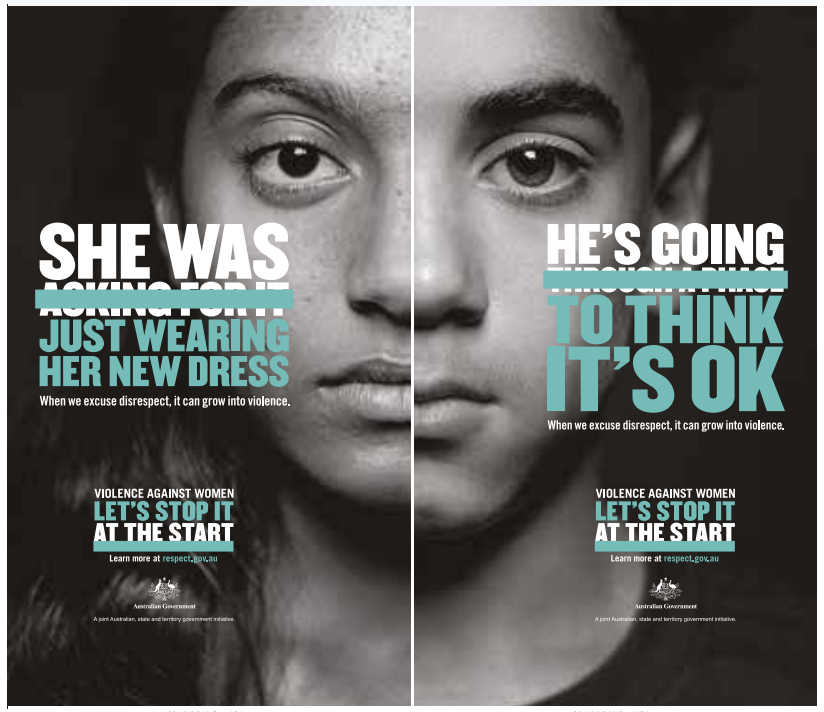
Case study: New domestic violence campaign to focus on 'boys being boys' attitude in society
A new Federal Government campaign aimed at preventing violence against women and children targets the 'boys being boys' attitude that still exists in society at a grassroots level.
Phase two of the $30 million Stop it at the Start campaign was launched at the Council of Australian Governments (COAG) National Summit on Reducing Violence Against Women and Children. The campaign includes advertising on television, radio, in print, online, in cinemas and on social media.
Minister for Women Kelly O'Dwyer explained: "While not all disrespect ends with violence, the cycle of violence certainly starts with disrespect. It's good to remember that our behaviour is a powerful influence on others, particularly the young."
She noted that throwaway comments like "it's just boys being boys" or "he did it because he likes you" can make young people think disrespect is a normal part of growing up, prompting adults to question whether that is the intended message.
Campaign effectiveness
The Stop it at the Start campaign was launched in 2016, and a previous series of advertisements rolled out two years ago were viewed over 43 million times online, with hundreds of thousands of shares on social media. Government research found that after the first phase of the campaign in 2016, more than two-thirds of adults who saw the advertisements took some form of action.
Important
Statistics highlighting the problem
Minister O'Dwyer emphasised that one in six women had experienced physical or sexual violence by a current or former partner since the age of 15. These figures increased to nearly one in four women when violence by boyfriends, girlfriends and dates were included. Concerningly, one in four young people are prepared to excuse violence from a partner.
Focus on respectful relationships
Minister for Families and Social Services Paul Fletcher said the second phase would showcase how words and actions could be misinterpreted by young people. He noted that the Australian Institute of Health and Welfare reported that, on average, almost eight women were hospitalised each day in 2014–15 from assaults by current or former spouses or domestic partners.
The campaign is jointly funded by national and state governments and supported by online tools available at www.respect.gov.au.
Victorian government programmes
State and territory governments in Australia have primary responsibility for public hospitals and community and public health, ambulance, public dental services, and mental health and wellbeing programmes.
In 2019–2020, the Victorian government allocated funding in the State Budget for the Smile Squad, the state's school dental programme. A fleet of Smile Squad vans visits public primary, secondary and specialist schools across Victoria to provide free oral health examinations and any necessary follow-up treatment to all students, including teeth cleaning, fluoride applications, fillings and other non-cosmetic treatments.
Note
The Smile Squad programme addresses a critical gap in youth healthcare by bringing dental services directly to schools, removing barriers such as cost, transport, and the need for parents to take time off work for appointments.
Safer P-Platers
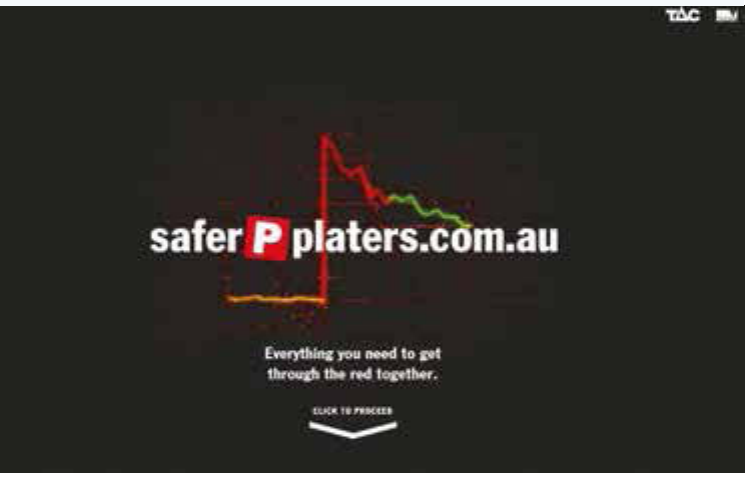
The Transport Accident Commission's (TAC) Safer P-Platers campaign informs parents of the unique risks young drivers face and provides strategies to improve their children's safety. The website includes sections covering:
- Night driving
- Drink driving
- Peer pressure
- Bad weather
Each section explains the risk and offers suggestions about how parents can support young drivers.
Important
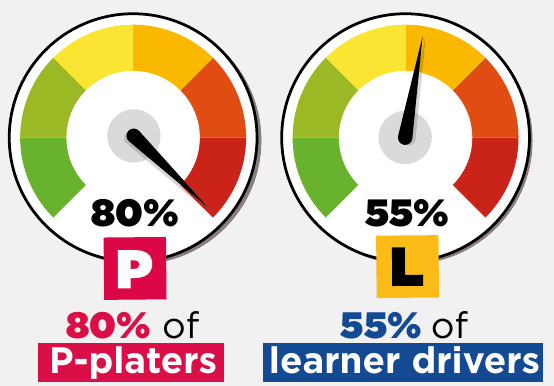
Statistics show that 80% of P-platers aged 16–17 had engaged in some form of risky driving on at least one of their 10 most recent trips, compared to 55% of learner drivers. This highlights the critical importance of ongoing parental support even after young people obtain their provisional licence.
The programme also offers mobile applications, including the Road Mode app, which prevents young drivers from being distracted by mobile phones whilst driving. Road Mode silences incoming calls and text messages, sending an automated text to let callers know the person is driving and cannot answer.
Doctors in Schools
In 2017, the Victorian government began the Doctors in Secondary Schools initiative. Funding allows adolescent-trained general practitioners (GPs) to attend 100 Victorian government secondary schools up to one day a week to provide medical advice and healthcare to students most in need.
This programme addresses the issue that teenagers are the least likely of all age groups to seek healthcare, despite the fact that many health and wellbeing problems that can have consequences into adulthood start during this life stage.
Programme objectives:
- Make primary healthcare more accessible
- Provide assistance to young people to identify and address issues or concerns early
Note
The GP provides students with the same services normally provided by GPs in the community, including consultations about physical and mental health and wellbeing, and sexual and reproductive health issues. GPs may also make referrals to other health services as required. There are no out-of-pocket expenses for participating Victorian government secondary schools, students, or their parents, guardians or carers.
Youth Central
Youth Central provides articles and information on topics relevant to young people aged 12–25, including:
- Health and wellbeing
- Alcohol, smoking and drugs
- Sexual relationships
- Ways to get involved and active in the community
- Developing new skills and making new friends
Victorian youth can interact with Youth Central by:
- Publishing articles, interviews, videos and podcasts
- Commenting on or sharing posts from Facebook or checking out their YouTube channel
- Retweeting or replying to their tweets, or sending them an email with suggestions
- Entering competitions
WayOut
WayOut is a state-wide suicide prevention programme that targets same-sex attracted, bisexual and transgender young people in rural Victoria. It aims to raise awareness about the needs of same-sex attracted and gender diverse young people, and the nature and effects of discrimination in regional, remote and rural communities.
WayOut is funded by the Victorian government Department of Health to support young individuals, their families and friends. It provides information sessions for teachers, healthcare professionals, youth services and community organisations that work with young people. It also provides Youth Mental Health First Aid Training in partnership with Live4Life, a mental health and wellbeing initiative in secondary schools across the Macedon Ranges Shire.
Note
WayOut specifically addresses the unique challenges faced by LGBTIQ+ young people in rural areas, where they may experience greater isolation and have less access to support services compared to their metropolitan counterparts.
Local government programmes
Local government activities can have a significant impact on young people through urban planning, public spaces, parks and gardens, human services, libraries and infrastructure. With its proximity to local youth, local government can be a potentially powerful advocate on youth issues to state and federal governments. This can involve leading debates and engaging people in shared decisions about both local and global issues.
Live4Life
The Live4Life initiative was developed as a community-wide response to a reported increase in depression, anxiety, self-harm and suicide in the Macedon Ranges Shire, particularly in 13- to 14-year-olds.
The initiative adopts a whole-of-community approach to:
- Increase knowledge about mental health issues
- Reduce stigma surrounding mental health
- Improve mental health and wellbeing service pathways appropriate for youth
Note
Live4Life involves training local community members to become Accredited Youth and Teen Mental Health First Aid (MHFA) Instructors. These instructors then deliver the Youth MHFA course to teachers, parents, carers, first-responders and community leaders. The programme also delivers two age-appropriate Teen MHFA courses to all year 8 and year 11 students in the local areas.
This approach recognizes that effective mental health support requires the entire community to be informed and equipped to help young people in need.
Non-government organisations
Rethink Sugary Drink
Rethink Sugary Drink is a partnership between 13 health and community organisations, including:
- Australian Dental Association
- Cancer Council
- Diabetes Australia
- Nutrition Australia
These organisations are concerned about the amount of sugar in soft drinks and sugary drink overconsumption. The consumption of sugar-sweetened beverages, such as soft drink and sports drinks, is associated with increased energy intake, which can create weight gain and obesity when physical activity levels are low.
By highlighting the amount of sugar in sweetened beverages, the programme encourages Australians to rethink their sugary drink consumption and switch to water, reduced-fat milk or unsweetened options.
Example
Campaign Example: The Sugar Stream Advertisement
A 2020 campaign uses an advertisement showing a family watching TV, focusing on a young girl about to take a sip from a sugary drink can. When she tips the can upside down, a steady stream of sugar spills out. The scene becomes more unsettling as her family hungrily devours handfuls of pure sugar, with her younger sister smiling to reveal a mouth full of rotten teeth.
This powerful visual metaphor aims to challenge young people's perceptions of sugary drinks by showing the literal sugar content in a memorable and impactful way. The campaign is shared across digital platforms including YouTube, Facebook and Instagram.
Youthbeyondblue
Youthbeyondblue aims to empower young people aged 12 to 25, their friends and those who care for them to respond to anxiety and depression. Youthbeyondblue supports and promotes environments and settings that build on the strengths of young people.
It is part of the beyondblue organisation that works across the lifespan, supporting those who are well to stay well, whilst assisting those who have depression and anxiety to recover and manage their condition.
Resources promoted by Youthbeyondblue include:
- Fact sheets on anxiety, low self-esteem, body image, depression, bullying and family breakup
- Chat line support
- Personal stories
- Online forum
Note
Social connection with other people supports good mental health and wellbeing and makes individuals more resilient to life's challenges. Youthbeyondblue's resources help young people build these connections and develop coping strategies.
Dove Self-Esteem Project
The Dove Self-Esteem Project was created with the vision of beauty as a source of confidence, not anxiety. The mission is to ensure that young people grow up enjoying a positive relationship with the way they look, helping them to raise their self-esteem and realise their full potential.
The project is a programme of evidence-based resources including parenting advice to help young people:
- Form healthy friendships
- Overcome body image issues
- Be their best selves
The Dove Self-Esteem Project offers confidence-building workshops for classrooms and educational activities for mentors and youth leaders. The guides (Confident Me for teachers, Uniquely Me for parents, and True to Me for youth leaders) work to get young people talking about body image and building their self-confidence.
DrinkWise
Established by the alcohol industry, DrinkWise Australia is an independent, not-for-profit organisation. The primary focus is to help bring about a healthier and safer drinking culture in Australia.
The initiative includes:
- A website with an interactive tool demonstrating the impact of alcohol on the body of a young person
- Fact sheets and videos on first alcohol experiences
- A 5 Point Plan providing practical advice on how to be a positive influence and delay a young person's introduction to alcohol
The 5 Point Plan encourages parents to:
- Discuss the issues: Talk about why not everyone drinks and how young people can fit in without alcohol
- Educate by example: Be a positive role model by drinking alcohol responsibly or not drinking at all
- Listen and engage: Be aware of and show interest in young people's upcoming activities, discussing these in a non-judgemental way
- Develop a good relationship: Work on developing and maintaining a good parent-child relationship based on clear and open communication
- Set your expectations: Make expectations regarding alcohol clear and involve young people in developing rules
Important
Exam tip: When answering questions about government and non-government programmes, be specific about which level of government runs which programme. For example, headspace is federally funded, whilst Safer P-Platers is a Victorian initiative.
Summary
Key Points to Remember:
-
Health literacy has two components: individual health literacy (personal knowledge and skills) and the health literacy environment (how information is provided and systems are set up).
-
Federal government programmes include the National Alcohol Strategy, Racism. It Stops With Me, headspace, and Stop it at the Start, which address national health priorities for young people.
-
Victorian government programmes such as Safer P-Platers, Doctors in Schools, Youth Central and WayOut address state-specific youth health needs, particularly around mental health, road safety and sexual health.
-
Local government programmes like Live4Life take a whole-of-community approach to addressing youth mental health issues at the local level.
-
Non-government organisations such as Rethink Sugary Drink, Youthbeyondblue, Dove Self-Esteem Project and DrinkWise complement government initiatives by targeting specific health issues affecting young people, often through partnerships and community engagement.