The Social Dimension of Sustainability (VCE SSCE Health and Human Development): Revision Notes
📚Revision Notes
The Social Dimension of Sustainability
What is social sustainability?
Social sustainability focuses on people's health and wellbeing. It involves creating an equitable society that meets the needs of all citizens and can be maintained indefinitely.
Important
Definition of Social Sustainability
Social sustainability: creating an equitable society that meets the needs of all citizens and can be maintained indefinitely.
The underlying aim of social sustainability is to ensure that all people:
- Have their human rights upheld
- Can participate in the society in which they live
- Can participate in decisions that affect their lives
- Experience equal access to essential resources
Essential resources for social sustainability include food, shelter, education, healthcare, employment, clean water, sanitation, clothing, recreation and leisure.
For progress to be socially sustainable, it must lead to improvements in the health and wellbeing of all people over time, especially those who currently experience inequality.
Five key considerations for social sustainability
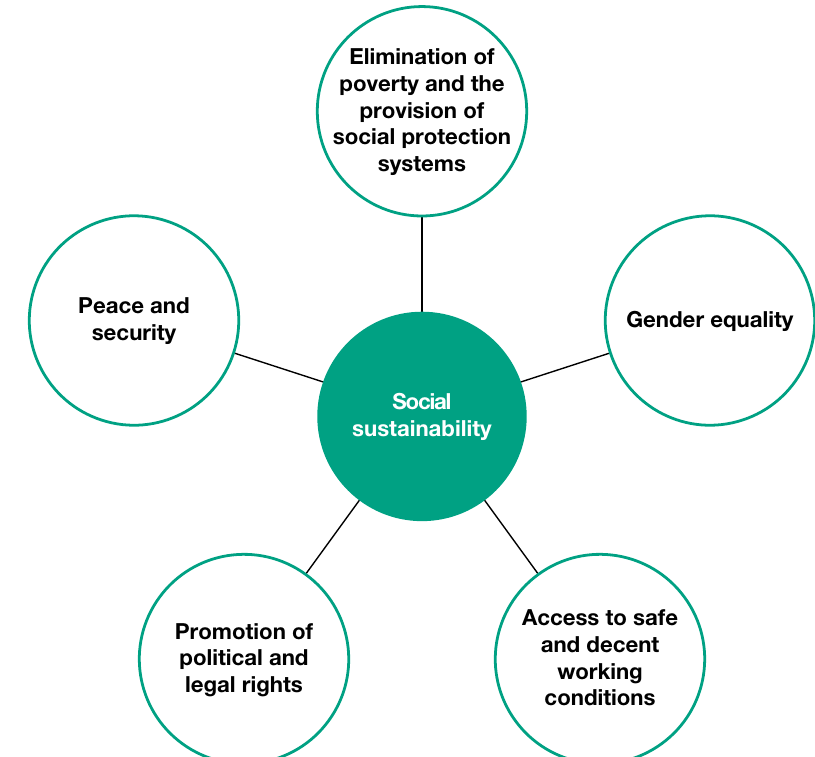
To ensure social sustainability, five key conditions must be available to all people:
Note
These five pillars work together to create a socially sustainable society. Each pillar is interconnected and has important implications for health and wellbeing across all dimensions - physical, mental, emotional, social, and spiritual.
Elimination of poverty and the provision of social protection systems
The global poverty challenge
Globally, hundreds of millions of people live in poverty, with the majority living in low- and middle-income countries. Although many countries' economies are experiencing growth, unequal access to financial resources continues to create a divide between rich and poor. For improvements in health and wellbeing to be sustainable, all people must be able to enjoy the benefits that can accompany economic growth.
What are social protection systems?
Social protection systems provide support for vulnerable people who are unable to earn an income, including as a result of illness or unemployment. These systems assist in providing access to essential resources such as housing, food and basic healthcare.
Example
Example: Social Protection in Australia
In Australia, income support is available through the federal government body Centrelink. Centrelink provides financial assistance to eligible citizens including:
- Unemployment benefits
- Disability support
- Age pensions
- Family assistance payments
However, in many low- and middle-income countries, the absence of social protection systems drives vulnerable groups further into poverty.
Health and wellbeing impacts
When poverty is eliminated, all people can access the resources required for a decent standard of living, such as education, food, clean water, adequate housing and sanitation. This promotes health and wellbeing by:
- Physical health and wellbeing: Reducing the risk of infectious diseases through better access to clean water, sanitation and healthcare
- Mental health and wellbeing: Reducing stress and anxiety caused by limited access to resources such as food and healthcare
- Emotional health and wellbeing: Enabling people to be better equipped to deal with misfortune, reducing worry and promoting resilience
Gender equality
Why gender equality matters
Gender equality is still a significant issue globally. The achievement of optimal health and wellbeing is not possible if half the population is denied human rights and equal opportunities.
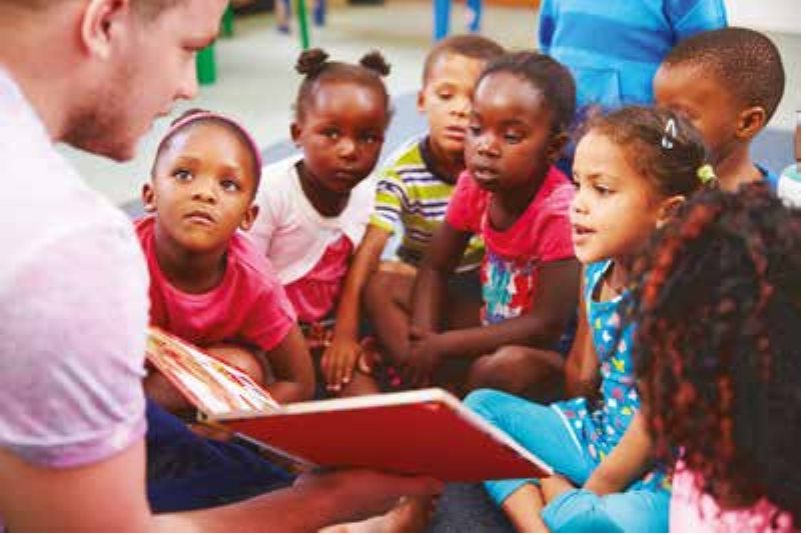
Women and girls must be able to access the same opportunities as men and boys in relation to education, employment, leadership and decision-making. Gender equality means more educated people working productively, which promotes economic sustainability, an essential component of overall sustainability.
Eliminating discrimination and violence
Important
Gender equality includes the elimination of all forms of discrimination and violence against women and girls. This is fundamental to achieving social sustainability and has wide-ranging effects on health and wellbeing.
Health and wellbeing impacts
Gender equality can promote health and wellbeing in numerous ways:
- Spiritual health and wellbeing: Females feel more a part of the society in which they live if they are socially included
- Emotional health and wellbeing: By having more say in their lives, females may feel more satisfied with life
- Physical health and wellbeing: Women will be less likely to experience injuries as a result of violence
- Mental health and wellbeing: Decreased stress levels, as women will be less worried about the impacts of violence and discrimination
- Social health and wellbeing: Females will be more empowered to make their own decisions about their lives, such as whether and whom they marry
Access to safe and decent working conditions
The current global situation
Safe and decent working conditions ensure that all people can access meaningful employment, including women, young people and those with disabilities. Currently, billions of people are either unemployed or working in conditions that violate their basic human rights and destroy their dignity.
Major employment-related issues
Important
Critical Global Employment Issues
Extreme poverty and the promise of a better life are often underlying factors in human trafficking, forced labour and child labour.
The International Labour Organization (ILO) provides concerning statistics:
- Approximately 21 million people are in forced labour globally
- Around 2.5 million people have been trafficked and are being subjected to labour exploitation, including sexual exploitation
Child labour
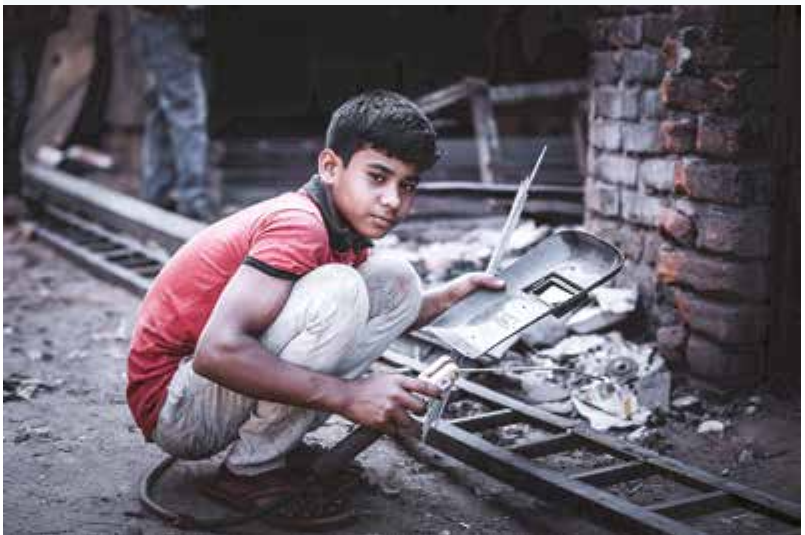
It is estimated that 150 million children between the ages of five and 17 currently work in conditions that are considered illegal, hazardous or extremely exploitative. Large numbers of children work in:
- Commercial agriculture
- Fishing
- Manufacturing
- Mining
- Domestic service
Some children work in illicit activities such as the drug trade and prostitution, or other traumatic activities, such as serving as child soldiers.
Health and wellbeing impacts
Access to safe and decent working conditions would see an end to child labour, forced labour and unsafe conditions, and assist in reducing poverty. This would have significant benefits for health and wellbeing:
- Social health and wellbeing: Children would be able to stay in school and socialise with their peers
- Physical health and wellbeing: Fewer people would be forced into prostitution, reducing their risk of contracting HIV and other STIs
- Emotional health and wellbeing: People working in safe and decent jobs are more likely to experience positive emotions, including pride and satisfaction
- Mental health and wellbeing: People experiencing safe and decent working conditions will feel safe at work and earn a reliable income, which can lower stress levels
- Spiritual health and wellbeing: Safe and decent work promotes feelings of connectedness
Promotion of political and legal rights
Representation in government
The opportunities available in a society must be equitable for all people. Women, indigenous populations and ethnic minorities are often under-represented in governments, and often do not have their rights upheld.
Note
Global Parliamentary Representation Statistics (2020)
According to the United Nations:
- 25% of all national parliamentarians were women (an increase of only 26% from 1995)
- In 21 countries, women numbered less than 10% of parliamentarians
- In six governments, there were no women at all
Under-representation of indigenous people and ethnic minorities is still a problem for governments in many high-, middle- and low-income countries.
Legal protections
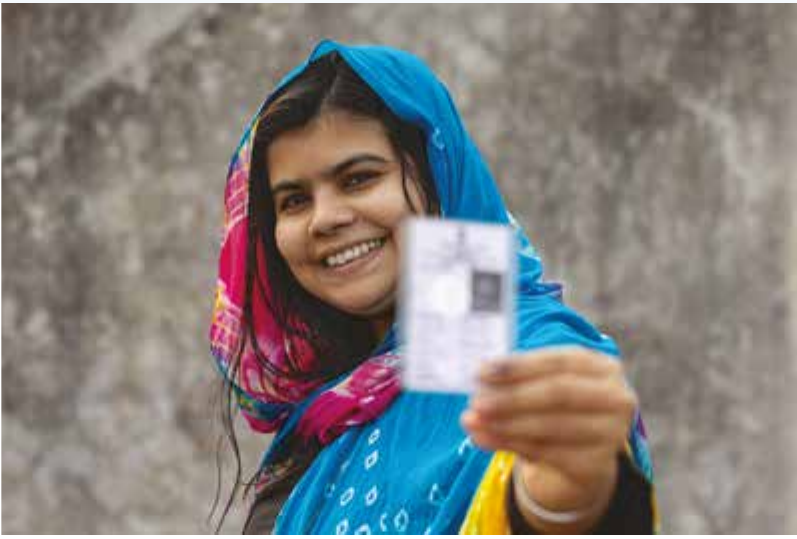
In many countries, laws are developed to protect citizens' human rights by making discriminatory acts illegal. Despite these interventions, many groups are not adequately protected under the law of the country in which they live.
As a result, many groups, including women, experience high rates of crime and a reduced ability to participate in the community in which they live. Examples of discrimination include not being able to:
- Vote
- Secure a loan
- Drive a car
- Own land
Such discrimination can also contribute to forced displacement from homes.
Why representation matters
Important
When specific groups are not adequately represented in government, policies are less likely to be developed that promote awareness and action towards issues that affect the health and wellbeing of these groups. This makes it difficult to break the cycle of poverty and achieve social sustainability.
Health and wellbeing impacts
Improving political and legal rights can promote health and wellbeing by:
- Mental health and wellbeing: Developing policies that prevent discrimination and promote equal opportunity for education and employment can reduce anxiety as people feel socially included
- Spiritual health and wellbeing: Connecting women, indigenous people and ethnic minorities to the communities in which they live
- Physical health and wellbeing: Addressing violence against women reduces the risk of injury from violence
Peace and security
The importance of peace
A peaceful environment and society are essential for promoting optimal health and wellbeing. When a country is in conflict, its level of health and wellbeing may be significantly lower than in times of peace.
Wide-ranging benefits of peace
During times of peace and security, besides the obvious reduction of death and injury from conflict, there are extensive associated effects on health and wellbeing for all members of society.
Resource allocation and infrastructure:
- Financial resources are not being directed to a war effort, so the government is in a better position to provide essential resources for its citizens, including infrastructure, education, healthcare and social protection
Environmental and resource access:
- The environmental impact of war does not occur, which increases access to food and services such as healthcare
- Water and sanitation facilities and electricity supplies can be maintained
- People are less likely to be displaced
- This reduces the risk of malnutrition and premature death, promoting physical health and wellbeing
Social functioning:
- Adults can continue to work and children can attend school, promoting social health and wellbeing as people have the opportunity to interact and socialise
Daily life and routine:
- People can go about their daily lives, performing activities such as attending work or going to school
- This promotes all areas of health and wellbeing as people can work to reduce poverty and access resources such as food, water, shelter and healthcare
- This can reduce stress (mental health and wellbeing), promote social interaction (social health and wellbeing), reduce the risk of infection (physical health and wellbeing), promote positive emotions (emotional health and wellbeing), and give people a sense of purpose in their lives (spiritual health and wellbeing)
Safety and security:
- The risk of personal injury and the destruction of infrastructure is reduced, which enhances physical health and wellbeing
- Vulnerable groups can be reached to address issues such as poverty and food insecurity
- People are more likely to receive protection under law during times of peace, which can promote feelings of security and mental health and wellbeing
Future generations:
- Long-lasting effects of war, such as the presence of landmines and the lack of infrastructure, are reduced
- Future generations do not have to focus on rebuilding, and can instead direct their efforts towards promoting their health and wellbeing
Summary
Key Points to Remember
- Social sustainability focuses on creating an equitable society where all citizens' needs are met indefinitely, with particular emphasis on health and wellbeing
- The five key pillars of social sustainability are: elimination of poverty and provision of social protection systems, gender equality, access to safe and decent working conditions, promotion of political and legal rights, and peace and security
- Each pillar of social sustainability has significant impacts across all dimensions of health and wellbeing (physical, mental, emotional, social and spiritual)
- Globally, millions of people still face challenges including poverty, gender inequality, forced labour and child labour (150 million children aged 5-17), and under-representation in government (only 25% of parliamentarians are women)
- Achieving social sustainability requires addressing interconnected issues, as improvements in one area often support progress in others (for example, eliminating poverty helps promote gender equality and access to education)