The Victorian Courts (VCE SSCE Legal Studies): Revision Notes
📚Revision Notes
The Victorian Courts
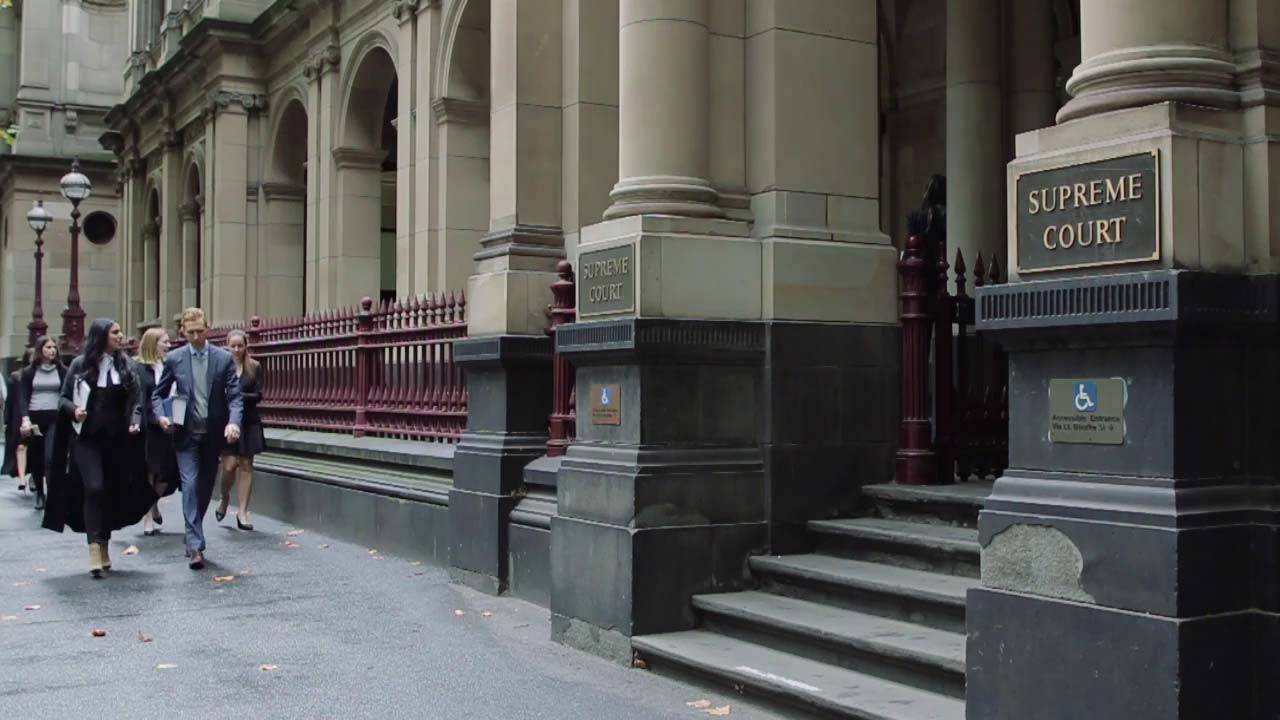
Introduction to Victorian courts
In Australia, courts provide a means of resolving and determining criminal cases. There are two types of courts: state courts and federal courts. State courts deal with issues arising under state law, while federal courts deal with issues arising under federal law.
Australian courts are ranked in a court hierarchy, with higher courts hearing more serious and complicated cases, and lower courts dealing with minor offences. The Victorian court hierarchy exists for several important reasons:
- To allow for specialisation and expertise in handling different types of cases
- To allow parties to appeal a decision to a higher court
- To ensure that the doctrine of precedent can operate by having lower and higher courts
- To ensure administrative convenience
Note
The court hierarchy is fundamental to the Australian legal system. It ensures that cases are heard at the appropriate level based on their complexity and seriousness, while also providing mechanisms for review and appeal.
The Victorian court hierarchy
From lowest to highest, the Victorian courts are structured as follows:
Lowest level:
- Magistrates' Court of Victoria (including specialist divisions: Coroners Court and Children's Court)
Middle level:
- County Court of Victoria
Highest state level:
- Supreme Court (Trial Division)
- Supreme Court (Court of Appeal)
Highest national level:
- High Court of Australia
Important
The High Court of Australia is a federal court and sits at the top of the entire Australian court system. It is the final court of appeal for all Australian legal matters.
The role of Victorian courts in criminal cases
Even though laws provide guidelines for acceptable behaviour, laws are broken and crimes are committed. Unlike civil disputes, there are no alternative bodies such as tribunals or complaints bodies that can resolve criminal cases. Criminal cases can only be resolved through the court system.
Two main roles
Victorian courts have two primary roles in criminal cases:
- Determine a criminal case (by deciding whether the accused is guilty)
- Impose a sanction (if a person has been found, or has pleaded, guilty)
Role 1: Determining a criminal case
When an accused person pleads not guilty, the court must determine whether they are guilty by managing and hearing criminal proceedings. The judge or magistrate acts as an impartial referee who has no bias against or connection with either party, and who does not favour any side.
The way guilt is determined depends on the type of offence:
Summary offences:
- Heard in the Magistrates' Court
- Guilt is determined by a magistrate at a hearing (not a trial)
- No jury is involved
Indictable offences:
- First, the case goes to the Magistrates' Court for a committal proceeding
- The final stage is a committal hearing, where the magistrate decides whether there is evidence of sufficient weight to support a conviction at trial
- If committed, the proceeding continues in either the County Court or Supreme Court
- Guilt is determined by a jury at a trial, with a judge overseeing the proceedings
Note
The committal proceeding acts as a filter to ensure that only the strongest cases use the resources of the higher courts, which are often overburdened. However, recent inquiries have shown that most persons are committed to stand trial, with only very few cases not proceeding any further.
Additional functions in determining criminal cases:
Courts also perform these important functions when determining cases:
- Provide specialisation and expertise: The Magistrates' Court specialises in minor criminal offences (e.g. minor thefts and assaults), whereas the Supreme Court specialises in the most serious indictable offences (e.g. murder)
- Manage the case: Judges and magistrates have significant powers of case management, which means they can give orders and directions to the parties. This includes setting down a timeline of when certain steps are to occur, so that delays can be managed
- Hear appeals: Certain Victorian courts have the power to hear an appeal made by one or both parties following a guilty verdict. An appeal may be in relation to a conviction, sentence or on a point of law. The party who appeals is known as the appellant, and the other party is known as the respondent
Example
Case Study: Appeal refused in murder case (Baker v The King [2022])
This case demonstrates how the appeal process works over an extended period. In November 2005, Albert, aged 22, died after falling through a window at a warehouse party in Brunswick. Two men, Khalid Baker and LM, were charged with murder. The prosecution alleged that both intended to cause Albert really serious injury.
In May 2008, the jury acquitted LM of murder but found Baker guilty. Baker was sentenced to 17 years in prison with a non-parole period of 12 years. Baker appealed to the Court of Appeal, arguing the verdict was unreasonable and could not be supported by the evidence. The Court of Appeal dismissed the appeal. Baker then appealed to the High Court, but the High Court also dismissed the appeal.
Baker was released on parole in September 2018, having served 13 years in jail. In 2022, he appealed again to the Court of Appeal, claiming there was fresh and compelling evidence demonstrating a substantial miscarriage of justice. He alleged that LM had admitted having the final physical contact with Albert. Although the Court of Appeal accepted the evidence was 'fresh', it did not accept it was 'compelling'. The court noted that the evidence must be reliable and substantial, and found inconsistencies in the fresh evidence.
This case shows that appeals can continue for many years, but courts require strong evidence to overturn convictions.
Role 2: Imposing a sanction
When an accused person pleads guilty, or the magistrate or jury finds the accused guilty, the court sets a date for a plea hearing. At this hearing, both parties make submissions about:
- The facts of the case
- The offender's circumstances
- The relevant factors that should be taken into account in sentencing
- The type of sentence the offender should receive
Following the plea hearing (on that day or on a later date), the judge or magistrate hands down a sanction. In higher courts, a judge normally provides a written judgment about the sanction they have imposed. This document can be made available to the public at a later date.
Example
Case Study: Breach of family violence order with armed robbery (DPP v Cattanach [2023])
This case illustrates how courts impose sanctions. The offender, aged 30 at the time of sentencing in 2023, pleaded guilty to one charge of armed robbery, one charge of making a threat to kill, one charge of contravention of a family violence intervention order, and three summary matters: assault, aggravated cruelty to an animal, and driving while disqualified.
The offender had a significant history of family violence, with several intervention orders against him over the years. On 1 January 2021, after drinking heavily, the offender returned home at 4:15 am and asked his father for car keys. When his father refused, the offender attacked him with various weapons, punched him, stabbed the family dog multiple times, and threatened to kill his father. His mother called triple-0 and was terrified.
The County Court judge noted that the offending was almost incomprehensible in terms of violence and cruelty. The judge also noted that the offender had a history of violent offending, including killing animals. Other than a plea of guilty, there was no evidence of remorse, suggesting the offender had no insight into his offending.
The judge sentenced the offender to eight years and three months in prison with a non-parole period of five-and-a-half years. The judge stated that "the prospects of your reoffending if you use liquor or drugs is going to be very high."
This case demonstrates how courts consider multiple factors when imposing sanctions, including the seriousness of the offending, prior criminal history, evidence of remorse, and the likelihood of reoffending.
The criminal jurisdiction of Victorian courts
Jurisdiction refers to the lawful authority (or power) of a court to apply the law and hear cases. There are two types of jurisdiction:
- Original jurisdiction: The power of a court to hear a case for the first time (i.e. not on appeal from a lower court)
- Appellate jurisdiction: The power of a court to hear a case on appeal
Summary table of criminal jurisdiction
| Victorian court | Original jurisdiction | Appellate jurisdiction |
|---|---|---|
| Magistrates' Court | - Summary offences - Indictable offences heard summarily - Committal proceedings - Bail and warrant applications | No appellate jurisdiction |
| County Court | Indictable offences except treason, murder, attempted murder, certain conspiracies | From the Magistrates' Court on a conviction or sentence (unless the Chief Magistrate decided the case) |
| Supreme Court (Trial Division) | Serious indictable offences | From the Magistrates' Court on a point of law (unless the Chief Magistrate decided the case) |
| Supreme Court (Court of Appeal) | No original jurisdiction | - All appeals from the County Court or the Supreme Court (Trial Division) - From the Magistrates' Court if the Chief Magistrate decided the case |
| Children's Court | Offences committed by children 10–17 years of age (except for certain offences) | No appellate jurisdiction |
| Coroners Court | Investigation of deaths and fires | No appellate jurisdiction |
Magistrates' Court
Original jurisdiction:
The Magistrates' Court is the lowest court in the Victorian court hierarchy and has jurisdiction to hear:
- Summary offences: Less serious criminal offences
- Indictable offences heard and determined summarily: Some indictable offences that can be dealt with in the Magistrates' Court if certain conditions are met
When the accused pleads not guilty, the proceeding to determine guilt is called a hearing (not a trial). Guilt is determined by a magistrate, not a jury.
The Magistrates' Court also has power to:
- Hear applications in relation to bail and warrants
- Conduct committal proceedings for indictable offences
Note
The Magistrates' Court has various specialist lists and courts, including the Sexual Offences List, the Assessment and Referral Court List, the Drug Court, and the Koori Court. These specialist divisions allow for targeted expertise in handling specific types of cases.
Appellate jurisdiction:
As the Magistrates' Court is the lowest court in the Victorian court hierarchy, it is not able to hear any appeals from other courts.
County Court
Original jurisdiction:
The County Court hears all indictable offences except those set out in section 36A of the County Court Act 1958 (Vic). This means it cannot hear cases involving:
- Treason
- Murder
- Attempted murder
- Certain conspiracies
If the accused pleads not guilty, the hearing at which guilt is determined is known as a trial, with guilt decided by a jury.
Appellate jurisdiction:
The County Court can hear criminal appeals against convictions or sentences handed down in the Magistrates' Court (unless the Chief Magistrate decided the case). This means that:
- People can appeal if they think they have been wrongly convicted in the Magistrates' Court and no reasonable magistrate would have convicted them on the facts presented
- People can appeal if their sentence was too harsh
- The DPP (Director of Public Prosecutions) can also appeal on the basis of a sentence being too lenient
Supreme Court (Trial Division)
Original jurisdiction:
The Trial Division of the Supreme Court has jurisdiction to hear all indictable offences. It generally hears the most serious indictable offences that cannot be heard by the County Court, such as:
- Treason
- Murder
- Attempted murder
If the accused pleads not guilty, the hearing at which guilt is determined is known as a trial, with guilt decided by a jury.
Appellate jurisdiction:
The Trial Division can hear criminal appeals on questions of law from cases heard in the Magistrates' Court (unless the Chief Magistrate decided the case). For example, an appeal can be made on a question of whether the magistrate incorrectly applied the law when determining whether an offence was committed.
Supreme Court (Court of Appeal)
Original jurisdiction:
The Court of Appeal has no original jurisdiction. It only hears appeals from other courts.
Appellate jurisdiction:
The Court of Appeal hears appeals from the County Court and the Supreme Court, which are usually determined by three judges. These appeals may question:
- A conviction
- The severity or leniency of a sentence
- A question of law
The Court of Appeal also hears appeals from the Magistrates' Court where the Chief Magistrate heard the case.
Important
Important appeal requirements:
- The Court of Appeal's leave (i.e. permission) is required for the offender to appeal
- No leave is required for the DPP to appeal to the Court of Appeal against a sentence imposed
- Any further appeals from the Court of Appeal are heard by the High Court of Australia, which is the final appeal court
- Leave is required from the High Court to appeal a decision
Specialised Victorian courts
Children's Court
The Children's Court is a specialist court for children. It has two divisions:
Criminal Division:
- Deals with all cases where a child (aged 10–17 years at the time of the offence, and under 19 years old when proceedings begin) has been charged with an offence
- Exception: It does not hear cases involving murder, attempted murder, manslaughter, child homicide, arson causing death, and culpable driving causing death. These offences are dealt with in the County or Supreme Court
Family Division:
- Deals with issues in relation to child protection where a child is at risk
- Hears applications for intervention orders (court orders designed to protect a person, their children and their property from another person)
Coroners Court
The Coroners Court investigates:
- Any death that is considered to be unexpected, unnatural or violent
- Deaths that resulted from an accident or injury
- Deaths that occurred during or following a medical procedure
- Fires that involve death, serious injury or significant damage to property
Note
The coroner's role is investigative rather than to determine guilt or impose sanctions. The Coroners Court seeks to establish the circumstances surrounding deaths and fires, which may inform recommendations to prevent similar incidents in the future.
Strengths and weaknesses of courts in resolving criminal cases
Understanding the strengths and weaknesses of courts helps to evaluate how well they achieve the principles of justice.
Strengths
Impartiality and fairness:
Judges, juries and magistrates are impartial referees who decide cases based on fact and law, not on personal biases or prejudices. This ensures fairness and upholds the principle of equality before the law.
Specialisation and expertise:
Because of the court hierarchy, judges and court personnel are specialised. This helps to ensure fairness and expertise in the way that cases are managed. Different courts focus on different types of cases, allowing judicial officers to develop deep knowledge in their area.
Procedural fairness:
Formal court processes, the way in which cases are managed, and rules of evidence help to ensure procedural fairness by allowing an accused person to present their case and rebut the other party's case. This supports the principle of fairness.
Right to appeal:
The court hierarchy allows for a party to appeal a case to a higher court. This provides a safeguard against wrongful convictions or inappropriate sentences, supporting both fairness and access to justice.
Weaknesses
Complexity and accessibility:
The courts and the way they decide cases are difficult to understand for accused people, particularly those who are not represented, or those with little to no education. This can undermine access to justice.
Cost and inequality:
Without legal representation, which can be expensive, a party may be disadvantaged by representing themselves, as they will not be equal to a party with legal representation. This creates inequality and undermines fairness.
Intimidating environment:
The formalities of the court process can result in parties feeling stressed, intimidated or nervous. This may affect their ability to present their case effectively and access justice.
Limited right to appeal:
The right to appeal is not automatic in many cases. For example, the Court of Appeal needs to give leave (permission) for an offender to appeal a decision, and the appeal process is difficult without a lawyer. This can limit access to justice, particularly for disadvantaged accused persons.
Important
When evaluating courts in resolving criminal cases, always consider how each strength or weakness relates to the three key principles of justice: fairness, equality, and access to justice.
Key definitions
Tribunal: A dispute resolution body that resolves civil disputes and is intended to be a less costly, more informal and faster way to resolve disputes than courts.
Complaints body: An organisation established by parliament to resolve formal grievances (i.e. complaints) made by an individual about the conduct of another party.
Committal hearing: A court hearing that is held as part of the committal proceeding in the Magistrates' Court. At a committal hearing, the magistrate will decide whether there is sufficient evidence to support a conviction for the offence charged.
Jurisdiction: The lawful authority (or power) of a court, tribunal or other dispute resolution body to decide legal cases.
Original jurisdiction: The power of a court to hear a case for the first time (i.e. not on appeal from a lower court).
Appellate jurisdiction: The power of a court to hear a case on appeal.
Intervention orders: A court order that is designed to protect a person, their children and their property from another person.
Summary
Key Points to Remember:
Court Structure:
- Victorian courts are structured in a hierarchy from the Magistrates' Court (lowest) through County Court and Supreme Court, to the High Court of Australia (highest)
- The court hierarchy enables specialisation, appeals, the doctrine of precedent, and administrative convenience
Roles of Courts:
- Victorian courts have two main roles in criminal cases: to determine guilt and to impose sanctions
- Judges and magistrates act as impartial referees in determining criminal cases
Jurisdiction:
- Courts have different jurisdictions: original jurisdiction (hearing a case for the first time) and appellate jurisdiction (hearing appeals)
- Summary offences are heard by a magistrate in the Magistrates' Court at a hearing
- Indictable offences are heard by a judge and jury at a trial in the County or Supreme Court
- Committal proceedings act as a filter to ensure only strong cases proceed to higher courts
Appeals:
- The Court of Appeal is the highest Victorian court and only hears appeals
- The High Court of Australia is the final court of appeal
- The right to appeal is not automatic and may require leave (permission)
Specialised Courts:
- The Children's Court deals with offenders aged 10-17 (with certain exceptions)
- The Coroners Court investigates deaths and fires
Evaluation:
- Strengths: Courts provide impartiality, specialisation, procedural fairness, and the right to appeal
- Weaknesses: Courts can be complex, costly, intimidating, and have limited appeal rights
Key Terms to Remember:
- Jurisdiction, original jurisdiction, appellate jurisdiction
- Committal hearing, plea hearing
- Appellant, respondent
- Impartial referee
- Intervention orders
Exam Technique:
- When discussing court jurisdiction, always specify both original and appellate jurisdiction
- Use real case examples (like Baker v The King) to illustrate how the appeal process works
- Link strengths and weaknesses of courts to the principles of justice (fairness, equality, access)
- Remember that the right to appeal is not automatic and may require leave (permission)
- Be clear about which court hears which types of offences (summary vs indictable)