Nuclear Energy for Australia (VCE SSCE Physics): Revision Notes
📚Revision Notes
Nuclear Energy for Australia
Natural nuclear reactors
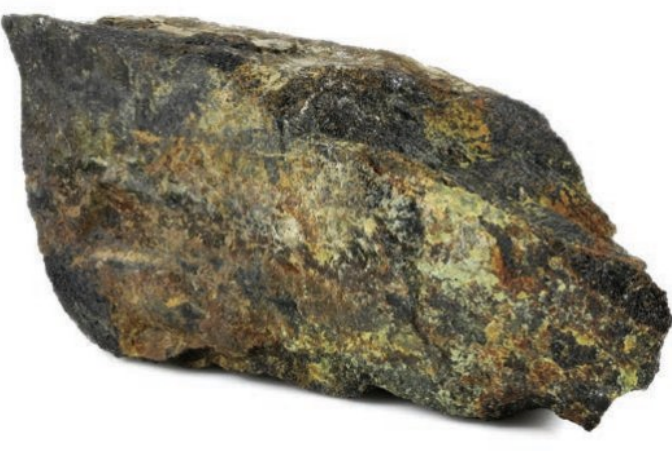
In the 1970s, physicists made a remarkable discovery while studying uranium ore samples from Gabon in West Africa. They found evidence that natural nuclear chain reactions had occurred approximately 1.8 billion years ago. This finding challenged the common perception that all nuclear processes on Earth are human-made.
Isotope ratios and the Gabon discovery
Uranium ore typically contains two main isotopes: uranium-235 () and uranium-238 (). These isotopes occur naturally in a fixed ratio of , which is determined by their different half-lives. However, the Gabon samples showed unusually low proportions of , particularly in uranium-rich areas of the ore body.
Note
Further investigation revealed traces of rare elements in proportions similar to those found in artificial nuclear reactors. Scientists concluded that 1.8 billion years ago, when concentrations may have been as high as (compared to less than today), there was sufficient fissile uranium for natural chain reactions to begin.
Natural moderation and reactor stability
Water trapped in surrounding sandstone acted as a moderator, a substance that slows neutrons to speeds that increase the probability of fission. The natural reactors operated in a cyclical pattern:
- Nuclear fission began with water acting as moderator
- Heat from fission boiled away all available water
- Without moderator, reactions stopped
- New water periodically entered the system
- Cycle repeated with remarkable stability
Important
These natural reactors were extraordinarily stable, operating continuously for up to one million years without a single meltdown. Eventually, so much was consumed that the chain reactions ceased permanently. Seventeen such natural nuclear reactors were discovered in Gabon, though intensive uranium mining has since destroyed sixteen of them.
Historical and contemporary aspects of Australian attitudes to nuclear energy
Nuclear energy has been a divisive topic in Australia since the 1950s. The debate encompasses scientific understanding of nuclear physics, environmental implications, and various controversial historical events. Key issues include British atomic bomb testing, uranium mining, nuclear research facilities, submarine acquisitions, and the potential role of nuclear power in addressing climate change.
Maralinga atomic testing
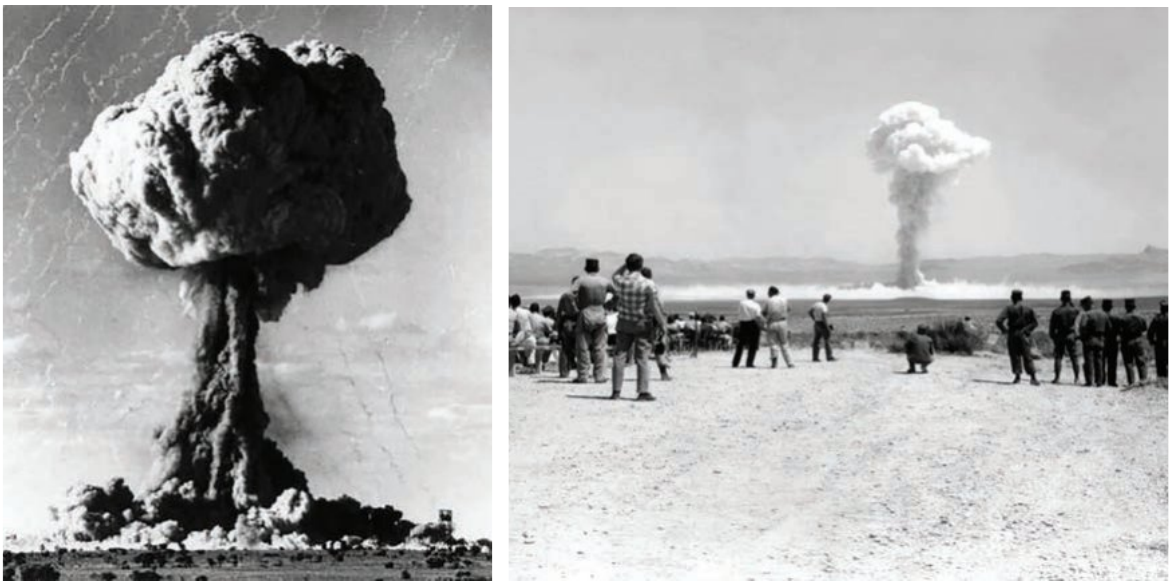
Between 1955 and 1963, the Australian Government secretly authorised British atomic bomb testing on Aboriginal land belonging to the Anangu people. This period represents one of the darkest chapters in Australia's nuclear history.
Impact on Aboriginal peoples
Important
The Maralinga Tjarutja, traditional Aboriginal owners of the land, were forcibly removed from their Country. This relocation destroyed traditional lifestyles of many Aboriginal families. Survivors reported seeing fleeing Aboriginal people picked up in military trucks or forced on long desert walks without water along routes designed to avoid the most contaminated areas.
Approximately Aboriginal people were exposed to radiation during testing. The radioactive fallout, called 'puyu' (black mist) by Aboriginal people, caused immediate health effects including sore eyes, skin rashes, diarrhoea, vomiting, fever and premature death of entire families. Explosions caused blindness. Long-term illnesses such as cancer and lung disease became apparent in the 1980s, when some Elders returned to their Country.
Minor trials and contamination
Beyond the seven major atomic tests, the British conducted minor trials between 1953 and 1963. These subcritical tests involved plutonium, uranium, polonium and beryllium experiments to study radioactive material dispersal patterns with prevailing winds. Although not nuclear explosions, they significantly contaminated the area.
Cleanup attempts and ongoing contamination
The United Kingdom Atomic Weapons Research Establishment conducted a minor cleanup in 1964, followed by a major cleanup in 1967. An area of around the firing range was ploughed, with contaminated equipment and material buried in pits. These were capped with tonnes of concrete to contain radioactive material. The British Government claimed that of the of plutonium exploded at the site had been collected. The Australian Government then released Britain from all further liabilities.
Note
However, in 1984, when approximately was scheduled to be returned to the Maralinga Tjarutja, scientists from the Australian Radiation Laboratory discovered the true extent of contamination. Radioactivity levels were ten times higher than predicted and much more widely dispersed than claimed. Scientists measured radioactivity levels exceeding at distances from testing sites.
The investigation revealed more than three million plutonium-contaminated particles, ranging from tens of micrometres to cricket ball size. Contrary to British assurances, most of the of plutonium was dispersed across lands extending more than from test sites. Although plutonium emits short-range alpha particles, it becomes extremely dangerous when inhaled with dust during windy periods. With a half-life of years, the contaminated lands will not be safe for human habitation for nearly a quarter of a million years.
Royal Commission findings
Important
The 1985 Royal Commission into British Nuclear Tests in Australia found that attempts to ensure Aboriginal and Torres Strait Islander peoples' safety were characterised by "ignorance, incompetence and cynicism". Test field boundaries were inadequately patrolled, and the British dismissed safety concerns with the heartless comment that "a dying race couldn't influence the defence of Western civilisation".
Research into this shameful period continues today, with recent reports indicating that some areas remain unsafe for human habitation due to high-level plutonium waste.
OPAL nuclear research reactor
Australia's Open Pool Australian Lightwater (OPAL) reactor represents the nation's peaceful use of nuclear technology. Located at Lucas Heights, south-west of Sydney, it operates as part of the Australian Nuclear Science and Technology Organisation.
Reactor specifications
OPAL is a state-of-the-art multi-purpose reactor using enriched uranium fuel. The reactor core consists of sixteen fuel assemblies arranged in a array, with five control rods controlling reactor power and enabling shutdown.
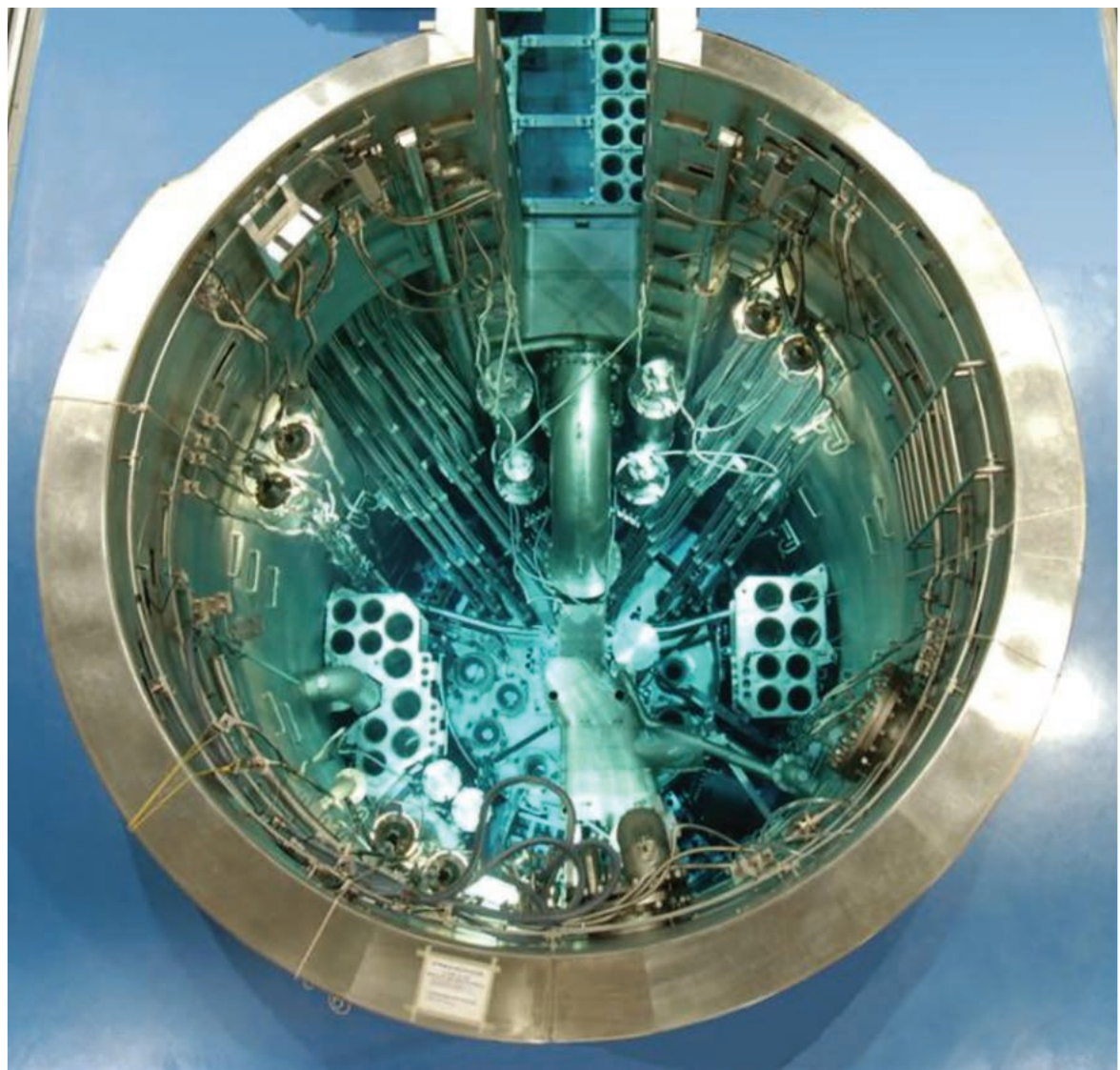
The reactor core is cooled by water and surrounded by a zirconium alloy reflector vessel containing heavy water (). This reflector vessel sits at the bottom of a -metre deep pool of normal light water (). The open pool design allows easy visibility and manipulation of items inside the reactor pool.
Safety and operation
The depth of water acts as an effective radiation shield, protecting workers and the environment from harmful radiation. The heavy water maintains the nuclear reaction by reflecting neutrons back towards the core, increasing the efficiency of the fission process.
Medical and research applications
Note
OPAL produces neutron beams for fundamental materials research and numerous radioisotopes for medical diagnosis and treatment, industry, agriculture and scientific research. Every Australian is likely to benefit from nuclear medicine, with the average person having at least two nuclear medicine procedures in their lifetime. Approximately of all radioisotopes used in Australian nuclear medicine procedures come from OPAL.
Global context
More than countries use nuclear energy in about research reactors worldwide. These reactors produce medical and industrial isotopes in addition to conducting research.
Nuclear submarines
In 2021, the Australian Government ordered at least eight nuclear submarines at an estimated cost of $ billion. These submarines represent a significant commitment to nuclear technology for defence purposes.
Technical features
A key feature is that these submarines are fuelled "for life", capable of remaining submerged for up to six months. They will carry nuclear reactors on board, providing the power needed for extended underwater operations.
Weapons systems
Note
Importantly, these submarines will carry conventional weapons only, not nuclear weapons. This contrasts with United States and United Kingdom submarines that carry nuclear missiles with total destructive capacity exceeding times the explosive power of the bombs dropped on Hiroshima and Nagasaki.
Nuclear energy for Australia: Current situation
Energy production status
Australia has never used nuclear energy for generating electrical power, despite possessing one-third of the world's uranium deposits and being the world's third largest uranium producer. Australia's significant coal and gas reserves have historically been cited as reasons why nuclear power has not been necessary.
International comparison: France
Example
Comparison Example: France's Nuclear Energy Model
France operates functioning nuclear reactors generating more than of the country's electricity. France is the world's largest net exporter of electricity due to very low generation costs using nuclear power, earning over € billion per year from electricity exports.
A 2015 French energy policy aimed to reduce nuclear generation to by 2025, but this target has been postponed. The country's energy minister stated that the target was unrealistic and would increase CO₂ emissions, endanger energy security and put jobs at risk.
Australia's emissions profile
When greenhouse gas emissions from Australia's coal, oil and gas exports ( of global total) are added to domestic emissions ( of global total), Australia's contribution to global climate pollution is approximately . This equals the total greenhouse gas emissions of Russia, the world's fifth largest CO₂ emitter.
Contributing factors to high emissions
Several factors contribute to Australia's high emission levels:
- In 2022, approximately of electricity was generated from fossil fuels ( coal, gas, oil)
- Warm climate results in high use of energy-hungry air-conditioning units
- Limited adoption of nuclear power for base-load electricity generation
Current energy consumption
In 2021, Australians used billion kilowatt hours (kWh) of electrical energy per year. Per capita, this averaged . Wind turbines, solar energy and hydro-electricity contributed of electricity needs, with the remaining coming from fossil fuels.
Potential environmental benefits
Note
Australia's uranium exports currently prevent at least million tonnes of CO₂ per year being released into Earth's atmosphere, compared to using black coal for the same energy production. If Australia's total low-cost uranium reserves were used instead of fossil fuels for electricity generation, they could prevent nearly million tonnes of CO₂ emissions.
A single nuclear power plant with capacity can offset emissions of approximately million tonnes of CO₂ each year when replacing black coal generation. Nuclear power plants also reduce emissions of sulfur dioxide, nitrous oxide and particulates, contributing significantly to improved air quality.
The nuclear energy debate
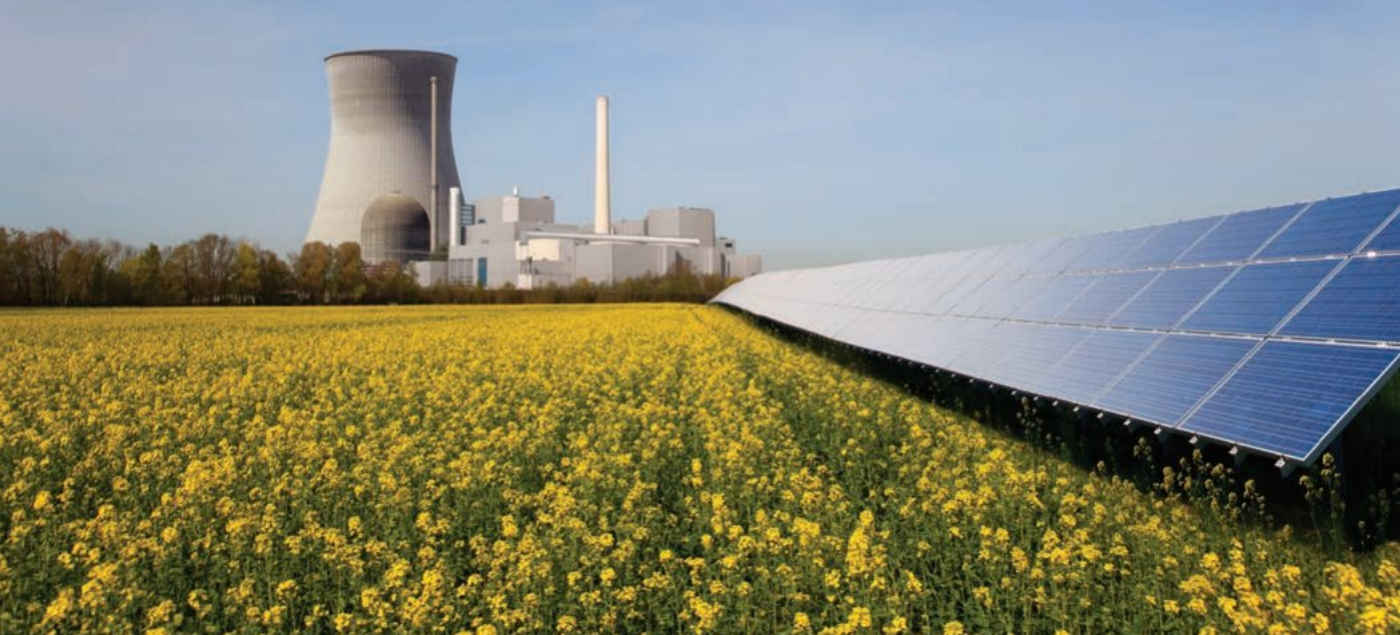
The question of whether Australia should adopt nuclear power for electricity generation remains contentious, with strong arguments presented by both supporters and opponents.
Arguments supporting nuclear energy
James Lovelock's perspective (2004)
Note
James Lovelock, a scientist and climate change environmentalist, argued strongly for nuclear energy as essential for civilisation's survival. He entreated environmental movement members to drop objections to nuclear energy, stating that even if nuclear dangers were real (which he disputed), its worldwide use would pose insignificant threat compared to dangers of intolerable heat waves and rising sea levels drowning coastal cities. Lovelock argued civilisation faces imminent danger and must use nuclear energy now or suffer consequences from climate change.
Minerals Council of Australia position (2019)
The Minerals Council emphasised several key points supporting nuclear energy:
- Climate change is real, and global energy demand is increasing
- Decarbonisation of power supplies is essential
- Nuclear energy provides around of world's electricity demand with zero emissions
- Nuclear power is low cost and can meet industrial and household needs 24/7
- Billions of citizens in countries already benefit from low-cost, zero-emission nuclear power
- Australia has world's largest uranium deposits yet prohibits nuclear power use
- The Minerals Council strongly supports informed debate on nuclear energy in Australia
Arguments against nuclear energy
The Climate Council of Australia, an independent body communicating climate change information, presents the following arguments against nuclear power in Australia:
Cost and construction time
Important
The Commonwealth Scientific and Industrial Research Organisation (CSIRO) states that by far the lowest cost electricity production method is solar and wind, even when including storage costs. In contrast, building and operating nuclear power stations in Australia remains prohibitively expensive.
Analysis by the nuclear industry itself shows nuclear power stations take an average of years to build, compared to years for major wind or solar projects. Australia needs to replace ageing coal-fired power stations quickly and slash emissions by this decade. According to the Australian Energy Market Operator's Integrated System Plan, the cheapest and quickest method is ramping up renewable energy paired with storage like pumped hydro and batteries.
Safety and environmental risks
Nuclear power poses significant community, environmental, health and economic risks:
- Major nuclear disasters such as Chernobyl (1986) and Fukushima (2011) impacted hundreds of thousands of people
- Contaminated areas take decades to clean up
- Even when operating as intended, nuclear power stations create long-term, prohibitively expensive legacies requiring site remediation, fuel processing and radioactive waste storage
- Nuclear power stations are water-hungry, requiring massive quantities for ongoing operations
Non-renewable nature
Note
Nuclear power is not renewable. Uranium is a finite resource like coal, oil and gas. While operating nuclear reactors do not create greenhouse gas emissions, all other parts of producing nuclear power are polluting, from mining through construction, decommissioning and waste management.
Renewable alternatives
Australia is one of Earth's sunniest and windiest countries, with sufficient renewable energy resources to power the country times over. Building large-scale wind and solar projects is the cheapest electricity production method, even when paired with storage. Renewable energy is also low risk, renewable and non-polluting.
Important
The Climate Council concludes that nuclear power is the slowest, most expensive, most dangerous and least flexible form of new power generation for Australia, making it senseless to pursue when renewable alternatives are superior.
Remember!
Summary
Key Points to Remember:
-
Natural nuclear processes: Nuclear chain reactions occurred naturally on Earth 1.8 billion years ago in Gabon, demonstrating that nuclear energy is not entirely artificial.
-
Historical impacts: British atomic testing at Maralinga (1955-1963) severely affected Aboriginal peoples and left long-term plutonium contamination that will remain dangerous for nearly 250,000 years due to plutonium's 24,100-year half-life.
-
Current Australian nuclear use: The OPAL reactor at Lucas Heights produces 75-80% of radioisotopes used in Australian nuclear medicine, benefiting every Australian through medical procedures.
-
Environmental context: Australia contributes approximately 5% to global emissions (domestic 1.4% + exports 3.6%), with 71% of electricity from fossil fuels. A single 1000 MW nuclear plant could offset 7-8 million tonnes of CO₂ annually.
-
Key debate points:
- Pro-nuclear: Zero emissions during operation, reliable 24/7 power, low generation costs, essential for climate targets
- Anti-nuclear: High construction costs ( years vs years for renewables), safety risks, non-renewable uranium, Australia's superior renewable energy potential (enough to power country 500 times over)