The Role of Attention in Perception (VCE SSCE Psychology): Revision Notes
📚Revision Notes
The Role of Attention in Perception
Introduction: What is attention?
Every day, our perceptual systems receive continuous sensory information from the environment, including sights, sounds, touch sensations, tastes and smells. These stimuli are registered by sense organs and transmitted via sensory nerves and neural pathways to the appropriate brain regions for processing. To prevent becoming overwhelmed by this constant flow of information, the brain employs attention as a filtering mechanism to determine which stimuli are important and which can be ignored.
Attention is the level of awareness directed towards certain stimuli to the exclusion of others.
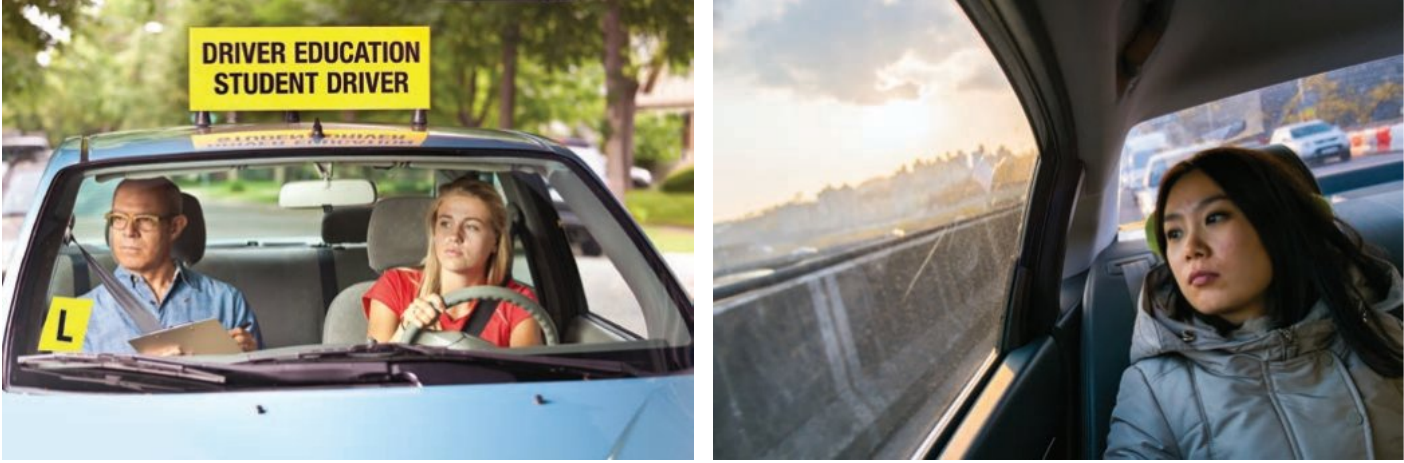
The amount of attention a person displays varies depending on the situation. For instance, whilst taking a driving test, an individual would be in a heightened state of awareness, paying considerably more attention to external stimuli such as traffic and road signs than if they were simply a passenger daydreaming during a journey.
Note
Our capacity to pay attention to particular stimuli whilst ignoring others enables us to filter incoming information and concentrate on what matters at any given moment. This allows us to make sense of the world around us more easily. For example, when completing an exam, it would be beneficial to focus on the questions and answers rather than being distracted by a ticking clock or birds chirping outside.
Research indicates that attention is influenced by both genetic factors and environmental experiences. There are three main types of attention that help us make sense of the world: sustained attention, selective attention and divided attention.
Sustained attention
Sustained attention, also known as vigilance, involves maintaining a high degree of attention over a prolonged period. During this state, an individual demonstrates greater readiness to detect rare and unpredictable stimuli.
Key characteristics
A defining feature of sustained attention is that the rarer or more unique a stimulus is, the greater a person's vigilance is likely to be when attending to it. Measures of sustained attention are particularly heightened when there is uncertainty about where stimuli will appear. For instance, during a probationary driving test, you would remain vigilant throughout, constantly looking out for potential events requiring a response, such as merging vehicles or pedestrians crossing.

Mental effort and limitations
Sustained attention requires considerable effort. Generally, attention can only be sustained for a limited period, although breaks can help refresh one's ability to maintain focus.
Important
The longer an individual remains vigilant, the greater the likelihood of missing information. When maintaining attention becomes difficult, the risk of misperceiving information increases. Being able to refocus after a distraction is a crucial aspect of sustained attention.
When sustained attention is used
This type of attention is essential for numerous tasks, including:
- Reading books
- Playing video games
- Listening to lectures
- Driving
- Cooking
- Navigating unfamiliar places
Most professions require at least a basic degree of sustained attention, whilst many demand highly developed vigilance skills. You are more likely to demonstrate greater vigilance when listening to important information about an assessment than during a casual conversation about a television programme.
Selective attention
Whilst sustained attention suits situations involving new or unpredictable stimuli, other circumstances require focusing attention on a single activity whilst disregarding environmental distractions. This is called selective attention.
Selective attention is focusing on a single activity whilst disregarding other environmental stimuli.
Relationship to controlled cognitive processes
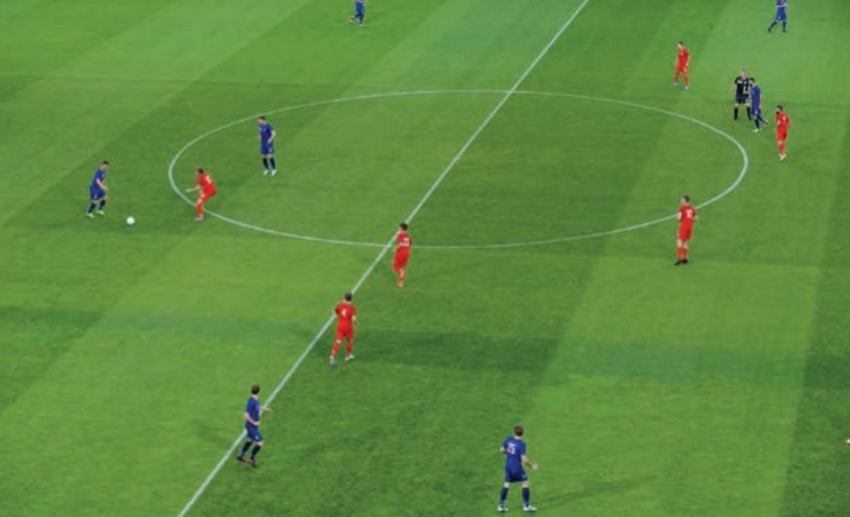
Selective attention is typically required when completing a controlled cognitive process – a cognitive task that requires a high level of conscious awareness and mental effort. It is employed when a task is complex (such as learning to dribble a football) or when the desired stimulus is known (such as scanning a room to locate your phone).
Awareness of surroundings
Although your focus is directed towards one stimulus during selective attention, you can still be consciously aware of other occurrences in the environment. For instance, whilst learning to dribble a football, your attention would be directed towards the ball and your body's movements, but you would also remain aware of other people on the field and any equipment in your path.

Salient stimuli
When using selective attention, you are more likely to focus on salient stimuli – stimuli that are prominent, conspicuous or otherwise noticeable compared to their surroundings.
The cocktail party effect
Imagine sitting in a busy restaurant at a celebratory meal with family and friends. The environment is exceptionally noisy: you're seated near the kitchen, conversations overlap around the table, music plays through the sound system, and a baby cries nearby. Yet despite this noise, you can engage in an interesting conversation with people sitting near you. You can ignore much of the surrounding noise and focus your attention on the people you're speaking with.
Note
The Cocktail Party Effect
This phenomenon is known as the 'cocktail party effect' – the ability to focus attention on a stimulus whilst ignoring numerous others.
There is another dimension to the cocktail party effect that illuminates selective attention. Imagine in that busy restaurant, with your attention focused on the conversation, you suddenly hear someone at the other end of the table say your name. You stop your conversation and turn your attention towards that person. In this case, even though you weren't attending to that source, your brain was able to filter that salient stimulus (your name) from your surroundings and redirect your attention to it.
Divided attention
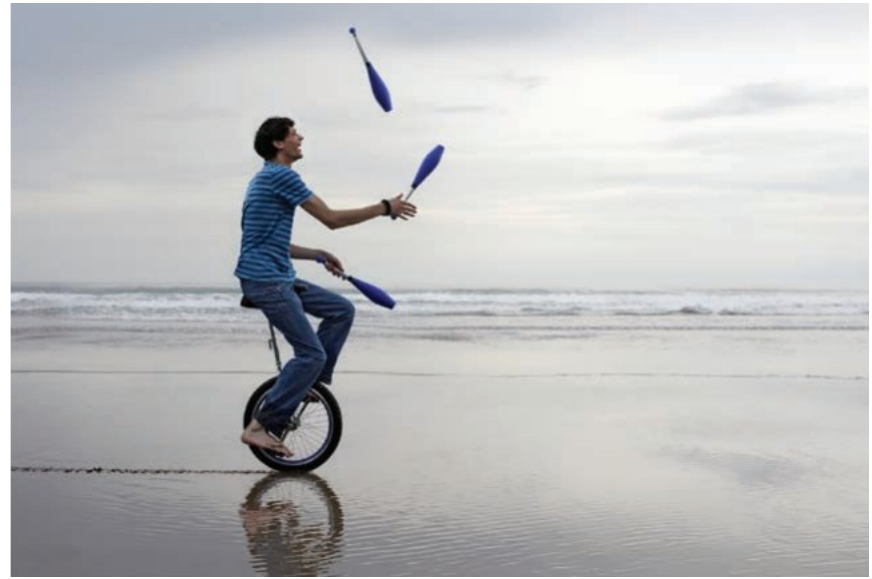
Unlike selective attention, where attention focuses on one stimulus, divided attention involves distributing attention to allow for the processing of two or more stimuli simultaneously.
Relationship to automatic cognitive processes
Divided attention can generally be employed when performing an automatic cognitive process – a task that requires little conscious awareness or mental effort. This may occur because the tasks have become well-learned through repetition or because of their simplicity.
A task may initially be a controlled process requiring selective attention but become automatic with practice. For example, dribbling a football may initially require selective attention, but with sufficient repetition, it becomes an automatic cognitive process. Once that skill becomes automatic, attention is freed, allowing you to divide your attention between dribbling the ball and another skill, such as looking for passing opportunities.
When divided attention can be used effectively
Divided attention can only be effectively employed when it is unnecessary to concentrate fully on either stimulus. If one stimulus is too complex (such as driving a car), divided attention cannot be used without seriously affecting performance or safety.
Examples of situations where divided attention can be used include:
- Chatting with a friend whilst playing a familiar video game
- Listening to music whilst exercising
Sensory system considerations
Note
Understanding Sensory System Overlap
When two or more stimuli rely on similar sensory systems (such as visual or auditory), it becomes harder to pay attention and process the information effectively. This explains why it is difficult to hold a conversation and simultaneously pay attention to song lyrics, and why when browsing your phone whilst watching television, you can only really focus on one screen at a time.
By contrast, if two stimuli rely on different sensory systems, they can be processed simultaneously with little difficulty. For instance, chatting (auditory) and playing video games (visual, somatosensory) can be managed concurrently more easily.
Comparing the three types of attention
The three types of attention – sustained, selective and divided – are each useful in different situations. Which type is most suitable depends on what the individual requires in that particular situation.
Practical example: Attending a birthday party
Example
Worked Example: Understanding Attention Types in Action
Consider attending a friend's birthday party. There are many unfamiliar people present, and the environment is very loud. This scenario demonstrates how we naturally switch between different types of attention:
Initial arrival: You want to greet your friend, so you scan the room for them, trying to identify them in the crowd → sustained attention
Moving through the party: As you walk towards them, your body starts moving to the music. You also notice a refreshment table, so you stop for some food and a drink. All the while, you keep track of your friend so you don't lose them in the crowd → divided attention
Deep conversation: You reach your friend, who has just begun a deep conversation with another person about global warming. You know something about this topic but not enough for an in-depth discussion, so you pay close attention, attempting to follow the thread in case you have anything to contribute → sustained attention. To achieve this, you must block out the surrounding noise and other stimuli competing for your attention → selective attention
Attention fatigue: The global warming conversation continues for some time, and it starts to become harder to maintain attention (sustained attention can only be applied for so long). Suddenly, you hear your name called → selective attention, and briefly you attempt to continue listening to your friends' conversation whilst also looking for the source of your name. These are both complex tasks, so you cannot use divided attention (a limitation of that attention type). Consequently, you drop out of the conversation completely and wander off to find the person who called you → selective attention, dancing as you go → divided attention

Important
As this example demonstrates, the type of attention you apply depends on the situation. Some types work well for certain tasks (such as dancing whilst walking) but not others (such as paying attention to a conversation). It is normal to move between attention types as your needs change.
Remember!
Summary
Key Points to Remember:
-
Attention functions as a filter that helps the brain prioritize important stimuli whilst excluding less relevant information, preventing sensory overload.
-
Sustained attention (vigilance) involves maintaining focused attention over prolonged periods, requiring high mental effort, and is best suited for detecting rare or unpredictable stimuli.
-
Selective attention involves focusing on a single stimulus whilst ignoring others, requires controlled cognitive processing with high mental effort, and is suited for complex tasks or when dealing with salient (noticeable) stimuli.
-
Divided attention allows processing of multiple stimuli simultaneously but only works effectively with automatic cognitive processes that require little mental effort, such as well-practiced or simple tasks.
-
The type of attention used depends on the situation: task complexity, familiarity, and the need for conscious awareness all influence which attention type is most appropriate at any given moment.