Mnemonic Devices to Increase Encoding, Storage, and Retrieval (VCE SSCE Psychology): Revision Notes
📚Revision Notes
Mnemonic Devices to Increase Encoding, Storage and Retrieval
Introduction to mnemonic devices
A mnemonic is any technique used to improve or enhance memory. These techniques help transform less meaningful information into something more memorable by organising material and connecting it to existing knowledge.
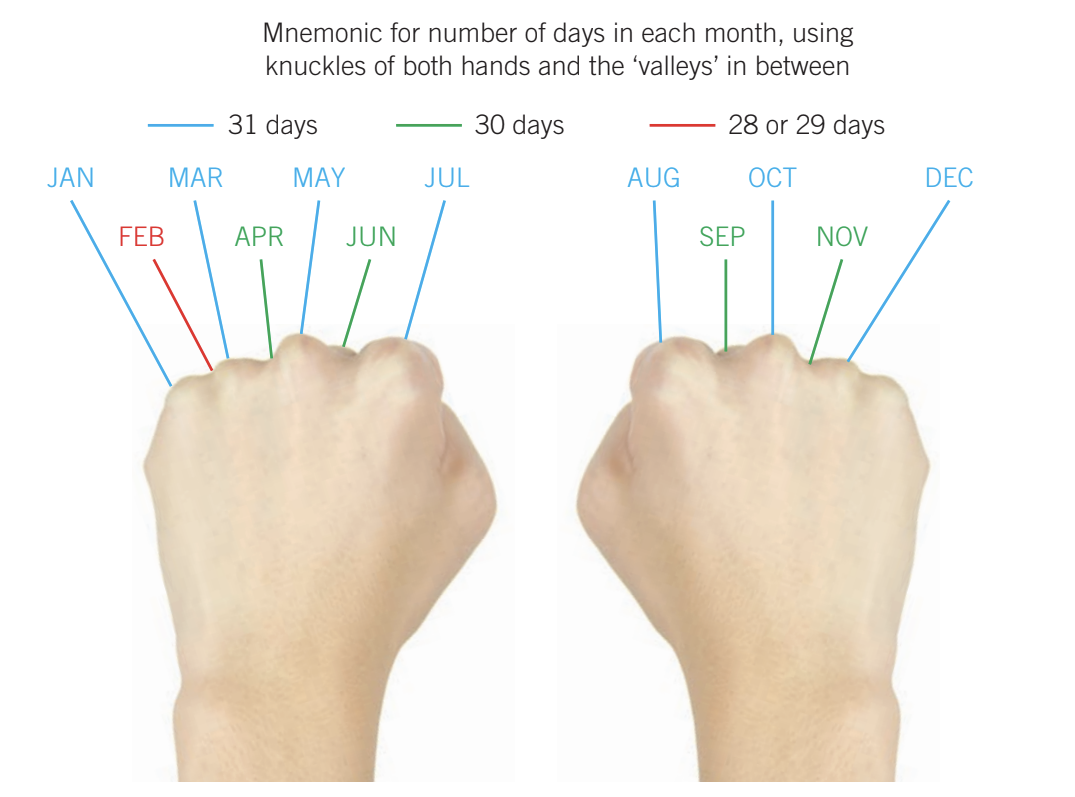
Mnemonics are particularly effective during the encoding stage of memory processing. When information is encoded using a mnemonic technique, retrieval cues are simultaneously created, making it easier to locate and retrieve the information later.
Important
Mnemonics do not reduce the amount of information to be learned; instead, they add organisational structure to help with storage and retrieval.
Research has demonstrated the effectiveness of mnemonic techniques. In a 1973 study, Gordon Bower asked students to learn five lists containing 20 unrelated words each (100 items total). Students who used mnemonic techniques recalled an average of 72 items, whilst those who relied on rote learning (simple repetition) remembered only 28 items on average. This substantial difference highlights how mnemonics facilitate better encoding and retrieval compared to maintenance rehearsal alone.
Limitations of mnemonic devices
Note
Whilst mnemonics are powerful memory tools, they have certain limitations that users should be aware of.
They work best for information that needs to be memorised but not necessarily understood in depth. Mnemonics are most effective for information that can be organised into list form, making them less suitable for complex conceptual material like entire textbook chapters. Additionally, creating and using mnemonics requires conscious effort and time investment, making them more demanding than simple repetition strategies.
Mnemonics in written cultures
A written culture is one in which stories and information are shared and preserved through reading and writing processes. Most modern societies function as written cultures, where learning primarily occurs through studying written texts.
Note
Written cultures have been vital in preserving values, norms, and traditions across generations, allowing information to be conserved over long periods and easily disseminated when needed.
Method of loci
The method of loci (Latin for 'places') is one of the oldest and most effective mnemonic systems, dating back to ancient Greece. This technique involves committing a familiar location or sequence of locations to memory, then visually linking these locations with information that needs to be recalled.

Each location serves as a retrieval cue that facilitates information retrieval when needed. The most effective locations are those familiar to the individual, such as rooms in your house, buildings at your school, or areas in your local shopping centre.
How the method of loci works:
- Choose a familiar location - Select a place you know well, such as your house
- Create a mental path - Establish a clear route through the location
- Encode the information - Visually place each item to be remembered in different locations along your path
- Retrieve the information - Take a mental walk through the location, collecting each item as you go
Example
Worked Example: Using Method of Loci for a Shopping List
To remember a shopping list, you might place:
- A carton of milk in your bedroom
- Oranges in the bathroom
- Eggs in the kitchen
- Hand sanitiser in the hallway
- Lollies in the attic
When you need to recall the list, you mentally walk through your house and retrieve each item from its location.
The method of loci works best when items need to be remembered in a specific order, such as a list, the points of a speech, or steps in a recipe. The number of items must match the number of locations in your chosen space.
Acronyms
An acronym is a word formed from the first letter of each word in a phrase, pronounced as a single word. Common examples include ANZAC (Australian and New Zealand Army Corps), NASA (National Aeronautics and Space Administration), and QANTAS (Queensland and Northern Territory Aerial Services).
Note
The key characteristic of an acronym is that it forms a pronounceable word. Abbreviations like AFL or ATM are not technically acronyms because the letters are said individually rather than pronounced as a single word.
When creating acronyms as mnemonic devices, the word doesn't need to be a real dictionary word, but it must be pronounceable. The letters of the acronym act as retrieval cues to help recall more complex material from long-term memory.
Acrostics
An acrostic is a phrase or sentence in which the first letter of each word functions as a cue to help recall information. Unlike acronyms, acrostics use full words to create meaningful sentences that are easier to remember.
Common examples include:
- 'Never Eat Soggy Weet-bix' (for compass directions: North, East, South, West)
- 'My Very Excellent Mother Just Served Us Nachos' (for planets: Mercury, Venus, Earth, Mars, Jupiter, Saturn, Uranus, Neptune)
- 'Richard Of York Gave Battle In Vain' (for rainbow colours: Red, Orange, Yellow, Green, Blue, Indigo, Violet)
Note
Acrostics are particularly useful when information needs to be remembered in sequential order, such as historical events, lists of scientific terms, or steps in a process. Each word in the sentence becomes a retrieval cue that helps recall a specific piece of information in the correct sequence.
Mnemonics in oral cultures
An oral culture is one in which information and stories are communicated through word of mouth rather than written text. Before widespread literacy, most societies functioned as oral cultures, where stories, poems, and sung narratives were performed to pass along historical, religious, cultural, and moral teachings.
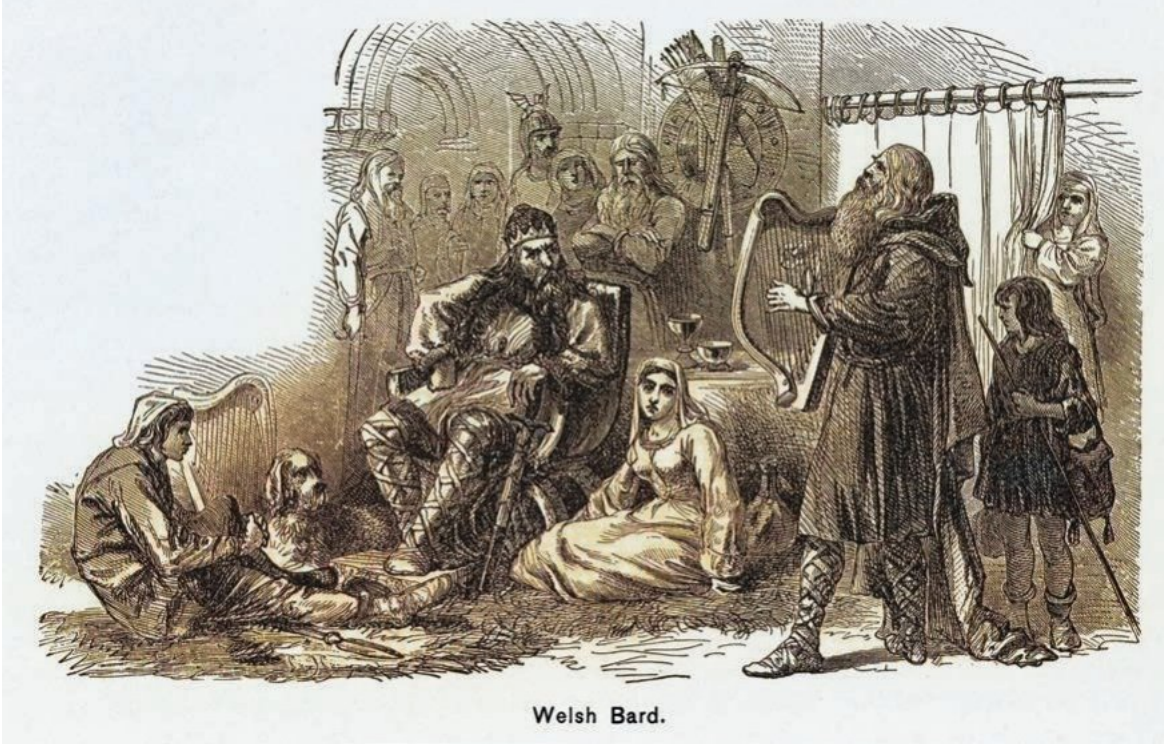
In oral cultures, information was retained through ritualistic performance of stories and narratives, where certain things had to be said and done in the right order by the right people. This ensured that vast amounts of knowledge could be preserved and transmitted across generations. Examples of oral traditions include Biblical teachings, Norse legends, and works of William Shakespeare, all originally designed to be told orally.
Note
Whilst most modern societies have transitioned to written cultures, some oral cultures remain today, including Native American peoples, Pacific Islander peoples, and Aboriginal and Torres Strait Islander peoples.
Sung narratives
A sung narrative is a story told through singing, music, and sometimes dance. This form of communication serves as both a mnemonic device and a cultural practice, helping to encode and retrieve important information whilst maintaining cultural traditions.
First Australians' use of songlines
For over 60,000 years, First Australians have passed down stories and knowledge through songlines and Dreamings. Note that the following description may not apply to all First Australian communities.
The Dreaming refers to a timeless concept that exists simultaneously in the past, present, and future. It encompasses stories and beliefs about creation, where all living things were either spirit ancestors or were created by spirit ancestors. The Dreaming is not merely stories; it is integrated into songs, artwork, dance, and the landscape itself. It provides guidance for life and living, explaining natural phenomena like storms and floods as well as events in people's lives.
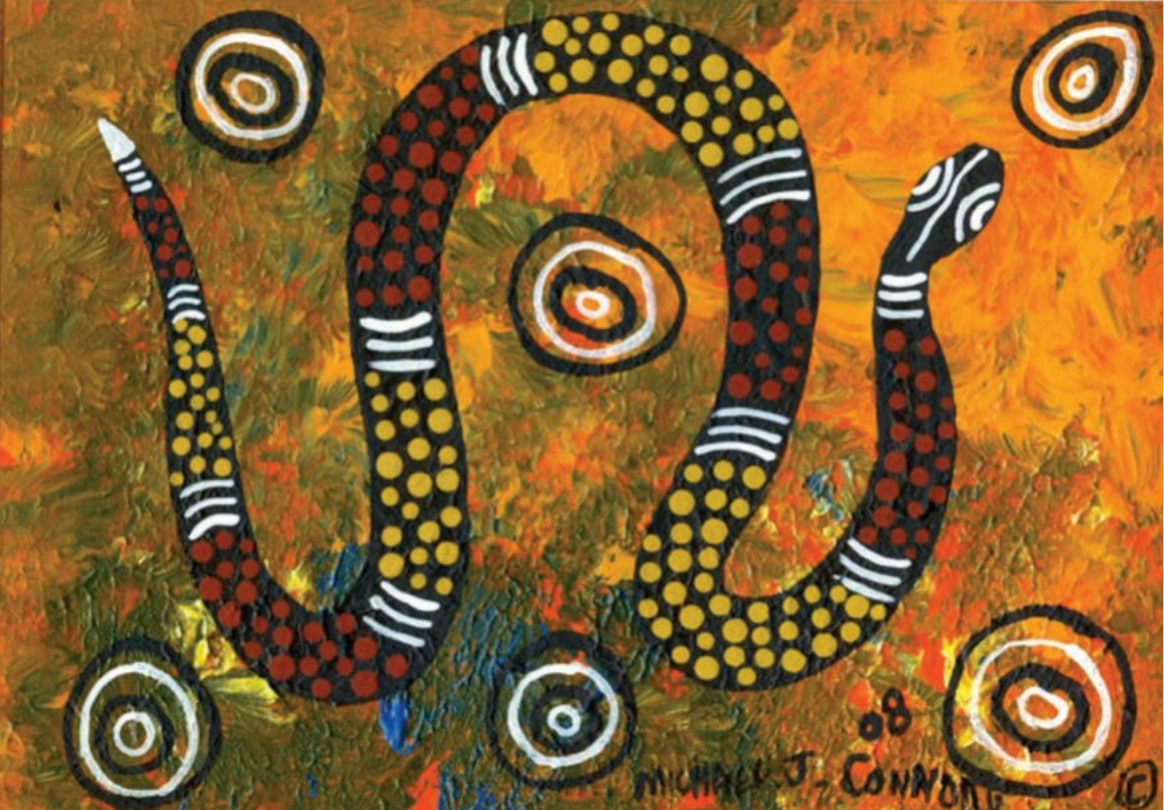
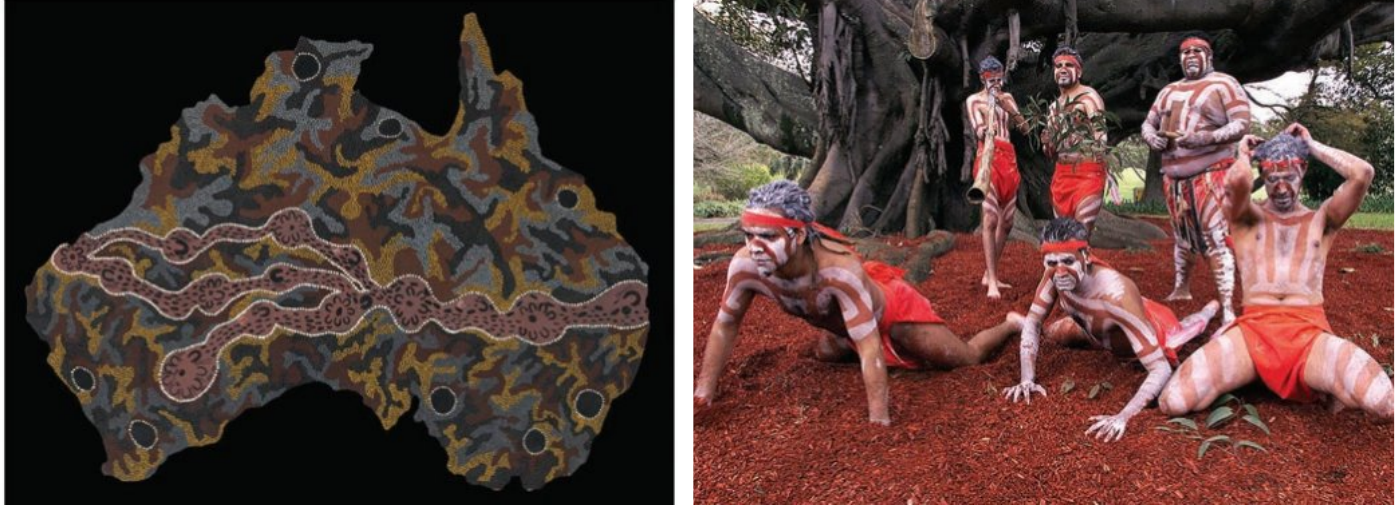
Songlines are sung narratives of the landscape that weave across Country, enabling every significant place in Aboriginal Dreaming to be known. They trace the journeys of ancestral spirits as they created the land, animals, and lore. A knowledgeable person can navigate across Country by singing the songline, which describes landmarks, locations, waterholes, and other natural features.
Important
Through songlines, First Nations peoples have acquired encyclopaedic knowledge of thousands of plant and animal species across Australia, along with practical information about climate, seasons, food sources, tool making, hunting, laws, and navigation.
Example
How Songlines Work as Mnemonic Devices:
At each significant location along a songline, a specific song, story, dance, or ceremony is performed. This performance is always associated with that particular location, allowing the retrieval of Dreaming Stories that contain knowledge about a wide range of subjects.
For example, songs or dances might contain detailed information about animal behaviours, such as how a kangaroo stands when approached by humans or when crocodile eggs are ready to be collected.
In this way, a songline provides a table of contents to an entire knowledge system that is essential for both literal and cultural survival. This system can be navigated both physically (by travelling to locations) and mentally (by recalling the sequence of songs and stories).
Comparison with method of loci
The use of songlines is remarkably similar to the method of loci used by ancient Greeks, as both techniques link information to physical locations. However, research suggests important differences between these approaches.
David Reser and colleagues at Monash University conducted a study comparing these two mnemonic techniques. Medical students learned a list of 20 butterfly names using either the method of loci or songlines. After a 20-minute training session, students using either mnemonic technique recalled more butterfly names than those who used no memory technique.
Note
Key Research Finding:
Crucially, students who used songlines were almost three times as likely to remember the entire list in their second test compared to students who used the method of loci. The researchers concluded that whilst both memory techniques are effective for learning sequential information, the Aboriginal method appears better suited to teaching in a single, relatively short instruction period.
Key differences between written and oral culture mnemonics
Written culture mnemonics (method of loci, acronyms, acrostics) typically:
- Can be used individually without performance
- Are static and do not change over time
- Separate information from cultural context
- Primarily serve memory function
Oral culture mnemonics (songlines) typically:
- Are embedded in cultural practices and ceremonies
- Connect information to physical landscape
- Integrate multiple forms of expression (song, dance, art)
- Serve both memory and cultural transmission functions
- May be more effective for single-session learning
Applying mnemonics to encoding and retrieval
Understanding how mnemonics work during both encoding and retrieval is essential for effective application.
During encoding:
- Mnemonics create organisational structure for information
- They establish retrieval cues at the time of learning
- They connect new information to existing knowledge
- They transform abstract information into more meaningful forms
During retrieval:
- The mnemonic structure provides a pathway to access stored information
- Retrieval cues trigger associated memories
- The organisational framework helps retrieve information in the correct sequence
- Recalling part of the mnemonic often aids retrieval of the complete information
Example
Worked Example: Using an Acrostic for Band Names
To remember a list of band names (Nirvana, Arcadia, Garbage, Eurythmics, Phoenix), you might create the sentence 'New Actors Get Everything Paid'.
During encoding: Each word's first letter becomes linked to a band name:
- New → Nirvana
- Actors → Arcadia
- Get → Garbage
- Everything → Eurythmics
- Paid → Phoenix
During retrieval: Recalling the sentence provides cues (N for Nirvana, A for Arcadia, etc.) that help access the complete list from long-term memory in the correct order.
Remember!
Summary
Key Points to Remember:
-
Mnemonics are memory enhancement techniques that work by organising information and creating retrieval cues during encoding, not by reducing the amount of information to be learned.
-
Method of loci links information to familiar locations in a mental journey, with each location serving as a retrieval cue. This technique works best for information that needs to be recalled in a specific order.
-
Acronyms create pronounceable words from first letters of items to be remembered, whilst acrostics use full sentences where each word's first letter provides a retrieval cue.
-
Written culture mnemonics (method of loci, acronyms, acrostics) are designed for individual use with written texts, whilst oral culture mnemonics (songlines) integrate memory techniques with cultural practices, landscape knowledge, and performance.
-
Songlines demonstrate superior effectiveness for single-session learning compared to method of loci, according to research by Reser and colleagues, suggesting that Aboriginal memory techniques may offer advantages for certain types of learning situations.