Neuromodulators (VCE SSCE Psychology): Revision Notes
📚Revision Notes
Neuromodulators
Introduction to neuromodulators
Neuromodulators are a specialised subclass of neurotransmitters. Like neurotransmitters, they are chemical molecules, but they work differently. Whilst neurotransmitters enable direct communication across a single synapse between two neurons, neuromodulators can alter the overall effectiveness of neural transmission in entire regions of the brain.
Note
Key Distinction: Neuromodulators are a subclass of neurotransmitters that alter the strength of neural transmission by increasing or decreasing the responsiveness of neurons to neurotransmitter signals. Unlike regular neurotransmitters that target a single neuron, neuromodulators affect entire brain regions.
Neuromodulators work by increasing or decreasing how responsive many neurons are to neurotransmitter signals or action potentials. They are released in a slower, more diffuse manner than regular neurotransmitters. This means targeted brain regions consisting of neural tissue can be affected by their chemical broadcast signals. As a result, neuromodulators have a much wider range of action and longer-lasting effects than neurotransmitters.
The process of neuromodulation differs from standard neurotransmission because it does not directly cause excitation or inhibition of a specific neuron. Instead, it alters both cellular and synaptic properties of multiple neurons, which then changes how neurotransmission occurs between them. For example, neuromodulators can:
- Modulate the efficiency of synaptic transfer
- Strengthen neural pathways involved in learning and memory
- Activate neurons and trigger long-lasting changes to synaptic activity (long-term potentiation)
- Increase dendritic receptors in post-synaptic neurons, improving post-synaptic stimulation
- Increase neurotransmitter production in presynaptic neurons
Common neuromodulators in the central nervous system include serotonin, acetylcholine and dopamine. These chemicals can act both as neurotransmitters (targeting a specific post-synaptic neuron across a synapse) and as neuromodulators (affecting broader brain regions). This note will focus on dopamine and serotonin as key examples of neuromodulators.
Comparing neurotransmitters and neuromodulators
Understanding the differences between neurotransmitters and neuromodulators is essential:
| Feature | Neurotransmitters | Neuromodulators |
|---|---|---|
| Description | Chemicals released by a presynaptic neuron to send signals to the post-synaptic neuron | Chemicals released by neurons to alter the effectiveness of neural transmission |
| Role | To transmit chemical signals to the adjacent neuron | To alter neural transmission by controlling the synthesis and release of neurotransmitters |
| Site of release | Into the synapse | Outside the synapse into neural tissue in brain regions |
| Target | A single post-synaptic neuron | Groups of neurons |
| Speed of action | Moderately fast | Moderately slow and last for longer periods |
Important
Remember the S.T.A.R. Principle: Neuromodulators are Slower, Target multiple neurons, Act on regions, and their Results last longer than regular neurotransmitters.
Dopamine as a neuromodulator
Overview of dopamine
Dopamine is a multifunctional neurotransmitter with both excitatory and inhibitory effects. It is involved in many central nervous system functions, including:
- Movement
- Pleasure and reward
- Attention
- Mood
- Cognition
- Motivation
When you engage in enjoyable activities such as spending time with friends, playing sport, gaming, watching your favourite show, shopping, or eating your favourite food, dopamine is released. This produces feelings of pleasure and wellbeing.
Dopamine acts as a neuromodulator because it reinforces neural activity in brain regions associated with these functions. One particularly important area is the reward pathway.
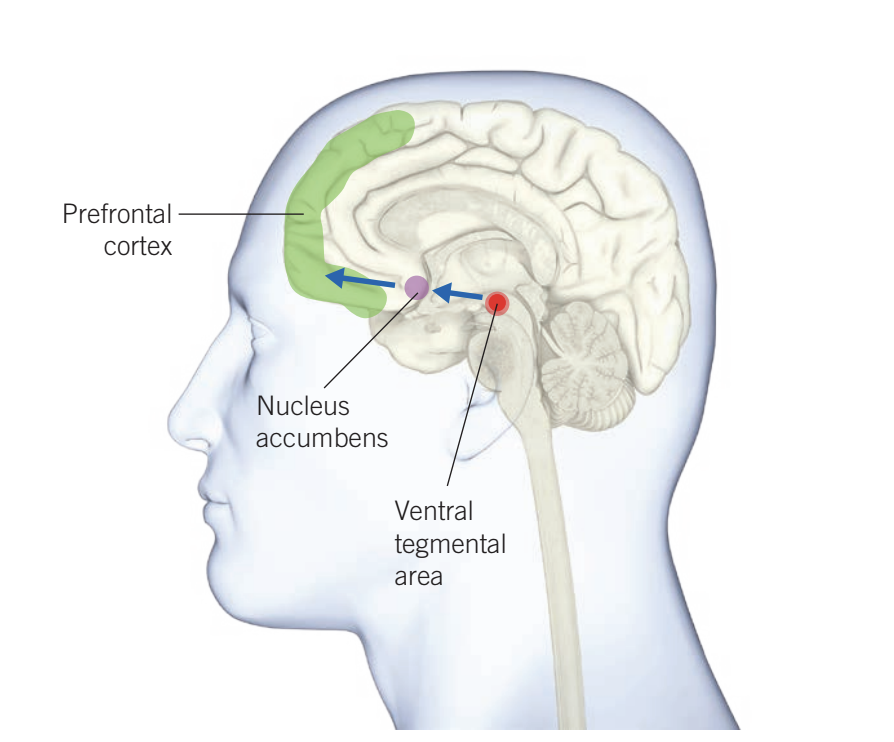
The reward pathway
The reward pathway is a group of brain structures that are activated by rewarding or reinforcing stimuli. Examples include seeing a cupcake when you are hungry or anticipating a cold glass of water when you are thirsty.
This pathway controls our responses to natural rewards such as food, sex and social interactions. It is therefore a key determinant of motivation. The main structures in the reward pathway are:
- Ventral tegmental area: Where dopamine is produced
- Nucleus accumbens: A central structure in the reward circuit
- Prefrontal cortex: Where dopamine ultimately travels to modulate decision-making
Note
The VAN Pathway: Remember the three key structures as VAN - Ventral tegmental area, nucleus Accumbens, and prefroNtal cortex.
When we are exposed to rewarding stimuli, the brain increases dopamine release along this pathway, which modulates brain activity in these structures. The more dopamine released within the reward centre, the more a stimulus is perceived as rewarding.
When we first see or anticipate a desired stimulus, dopamine travels throughout the reward pathway, signalling us to repeat the action to obtain that reward again. It also activates memory regions to pay attention to all features of that rewarding experience, enabling future repetition.
The role of dopamine in thirst and drinking
Consider how satisfying it feels to drink water when extremely thirsty. Reward signals are carried by dopamine along the brain's reward pathway, and research shows it plays an important role in drinking behaviours and thirst.
When liquid is swallowed, the gulping motion sends a message to the brain that water has been consumed. This quiets the neurons that generate the urge to drink. Dopamine release is coupled with this gulping motion and drinking behaviour, suggesting that drinking is a learned behaviour. Having drunk water throughout your life, this behaviour has been consistently reinforced by dopamine release, producing feelings of pleasure that you seek to repeat.
Research evidence: Mouse study on dopamine and drinking
Example
Research Study: Dopamine and Drinking Behaviour
Researchers investigated whether dopamine release associated with thirst and drinking is due to the drinking behaviour itself or the resulting hydration. They used a sensor that glows in the presence of dopamine, which they placed into mouse brains to record dopamine levels in real time.
The researchers examined two conditions:
- Thirsty mice that drank water and other non-hydrating liquids
- Mice that had water injected directly into their stomachs (similar to an intravenous drip), which simply hydrated them
Key Findings:
- Thirsty mice had a large surge in dopamine levels after drinking water
- These dopamine changes occurred even before drinking would have affected the water level in their bloodstream
- Mice that had water injected into their stomachs did not release any dopamine afterwards
Conclusion: This suggests that the act of drinking itself is rewarding, not the feeling of being hydrated. Interestingly, a spike in dopamine also occurs when drinking beverages that leave you feeling thirsty, because this spike depends on the process of licking, sipping or gulping, not on hydration or the type of liquid consumed.
The role of dopamine in hunger and eating
Hunger is a motivational sensation that drives us to consume food. Food consumption releases dopamine and produces feelings of pleasure, increasing the likelihood of eating when we next experience hunger. The reward system is prominent in modulating appetite and motivational drives for food.
The brain receives signals from several hormones indicating when food is needed. These signals modify dopamine output from the reward pathway, controlling our motivation for food. Research indicates that dopamine plays an essential role in appetite control. For example, when laboratory mice are deprived of dopamine, they die of starvation, completely lacking motivation to feed themselves. When given dopamine supplementation, they ate normally, suggesting that a baseline level of dopamine is required for a healthy appetite.
The dopamine-hunger-eating cycle
The relationship between dopamine, hunger and eating follows a clear pattern:
- Hunger begins: Dopamine levels decrease below baseline in the reward pathway. This triggers the sensation of hunger and increases food-seeking and eating behaviour.
- Eating occurs: When you eat food, dopamine levels in the reward pathway rise above baseline. You experience pleasure, which reinforces this pattern of brain activity and behaviour.
- Satisfaction: Once hunger is satisfied, dopamine levels fall back to baseline.
Note
Cravings and Dopamine: Cravings can influence how much dopamine is released. If you have a craving for chocolate and then eat it, your brain releases more dopamine than if you ate something you were not craving.

The role of dopamine in addiction
Dopamine's close connection to the reward centre and its ability to motivate pleasurable activities means it is associated with unhealthy and addictive behaviours. These include:
- Overeating
- Smoking
- Drinking alcohol
- Using other addictive substances
- Excessive smartphone use
- Gambling
- Computer gaming
Whenever we see a reward worth pursuing, our brain produces higher levels of dopamine, motivating us to complete the task regardless of how unhealthy or difficult it might be.
The dopamine theory of addiction
Important
The Dopamine Theory of Addiction
This theory suggests that most addictions are caused by the brain's inability to produce dopamine naturally without the addictive behaviour or substance. Only the addiction provides enough dopamine to experience pleasure and excitement.
When a person consumes more of the substance or performs more of the behaviour, their brain requires increasing amounts to elevate dopamine levels and experience pleasure. This repetition eventually leads to addiction.
The addiction cycle:
- Engagement in unhealthy behaviour (e.g., computer gaming, gambling)
- Increased dopamine release in the reward pathway, producing feelings of pleasure
- Increased urge to continue and seek out the same feelings of pleasure
- Reduced dopamine production over time, diminishing the brain's supply
- Return to Step 1 with increased intensity
Computer gaming and gambling
Modern computer games are deliberately designed with psychology consultants to keep players engaged. They flood the reward centre with dopamine, giving gamers a 'rush' similar to that observed in people using highly addictive stimulant drugs like amphetamine or cocaine. The human brain craves instant gratification, fast pace and unpredictability - all satisfied by computer games.
In gambling, uncertainty is a main drawcard - the size of the jackpot, the risk of losing, or the probability of winning. Dopamine release actually increases during moments leading up to a potential reward (an anticipation effect), giving gamblers a rush or 'high' even if they lose. This often triggers an urge to keep playing rather than walk away, known as 'chasing losses'.
Serotonin as a neuromodulator
Overview of serotonin and the serotonin pathway
Serotonin is an inhibitory neurotransmitter that also acts as a neuromodulator, influencing a variety of brain activities. Interestingly, more than 90% of the body's serotonin is found in the gastrointestinal tract, where it regulates bowel function and reduces appetite.
However, serotonin is best known for its role in the brain, where it modulates virtually all human behavioural processes, including:
- Mood
- Perception
- Reward
- Anger and aggression
- Appetite
- Memory
- Sexuality
- Attention
Note
The Serotonin Pathway: The serotonin pathway originates in the brainstem and extends to almost all areas of the cerebrum, including the cerebral cortex. Serotonin is produced in the brainstem and travels throughout these regions, modulating brain activity. Impairments to the serotonin pathway have been linked to anxiety disorders, depression and Parkinson's disease.
The role of serotonin in mood
Generally, research shows that when serotonin levels are high, mood improves. However, establishing a cause-and-effect relationship is difficult due to other chemical processes occurring in the body. For example, it remains unclear whether:
- Depressed people stop making serotonin, or
- Low levels of serotonin lead to depression, or
- Other factors cause both depression and low serotonin
Other possible contributing factors include faulty serotonin receptors or a lack of tryptophan (an amino acid from which serotonin is made in the gut).
Important
Serotonin and Mood Balance
Despite uncertainty about causation, research clearly demonstrates that balanced serotonin levels lead to calm, focused, happy and stable moods. When levels drop too low, this has devastating effects on the brain's ability to regulate mood. Low serotonin levels are most commonly associated with depression and anxiety.
The role of serotonin in sleep
Serotonin is generally required for normal amounts of sleep. Research shows that lower levels of serotonin in the brain can disrupt the circadian rhythm of sleep-wake cycles. By disrupting this rhythm, a serotonin imbalance leads to restless sleep where a person wakes frequently, resulting in sleep deprivation at night and sleepiness during the day. This is often a symptom of depression, which is also associated with lower serotonin levels.
Sleep regulation mechanisms
Two main factors control sleep:
- Circadian (body) clock: When it is light during the day, the body is awake; when it gets dark, the body knows to sleep.
- Homeostatic sleep pressure: When you wake up in the morning after rest, you feel energetic. As the day progresses, you become tired and sleepy, so the pressure to sleep increases. If you do not sleep that night, your sleep pressure is even higher the next day, making you more tired despite it being light outside and your circadian clock indicating wakefulness.
Note
Sleep Pressure and Serotonin
For proper sleep, you need both high sleep pressure and alignment of the circadian clock with the time of day. Research generally shows that if the brain lacks serotonin, a person will have reduced sleep pressure, increasing restlessness and wakefulness when they should be sleeping.

The role of serotonin in aggression and impulsivity
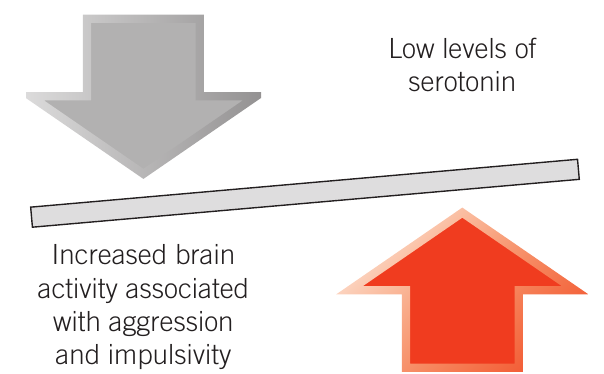
Research shows that serotonin helps regulate brain activity associated with impulsive and aggressive behaviours.
Impulsivity
Several studies have investigated serotonin's involvement in impulsivity, which involves assessing whether to take an immediate reward or wait for a future, potentially larger reward. Research findings show:
- Lower serotonin levels in the brain, particularly the cerebral cortex, lead people to discount delayed rewards, increasing impulsive behaviours
- Higher serotonin levels in the same brain area lead to people waiting longer for rewards, reducing impulsivity
Aggression
Research indicates that low levels of serotonin in the brain can affect communication between specific structures within the limbic system responsible for regulating emotions. In particular:
- Communication between the amygdala (which produces emotional responses like anger) and the frontal region of the cerebral cortex becomes weaker
- This makes it more difficult for the frontal cortex (which makes decisions) to control and regulate emotional responses to anger generated within the amygdala
- This results in increased aggressive and violent behaviours
Summary
Key Points to Remember:
-
Neuromodulators are a special subclass of neurotransmitters that affect entire brain regions rather than single neurons. They are released slowly, have longer-lasting effects, and alter how responsive neurons are to signals.
-
Dopamine is involved in movement, pleasure, attention, mood, cognition and motivation. It reinforces neural activity in the reward pathway, which controls responses to natural rewards and determines motivation.
-
Dopamine and behaviour: Research shows that the act of drinking (not hydration) releases dopamine. Hunger decreases dopamine, eating increases it, and this cycle reinforces food-seeking behaviour. Addiction develops when the brain cannot produce dopamine naturally without the addictive substance or behaviour.
-
Serotonin is an inhibitory neurotransmitter and neuromodulator that influences mood, sleep, aggression, appetite, memory and attention. The serotonin pathway originates in the brainstem and extends throughout the cerebrum.
-
Serotonin and behaviour: Balanced serotonin levels promote calm, focused and happy moods, whilst low levels are associated with depression and anxiety. Low serotonin disrupts sleep-wake cycles, reduces sleep pressure, and increases impulsive and aggressive behaviours by weakening communication between the amygdala and frontal cortex.