Localisation of Place (AQA A-Level Geography): Revision Notes
📚Revision Notes
Localisation of place
Introduction to localisation
Many communities around the world are actively resisting the effects of globalisation by focusing on local identity and promoting local economies. This response is known as localisation. Rather than accepting the dominance of global brands and chains, these communities have made place a central focus in their fight to preserve local character and economic independence.
Localisation represents a deliberate choice to prioritise local goods, services and businesses over national and international chains. It aims to strengthen community bonds, preserve distinctive place identity and keep money circulating within the local economy.
Note
The localisation movement has grown significantly as communities recognise that preserving local character requires active resistance to homogenising forces of globalisation. This grassroots response demonstrates how place can become a powerful political and social symbol.
Local currency initiatives
Purpose of local currencies
Some towns have introduced local currencies to encourage residents to shop at independent businesses rather than chain stores. The key aims are to:
- Keep money within the local economy
- Support independent shops and services
- Strengthen community connections
- Create a distinctive sense of place
Case study: Totnes, South Devon
Totnes in South Devon pioneered the local currency movement in the UK. In 2007, the town launched its own currency to promote local shopping. However, the scheme faced various challenges and eventually ended in 2019.
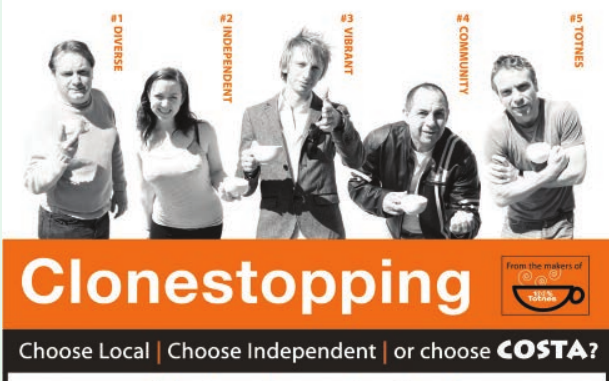
The most significant example of localisation in Totnes came in 2012, when the coffee chain Costa attempted to open an outlet in the town. The community response was remarkable:
- Within weeks of the proposal, three-quarters of the town's population signed a petition opposing the outlet
- Residents emphasised their support for independently-owned coffee shops
- The opposition was not anti-capitalist, but rather fiercely protective of local character and businesses
Important
The campaign, known as Clonestopping, aimed to prevent Totnes becoming a 'clone town' - a settlement where the high street is dominated by chain stores rather than independent businesses. After an eight-month battle, Costa dropped their plans.
A clone town is a settlement where chain stores dominate the high street, causing places to lose their distinctive identity and look identical to many other towns.
Interestingly, Costa later acknowledged the strength of local feeling in Totnes and recognised the specific circumstances of the town. However, by 2019, a national coffee shop chain did open a branch in Totnes, suggesting that community opposition to chains has weakened over time, or that some inevitability exists in this trend.
Case study: Bristol Pound
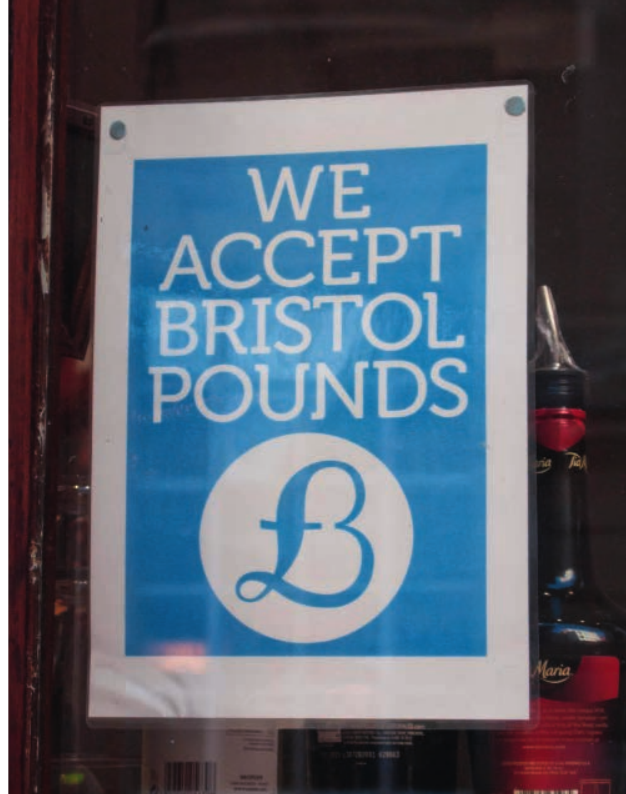
The Bristol Pound was launched in 2012 as another example of local currency. Bristol was exploring innovative ways to develop the scheme, including:
- Creating an e-wallet system (a local version of digital payment services)
- Developing ways to adapt to cashless economy trends
Note
Challenges Facing Local Currencies
Even before the COVID-19 pandemic, the Bristol Pound faced difficulties. The online Bristol Pay system was still being tested when COVID-19 restrictions arrived, which further limited its development and success. These challenges highlight that whilst local currency initiatives are ambitious, they face practical obstacles in implementation.
Belonging
What does belonging mean?
In the context of place, belonging means being part of a community. A sense of belonging is increasingly recognised as essential for making a place sustainable and successful.
Regeneration schemes today often focus as much on the social environment as on the built environment. The way different agencies and individuals contribute to a place can have a positive impact on residents' lived experience.
Factors influencing belonging
Whether someone feels a sense of belonging to a place can be influenced by numerous factors, including:
- Age
- Gender
- Sexuality
- Socio-economic status
- Religion
- Level of education
- Race and ethnicity
Note
These demographic and social factors interact in complex ways to shape individual experiences of place. Understanding these influences is crucial for creating inclusive communities where diverse groups can develop a strong sense of belonging.
Race and ethnicity
Important
Key Definitions:
- Race is based on biological and physical characteristics such as skin colour
- Ethnicity is a broader concept defined as belonging to a social group that has a common national or cultural tradition, such as language and ancestry
These two concepts are related but distinct, and both play important roles in how people experience and identify with places.
As globalisation and migration have increased, many places, particularly cities, have become much more ethnically and culturally diverse. This diversity can strengthen a sense of belonging for different groups within the community.
Case study: London's multicultural character
London is frequently described as one of the world's most multicultural cities. It hosts an enormous number and variety of festivals which demonstrate this diversity:
- The largest Chinese New Year festival outside China
- Vaisakhi (Sikh New Year)
- Diwali (the Hindu Festival of Lights)
- The Shubbak Festival of Arab culture
Despite its multicultural status, minority ethnic clusters still exist in parts of London, including China Town in Soho and Banglatown in and around Brick Lane. These areas have developed for reasons of mutual support and cultural preservation, with dedicated shops and services meeting community needs.
Well-being
The quality of a place directly affects residents' sense of well-being and happiness. In 2020, the Sunday Times judged Altrincham in Greater Manchester as the best place to live in Britain. The decision was based on:
- A revitalised town centre
- Quality schools
- Proximity to Dunham Massey (a large National Trust property and park)
- The town's initial response to the COVID-19 pandemic
Note
Regional Winners and Their Distinctive Attributes
Different places across Britain were recognised for unique qualities:
- Narberth (south Wales): warm welcome to visitors and 'high-class high street'
- Ballycastle (Northern Ireland): quality local produce and 'magical market'
- Leith (Edinburgh, Scotland): 'repurposed industrial buildings' and 'trendy' restaurants
- Victoria Park Village (London): described as 'wonderfully hip but sprinkled with history'
These varied examples demonstrate that there is no single formula for creating a great place - success comes from developing and celebrating distinctive local character.
It's important to recognise that different people will have different views about what makes a place great. Not all residents of these places would necessarily agree with the Sunday Times assessment. The quality of lived experience and perception of place are influenced by a sense of belonging, as well as factors like age, gender, socio-economic status, religion, level of education and sexuality.
The Transition Town movement
The Transition Network was founded in 2007 as a response to two major threats:
- Climate change
- Peak oil - the point when maximum oil extraction is reached, after which production is expected to decline
Since its founding, the movement has expanded to address many other issues connected to globalisation, including:
- Dilution of place identity
- Loss of community
- Economic challenges in local areas
Rob Hopkins, one of the founders, explains the movement's philosophy:
"It's about what you can create with the help of the people who live in your street, reimagining and rebuilding your neighbourhood, your town. If enough people do it, it can lead to real impact, to real jobs and real transformation of the places we live, and beyond."
Note
Global Impact of the Transition Movement
Today, there are over 1,000 Transition initiatives worldwide. Increasing numbers of places are embracing a lifestyle where communities come together to:
- Share skills
- Grow food
- Provide care for dependants
- Fight inequality
The movement represents a grassroots approach to creating more sustainable, connected communities with a stronger sense of place.
Insider and outsider perspectives on place
People develop a stronger relationship with places they are familiar with. To be inside a place means to belong to it and identify with it. The more profoundly connected you are to a place, the stronger your identity becomes with that place.
This connection explains why people living within a place are more likely to oppose certain developments in their local area than people from outside.
Important
Understanding Nimby
The term Nimby is an acronym for the phrase 'not in my backyard'. It describes local opposition to developments such as new housing estates, wind farms or fracking proposals.
This insider perspective reflects a protective attitude towards places people feel connected to and identify with. Outsiders, who lack this emotional connection, may view proposed developments more positively or neutrally.
What makes a great place?
Understanding what makes a place successful and sustainable involves examining multiple interconnected factors. These can be organised into several categories:
Key attributes - the fundamental characteristics that define a place, including:
- Sociability (welcoming, friendly, interactive)
- Uses and activities available
- Access and linkages (connections to other places)
- Comfort and image
Intangibles - harder-to-measure qualities such as:
- Street life
- Evening use
- Proximity to local services
Measurements - quantifiable data including:
- Traffic data
- Crime statistics
- Population density
- Sustainable transport options
Note
All these elements interact to create places where people want to live, work and spend time. The most successful places balance practical necessities with social and emotional needs, creating environments where communities can thrive and residents feel a genuine sense of belonging.
[IMAGE
]Remember!
Summary
Key Points to Remember:
- Localisation is a response to globalisation where communities focus on promoting local goods, services and distinctive place identity
- Local currencies like those in Totnes and Bristol aim to keep money in the local economy, though they face practical challenges
- Belonging is essential for sustainable places - it's influenced by factors including age, gender, religion, socio-economic status and ethnicity
- The Transition Town movement (founded 2007) brings communities together to address climate change, peak oil and loss of local identity through grassroots action
- Insider and outsider perspectives affect how people view place - those with stronger connections (insiders) are more protective of their local area