Contemporary Urban Processes (AQA A-Level Geography): Revision Notes
📚Revision Notes
Contemporary urban processes
Higher-income countries have experienced much slower rates of urbanisation in recent decades. Some cities have even seen population decline. The focus has shifted from people moving into urban areas (as during the Industrial Revolution) to more complex patterns of movement within and between urban areas.
Suburbanisation
Important
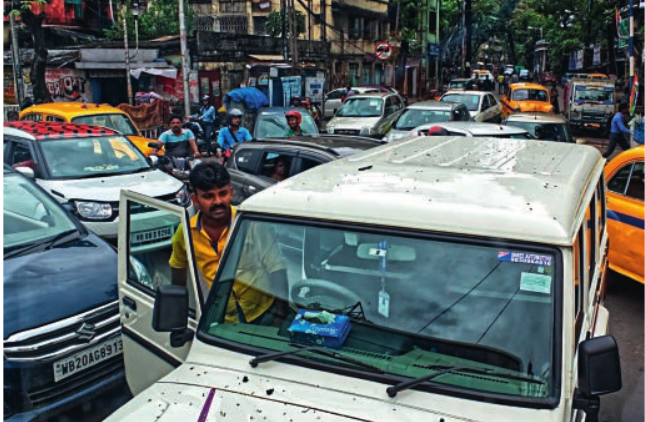
Suburbanisation is the movement of people from the inner parts of a city to the outer edges. This process has been enabled by the development of transport networks and increased car ownership, allowing people to commute to work.
Characteristics of suburbanisation
Suburbanisation creates distinct patterns in urban development:
- Outward growth of cities, engulfing surrounding villages and rural areas
- Development following main transport routes (railway lines and arterial roads)
- Large-scale housing construction on the urban fringe
- Creation of residential areas with gardens and open space
- Wealthier commuters living at greater distances from work centres
Historical development in the UK
During the 1930s, suburban growth in the UK occurred with few planning controls. Development followed main roads, creating what became known as ribbon development. By the 1940s, this uncontrolled sprawl raised concerns about losing countryside.
This led to the establishment of green belts - designated areas of open space and low-density land use surrounding towns where further development was strictly controlled.
Note
Green belts were created as a direct response to uncontrolled suburban sprawl in the 1930s and 1940s. They remain an important planning tool today, though they face ongoing pressure from housing demand and development interests.
From the 1950s onwards, suburban expansion became better planned:
- Large-scale council housing was built on available suburban fringe land during the 1950s and 1960s
- The 1970s saw a shift towards home ownership
- Private housing estates were constructed on the urban fringe
- These areas featured more land for gardens and public open space compared to inner-city developments
As car ownership increased, the edge of town became particularly attractive. More available land for car parking and expansion made these locations ideal for:
- New offices
- Factories
- Shopping outlets (retail parks)
In many instances, strict green belt controls were relaxed or ignored to accommodate this development.
More recently, suburban areas have continued to develop with new housing estates and local shopping centres. These areas remain highly attractive in the property market.
Causes of suburbanisation
Several factors drive the movement to suburbs:
- Transport improvements: Better public transport systems and increased private car ownership enable longer commutes
- Desire for space: People seek larger homes with gardens
- Environmental quality: Suburbs offer cleaner air and less congestion than city centres
- Perception of safety: Suburbs are viewed as relatively crime-free environments
- Better facilities: Access to good schools, woodland, parks, golf courses and playing fields
- Economic ability: Increased affluence allows people to afford suburban housing and commuting costs
Effects of suburbanisation
Negative impacts:
Urban sprawl causes several environmental and social problems:
- Loss of countryside: Urban areas spread into surrounding rural land
- Increased congestion: More cars on roads as people commute to work
- Social segregation: Wealthier residents move to suburbs whilst poorer residents remain in inner cities. For example, affluent areas like Richmond (from inner London) and Belgravia demonstrate this pattern
- Funding diversion: Investment shifts from inner city areas to suburbs to pay for new infrastructure and services
Note
Studies show that building more roads often attracts more traffic rather than solving congestion - a 1997 California study found that new road capacity fills up to 90% within just five years. This phenomenon challenges the assumption that infrastructure expansion alone can resolve urban transportation problems.
Positive impacts:
- Improved quality of life for those who can afford to move
- Reduced population pressure in inner-city areas
- Creation of new communities with modern facilities
Counter-urbanisation
Important
Counter-urbanisation is the migration of people from large urban areas to smaller urban settlements or rural areas. This involves leapfrogging over the rural-urban fringe. It can mean daily commuting but may also require lifestyle changes and increased use of information and communication technology (ICT).
Counter-urbanisation represents a reversal of the traditional urbanisation pattern. Unlike suburbanisation (which extends the city outwards), counter-urbanisation involves growth in rural areas beyond the main city.
Characteristics of counter-urbanisation
Counter-urbanisation creates distinct patterns in rural settlements:
- Migration from major urban areas to smaller towns and villages
- Reduced difference between rural and urban areas
- Growth of rural settlements whilst avoiding suburban expansion around the main city
- Development of suburbanised villages - rural settlements with good services and excellent commuter route access
Causes of counter-urbanisation
Multiple factors encourage people to leave major urban areas:
Push factors (reasons to leave cities):
- Air pollution, dirt and crime in urban environments
- Congestion and high living costs
- Stressful, fast-paced lifestyle
Pull factors (attractions of rural areas):
- The 'rural idyll': Perception of countryside as pleasant, quiet and clean with affordable land and house prices
- Car ownership and affluence: Greater financial means allowing longer commutes to work
- Employment changes: Many employers have relocated from cities to rural or smaller urban locations
- Technology improvements: Broadband and high-speed internet enable home working. People can access global systems from a home computer just as easily as from a city centre office
- Rising affluence: Increased demand for second homes and earlier retirement
- Economic changes in agriculture: Farmers facing financial difficulties may sell unwanted land and buildings, providing development opportunities
Note
The rise of remote working technology has been particularly significant in enabling counter-urbanisation. The COVID-19 pandemic further accelerated this trend as many people discovered they could work effectively from rural locations, leading to increased demand for properties outside major urban centres.
Effects of counter-urbanisation
Impact on rural settlements:
Counter-urbanisation affects the layout and character of villages:
- Modern housing estates built on the edges of settlements
- Small industrial units developed on main roads leading into villages
- Former open areas built upon
- Old properties and agricultural buildings converted and modernised
- Increased use of commuter railway stations with additional car parking
Social impacts:
The influx of newcomers can create tensions:
- Conflicts between newcomers and local residents
- Despite new arrivals, many rural services disappear due to concentration in larger centres
- Schools close due to amalgamation into larger units
- Post offices shut down
- Churches close as parishes merge
- Wealthier newcomers continue using urban services whilst living in rural areas
Important
Counter-urbanisation often creates a paradox: while bringing new residents and investment to rural areas, it can simultaneously lead to the loss of essential local services. This occurs because wealthier incomers typically continue to use urban services rather than supporting village facilities, and because service providers concentrate offerings in larger centres for economic efficiency.
Evidence of counter-urbanisation in an area:
You can identify counter-urbanisation through:
- Increased use of commuter railway stations, including expanded car parking facilities
- Rising house values in the area
- Construction of executive housing, often on newly designated building land following demolition of old properties
- Conversion of former farm buildings into exclusive residences
The rural turnaround:
Counter-urbanisation contributes to demographic change in rural settlements. These changes may include:
- Out-migration of young village-born adults seeking education and employment opportunities elsewhere
- Decline of elderly village-born population through deaths
- In-migration of young to middle-aged married couples or families with young children
- In-migration of younger, more affluent people, resulting in increased house prices
Note
These changes vary considerably between parishes. Settlements experiencing the most change are typically key villages with a range of basic services and good commuter route access. Villages lacking these characteristics may continue to experience population decline despite broader counter-urbanisation trends.
Urban resurgence
Important
Urban resurgence refers to the regeneration (both economic and structural) of an urban area that has suffered decline. This is often initiated by redevelopment schemes but also results from wider social, economic and demographic processes.
Characteristics of urban resurgence
Urban resurgence is visible through changing cityscapes:
- Areas retain industrial architecture from the past (factories, warehouses)
- These buildings increasingly convert to housing or commercial use
- Modern infrastructure and services added to historic areas
- Transformation of run-down areas into fashionable districts or 'quarters'
- Return of young professionals and creative industries to city centres
Causes of urban resurgence
Several factors have driven the revival of declining urban areas, particularly former industrial cities:
Economic factors:
- Development of strong financial, business and consumer service industries
- Growth of the service economy replacing manufacturing
- Investment by private companies leading to wholesale transformation
- Attraction of university students, young professionals and immigrant workers
Social and demographic factors:
- City living becomes more attractive as urban areas improve
- People choose to live closer to entertainment and leisure facilities rather than face long commutes
- Young people remain in cities even when starting families
- Older people whose children have left home return to cities to access urban services
Technological and global factors:
- Globalisation facilitates resurgence in some urban areas
- Cities gain reputations for creative and digital start-up businesses
- Technology hubs attract clusters of innovative companies
- Areas become fashionable for independent shops, galleries, markets, bars and restaurants
Example
Example: East London Tech City
East London Tech City demonstrates how technological innovation can drive urban resurgence. The area now hosts:
- Numerous digital and creative start-ups
- Global technology organisations including Facebook, Google, Amazon and EE
- A thriving ecosystem of independent shops, galleries, markets, bars and restaurants
This transformation has turned a formerly declining industrial area into one of Europe's leading technology hubs, attracting both investment and talent from around the world.
Catalytic events:
- Major sporting events drive investment and regeneration
- The London 2012 Olympics brought significant investment to former industrial areas of East London
- The 2014 Commonwealth Games encouraged urban regeneration and business investment in depressed parts of Glasgow
Note
Major sporting events often serve as catalysts for urban regeneration by providing justification for large-scale public investment in infrastructure, creating momentum for wider private investment, and raising the international profile of previously declining areas.
Effects of urban resurgence
Positive impacts:
- Revival of city centres and former industrial areas
- Creation of employment opportunities in service industries
- Increased investment in infrastructure and facilities
- Cultural and entertainment hubs attract visitors and spending
- Transformation of derelict areas into attractive living spaces
Negative impacts:
- Rising house prices displace existing residents
- Greater pressure on urban infrastructure as populations return
- Not everyone benefits equally - increasing inequality between rich and poor
- Risk of gentrification displacing lower-income communities
Important
Urban resurgence often creates a tension between regeneration and displacement. While improved areas attract investment and create opportunities, rising property values can force out long-term residents who can no longer afford to live in their own neighbourhoods. This process, known as gentrification, raises important questions about who benefits from urban renewal and how to ensure regeneration is inclusive.
Case study: The resurgence of central Birmingham
Example
Case Study: The Jewellery Quarter, Birmingham
The Jewellery Quarter in Birmingham exemplifies urban resurgence following boom and bust cycles.
Historical context:
- Early 1900s: employed over 20,000 people in jewellery making, metalworking and hallmarking
- Foreign competition, reduced demand and bombing during the Blitz caused sharp decline
- Decline continued throughout the twentieth century
- Despite small regeneration attempts, major improvement only began in the early 2000s
Evidence of regeneration:
- Former warehouses and factories converted into loft-style apartments and townhouses
- Over 30 restaurants, bars and cafés created a vibrant hub for young businesses and professionals
- Gas Street Basin canal area (once a thriving transport hub for coal and glass) cleaned up
- Waterways now feature bars and restaurants with traditional narrowboats navigating past arts and entertainment complexes
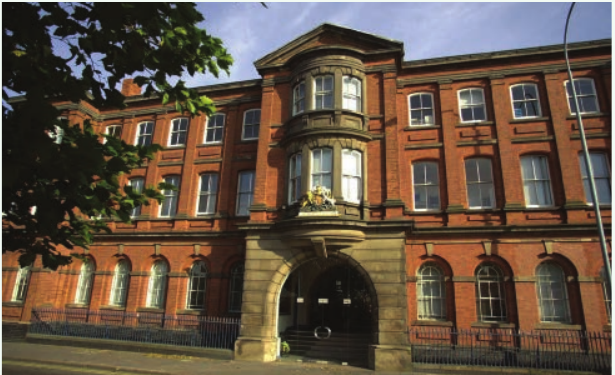
The redevelopment demonstrates how historic industrial areas can transform into attractive residential and commercial districts whilst retaining traditional architectural features.
Case study: The New York City High Line
Example
Case Study: The High Line, New York City
The High Line represents innovative urban resurgence through infrastructure reuse.
Background:
- Originally a 1.5-mile elevated rail track built to carry goods to and from Manhattan's largest industrial district
- Abandoned in the 1980s during the Lower West Side's manufacturing decline
- Lay derelict for 25 years before large-scale redevelopment in the 2000s
Transformation:
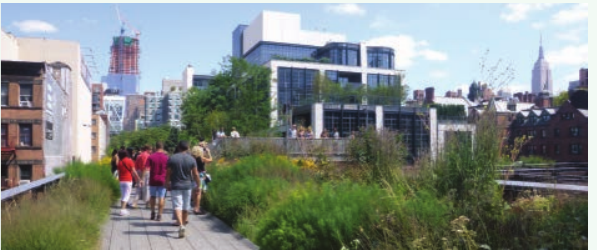
- Successfully redeveloped as an elevated park and walkway
- Design features trees, grasses and shrubs
- Functions like a green roof with porous pathways allowing water drainage between planks
- Planting inspired by self-seeded landscape that grew on the derelict tracks during 25 years of abandonment
Impact:
- Became a site for artistic commissions and cultural events
- Five million annual visitors increased spending in local shops and cafés
- Encouraged real estate development in neighbouring areas
- Gave new life to industrial infrastructure as public green space
The High Line demonstrates how creative reuse of abandoned infrastructure can catalyse wider urban regeneration.
Urban change
De-industrialisation, decentralisation and the rise of the service economy
Important
De-industrialisation refers to the loss of jobs in the manufacturing sector, which occurred in the UK during the second half of the twentieth century.
Historical context:
Prior to de-industrialisation, the Industrial Revolution and manufacturing growth were key drivers of urban development. Cities became synonymous with particular industries:
- Manchester: textiles
- Sheffield: iron and steel
- Glasgow: shipbuilding
Thousands of jobs were created and people migrated to urban areas for work.
Causes of de-industrialisation:
By the 1980s, older industrial cities experienced severe economic problems. Three main factors caused manufacturing decline:
- Mechanisation: Most firms could produce goods more cheaply using machines rather than employing people
- Foreign competition: Rapidly industrialising countries such as Taiwan, South Korea, India and China could produce goods more cheaply
- Reduced demand: New materials and technologies replaced traditional products, decreasing demand for established manufactured goods
Impact on UK cities:
Manufacturing employment showed an overall downward trend across the UK. Urban areas bore the brunt of these job losses, though unemployment figures varied significantly between cities. This depended on:
- Size of the city
- Composition of the urban economy
- Actions of local government
Note
Cities in the manufacturing heartlands of northern England experienced particularly severe impacts from de-industrialisation. Areas that had been built around single industries (such as shipbuilding or steel production) faced especially difficult transitions as their economic foundations collapsed.
Urban responses - decentralisation:
Important
Decentralisation has two meanings:
- The movement of population and industry from the urban centre to outlying areas
- The movement of government institutions or business headquarters away from the central/core areas of a country
As manufacturing declined, two related processes occurred:
- Population decentralisation: people moved from urban centres to suburbs (suburbanisation) or to smaller settlements and rural areas (counter-urbanisation)
- Economic decentralisation: businesses and industries relocated away from city centres
The rise of the service economy:
Cities adapted to de-industrialisation by developing service-based economies:
- Financial services (banking, insurance, investment)
- Business services (legal, accounting, consulting)
- Consumer services (retail, hospitality, entertainment)
- Public services (healthcare, education, government)
Note
This economic transformation was particularly successful in cities that:
- Attracted university students and young professionals
- Developed strong cultural and creative sectors
- Invested in modern infrastructure
- Marketed themselves effectively as business and leisure destinations
The shift from manufacturing to services fundamentally changed the character, economy and social composition of UK cities.
Key terms
Important
Understanding these terms is essential for analysing contemporary urban processes.
Counter-urbanisation - The movement of people from large urban areas into smaller urban areas or into rural areas, thereby leapfrogging over the rural-urban fringe. It can mean daily commuting but can also require lifestyle changes and increased use of ICT.
Decentralisation (1) - The movement of population and industry from the urban centre to outlying areas.
Decentralisation (2) - The movement of government institutions or headquarters of businesses away from the central/core areas of a country.
De-industrialisation - The loss of jobs in the manufacturing sector, which occurred in the UK in the second half of the twentieth century.
Edge city - A self-contained settlement which has emerged beyond the original city boundary and developed as a city in its own right.
Gentrification - The buying and renovating of properties, often in more run-down areas, by wealthier individuals.
Suburbanisation - The movement of people from living in the inner parts of a city to living on the outer edges. It has been facilitated by the development of transport networks and the increase in ownership of private cars, which have allowed people to commute to work.
Urban resurgence - The regeneration, both economic and structural, of an urban area which has suffered a period of decline. This is often initiated by redevelopment schemes but is also due to wider social, economic and demographic processes.
Urban sprawl - The spread of an urban area into the surrounding countryside.
Remember!
Summary
Key Points to Remember:
-
Suburbanisation involves people moving from city centres to outer edges, creating urban sprawl and social segregation but also relieving inner-city pressure.
-
Counter-urbanisation sees people leapfrog suburbs entirely to live in smaller towns or rural areas, driven by the 'rural idyll', increased affluence and improved technology enabling remote working.
-
Urban resurgence regenerates declining former industrial cities through redevelopment, service economy growth, and cultural attractions - exemplified by Birmingham's Jewellery Quarter and New York's High Line.
-
De-industrialisation caused severe job losses in manufacturing during the late twentieth century, forcing cities to adapt by developing service-based economies.
-
These processes don't occur in isolation - cities often experience multiple processes simultaneously, and the balance between them shapes contemporary urban development patterns.