Precipitation and Fog (AQA A-Level Geography): Revision Notes
📚Revision Notes
Precipitation and Fog
Precipitation in urban areas
Urban areas typically receive more rainfall than the surrounding rural regions. This occurs because higher temperatures in cities encourage the development of lower atmospheric pressure systems, which promote rainfall. The pattern of precipitation in urban environments tends to be more intense, with convectional rainfall occurring more heavily and frequently. Thunder and lightning events are also more common in cities compared to rural areas.
Mechanisms causing increased urban precipitation
Several interconnected processes work together to increase rainfall over cities:
The urban heat island effect and convection
The heat island effect creates a zone of warmer air over the city. As ground surfaces are heated throughout the day, rapid evapotranspiration takes place. This moisture-rich warm air rises quickly, creating convection currents that can develop into cumulus clouds and eventually produce convectional weather patterns. This process is particularly effective at generating localised, intense rainfall events.
Note
The urban heat island effect is fundamental to understanding urban precipitation. The warmer temperatures in cities don't just make them uncomfortable - they actively drive atmospheric processes that increase rainfall. The rising warm air creates a natural "pump" that draws in moisture from surrounding areas and lifts it high enough to form rain-producing clouds.
Building-induced air turbulence
The presence of high-rise buildings creates a varied urban skyline with different building heights. This mixture of tall and short structures induces significant air turbulence, promoting increased vertical motion in the atmosphere. As prevailing winds move over the city, the tall buildings act as barriers, causing air to split and flow around them. This is similar to an orographic process (like air flowing over mountains). When the separated air streams reunite on the downwind side of buildings, they are forced to converge and rise upwards, forming clouds and potentially producing rainfall.
Low pressure systems and wind convergence
Rising warm air over cities creates areas of lower atmospheric pressure. This pressure difference causes surface winds to be drawn inward from the surrounding rural areas. As these winds converge over the higher urban canopy, they are forced upwards by the pressure gradient. This convergence and uplift of air masses further enhances cloud formation and precipitation potential.
Pollution as a precipitation catalyst
City pollution plays a crucial role in increasing both cloud formation and rainfall intensity. Pollutants released into the atmosphere act as hygroscopic nuclei - particles that attract water molecules. These particles provide surfaces upon which water vapour can condense, assisting in raindrop formation. Research also suggests that urban air pollution may enhance the likelihood of lightning strikes, as cloud droplets acquire different electrical charges when forming around pollutant particles.
Important
The Role of Pollution in Urban Precipitation
Pollution doesn't just affect air quality - it fundamentally alters precipitation patterns. Hygroscopic nuclei from pollutants make it easier for water droplets to form, essentially "seeding" clouds. This means that cities with higher pollution levels often experience more frequent rainfall events, creating a direct link between industrial activity and local weather patterns.
Industrial water vapour
Cities with major industrial areas and power stations release substantial quantities of water vapour directly into the atmosphere. This additional moisture contributes to the overall humidity of urban air, providing more water available for precipitation when conditions are suitable.
Quantitative evidence
Research studies have demonstrated that rainfall in areas downwind of major urban centres can be as much as 20 per cent greater than in upwind locations. The heating of the surface and overlying air creates atmospheric instability that encourages air to rise. As this air ascends, it cools, and water vapour condenses into rain that falls on the downwind side of the city. This creates a measurable precipitation gradient across the urban-rural boundary.
Note
The 20% increase in rainfall is not evenly distributed across the city. Instead, it occurs predominantly on the downwind side, creating a distinct pattern. This means that suburbs and rural areas positioned downwind from major cities can experience significantly more rainfall than their upwind counterparts, affecting local agriculture and water management.
Fog in urban environments
Historical development
The occurrence of fog in cities increased dramatically alongside industrialisation. Historical weather records from London provide clear evidence of this trend. In the early 1700s, the city experienced approximately 20 days of fog each year. However, by the end of the 1800s, this figure had risen to over 50 days annually - more than doubling the frequency of foggy conditions.
Example
Historical Case Study: London Fog
The transformation of London's atmosphere during the Industrial Revolution provides a striking example of human impact on local climate:
- Early 1700s: ~20 foggy days per year
- Late 1800s: 50+ foggy days per year
- 1950s: Particle concentration in city air substantially greater than rural areas
This dramatic increase was directly linked to coal burning and industrial emissions, which released massive quantities of particles into the atmosphere.
This increase was directly linked to industrial activity. By the 1950s, the average concentration of particles in city air across the more developed world was substantially greater than in rural areas. These airborne particles served as condensation nuclei, providing surfaces upon which fog could form at night, particularly under high-pressure weather conditions when air is stable and calm.
Impact of Clean Air legislation
In the United Kingdom, the introduction of the Clean Air Acts during the 1950s resulted in a dramatic transformation of urban air quality. These laws led to a significant reduction in smoke production and particulate emissions. Consequently, there was a marked decrease in the number of foggy days experienced in British cities. The reduction in condensation nuclei meant that fog formation became less frequent and less persistent.
Contemporary fog issues
Whilst developed nations have generally seen improvements in air quality, cities undergoing rapid industrialisation are now experiencing severe fog events. This pattern represents a repeat of the historical experience of Victorian-era cities, but in a contemporary context.
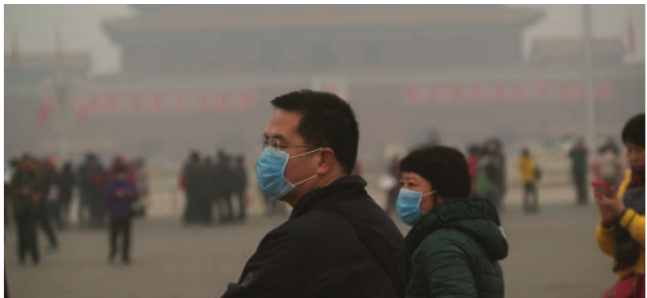
Cities such as New Delhi and Beijing regularly suffer from winter fog events. The term 'airpocalypse' has been coined to describe the severe conditions that arise when fog combines with high levels of air pollution. During these events, pollutants become trapped within the fog, creating a toxic smog that poses serious health risks. The combination of moisture and pollutants can result in significant death tolls, as the toxic mixture affects respiratory and cardiovascular health. People in affected cities often wear face masks as protection against these hazardous conditions.
Important
Understanding Condensation Nuclei
Condensation nuclei are tiny particles suspended in the atmosphere that provide surfaces for water vapour to condense upon. In urban areas, these particles often consist of pollutants from industrial processes, vehicle emissions, and combustion. Their presence significantly increases the likelihood of fog formation, particularly under stable atmospheric conditions.
Without these particles, water vapour would require much cooler temperatures to condense. However, condensation nuclei allow fog to form at higher temperatures, making urban fog events more frequent and persistent than they would naturally be.
Summary
Key Points to Remember:
-
Urban areas receive more precipitation than rural areas due to the heat island effect, building-induced turbulence, and pollution acting as condensation nuclei. Rainfall can be 20% higher downwind of cities.
-
The urban heat island generates convection currents that promote cloud formation and intense convectional rainfall, along with increased thunder and lightning events.
-
Historically, fog increased with industrialisation - London's foggy days more than doubled from the 1700s to 1800s due to particles acting as condensation nuclei.
-
Clean Air Acts in the 1950s dramatically reduced fog in developed nations by cutting smoke and particulate emissions.
-
Recently industrialising cities like Beijing and New Delhi experience 'airpocalypse' events where fog traps pollutants, creating toxic smog with serious health impacts.