Waste Management and Disposal (AQA A-Level Geography): Revision Notes
📚Revision Notes
Waste management and disposal
Urban areas produce vast quantities of waste that must be managed effectively to protect human health and the environment. Understanding different waste management strategies and disposal methods is crucial for sustainable urban development.
Note
Effective waste management is one of the most critical challenges facing modern cities. Poor waste management can lead to serious health problems, environmental degradation, and reduced quality of life for urban residents.
Sources and types of solid waste
Waste comes from multiple sources within urban environments, each generating distinct types of materials that require specific management approaches.
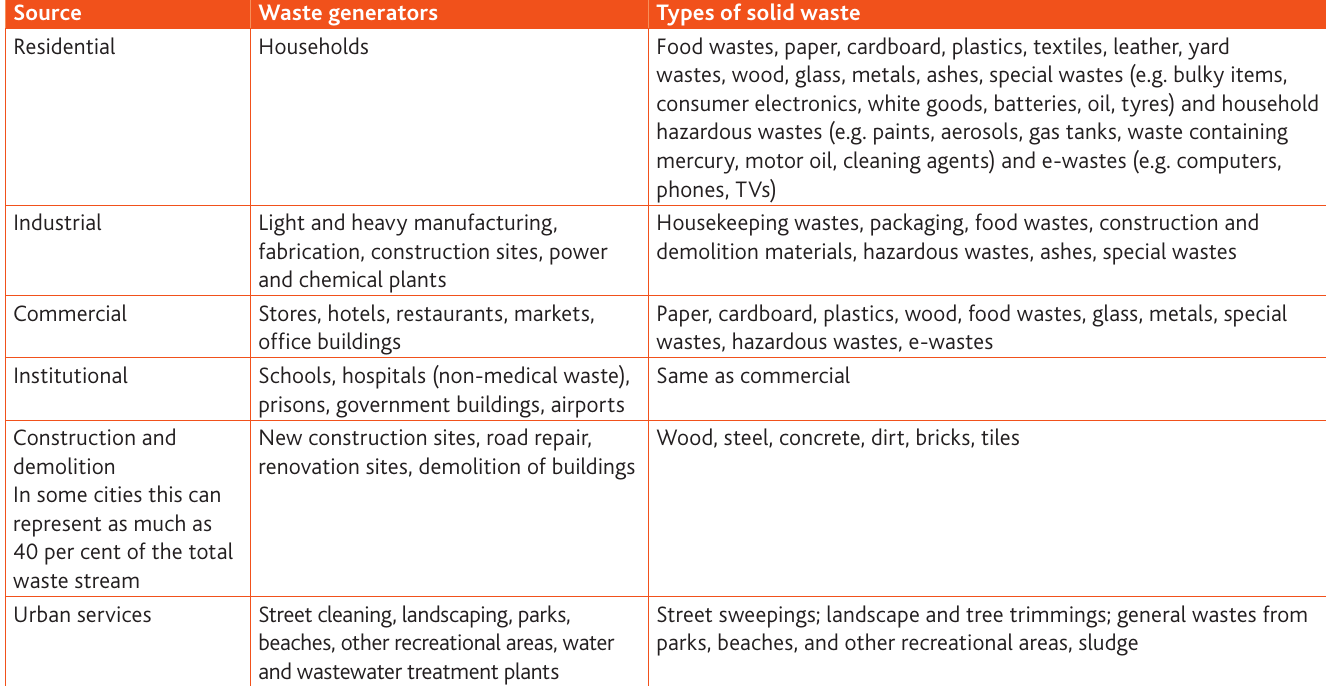
The six main categories of urban waste include:
- Residential waste: Household rubbish including food scraps, packaging, paper, textiles, electronics, and hazardous items like batteries and cleaning products
- Industrial waste: Materials from manufacturing processes, including packaging, construction materials, and hazardous substances
- Commercial waste: Generated by businesses such as shops, hotels, restaurants, and offices - similar to residential waste but in larger quantities
- Institutional waste: From schools, hospitals, government buildings, and airports - comparable to commercial waste
- Construction and demolition waste: Building materials like wood, steel, concrete, bricks, and tiles - can represent up to 40% of total urban waste in some cities
- Urban services waste: Collected from street cleaning, park maintenance, beach cleaning, and wastewater treatment facilities
Important
Construction and demolition waste can account for up to 40% of the total waste stream in some urban areas, making it a significant component of municipal solid waste management.
The waste management hierarchy
The most effective approach to waste management prioritises preventing waste creation over disposal. This approach is organised into a hierarchy showing preferred options.
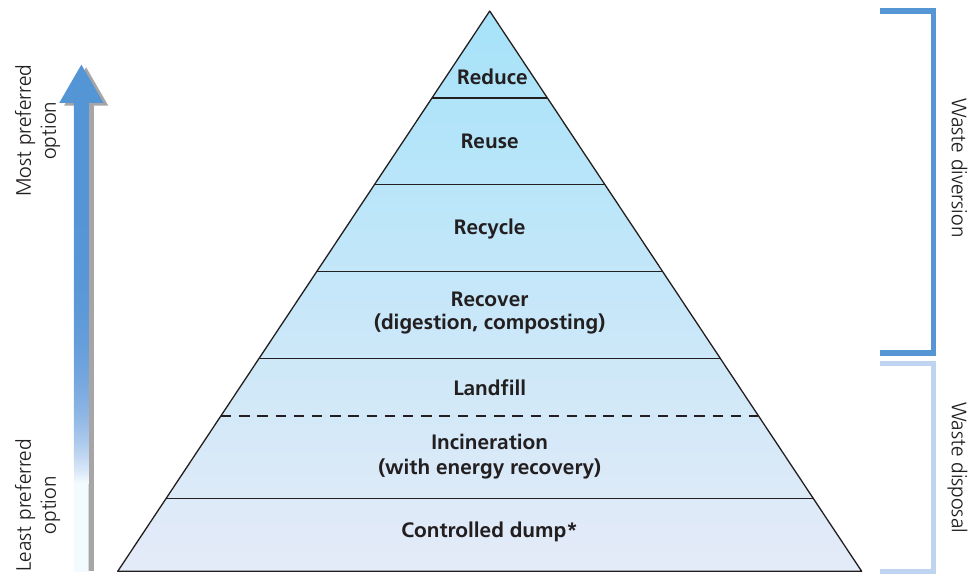
The hierarchy moves from most preferred to least preferred options:
Waste diversion (prevention):
- Reduce - Minimising waste production at source through better design, consumption choices, and waste-related legislation
- Reuse - Using items multiple times before disposal
- Recycle - Reprocessing materials into new products
- Recover - Extracting value through composting, digestion, or energy generation
Waste disposal: 5. Landfill - Burying waste in controlled sites 6. Incineration with energy recovery - Burning waste to generate electricity or heat 7. Controlled dump - Managed disposal sites with environmental controls
The aim is to move waste management up the hierarchy, focusing on prevention rather than disposal.
Note
The waste hierarchy is based on the principle that the best way to manage waste is to avoid creating it in the first place. Each step down the hierarchy represents a less preferable option from an environmental perspective.
Example
Practical Application: Reducing Plastic Waste
Following the waste hierarchy in your daily life:
- Reduce: Choose products with minimal packaging, avoid single-use plastics
- Reuse: Use refillable water bottles instead of buying bottled water
- Recycle: Sort plastic containers for recycling collection
- Recover: Composting organic waste instead of throwing it away
- Disposal: Only as a last resort for items that cannot be managed through other methods
Recycling and resource recovery
Resource recovery is the selective extraction of disposed materials for specific next uses, such as recycling, composting, or energy generation.
Recycling processes
Recycling involves reprocessing materials so they can be manufactured into new products. The global market for recyclable materials has grown substantially:
- Post-consumer scrap metal: approximately 400 million tonnes annually
- Paper and cardboard: around 175 million tonnes annually
- Combined global value: at least $30 billion per year
Note
The recycling industry has become a major global economic sector, creating jobs and generating significant revenue while reducing the environmental impact of waste disposal.
The informal recycling sector
In many low and middle-income countries, recycling operates through informal systems. An estimated 15 million people worldwide survive by collecting and selling recyclable materials from waste. This informal sector plays a vital role in diverting waste from landfills, though workers often face difficult and hazardous conditions.
Example
Informal Recycling: Cairo's Waste Collectors
In Cairo, Egypt, women and children known as waste collectors bring home large quantities of rubbish each morning to sort through, extracting valuable materials for sale. Despite the essential service they provide, these workers often lack basic safety equipment and work in unsanitary conditions, facing significant health risks.
Urban mining
Urban mining refers to recovering valuable compounds and elements from products, buildings, and waste that would otherwise decompose in landfills.
This process involves salvaging reusable components for recycling, significantly reducing landfill waste. Manufacturing products from recycled materials saves considerable energy - producing aluminium from recycled sources requires 95% less energy than creating it from virgin materials.
Important
The energy savings from recycling are substantial. For example:
- Aluminium: 95% less energy than virgin production
- Steel: 60% less energy
- Paper: 40% less energy
- Plastics: 70% less energy
Environmental considerations
Recycling offers important advantages:
- Reduces quantities of waste requiring disposal
- Returns valuable materials to the economy
- Conserves natural resources
However, there are environmental challenges:
- Energy is required to operate material recovery facilities
- This leads to greenhouse gas emissions
- Informal recycling by waste pickers generates minimal greenhouse gases except when materials are improperly burned (particularly problematic with e-waste metal recovery)
Note
While recycling does require energy, the net environmental benefit is typically positive. The energy used in recycling is usually far less than the energy required to extract and process virgin materials.
Global waste trade
The global waste trade is the international movement of waste between countries for further treatment, disposal, or recycling.
Toxic and hazardous wastes are frequently exported from high-income to low-income countries. These receiving countries often lack safe recycling processes and proper disposal facilities, resulting in environmental contamination. The Basel Convention was introduced to prevent transboundary movement of hazardous waste, though evidence suggests illegal trade continues.
Important
The global waste trade raises serious environmental justice concerns. Wealthier nations often export their most hazardous waste to poorer countries, where inadequate regulations and desperate economic conditions create dangerous working environments and severe environmental damage.
Reduction through incineration
Energy from waste involves burning waste under carefully controlled conditions to produce electricity and heat, whilst reducing waste volume by up to 90%.
An increasing number of urban areas process waste through incineration facilities. This method safely destroys general waste at high temperatures whilst generating usable energy.
How it works
Incineration facilities burn waste to produce heat, which generates steam to drive turbines producing electricity. Many facilities also supply heating to nearby communities and businesses.
Note
Modern waste-to-energy plants are sophisticated facilities with advanced pollution control systems. They operate at temperatures exceeding 850°C to ensure complete combustion and minimize harmful emissions.
Advantages and disadvantages
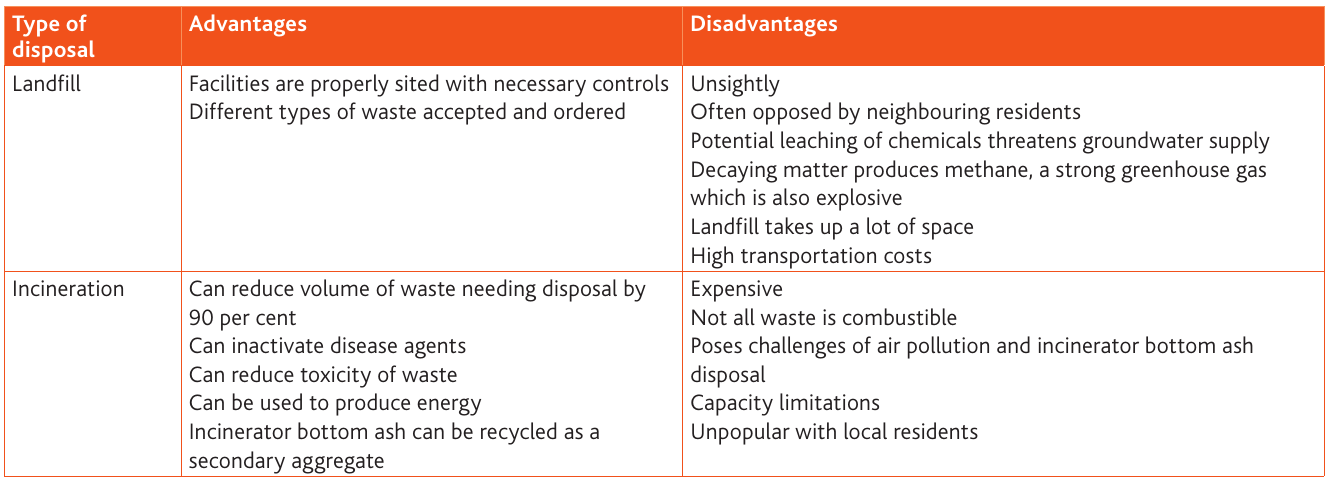
Whilst incineration significantly reduces waste volume and produces energy, it has drawbacks:
- High construction and operating costs
- Not all waste types can be burned
- Creates air pollution challenges
- Produces bottom ash requiring disposal
- Limited capacity
- Often faces local opposition
Important
Open burning of waste, common in poorer countries, causes severe air pollution due to low combustion temperatures and is strongly discouraged. Unlike modern incineration facilities, open burning releases dangerous pollutants directly into the environment without any filtration or control.
Burial in landfills
Burial is the placement of waste in man-made or natural excavations, such as pits or landfills. Landfill sites are the most common final disposal location for urban waste worldwide.
Landfill operations
In higher-income countries, landfill sites follow strict regulations. Controls typically include:
- Careful site selection away from water sources
- Ordered acceptance of different waste types
- Collection and management of gases produced by decomposing waste (particularly methane)
- Control of leachate (liquid that seeps from waste)
- Monitoring of groundwater quality
Note
Many modern UK landfill sites capture methane gas and use it to generate electricity through turbines. This process, known as landfill gas recovery, helps reduce greenhouse gas emissions while producing renewable energy.
Unregulated disposal
Unregulated waste disposal is not controlled or supervised by law. In lower-income countries, waste may simply be dumped in holes in the ground without environmental controls.
This creates serious problems:
- Becomes breeding grounds for insects and vermin
- Spreads air and water-borne diseases
- Where waste collection is inadequate, diarrhoea incidence is twice as high
- Acute respiratory infections are six times higher
- Leachate contaminates groundwater and surface water
- Burning waste that isn't properly collected creates severe air pollution
Important
The health impacts of inadequate waste management are severe and disproportionately affect the poorest communities. Proper waste management is not just an environmental issue - it is a critical public health necessity.
Environmental impacts of landfills
Even regulated landfills create environmental challenges:
Greenhouse gas production: Rotting organic matter produces methane, a powerful greenhouse gas with 25 times the warming potential of carbon dioxide
Air quality impacts: Methane, bleach, ammonia, and other chemicals produce toxic gases affecting local air quality. Non-chemical contaminants like dust also enter the atmosphere
Water contamination: Toxic chemicals can leach into groundwater and rivers, contaminating water supplies
Space requirements: Landfills occupy large areas of land and require expensive transportation
Local opposition: Communities often object to landfill sites due to concerns about smell, soil pollution, and groundwater contamination
Note
The environmental impacts of landfills extend far beyond the site boundaries. Groundwater contamination can affect communities kilometers away, and methane emissions contribute to global climate change.
Case study: electronic waste in Guiyu, China
Electronic waste (e-waste) includes discarded electrical and electronic devices. Technological advances and rapidly increasing consumption have created a fast-growing global waste stream - approximately 44.7 million tonnes were generated in 2016.
The global e-waste problem
E-waste is now the world's fastest-growing waste category. Much originates in the USA and Europe, but is shipped to poorer countries in Asia and Africa for processing and recycling, often through informal methods.
Electronic goods contain toxic substances including:
- Lead
- Mercury
- Cadmium
- Arsenic
- Flame retardants
When landfilled, these toxic materials seep into the environment, contaminating land, water, and air.
Important
E-waste contains both valuable materials (gold, silver, copper) and highly toxic substances. Without proper processing facilities, attempts to recover valuable materials often release dangerous pollutants into the environment.
Guiyu's e-waste industry
The town of Guiyu in Guangdong province, China, has operated as one of the world's largest electronic waste dump sites for many years. At its peak:
- Some 5,000 workshops operated
- 15,000 tonnes of waste processed daily
- Workers dismantled mobile phones, computer screens, and computer towers
- Components were shipped from around the world
Example
E-waste Processing in Guiyu
The informal recycling process in Guiyu involved:
- Workers manually dismantling electronics without protective equipment
- Burning circuit boards over open fires to recover copper and precious metals
- Using acid baths to extract gold from components
- Dumping remaining toxic materials in rivers and fields
- Selling recovered materials to manufacturers
This process, while economically valuable for the community, caused severe environmental contamination and health problems.
Health and environmental impacts
The recycling processes release large quantities of pollutants:
- Heavy metals and chemicals enter the air
- Local water supplies become heavily contaminated with toxic metal particles
- Workers at these sites experience frequent poor health episodes
- Local residents suffer respiratory and stomach problems
- Children in the area have abnormally high levels of lead in their blood
Important
The Guiyu case demonstrates severe environmental justice issues created when hazardous waste is exported to countries with weak environmental regulations and inadequate worker protections. The economic desperation of receiving communities makes them vulnerable to accepting dangerous waste despite the health risks.
Case study: landfill versus incineration in Amsterdam
Amsterdam, the cultural capital of the Netherlands, is a densely populated, low-lying country with limited available land. Rising prosperity in the twentieth century led to increased production and consumption of goods, consequently increasing waste generation.
The Dutch waste management approach
Facing limited space and growing environmental awareness, the Dutch government implemented measures to reduce landfill reliance. Their strategy, incorporated into Dutch legislation in 1994 as 'Lansink's Ladder', prioritises:
- Avoiding waste creation in the first place
- Recovering valuable raw materials from waste
- Generating energy by incinerating residual waste
- Only dumping what is absolutely unavoidable in an environmentally acceptable manner
Note
Lansink's Ladder became the foundation for European waste management policy and influenced the development of the waste hierarchy used internationally today.
Moving away from landfills
Several factors drove the reduction in landfilling:
- Increasing material consumption levels
- Significant lack of physical space in a small, densely populated country
- Environmental deterioration of land
- Growing public objections to waste disposal sites due to smell, soil pollution, and groundwater contamination
Government actions included:
- A landfill tax introduced in 1995 on every tonne of material landfilled, providing financial incentive for alternative methods like incineration (increased yearly until repealed in 2012)
- A landfill ban covering 35 waste categories introduced in 1995
Results: The amount of waste sent to landfill decreased significantly in the late 1990s and early 2000s. By 2006, the country had already achieved the landfill targets set by the EU Landfill Directive for 2016.
Example
Dutch Waste Reduction Success
Between 1995 and 2006, the Netherlands transformed its waste management system:
- Landfilled waste dropped from approximately 50% to less than 5% of total waste
- Recycling rates increased dramatically
- Energy recovery from waste incineration became standard practice
- The country exceeded EU targets 10 years ahead of schedule
This demonstrates how policy measures (taxes and bans) combined with investment in alternative infrastructure can rapidly transform waste management practices.
The Afval Energie Bedrijf (AEB) incineration plant
In a waste-to-energy (W2E) strategy, Amsterdam constructed the Afval Energie Bedrijf (AEB) incineration plant, capable of producing 1 million MWh of electricity annually.
Key features:
- Processes waste brought by 600 trucks and one freight train daily from the Amsterdam metropolitan area
- 64% of waste ending up at the plant is recycled
- Produces 300,000 gigajoules of heat annually for heating several communities around Amsterdam
- Equipped with complex flue gas scrubbing processes to reduce environmental impact
- Material remaining after processing (trace elements unsuitable for manufacturing, fly ash, or construction) becomes landfill
Integration with water treatment: The AEB plant is located next to the Waternet water treatment plant. The two facilities work together - the incineration plant supplies energy and heat for water treatment processes, whilst the water treatment plant injects its sludge and biogas into the incineration plant as additional fuel sources.
Note
The integrated approach at Amsterdam demonstrates how modern waste management systems can minimize environmental impact whilst maximizing resource recovery and energy generation. By connecting different facilities, the city creates a circular system where waste from one process becomes fuel for another.
Important
This case study illustrates that successful waste management requires:
- Strong political will and supportive legislation
- Significant infrastructure investment
- Integrated planning across different sectors
- Long-term commitment to sustainable practices
Summary
Key Points to Remember:
- The waste hierarchy prioritises reduction and reuse over recycling, with disposal methods like landfill and incineration as last resorts
- Urban waste comes from six main sources: residential, industrial, commercial, institutional, construction and demolition, and urban services
- Recycling and resource recovery reduce waste sent to disposal whilst returning valuable materials to the economy, though energy is still required for processing
- Incineration can reduce waste volume by up to 90% and produce energy, but it is expensive and creates air pollution challenges
- Landfills remain the most common disposal method globally, but they produce methane, risk groundwater contamination, and require significant space
- The global trade in hazardous waste, particularly e-waste, causes severe environmental and health problems in receiving countries with inadequate regulations and disposal facilities