Unequal Power Relations in Global Systems (AQA A-Level Geography): Revision Notes
📚Revision Notes
Unequal power relations in global systems
Understanding power imbalances in the global system
The global economic and political system is characterised by significant power imbalances between countries. Wealthier, more developed nations possess greater influence and control over how global systems operate, which allows them to shape international policies and decisions to their advantage. This creates an unequal playing field where some countries have considerably more voice and influence than others.
Note
Understanding these power dynamics is essential for analysing how global systems function and why certain countries benefit more than others from globalisation. The distribution of power in the international system directly affects economic opportunities, political sovereignty, and the ability of nations to pursue their own development goals.
How developed countries maintain their power
Economic and technological advantages
Highly Developed Economies (HDEs) maintain their dominant position through several key mechanisms. They possess substantial wealth which enables them to invest in cutting-edge technology and maintain powerful military forces that can be deployed globally. This economic strength translates into practical power.
HDEs frequently provide aid, investment and transfers of technology and medical knowledge to assist developing countries. However, this assistance typically comes with conditions.
Note
The Dependency Relationship
Developed nations usually expect geopolitical support in return for their help, creating a dependency relationship that reinforces their influence. This means that developing countries receiving assistance may be obligated to:
- Support the donor country's positions in international forums
- Align their foreign policy with the donor's interests
- Provide access to resources or strategic locations
- Adopt specific economic or political reforms
Membership in exclusive international groups
Wealthier nations have formed close relationships with each other through membership in prestigious intergovernmental economic groups. By cooperating within these organisations, they can combine their efforts and become even more influential in shaping global economic and political systems.
Important
The G7 (Group of Seven) is an intergovernmental organisation comprising the world's seven largest advanced IMF economies: Canada, France, Germany, Italy, Japan, the UK and the US.
Important
The G20 is an international forum for the governments of 20 major economies. It includes the G7 countries and the EU as a single member. It was established in 1999 to give a voice to the major developing economies, though it still includes China.
Important
The OECD (Organisation of Economic Co-operation and Development) is a group of 34 of the richest and most influential countries globally.
Dominance in global governance structures
Developed countries exert considerable influence through major intergovernmental organisations such as the United Nations, the International Monetary Fund (IMF), the World Bank and the World Trade Organisation (WTO). These institutions have helped improve global stability and development, but they are controlled by more powerful nations.
Note
Structural Power Imbalances
These organisations' structures often reflect the vested interests of their most powerful members. This enables wealthy countries to influence changes and policies to their own advantage, perpetuating the existing power imbalance. For example:
- Voting rights in the IMF and World Bank are weighted by financial contributions
- The UN Security Council has only five permanent members with veto power
- Leadership positions in these organisations are often held by representatives from developed nations
Why developing countries have limited influence
Developing countries face significant constraints on their power and ability to shape global systems. They have limited influence in international decision-making processes and must often depend on decisions made by wealthier nations.
This dependency creates a difficult situation for less developed nations. They are constrained in how they can respond to geopolitical issues because they lack the economic and political resources of developed countries.
Important
The Dependency Trap
When facing international challenges, developing countries may have no choice but to rely on geopolitical support from more powerful allies, which further reinforces their subordinate position in the global system. This creates a cycle where:
- Limited resources mean limited bargaining power
- Dependence on aid creates obligation to donor countries
- Lack of representation in global institutions reduces their voice
- Strategic decisions are made without their meaningful input
Regional economic disparities
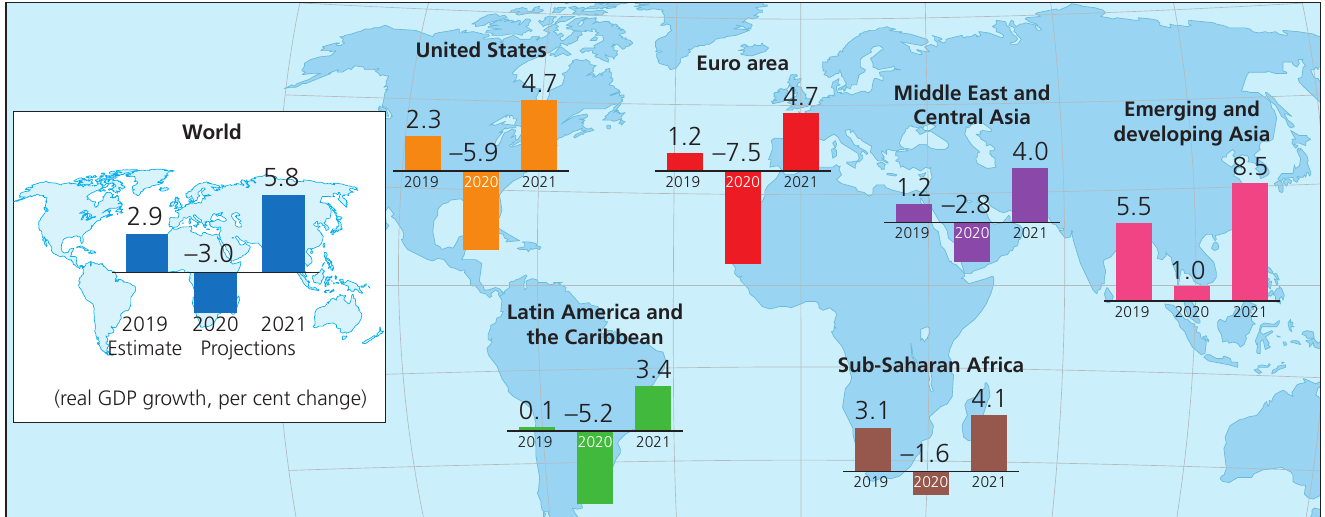
The unequal distribution of power is reflected in stark economic differences between world regions. The COVID-19 pandemic particularly highlighted these disparities, with different regions experiencing vastly different economic impacts and recovery trajectories.
Note
Regional Economic Impact Analysis
The data shows that in 2020, most regions experienced significant economic contraction. However, the scale of the downturn and the projected recovery varied considerably:
- Developed regions like the United States and Euro area saw substantial declines but were projected to recover more quickly
- Sub-Saharan Africa and Latin America and the Caribbean faced severe economic challenges with slower projected recovery rates
- Emerging and developing Asia demonstrated resilience, maintaining some positive growth even during the pandemic
This pattern illustrates how economic power and resources affect countries' ability to weather global crises.
Geopolitical events and power dynamics
Geopolitical issues emerge from various sources but are typically rooted in political or economic conflicts between countries or groups of nations. These conflicts may arise from resource shortages, strategic territorial claims, exploration rights, or support for particular political allies or minority groups within countries.
Example
Example: US Influence at the United Nations
The US permanent position on the UN Security Council may have provided protection for Israel from broader UN criticism regarding policies that disadvantage Palestinians.
This demonstrates how:
- Powerful nations can use their positions in international organisations to support their allies
- Veto power enables blocking of resolutions critical of allies
- Strategic interests can override broader international consensus
- Structural positions translate into practical diplomatic protection
Case study: Russia and China's geopolitical influence
Both Russia and China serve as permanent members of the UN Security Council, giving them significant power in international affairs. They have used their considerable political and economic influence to shape geopolitical events to their advantage.
These nations demonstrate how countries with substantial resources and strategic positions can exert influence over global systems, even when their actions may be controversial or opposed by other nations. Their positions on the Security Council provide them with veto power, enabling them to block resolutions that conflict with their interests.
Note
Veto Power in Practice
The veto power held by permanent Security Council members means that any of these five nations (US, UK, France, Russia, and China) can single-handedly block UN resolutions, regardless of how many other countries support them. This gives them extraordinary leverage in international affairs and allows them to protect their interests and those of their allies from international pressure or sanctions.
Summary
Key Points to Remember:
-
Wealthier developed countries possess more power in global systems due to their wealth, advanced technology, military strength and influence in international organisations.
-
Exclusive groups like the G7, G20 and OECD enable developed nations to coordinate their efforts and amplify their influence over global economic and political systems.
-
Developing countries face significant constraints and limited influence in global decision-making, often having to depend on support from more powerful nations.
-
Global governance institutions such as the UN, IMF and World Bank are dominated by powerful nations whose interests shape international policies and decisions.
-
Geopolitical conflicts typically stem from political or economic disputes, with powerful nations like Russia and China using their positions to influence outcomes in their favour.
-
The structural power imbalances in international organisations perpetuate inequality and make it difficult for developing nations to challenge the existing global order.