Case Study: Médecins Sans Frontières (MSF) (AQA A-Level Geography): Revision Notes
📚Revision Notes
Case Study: Médecins Sans Frontières (MSF)
What is MSF?
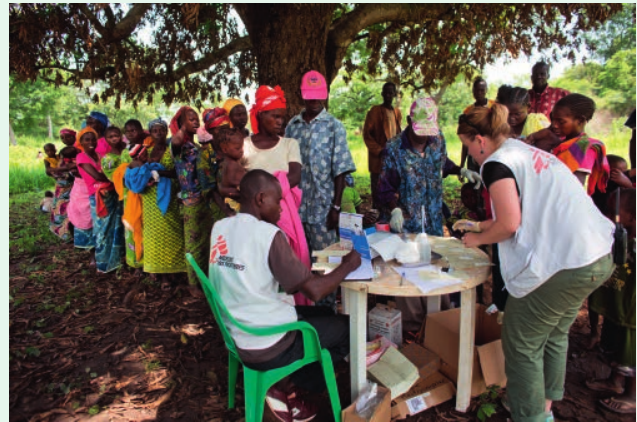
Médecins Sans Frontières (which means 'Doctors Without Borders' in English) is an international humanitarian medical organisation that delivers life-saving healthcare where it's needed most urgently. Founded in 1971, MSF operates as an independent NGO committed to treating people affected by crises regardless of their circumstances.
Important
MSF is an NGO that provides medical aid in emergency situations, treating people caught up in conflicts, disasters, disease outbreaks, or those excluded from healthcare systems.
Scale of operations
MSF has grown into a major global health organisation with impressive reach:
- Operates in over 74 countries worldwide
- Employs 35,000 personnel globally
- Works with local communities and healthcare systems
- Provides both emergency response and longer-term specialist medical support
The organisation responds rapidly to health crises and disasters whilst also maintaining ongoing projects to tackle persistent health challenges including COVID-19, cholera, Ebola, malaria, meningitis and HIV/AIDS.
Personnel and recruitment
MSF takes a distinctive approach to staffing that prioritises local expertise and cultural understanding:
- 90% of staff are recruited locally from the countries where MSF operates
- The majority are local doctors, nurses and medical specialists
- European managers coordinate operations and provide oversight
- Teams also include logistics experts and water and sanitation engineers
Note
This local recruitment strategy ensures MSF has staff who understand local contexts, speak local languages, and can work effectively within communities. This approach not only provides employment opportunities in crisis-affected regions but also ensures culturally appropriate and sustainable healthcare delivery.
Funding and independence
MSF's funding model is designed to maintain operational independence and ethical integrity:
- 96.2% of funding comes from approximately 6.5 million individual donors around the world
- The remaining funds come from governments and international organisations
- This diverse funding base helps ensure MSF can respond flexibly to crises
Principled funding decisions
Important
MSF takes a strong ethical stance on funding sources to protect its independence and credibility:
- Refuses contributions from companies in industries whose core activities may compromise MSF's ability to provide independent care
- Specifically excludes tobacco, mining and pharmaceutical industries since 2016
- Takes principled positions on political issues affecting healthcare, such as protesting the EU's reluctance to accept more migrants fleeing Middle Eastern conflicts and the EU's deal with Turkey to hold more refugees
This approach protects MSF's credibility and ensures they can speak freely about public health issues without conflicts of interest.
Treatment of malnutrition
MSF addresses severe malnutrition using an innovative approach that has revolutionised treatment in resource-limited settings:
Important
RUTf (Ready-to-Use Therapeutic Food) is a therapeutic food containing all essential nutrients needed by children. It mainly consists of peanut butter paste.
RUTf has several advantages that make it particularly effective:
- Can be stored for long periods without refrigeration
- Works effectively in various settings
- Revolutionised the treatment of severe malnutrition
- Enables wider distribution and use in remote areas
Maternal health programmes
MSF works to reduce maternal deaths through community-based approaches and emergency care provision:
- Training and supporting traditional birth attendants in communities
- Working with local midwives in areas with limited formal healthcare
- Setting up programmes to identify complicated births quickly
- Ensuring women can access emergency care when needed
- Helping prevent maternal deaths through early intervention
Note
Traditional birth attendants play a crucial role in many communities where formal healthcare facilities are limited or inaccessible. By training these community members, MSF helps ensure safer deliveries and better maternal health outcomes while respecting local practices and cultural contexts.
Research activities
Beyond immediate care, MSF conducts critical field research to improve healthcare globally and address diseases that affect vulnerable populations:
Note
Research focus areas include:
- Treatment of multi-drug-resistant tuberculosis (TB)
- HIV/AIDS treatment and prevention
- Combating neglected tropical diseases including:
- Chagas disease
- Kala-azar (visceral leishmaniasis)
- Mental health support in crisis situations
This research generates evidence that improves the effectiveness and quality of clinical care MSF and others provide worldwide. By focusing on neglected diseases, MSF helps fill critical gaps in medical knowledge that commercial pharmaceutical research often overlooks.
Advocacy and campaigning
MSF acts as a watchdog to protect public health needs against corporate interests, recognising that healthcare access involves political and economic factors, not just medical ones.
Campaign for Access to Essential Medicines
MSF initiated this influential international campaign, which has been joined by other NGOs. The campaign's objectives include:
- Increasing availability of essential medicines in developing countries
- Challenging high medicine costs and the absence of treatments for diseases affecting patients in poorer nations
- Lobbying governments and pharmaceutical companies about pricing
- Encouraging production of affordable generic medicines as alternatives to expensive branded drugs
- Pushing for price cuts to medicines, vaccines and diagnostic tests
- Steering research towards development of new drugs and vaccines for neglected diseases
Note
The campaign addresses systemic barriers that prevent people in developing countries from accessing life-saving treatments. By advocating for generic medicines and challenging pharmaceutical pricing practices, MSF works to make healthcare more equitable globally.
Remember!
Summary
Key Points to Remember:
- MSF is an independent medical humanitarian NGO founded in 1971 that provides emergency healthcare in over 74 countries
- Local recruitment is key: 90% of MSF's 35,000 staff are hired locally, ensuring culturally appropriate care and community understanding
- Independent funding: 96.2% comes from individual donors, allowing MSF to refuse money from tobacco, mining and pharmaceutical industries
- RUTf revolutionised malnutrition treatment as a peanut butter-based therapeutic food that requires no refrigeration and contains all essential nutrients
- MSF advocates for health justice through the Campaign for Access to Essential Medicines, challenging pharmaceutical costs and pushing for affordable generic medicines in developing countries