Overpopulation, Underpopulation and Optimum Population (AQA A-Level Geography): Revision Notes
📚Revision Notes
Overpopulation, Underpopulation and Optimum Population
Understanding the population-resource relationship
The connection between human population and available resources is complex and can be examined at multiple scales. Finding the right balance between how many people live in an area and the resources available to support them is fundamental to understanding population geography.
Note
The relationship between population and resources is not static - it changes constantly based on technological advancement, resource discovery, and economic development. What might be considered an ideal population today could be different tomorrow.
Optimum population
Optimum population is the perfect match between the number of people and the resources available to support them, resulting in the best possible quality of life for everyone in that area.
This concept describes the ideal situation where a specific population size, working with all available resources, achieves the maximum standard of living. It represents the point at which income per person is at its highest and living standards are optimised.
Most nations aim to reach this balance through various approaches:
- Direct population management policies
- Indirect population control measures
- Resource management strategies
Note
The Dynamic Nature of Optimum Population
Optimum population is not a fixed target. It continually shifts because:
- New technologies emerge and increase resource availability
- Resource discoveries change what is available
- Economic conditions evolve
- Environmental factors alter resource capacity
This means that a country's optimum population today may be different from its optimum population in the future.
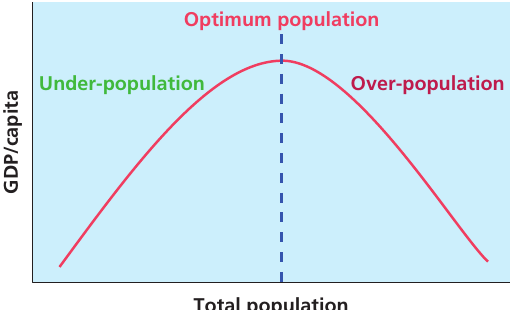
The graph above demonstrates how GDP per capita changes with population size. The peak of the curve represents the optimum population point, where economic output per person is maximised.
Overpopulation
Overpopulation occurs when the population exceeds what the available resources can sustainably support, placing strain on those resources and reducing the average standard of living for everyone.
Note
Key Characteristics of Overpopulation
When an area experiences overpopulation, it typically shows these features:
- Lower income per person, often resulting in widespread poverty
- High levels of unemployment and underemployment
- Outward migration as people seek better opportunities elsewhere
- Insufficient food, minerals and energy resources
- Increased vulnerability to natural disasters
- Potential for conflict, war and ethnic tensions
A common misconception
Important
Population Density ≠ Overpopulation
It is incorrect to assume that overpopulation relates only to how densely packed people are in an area. The concept actually measures the relationship between population size and available resources, not just how crowded a place appears.
This is one of the most misunderstood aspects of population geography - density alone tells us nothing about whether an area is truly overpopulated.
Example
Comparing Mali and the Netherlands
The Netherlands has a population density of 511 people per km², yet enjoys a relatively high standard of living. This is because the country has:
- Advanced technology
- Efficient resource management
- Strong economic systems
- Good infrastructure
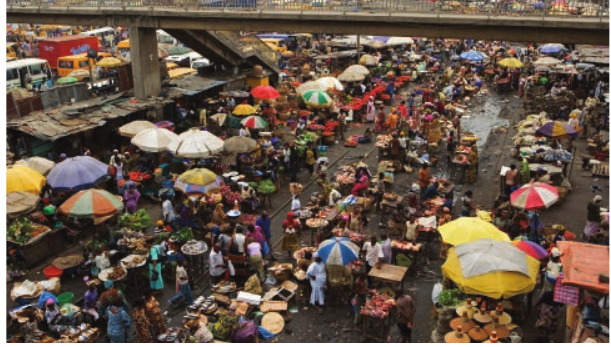
In contrast, Mali has only 16 people per km² but struggles to meet the basic needs of its population. This is due to:
- Limited resource base
- Less developed technology
- Economic challenges
- Infrastructure constraints
Key takeaway: This comparison clearly shows that population density alone does not determine whether an area is overpopulated. Resource availability and technology are equally important factors.
Underpopulation
Underpopulation exists when there are insufficient people to fully utilise the available resources at the current technology level, suggesting that increased population would lead to more effective resource use and improved living standards.
Note
Key Characteristics of Underpopulation
Areas experiencing underpopulation typically demonstrate:
- High income per person (though not yet maximised)
- Low unemployment rates
- Inward migration as people are attracted to opportunities
- Good living conditions and quality of life
- High levels of technology and development
Examples of underpopulated regions
Developed nations with extensive resources and advanced technology but relatively small populations often exemplify underpopulation. Countries like Canada, Australia and Norway may be considered underpopulated because they have:
- Vast territories with untapped resources
- Small populations relative to their land area
- Capacity to support larger populations
- Potential for population growth without reducing living standards
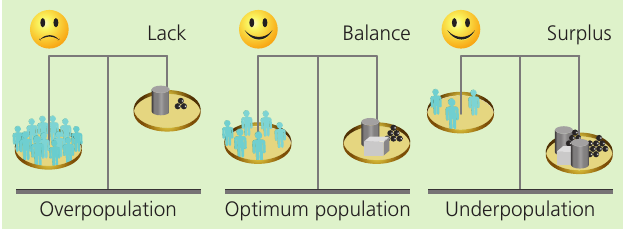
Comparing the three population types
The table below highlights the contrasting characteristics of overpopulated and underpopulated areas:
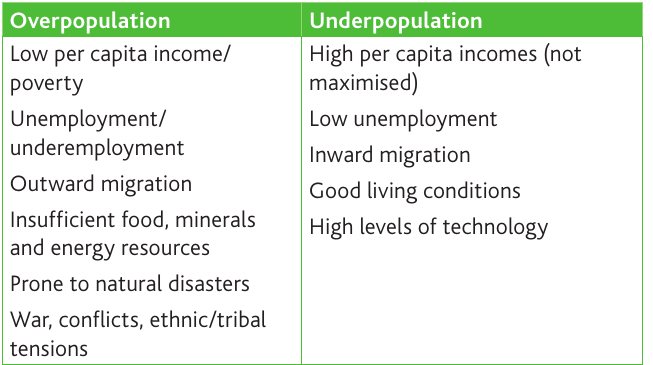
Understanding these differences helps geographers and policymakers identify appropriate strategies for different regions. An overpopulated area might benefit from family planning programmes or economic development, whilst an underpopulated region might implement immigration policies or incentives for population growth.
The relationship between population and resources determines which category an area falls into, and this relationship changes over time as technology advances and resources are discovered or depleted.
Summary
Key Points to Remember:
- Optimum population achieves the maximum standard of living by perfectly balancing population with resources
- Overpopulation means too many people for the available resources, reducing living standards for everyone
- Underpopulation means too few people to fully utilise resources, with potential for improvement through population growth
- Population density is NOT the same as overpopulation - a densely populated area can still provide high living standards with good technology and resources
- All three concepts are dynamic and change as technology develops and resources change