Case Study: Royal Dutch Shell (AQA A-Level Geography): Revision Notes
📚Revision Notes
Case Study: Royal Dutch Shell
Company overview
Shell is an Anglo-Dutch transnational oil and gas company with its headquarters located in the Netherlands. As one of the world's largest energy corporations, Shell demonstrates how major oil companies operate on a truly global scale.
Important
Shell is vertically integrated, meaning the company is involved in every stage of the oil and gas industry from initial exploration through to final sale to consumers.
Shell's operations and vertical integration
Shell's business model covers six main areas of the oil and gas industry:
- Exploration and production – using geological expertise to locate and extract oil and gas reserves
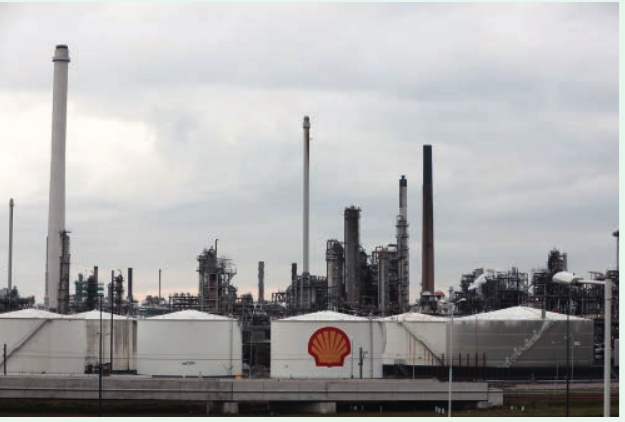
- Refining – the company owns 35 refineries that process crude oil into usable products
- Distribution – Shell operates its own fleet of oil tankers and lorries to transport products
- Petrochemicals – producing chemical products derived from petroleum
- Power generation and trading – involvement in the electricity sector
- Investment in renewable energy sources – positioning for the energy transition
Understanding the three stages
The oil and gas industry is typically divided into three main stages, all of which Shell participates in:
Note
The Three Stages of Oil and Gas Operations:
- Upstream activities involve exploration and drilling for oil and gas
- Midstream activities cover transportation through pipelines or by tanker
- Downstream activities include refining crude oil into different products for distribution and sale
Think of these stages as following the flow of oil from underground to your local petrol station!
Global scale and production
Shell operates on a massive international scale:
- Present in over 70 countries worldwide
- Produces approximately 3.7 million barrels of oil equivalent per day
- This production figure includes both oil and gas outputs combined
Note
The term oil equivalent is used to combine oil and gas production into a single measurement, making it easier to understand total energy output.
Key production locations
Shell's main production activities are concentrated in two primary regions:
South East Asia
Shell has significant operations across South East Asia, engaging in exploration, production and distribution activities throughout the region.
Niger Delta, Nigeria
The Niger Delta represents a major production area for Shell. However, operations here have been controversial:
Note
Positive impacts:
- Shell provides jobs and income to local communities
- The company invests in improving skills, education and training for the local workforce
- Economic benefits flow to the region through employment and related activities
Important
Negative impacts:
- Shell has been accused of damaging local communities through its operations
- Environmental concerns have been raised about the company's activities in the area
- The balance between economic benefits and environmental costs remains contested
This highlights the complex nature of TNC operations – they bring both benefits and challenges to host communities.
Strategic partnerships and joint ventures
Shell frequently works through consortiums and joint ventures with other energy companies. This collaborative approach allows Shell to:
- Partner with host governments where they operate
- Share risks and costs of major projects
- Gain exploration rights in new areas
- Invest in mutually advantageous infrastructure such as oil pipelines
- Access new markets and production opportunities
Example
Worked Example: Joint Venture Partnership
Shell partners with Petronas, the Malaysian state company, to gain exploration rights in Malaysia. This partnership means:
- Shell gains access to Malaysian oil fields
- Petronas benefits from Shell's technical expertise
- Both companies share the costs and risks of exploration
- Infrastructure investments (like pipelines) benefit both parties
This is a typical win-win arrangement for TNCs and host country governments.
Energy transition and future direction
Recognising the shift towards cleaner energy, Shell has begun positioning itself for the future:
- The company has made considerable investments in alternative, renewable energy sources
- Shell has ambitions to become a large electricity supplier, moving beyond traditional oil and gas
- This represents a strategic response to global energy transition and climate change concerns
Note
Shell's move into renewable energy reflects a broader trend among traditional oil companies. As fossil fuel demand is expected to decline, these companies are diversifying their energy portfolios to remain profitable in a changing energy landscape.
Remember!
Summary
Key Points to Remember:
- Shell is vertically integrated across the entire oil and gas supply chain, from exploration to final sale
- The company operates in over 70 countries and produces around 3.7 million barrels of oil equivalent daily
- Shell's operations have both positive impacts (jobs, skills, income) and negative impacts (environmental damage, particularly in the Niger Delta)
- The company works through joint ventures and consortiums with other energy firms and state companies
- Shell is investing in renewable energy and aims to become a major electricity supplier as part of the global energy transition
- Remember the three stages: Upstream (exploration), Midstream (transportation), Downstream (refining and distribution)