Energy Mix (AQA A-Level Geography): Revision Notes
📚Revision Notes
Energy mix
Understanding energy mix
The global energy supply varies significantly between countries, creating what we call an energy mix. Understanding these differences helps us recognise why nations make particular energy choices and how they meet their energy security needs.
Important
Energy mix refers to the combination of different primary energy sources that households and industries in a specific area (typically at national level) use to meet their energy requirements.
When examining energy statistics, it's crucial to recognise what the data actually represents. Some figures focus exclusively on electricity generation, which provides an incomplete picture. The full primary energy mix of a nation includes all energy forms used across different sectors - not just electricity, but also transport fuels (petrol, diesel), heating sources (natural gas, oil for boilers), and cooking fuels (biomass, LPG). Looking only at electricity generation misses these other vital energy uses.
Note
The composition and utilisation of energy resources differs markedly between industrialised and non-industrialised nations, reflecting variations in economic development, infrastructure, and access to different energy sources.
Factors that shape a country's energy mix
Multiple interconnected factors determine which energy sources a country relies upon. These factors work together to create each nation's unique energy profile.
Note
Memory aid for the seven factors: "A Good Idea: Good Policy Leads Development"
- Availability
- Government policy
- Inertia
- Geopolitics
- Physical conditions
- Level of development
- Diversity
Availability of energy sources within the country
Nations naturally prioritise using energy resources they possess domestically. This reduces import dependency and leverages existing resources. Countries with abundant coal reserves, for instance, historically developed coal-based energy systems, whilst those with strong river systems could develop hydroelectric power.
Inertia
Once an energy system becomes established, changing it proves challenging. Economic factors and technical difficulties create resistance to transformation, even when better alternatives exist or original reasons for the energy mix no longer apply. Existing infrastructure, trained workforce, and established supply chains create momentum that maintains current systems.
Important
Inertia is a major barrier to energy transition - established systems resist change even when better alternatives become available.
Government energy policy
Policy decisions fundamentally shape national energy direction. Governments might pursue energy security by reducing reliance on imports, or commit to international environmental agreements like the 2015 Paris Climate Agreement. These political choices drive investment, regulate markets, and set targets that determine which energy sources receive support and development.
Geopolitics
International relationships significantly influence energy choices. Nations prefer trading with friendly, reliable partners. Conversely, suppliers that prove unreliable or represent potential conflict risks become less attractive, regardless of their resources. Political tensions can eliminate certain energy import options entirely.
Level of development (economic and technological)
Development level determines what energy sources prove 'appropriate' for a nation. Less economically developed countries often cannot afford nuclear power development or risk over-dependence on expensive fossil fuel imports. They may rely more heavily on traditional biomass for cooking and heating, lacking the infrastructure for grid electricity distribution that developed nations take for granted.
Physical and locational conditions
Geography determines which renewable energy sources become viable. Certain locations suit specific renewable technologies - the UK benefits from strong, consistent winds; Iceland and Norway possess excellent hydroelectric potential from mountainous terrain and high rainfall; Spain enjoys abundant sunshine for solar generation. Without appropriate physical conditions, these renewable options remain impractical regardless of desire to use them.
Diversity
Governments may deliberately choose to diversify their energy sources, ensuring countries don't become overly dependent on just one or two options. This diversification strategy provides resilience against supply disruptions and price volatility in any single energy market.
Geothermal energy
Renewable energy sources possess the overarching advantage of sustainability - they reduce long-term dependency on finite fossil fuels. However, different renewables create varying environmental impacts during manufacture, construction, or operation. Critically, apart from biomass, renewable sources require specific physical conditions to function effectively, making them geographically specific - a potential limitation for widespread deployment.
Geothermal energy harnesses heat from within the Earth's crust. The process involves pumping cold water deep underground through a network of pipes. As this water descends, it contacts hot rocks heated by geothermal energy from the Earth's interior. The intense underground heat transforms the cold water into steam and extremely hot water.
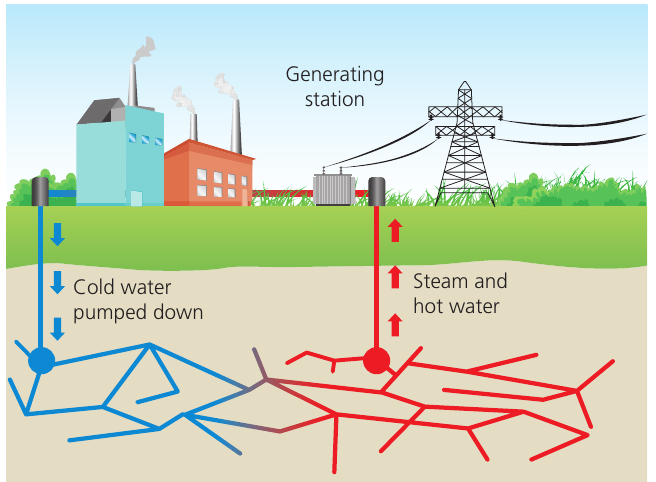
This superheated steam and water then rises back to the surface through separate pipes. At the surface, the steam drives turbines connected to electricity generators at the generating station, producing electrical power. The system creates a continuous cycle - cold water goes down, hot steam comes up, drives turbines, generates electricity.
Example
Case Study: Iceland's Geothermal Success
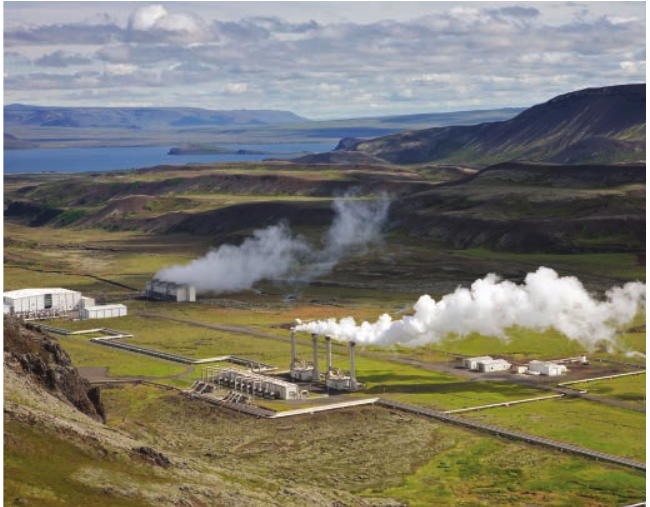
Iceland provides an excellent example of geothermal energy in action. The Nesjavellir geothermal power station demonstrates how countries with appropriate geology can harness this renewable resource.
Located in a volcanically active region, the facility produces substantial amounts of electricity whilst emitting primarily water vapour rather than greenhouse gases.
Comparing renewable energy sources
Each renewable energy source presents distinct advantages and disadvantages. Understanding these trade-offs helps explain why different countries favour particular renewables based on their circumstances.
Note
Memory aid for the seven renewable sources: "Some Will Bring Happy Times With Generosity"
- Solar
- Wind
- Biomass
- HEP (Hydroelectric Power)
- Tidal
- Wave
- Geothermal
Solar energy
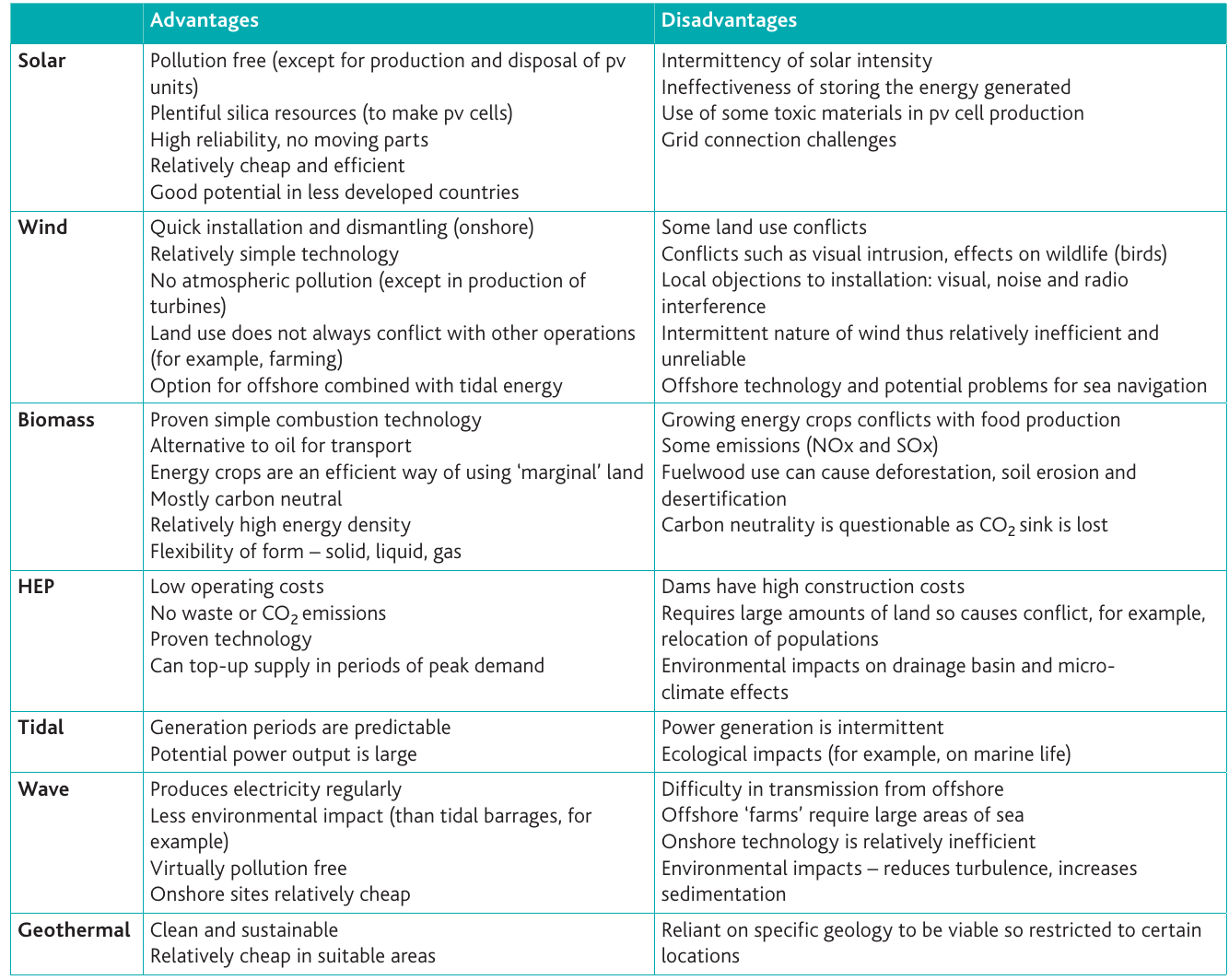
Solar power offers pollution-free operation (except during manufacturing and disposal of panels) and works particularly well in less developed countries where decentralised generation proves beneficial. The technology contains no moving parts, providing high reliability, whilst silicon resources for panel manufacture remain plentiful.
However, solar generation depends on sunlight availability, creating intermittency challenges. Energy storage remains problematic, some panel production uses toxic materials, and connecting solar installations to existing grids presents technical challenges.
Wind energy
Wind turbines install and dismantle relatively easily, particularly offshore installations. The technology remains straightforward, produces no atmospheric pollution during operation, and land use often permits other activities like farming to continue around turbines. Offshore sites can combine with tidal energy generation.
Unfortunately, wind energy creates some land use conflicts, visual impacts, and affects wildlife, particularly birds. Local communities sometimes object to installations, citing visual intrusion and noise. Wind's intermittent nature makes it relatively inefficient and unreliable, whilst offshore technology creates sea navigation concerns.
Biomass
Biomass provides proven combustion technology and offers an oil alternative for transport when converted to biofuels. Energy crops efficiently use 'marginal' land unsuitable for food production and approach carbon neutrality. The fuel offers high energy density and format flexibility (solid, liquid, gas).
Important
Growing energy crops competes with food production and generates some emissions (nitrogen oxides and sulphur oxides). Fuelwood harvesting can drive deforestation, soil erosion, and desertification.
However, questions remain about true carbon neutrality, as carbon dioxide sinks may be lost in the process.
Hydroelectric power (HEP)
HEP features low operating costs, produces no waste or carbon dioxide emissions, and employs proven, reliable technology. Systems can increase supply during peak demand periods by releasing more water through turbines.
Nevertheless, dam construction costs prove substantial, requiring large land areas that cause conflicts, particularly affecting communities requiring relocation. Environmental impacts include drainage basin alterations and micro-climate changes.
Tidal energy
Tidal generation benefits from predictable generation periods following tidal cycles, with large potential power output from major installations. However, power generation occurs intermittently, limited to tidal flow periods, and ecological impacts on marine ecosystems require careful consideration.
Wave energy
Wave power produces electricity consistently, creates less environmental impact than tidal barrages, operates pollution-free, and coastal installation sites prove relatively affordable. Challenges include transmitting power from offshore locations, large sea areas required for wave 'farms', relatively inefficient onshore technology, and environmental impacts from offshore installations that reduce turbulence and increase sedimentation.
Geothermal energy
Geothermal systems provide clean, sustainable energy with relatively low costs in geologically suitable areas. However, viability depends entirely on specific geological conditions, restricting potential locations significantly.
Case study: Niger's energy mix
Niger demonstrates how development level, resource availability, and economic constraints create a particular energy profile. Understanding this West African nation's energy situation illustrates the challenges facing less developed countries.
Energy mix composition
In 2018, biomass sources provided the overwhelming majority (77%) of Niger's primary energy supply totalling 3,100 million tonnes of oil equivalent. This biomass primarily comprises fuelwood, charcoal, and animal waste. Approximately 84% of Niger's population lives in rural areas, where communities depend almost entirely on these traditional fuels for cooking and heating needs. Only 20% of the population accesses electricity from the grid.
Note
The dominance of biomass in Niger's energy mix reflects the country's rural population distribution and limited access to modern energy infrastructure.
Why this energy mix exists
Despite being one of the world's ten largest uranium producers, with half a million tonnes of proven reserves, Niger lacks the wealth and technical expertise required to develop nuclear energy domestically. The country possesses significant underdeveloped oil reserves, which it uses to supplement energy supply for transport and power generation sectors, rather than developing them fully.
Households consume 82% of Niger's energy. Road transport accounts for 14%, whilst industry (predominantly mining) and commercial/public services divide the remainder. The dominance of household consumption reflects the rural population's reliance on firewood as the cheapest and most readily available energy source. Limited coal and oil reserves exist but remain largely unexploited.
Important
Niger exemplifies a common challenge in less developed countries: possessing valuable energy resources (like uranium) but lacking the financial and technical capacity to exploit them for domestic energy needs.
Future energy potential
Niger possesses considerable potential for diversifying its energy mix. Construction of the Kandaji HEP station commenced in 2019 on the Niger River, with expected completion in 2025. This hydroelectric facility should provide renewable electricity generation capacity.
The country also shows promise for expanding solar and wind energy generation, supported by a United States government organisation called Power Africa. This initiative specifically encourages electricity development in rural areas, potentially reducing reliance on traditional biomass and extending grid access to more communities.
Summary
Key Points to Remember:
-
Energy mix varies globally - Each country's combination of primary energy sources reflects their unique circumstances, resources, and development level. It includes all energy uses, not just electricity generation.
-
Seven key factors shape energy choices - Availability of resources, inertia in existing systems, government policy, geopolitical relationships, development level, physical conditions, and diversity strategies all influence which energy sources nations adopt.
-
Renewable energy offers sustainability but requires specific conditions - Most renewable sources (except biomass) depend on particular geographical features, making them geographically specific. Each renewable type presents distinct advantages and challenges.
-
Development level profoundly affects energy access - Niger exemplifies how less developed countries may rely heavily on traditional biomass (77%) despite possessing other resources like uranium, due to financial and technical constraints limiting energy infrastructure development.
-
Energy transition requires long-term planning - Changing established energy systems proves difficult due to inertia, but strategic investments in appropriate renewables (like Niger's planned Kandaji HEP station) can gradually diversify energy mixes and improve access.