Primary and Secondary Sources (AQA A-Level Geography): Revision Notes
📚Revision Notes
Primary and Secondary Sources
Understanding the difference between primary and secondary energy sources is fundamental to studying global energy systems. Energy exists in various forms in nature, but most of these natural sources must be converted into usable forms before they can power our homes, industries, and transport systems.
Understanding primary and secondary energy
Primary energy sources are forms of energy found naturally in their original state. These include resources like wind, flowing water, sunlight, coal deposits, oil reserves, and natural gas. However, these sources cannot usually be used directly in their raw form and must undergo conversion processes.
Secondary energy forms are created when primary sources are transformed into usable types of power. The most common secondary energy form is electricity, which can be generated from multiple primary sources. Other secondary forms include petrol and diesel (refined from crude oil), bioethanol (processed from biomass), and heat for domestic or industrial use.
Important
Primary energy resources are potential sources of energy found in their natural form, such as wind, running water, or raw materials like coal, oil, wood, and uranium. They need to be converted or processed into secondary energy sources such as petrol or diesel used to run vehicles, or electricity which powers domestic, industrial, and commercial premises.
Important
Secondary energy resources are forms of energy that have been transformed or converted from primary sources into manufactured power forms which are usable, such as heat, electricity, or petroleum.
Global energy supply patterns
The composition of global energy sources has evolved over recent decades, though fossil fuels continue to dominate. Understanding these patterns helps explain current energy challenges and future transitions.
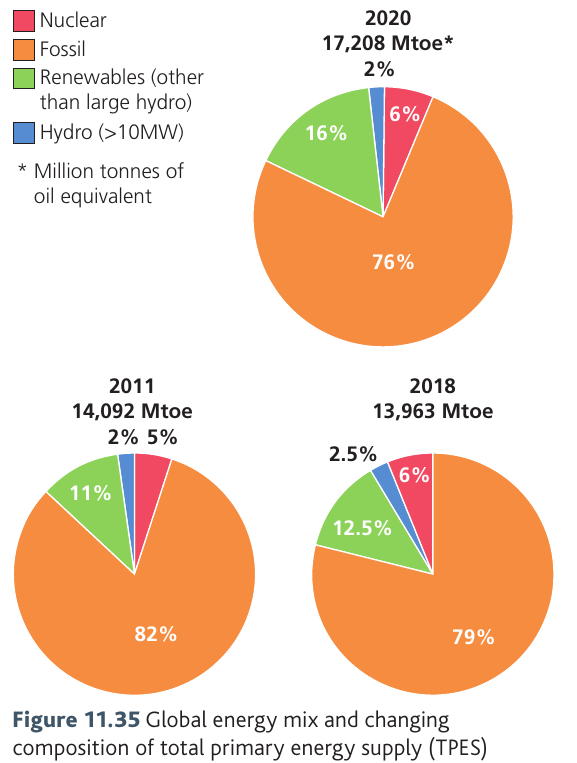
Key statistics from the global energy mix show:
- 2020: Fossil fuels comprised 76% of total primary energy supply (TPES), with renewables (excluding large hydro) at 16%, nuclear at 6%, and large hydroelectric at 2%
- 2018: Fossil fuels accounted for 79% of TPES, with renewables at 12.5%, nuclear at 6%, and hydro at 2.5%
- 2011: Fossil fuels dominated at 82% of TPES, with renewables at 11%, nuclear at 5%, and hydro at 2%
This data demonstrates a gradual shift towards renewable energy, though the transition remains slow. The total primary energy supply has ranged between approximately 14,000 and 17,000 million tonnes of oil equivalent (Mtoe) during this period.
Note
Energy mix refers to the combination of different energy sources used across a country or globally. Primary energy mix includes all sources used to produce secondary energy. Some data focuses specifically on electricity generation rather than total energy consumption.
Converting primary to secondary energy
Different primary sources require specific conversion technologies to produce usable secondary energy. Understanding these processes is essential for evaluating energy systems.
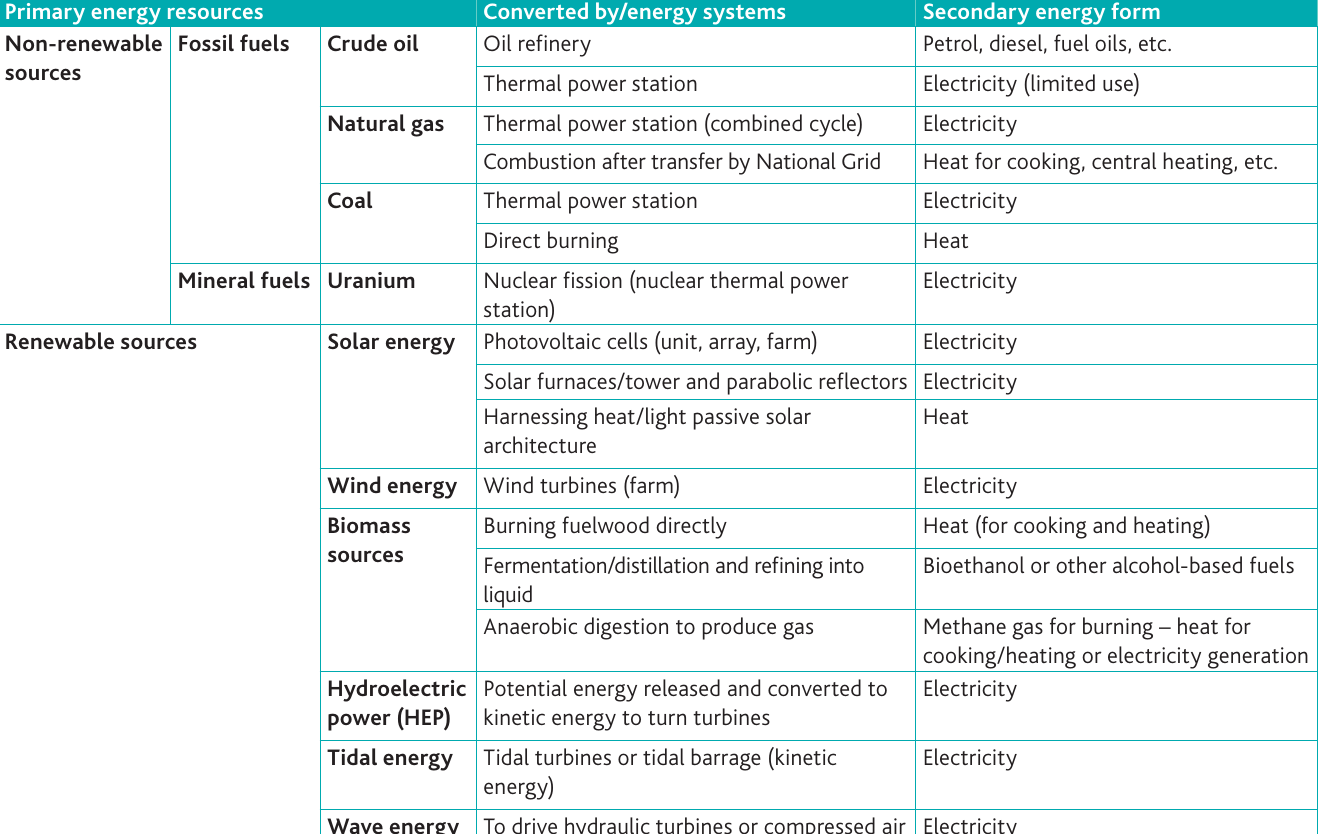

The conversion process varies significantly depending on the primary source:
Non-renewable conversions:
- Crude oil passes through oil refineries to produce petrol, diesel, and fuel oils
- Natural gas can be burned in thermal power stations (including combined cycle plants) to generate electricity, or distributed through national grids for heating and cooking
- Coal is primarily burned in thermal power stations for electricity generation, though it can also be burned directly for heat
- Uranium undergoes nuclear fission in thermal power stations to produce electricity
Renewable conversions:
- Solar energy can be captured through photovoltaic cells to generate electricity, concentrated using mirrors to produce extreme heat for power generation, or harnessed passively through building design for heating
- Wind energy turns turbines in wind farms to produce electricity
- Biomass can be burned directly for heat and cooking, fermented and distilled into bioethanol or other alcohol-based fuels, or digested anaerobically to produce methane gas
- Water energy drives turbines through various mechanisms including hydroelectric dams, tidal barrages, and wave compression systems
- Geothermal heat can power thermal stations for electricity or be used directly for heating purposes
Non-renewable energy sources
Fossil fuels
Fossil fuels have dominated the global energy landscape for over a century and continue to supply the majority of the world's power needs. Each type has distinct characteristics, advantages, and challenges.
Oil remains the most widely used energy source globally, though its share of total primary energy supply has declined to 30 per cent. It plays a crucial role in transport and the petrochemical industries. Oil can be transported relatively easily as a liquid and is highly tradable as a commodity. However, its price exhibits significant volatility, and the market is dominated by major oil-producing countries and large transnational corporations. Geopolitical tensions in areas with the largest reserves create supply security concerns.
Natural gas accounts for 22 per cent of the global energy budget and represents the fastest-growing fossil fuel source. It burns more cleanly than oil or coal and has lower environmental impacts. Natural gas is efficient for both power generation and direct heating applications. Increasing discoveries of unconventional sources (such as shale gas reserves) continue to expand supply. However, developing natural gas infrastructure requires substantial investment, particularly for transportation and distribution networks. Increasingly, reserves are located offshore or in remote areas, adding to extraction costs and supply route distances.
Coal supplies approximately 24 per cent of global energy and generates around 37 per cent of the world's electricity. It has a wider geographical distribution than oil or gas, with more plentiful reserves. Coal is particularly important in rapidly industrialising nations like China and India. New technologies are improving its environmental performance, including carbon capture and storage systems. However, coal produces high emissions of carbon, particulates, and other pollutants. These environmental concerns are leading to a gradual decline in its use in many developed countries, despite stable prices.
Note
The three fossil fuels together account for the vast majority of global energy supply, but each has distinct advantages and challenges. Oil dominates transport, natural gas is growing fastest due to cleaner burning, and coal remains important for electricity generation despite environmental concerns.
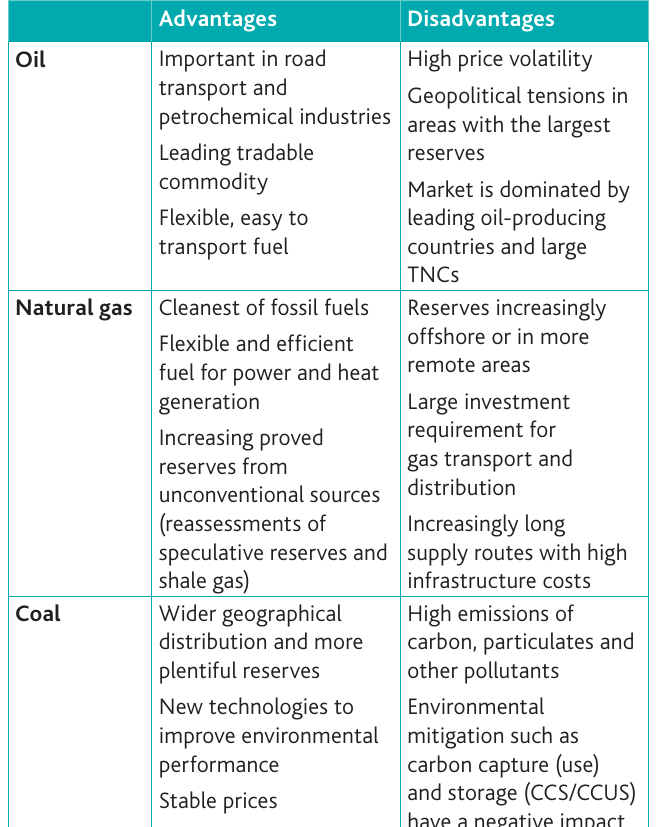
The table above summarises the key advantages and disadvantages of each fossil fuel type, highlighting economic, environmental, and geopolitical considerations that influence their continued use.
Nuclear energy
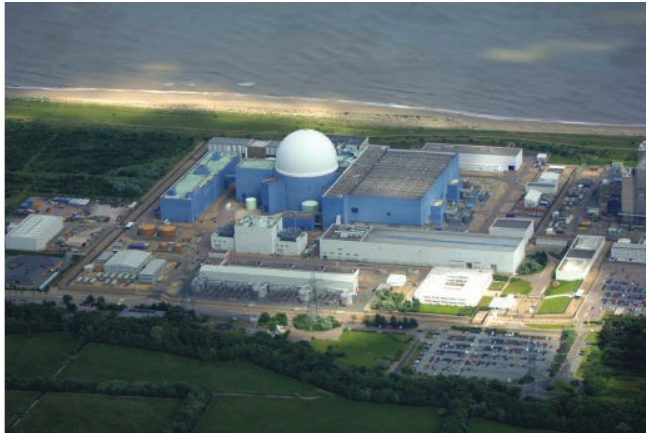
Nuclear power contributes approximately 6 per cent of the world's energy supply. It requires advanced technology and substantial initial investment, which explains why it is predominantly found in developed, high-income countries. However, developing nations such as China and India are increasingly investing in nuclear programmes.
Advantages of nuclear energy:
Nuclear power offers several compelling benefits that have sustained its use despite controversies. Modern reactors are highly energy-efficient with fuel that produces massive amounts of power from relatively small quantities of uranium. Reserves of uranium are relatively large and widely distributed compared to fossil fuels. Once constructed, nuclear stations provide predictable electricity costs over their operational lifetime. They produce minimal atmospheric pollution compared to fossil fuel combustion, making them an excellent replacement for coal and gas in electricity generation. The absence of carbon emissions during operation positions nuclear power as a low-carbon alternative in the fight against climate change.
Disadvantages of nuclear energy:
Despite these advantages, nuclear power faces significant challenges. Construction costs and regulatory compliance requirements are exceptionally high, making nuclear projects financially risky. Public concern about radioactive waste disposal remains intense, with no universally accepted long-term solution yet implemented. The potential for catastrophic accidents, demonstrated by incidents at Chernobyl, Ukraine (1986) and Fukushima, Japan (2011), has forced evacuation of local populations and caused widespread environmental contamination. Finding suitable sites that meet geological, hydrological, and population safety criteria proves increasingly difficult. Additionally, plutonium produced as a by-product can be used in nuclear weapons, creating geopolitical security concerns and potential terrorism threats. These factors have dampened enthusiasm for nuclear expansion in many advanced economies, leading to a levelling off of new reactor construction until recently.
Important
Nuclear energy presents a paradox: it offers low-carbon, efficient electricity generation but comes with risks related to accidents, waste disposal, and weapons proliferation. These competing factors make nuclear power one of the most controversial energy sources in the global energy mix.
Renewable energy sources
Renewables have increased their contribution to global Total Primary Energy Supply to around 16 per cent, and this growth trend is accelerating. Renewable energy has become the third-largest contributor to global electricity production. Some countries generate extremely high proportions of their electricity from renewables - for example, Iceland produces 100 per cent from geothermal and hydroelectric sources, Paraguay and Norway generate 100 per cent and 98 per cent respectively from hydroelectric power.
The overriding advantage of all renewable sources is their sustainability over the long term and their role in reducing dependency on finite fossil fuels. However, renewable energy technologies vary considerably in their environmental impacts during manufacture, construction, and operation. A key limitation is that most renewables (except biomass) require certain physical and locational conditions to be present, making them geographically specific in their application.
Solar energy
The Sun provides continuous energy to Earth, contributing significantly to building heating through windows and walls. This natural heating can be maximised through passive solar architecture, which incorporates design features like larger south-facing windows to capture more sunlight.
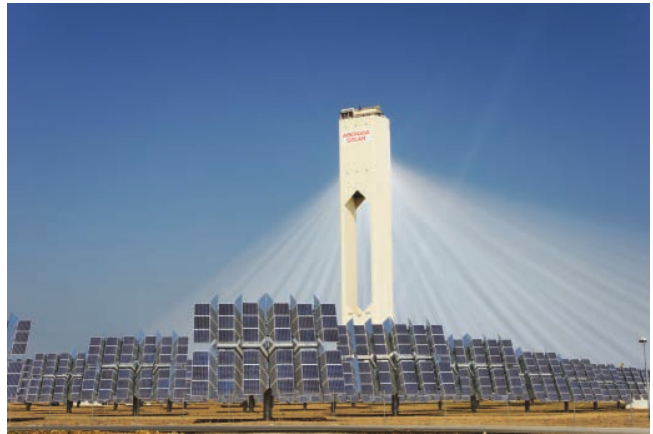
Solar energy is already utilised in appropriate technologies such as solar cookers in developing countries, but greater potential exists for electricity generation. Photovoltaic (PV) cells and arrays convert sunlight directly into electricity. More advanced systems use heliostats - parabolic mirrors that direct and concentrate the Sun's energy onto focal points. These concentrated solar power systems can achieve extremely high temperatures for industrial applications or to generate steam that drives electricity-producing turbines.
Note
The potential for solar energy in less developed tropical countries is excellent due to the reliability and intensity of sunlight in these regions. Solar installations can provide power to remote areas without extensive grid infrastructure.
Wind energy
Wind energy potential varies dramatically depending on location, wind speed patterns, and consistency. Turbines convert the kinetic energy of moving air into electricity and are increasingly deployed in large-scale wind farms connected to electricity distribution networks. These installations can create conflicts with other land uses, restricting wind energy development in some areas.
Countries with frequent, strong winds and extensive coastlines are particularly suited to wind power development. Many nations have developed substantial offshore wind farms where wind speeds are higher and more consistent than on land. The technology continues to advance, with larger turbines and improved efficiency making wind power increasingly cost-competitive.
Biomass sources
Biomass currently provides around 10 per cent of total primary energy supply. The concept of 'bioenergy' encompasses a broad range of applications involving any plant or animal matter converted into solid, liquid, or gaseous biofuels through various conversion technologies.
'Traditional biomass' primarily refers to fuelwood, charcoal, and agricultural residues used for household cooking, lighting, and space-heating in developing countries. These materials serve as the main fuel sources for over a third of the world's population. However, biomass applications extend far beyond these traditional uses.
In developed and developing nations, biomass can be burned in thermal power stations to generate electricity or processed through anaerobic digestion to produce biogas for cooking, heating, or electricity generation. Through fermentation and distillation processes, biomass can be converted into bioethanol and other alcohol-based fuels suitable for transport. These conversion processes allow biomass to contribute to multiple energy sectors, from domestic heating to industrial electricity generation.
Hydroelectric power (HEP)
Falling water generates approximately 2 per cent of total global energy supply. Many experts believe this resource remains under-exploited, though large dam projects carry significant environmental consequences. Major schemes like the Aswan High Dam in Egypt have proven controversial due to their substantial environmental and social costs.
Hydroelectric power captures the potential energy of water stored at height and converts it to kinetic energy as it falls, driving turbines that generate electricity. The technology is mature and reliable, providing baseload power to electricity grids. However, suitable sites require specific geographical features including sufficient rainfall, elevation changes, and appropriate valley shapes for reservoir creation.
Note
Hydroelectric power provides reliable baseload electricity and is a mature technology, but suitable sites are limited by geography and large dams can have significant environmental and social impacts on local communities and ecosystems.
Tidal power
The oceans contain massive energy potential, but only a fraction is currently being harnessed. Tidal power can be captured through two main technologies: tidal current water turbines (essentially underwater wind turbines) or tidal barrages.
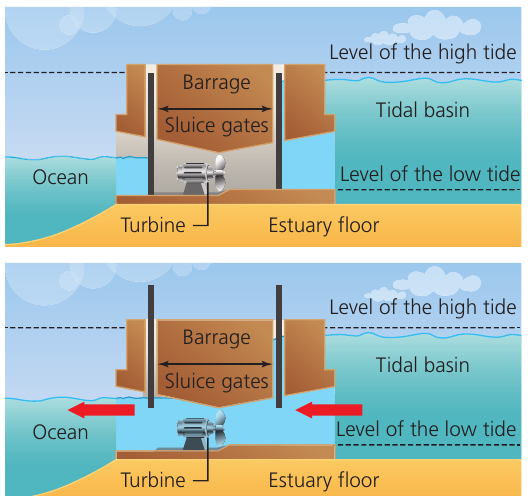
Tidal barrages operate similarly to hydroelectric dams but harness tidal movements rather than river flow. As the tide rises, water enters a tidal basin through sluice gates. At high tide, these gates close, trapping water behind the barrage. When the external tide falls, creating a height difference, sluice gates open and the captured water rushes through turbines, generating electricity. This process can occur on both incoming and outgoing tides, maximising energy capture.
However, viable locations for tidal barrages are limited by specific physical requirements, including deep coastal bays, inlets or estuaries with high tidal ranges. Construction costs are substantial, and barrages may cause environmental disruption by altering natural tidal flow patterns. These factors have restricted widespread adoption despite the technology's potential.
Wave power
Various technologies are being developed to make wave power commercially viable, particularly as significant energy can be lost in transmitting electricity from offshore installations to land-based grids.
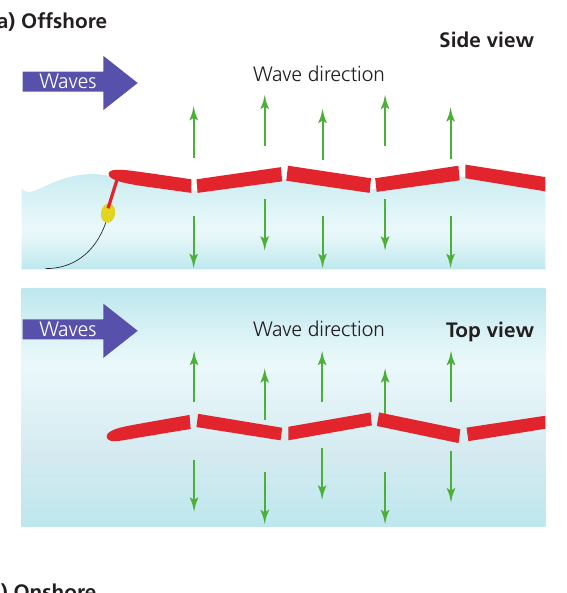
The most common offshore approaches harness the kinetic energy of surface waves to move floating structures up and down. These movements drive hydraulic rams that power electrical generators. The Pelamis Wave Energy Converter exemplifies this technology. Onshore alternatives include technologies like the LIMPET device on the Isle of Islay, which harnesses wave action inside concrete chambers. Waves force water into the chamber, compressing air that is then forced through turbines, generating electricity as pressure fluctuates with wave movements.
Wave power offers advantages as a renewable resource, but technology remains under development. Energy losses during transmission from offshore sites and the harsh marine environment present ongoing engineering challenges.
Geothermal energy
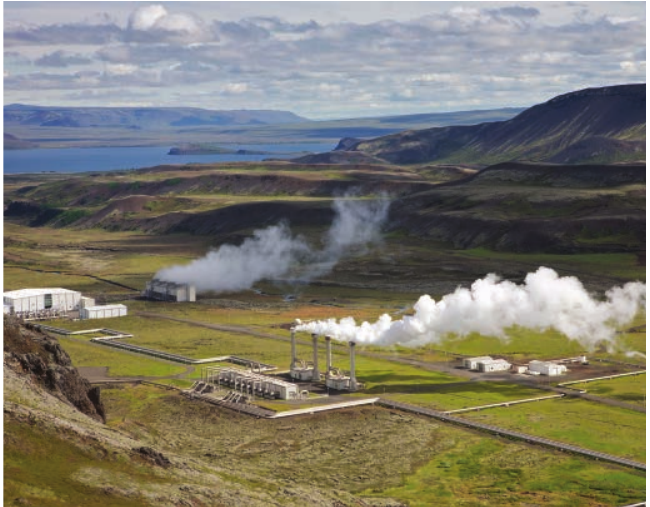
Earth's temperature increases by approximately 1°C for every 30 metres of depth within the crust. This temperature gradient becomes even steeper in geologically active regions such as plate margins, where volcanic activity brings heat closer to the surface.
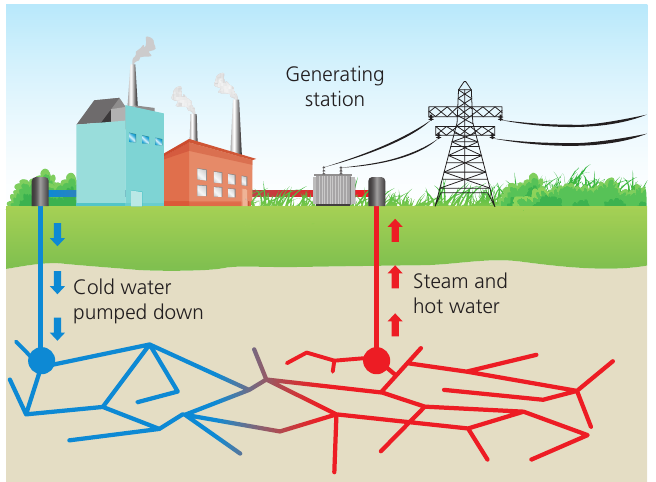
Geothermal energy exploits this natural heat through two main approaches. The most common method taps naturally occurring 'hydrothermal convection' systems. Cold water is pumped down into the Earth's crust where it heats up, then rises back to the surface. This heated water or steam can drive turbines in thermal power stations to generate electricity, or be used directly for heating buildings and industrial processes.
Note
Geothermal installations are particularly prominent in countries with significant volcanic activity, such as Iceland, New Zealand, and parts of the United States. The technology provides reliable baseload power independent of weather conditions, unlike solar or wind energy. However, suitable geology limits where geothermal energy can be economically exploited.
Energy mix and influencing factors
The global Total Primary Energy Supply represents an overall energy mix, but actual energy utilisation varies considerably between countries. Each nation's energy profile reflects multiple influencing factors rather than following a universal pattern.
Factors influencing a country's energy mix:
Availability of energy sources within the country: Nations naturally prioritise using resources readily available within their borders. Countries with abundant coal reserves, oil fields, or renewable energy potential will develop these resources first before importing alternatives.
Inertia: Energy systems exhibit significant resistance to change due to economic and technical challenges involved in transforming existing infrastructure. Even when alternatives become available, countries may maintain their established energy mix because of the investment already committed to current systems.
Government energy policy: Political decisions fundamentally shape energy development. Governments may prioritise energy security by favouring domestic sources, or commit to environmental goals by promoting renewables. International agreements like the 2015 Paris Climate Agreement drive policy changes towards lower-carbon energy systems.
Geopolitics: International relationships affect energy choices significantly. Countries prefer trading partners they can cooperate with reliably. Conversely, some energy suppliers cannot be relied upon due to political instability or potential conflicts, forcing nations to seek alternative sources despite economic costs.
Level of development (economic/technological): Economic capacity constrains energy choices. Less developed countries cannot afford expensive technologies like nuclear power or may become overly dependent on fossil fuel imports. Development level also determines the technical expertise available to operate advanced energy systems.
Physical/locational conditions: Geography determines which renewable technologies are viable. Countries with consistent strong winds develop wind power, nations with high tidal ranges can exploit tidal energy, those with volcanic activity harness geothermal heat, and countries with abundant sunshine invest in solar power. Physical conditions thus create natural advantages for specific energy sources.
Diversity: Governments may deliberately diversify their energy mix to avoid excessive reliance on only one or two sources. Diversification enhances energy security by ensuring that problems affecting one source do not cripple the entire energy system.
Important
No single factor determines a country's energy mix. Instead, the combination of available resources, existing infrastructure, government priorities, international relations, economic capacity, geographical conditions, and security concerns all interact to shape how each nation generates and uses energy.
Summary
Key Points to Remember:
-
Primary energy sources exist naturally in raw form (like coal, wind, or sunlight) and must be converted into secondary energy (like electricity or petrol) before they can be used effectively
-
Fossil fuels still dominate global energy supply at 76-79%, but renewable energy is growing steadily and now contributes around 16% to total primary energy supply
-
Each energy source has distinct advantages and limitations - fossil fuels offer reliability and existing infrastructure but cause environmental damage; nuclear provides low-carbon electricity but faces waste disposal challenges; renewables are sustainable but often location-specific
-
Energy conversion systems transform primary sources into usable secondary forms through technologies like oil refineries, thermal power stations, wind turbines, photovoltaic cells, and hydroelectric dams
-
A country's energy mix is shaped by multiple factors including available resources, existing infrastructure (inertia), government policy, international relationships, economic development level, suitable physical conditions, and the desire for diversity in supply