Classification of Resources (AQA A-Level Geography): Revision Notes
📚Revision Notes
Classification of resources
Understanding resource types
Natural resources are the materials we obtain from the Earth, and geographers classify them into different categories to help us understand how they're used and managed. The main classification system divides resources into stock resources and flow resources, based on whether they can be renewed or not.
Note
Understanding the difference between stock and flow resources is fundamental to resource management. This classification helps us predict resource availability, plan for the future, and develop appropriate conservation strategies.
Stock resources
Stock resources are compound deposits of materials that have formed over millions of years, typically found on or within the Earth's crust. These resources are fundamentally different from flow resources because of their formation timescale and finite nature.
Important
Stock resources are non-renewable resources that can be permanently expended. Their quantity is expressed in absolute amounts rather than rates.
Key characteristics of stock resources:
- They have a fixed and finite supply from an economic perspective
- Once used, they cannot be replenished within a human timeframe
- They're measured in absolute amounts (such as tonnes) rather than rates of renewal
- Examples include fossil fuels, metals, and minerals
- Formation typically takes millions of years through geological processes
Flow resources
Flow resources work on a completely different principle. These are resources that can be naturally renewed within a timeframe that's relevant to human decision-making and planning.
Important
Flow resources are resources that are renewable and can be replaced. Examples include fresh water and timber. They are commonly expressed in terms of the annual rates at which they are regenerated.
An important distinction exists within flow resources:
- Human-dependent flow resources: These rely on human activity staying at or below their natural regeneration capacity. If we harvest them faster than they can renew, they become depleted. Examples include forests and fish stocks.
- Critical flow resources: Resources from forests, plants and other biomass that may be depleted by overuse if exploited at a faster rate than they are replaced, requiring prudent management.
- Non-critical flow resources: Everlasting resources such as tides, waves, running water, wind and solar power that don't depend on careful management.
Energy resource classification
Energy resources provide a clear example of how the stock and flow classification system works in practice. All energy resources fall into two main categories: non-renewable and renewable.
Non-renewable energy resources
Non-renewable energy resources (also known as finite or stock resources) are those that have been built up or have evolved over geological time periods. They share several important characteristics:
- They cannot be used without depleting the stock
- Their rate of formation is incredibly slow - meaningless in terms of human lifespan
- Primary examples include fossil fuels: oil, natural gas and coal
- They also include uranium used in nuclear energy
- Once consumed, they're gone permanently from a human perspective
The term "stock resources" is particularly appropriate here because these resources exist as fixed stocks or reserves that diminish with use.
Renewable energy resources
Renewable energy resources (also known as flow resources) work fundamentally differently. They yield a continuous flow that can be consumed in any given period of time without endangering future consumption, provided current use doesn't exceed net renewal during the same period.
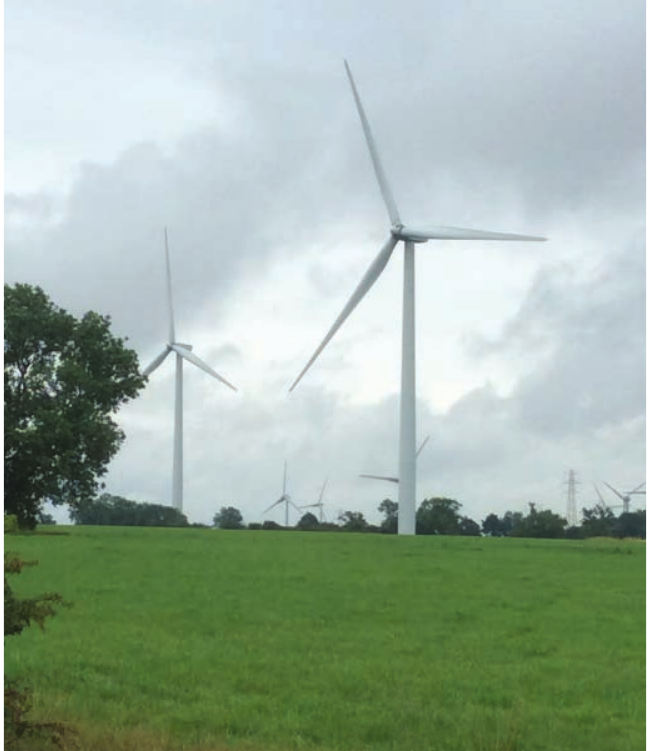
Examples of renewable energy resources include:
- Solar power: Energy from sunlight
- Hydroelectric power: Energy from flowing water
- Geothermal energy: Heat from within the Earth
- Wave and tidal power: Energy from ocean movements
- Wind power: Energy from moving air
- Biomass sources: Energy from organic materials
Note
Renewable resources can be subdivided based on whether they require careful management. Critical renewable resources, such as biomass from forests and plants, can be depleted through overuse. If we harvest these faster than they regenerate, we effectively treat a flow resource like a stock resource. Non-critical renewable resources, such as tides, waves, wind and solar power, are everlasting and don't require the same careful management approach.
Resource management and sustainable development
Resource management involves controlling how we exploit and use resources, taking into account both the economic benefits and environmental costs. The central concept here is sustainable development.
Important
Sustainable development requires a controlled system of resource management to ensure that the current level of exploitation doesn't compromise the ability of future generations to meet their needs.
This concept is particularly important when we consider flow resources. Just because a resource can theoretically renew itself doesn't mean it will if we mismanage it. Sustainable development means:
- Harvesting renewable resources at or below their regeneration rate
- Planning for the long-term availability of resources
- Balancing economic needs with environmental protection
- Considering intergenerational equity (fairness to future generations)
Water as a renewable resource
Water provides an interesting case study in resource classification. While water is technically renewable within the closed global hydrological system, calling it simply "renewable" can be misleading.
Important
Groundwater is the water stored underground in the cracks and spaces in soil, sand and rock. It moves slowly through geologic formations called aquifers.
The reality of water availability:
- Water is effectively finite because only about one per cent of freshwater is easily available for human use
- The majority of Earth's water (97.5%) is saltwater in oceans
- Of the 2.5% that is freshwater, nearly 70% is locked up in ice caps, glaciers and permanent snow
- Groundwater represents about 30% of freshwater, but it's not all readily accessible
- Only a tiny fraction of Earth's fresh water is available on the surface or in the atmosphere
Note
This means water can only truly be considered renewable at any location where there's carefully controlled usage, treatment and release. In many regions, particularly Asia and North America, rates of abstraction (removal of water from the environment) exceed rates of recharge (natural replenishment), causing depletion.
Important
Abstraction (water) is the removal of water available in the environment, either permanently or temporarily, from rivers, lakes, canals, reservoirs or from underground aquifers.
Around 1.8 billion people globally depend upon groundwater for their drinking water, but supplies are steadily decreasing in many areas. This demonstrates why even "renewable" resources require careful management and why the classification of resources matters for policy and planning.
Stock resource evaluation
Stock resources are mainly mineral deposits found in or on the Earth's crust. These minerals represent a concentration of naturally occurring solid, liquid or gaseous inorganic or fossilised organic material.
Understanding resources and reserves
There's an important distinction in how we classify and quantify stock resources:
Important
Reserves are that part of a resource that is available for use under existing economic and political conditions and with available technology.
The term "resources" includes all deposits of mineral resources, whether known, undiscovered, or even discovered but currently unviable economically. In contrast, "reserves" refers specifically to the parts of the resource base that are:
- Economically viable to extract
- Technically feasible to extract with current technology
- Available under current political conditions
Note
This distinction can become blurred in practice because commodity prices fluctuate constantly and technological advances happen relatively rapidly. What's uneconomical today might become economical tomorrow. A continuous increase in the price of a particular mineral and improved extraction technology will convert more "resources" into actual "reserves".
The McKelvey box concept
The McKelvey box (named after US geologist Vincent McKelvey) provides a visual way to understand the relationship between resources and reserves. This diagram helps distinguish between resources and reserves and shows the differences that exist within these two broad categories.
The larger box in this representation shows the entire "resource base" of a given mineral (such as copper ore). The smaller cube within the resource base represents the actual copper reserve, which is determined by:
- Economic recoverability: Based on current market prices and extraction costs
- Technical feasibility: Whether we have the technology to extract it
- Access: Whether we can legally and physically reach the deposit
As commodity prices rise or extraction technology improves, deposits that were previously considered "resources" (known but uneconomical) can shift into the "reserves" category (economically viable). This means the boundary between resources and reserves is dynamic and constantly shifting.
Key factors affecting reserves
Several factors influence whether a mineral deposit qualifies as a reserve:
- Price: Higher market prices make previously marginal deposits economical
- Technology: New extraction methods can make difficult deposits accessible
- Infrastructure: Transport links and processing facilities affect viability
- Political stability: Deposits in unstable regions may be technically and economically viable but politically inaccessible
- Environmental regulations: Stricter rules can make some deposits uneconomical
- Grade and quality: Higher quality deposits are more likely to be reserves
Resource terminology
Understanding stock resources also requires familiarity with several related terms:
Important
Exploration is the process of searching in an area with the intention of finding and mapping natural resources.
Important
Exploitation is the action of using natural resources to the fullest or for the most profitable use.
Important
Resource frontier refers to a newly colonised region where resources have been discovered and are brought into production for the first time.
Important
Resource peak marks the point in time when the maximum production rate of a resource occurs (at all scales from individual reserves to global), with production declining in subsequent years.
These concepts are crucial for understanding how we discover, develop and eventually deplete stock resources. The resource peak concept is particularly important for planning, as it indicates when we need to transition to alternative resources or reduce consumption.
Summary
Key Points to Remember:
-
Stock resources are finite: They're measured in absolute amounts and cannot be replaced within human timescales. Examples include fossil fuels and mineral deposits.
-
Flow resources are renewable: They regenerate naturally at measurable rates. However, critical flow resources (like forests) can be depleted if overused, while non-critical resources (like solar and wind) are everlasting.
-
Resources ≠ Reserves: Resources include all deposits (known and unknown, economic and uneconomic), while reserves are only the economically and technically viable portions available for extraction now.
-
Water is effectively finite: Despite being part of the hydrological cycle, less than 1% of Earth's freshwater is readily accessible, making careful management essential.
-
Sustainable development is essential: Managing resources sustainably means ensuring current use doesn't prevent future generations from meeting their needs, particularly important for critical flow resources.