Thatcher, Europe and Conservative Party Divisions (AQA A-Level History): Revision Notes
📚Revision Notes
Thatcher, Europe and Conservative Party Divisions
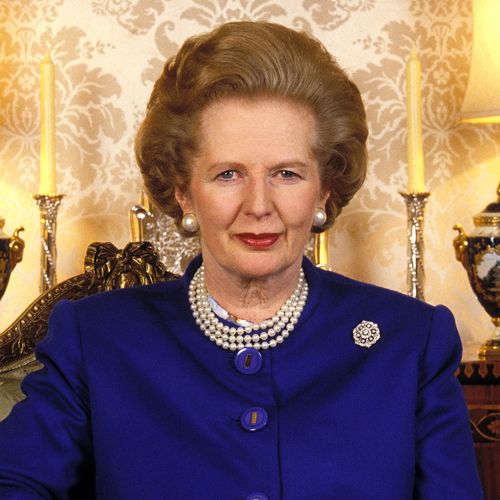
Thatcher as an international figure
After the Falklands War, Margaret Thatcher became a major international figure. Her forceful and confrontational style at European Council meetings made her highly visible on the world stage.
Her international profile was further enhanced through media exposure. When Mikhail Gorbachev invited her to visit the Soviet Union, Thatcher became the Western politician most familiar to Soviet citizens. Her reputation was reinforced again in the Middle East, where she became closely associated with another major conflict.
The First Gulf War
The First Gulf War (1990–91) followed Iraq’s invasion of its smaller neighbour, Kuwait. Iraq’s leader, Saddam Hussein, had previously fought a lengthy and costly war against Iran, and his regime was widely criticised for its poor human rights record. The invasion provoked strong international condemnation and led to the imposition of economic sanctions on Iraq.
At the time of the invasion, Thatcher was in the United States meeting President George H. W. Bush, who had earlier served as Vice President under Ronald Reagan. Thatcher argued strongly in favour of military intervention. Although Bush initially adopted a more cautious stance, he eventually agreed to take action after sustained pressure from Thatcher.
Several countries in the region supported the plan to force Iraqi troops out of Kuwait. The annexation of one sovereign state by another was almost unheard of in recent decades, and there were widespread fears that Iraq gaining control over such a large share of the world’s oil supplies would destabilise the global economy.
The conflict itself was relatively short. A large-scale aerial bombardment was followed by a ground offensive. As the Iraqi army collapsed in a disorganised retreat, coalition commanders recognised that the route to Baghdad was effectively open. However, the decision not to advance on the capital, overthrow Saddam Hussein, or impose political change in Iraq was ultimately a political decision rather than a military one.
Europe as a source of Conservative division
Throughout Thatcher's premiership (and continuing under Major), Britain's relationship with the European Economic Community created profound divisions within Conservative ranks. Three broad positions emerged among Conservative MPs regarding Britain's role in Europe:
- Full participation in the EEC, engaging with and being shaped by developments in European integration
- Remaining within the EEC but limiting involvement in what was seen as an undemocratic institution
- Complete withdrawal from the EEC
These competing visions produced ongoing tension within the party, with disagreements over Europe eventually contributing to Thatcher's removal from office in November 1990.
Note
The Europe question proved so divisive that it not only dominated political discourse throughout Thatcher's eleven years in power but would continue to fracture the Conservative Party under John Major's leadership and beyond.
Europhile ministers and their arguments
Kenneth Clarke and Michael Heseltine represented the pro-European wing of the Conservative Party. They advocated for Britain's active membership of the EEC on both economic and political grounds. The EEC, they argued, served Britain's economic interests through enhanced trade opportunities. Beyond economics, they viewed the organisation as a force for political stability across Europe, helping to prevent future conflicts between member states.
The EEC had emerged from the determination of France and West Germany to build strong economic, social and political links following the Second World War, and Clarke and Heseltine believed this peace-building function remained important.
Thatcher's shifting position on Europe
Thatcher's attitude toward European integration underwent considerable change during her political career. In the early 1970s, she held positive views about Britain's relationship with the EEC. She voted in favour of British membership in 1973 and actively campaigned for Britain to remain within the EEC during the 1975 referendum.
As Prime Minister, Thatcher initially continued this supportive stance. She argued successfully that Britain's financial contribution to the EEC budget was excessive, and secured a reduction in the amount paid. This demonstrated that she was willing to work within European structures to advance British interests.
Important
Thatcher's position began to harden dramatically after 1985. The appointment of French Socialist Jacques Delors as President of the European Commission marked a turning point. Delors spoke openly about developing a single EEC currency and, in a 1988 speech to the TUC, emphasised the importance of legislation to protect employees' rights. This interventionist approach to labour regulation clashed directly with Thatcher's commitment to deregulation and free-market economics.
Thatcher also became increasingly concerned about the growing powers of European institutions. She declared in 1999: "In my lifetime all our problems have come from mainland Europe and all the solutions have come from the English-speaking nations across the world." This retrospective statement revealed how completely her thinking had shifted, as she now contrasted what she saw as the threat from Hitler's Germany with the support received from Roosevelt's USA and the Empire's countries during the Second World War.
Note
Historian Richard Vinen has observed that Thatcher's perspective on Europe differed from many of her cabinet colleagues because of generational experience. She had not served in uniform during either world war, whereas many senior male ministers in her early cabinets had fought in the conflicts. When young, these men had witnessed much of Europe under fire. Thatcher had not left Britain until she was 26. Their direct experience of European warfare and subsequent reconstruction inevitably shaped their understanding of the EEC's importance differently from hers.
The Single European Act (1986)
The EEC had been established through the 1957 Treaty of Rome. In 1986, this founding treaty was revised through the Single European Act, which Thatcher signed despite her growing reservations about European integration. The Act introduced two major changes:
Creating a single market: The Act established a timetable for removing remaining barriers to trade and enabling the free movement of people, goods and services across all EEC member states. This addressed the fact that despite the EEC's existence, various restrictions on trade still operated between member countries.
Qualified majority voting: The Act created a framework that would develop into a common defence policy. More immediately, it changed the decision-making process within the EEC from requiring unanimous agreement to allowing qualified majority voting. As the EEC expanded (from the original six members to 12 by 1986, with further expansion expected), unanimous decision-making had become increasingly difficult and left the organisation inefficient.
Important
Thatcher's decision to sign the Single European Act represented a commitment to closer union between Britain and other European states. According to historian Peter Hennessy: "The passing of the Single European Act in 1986 [marked] a step little noticed at the time towards a Europeanised Britain ... and, incidentally, beginning to lay down the incendiary material which brought her premiership to an end five years later."
The pressure to sign came from within her own government. Geoffrey Howe (her Deputy Prime Minister and Leader of the Commons) and her Chancellor Nigel Lawson jointly persuaded Thatcher to commit Britain to the agreement. This demonstrated that even senior figures aligned with Thatcherite economics believed closer European cooperation served British interests.
The Bruges speech and escalating Euroscepticism
As Thatcher's opposition to further European integration intensified, so too did her willingness to express that opposition publicly. Following her third election victory, she delivered a speech in Bruges in September 1988 that openly challenged the direction of European policy. She expressed discontent with the European project, stating:
Note
The Bruges Speech (September 1988)
"We have not successfully rolled back the frontiers of the state in Britain, only to see them re-imposed at a European level, with a European super-state exercising a new dominance from Brussels."
This speech represented a direct attack on the federalist vision promoted by Commission President Delors and supported by many within the Conservative Party. Thatcher identified herself firmly with Euroscepticism, arguing that European institutions threatened to undermine the economic reforms she had achieved domestically.
Deepening divisions within the Conservative Party
The Single European Act highlighted fundamental disagreements among Conservatives about what the EEC should be. Some argued that Britain had been persuaded to join what was essentially a free-trade area with minimal political oversight – the Common Market.
Note
Common Market: A popular British name for the EEC that emphasised its economic role, and minimised its political and diplomatic one.
However, others within the Conservative Party feared that the collection of trading nations was developing into a state structure. They were particularly concerned about defending British sovereignty and independence. Questions about Britain's membership of the EEC and the competencies of European agencies generated strong emotions within Conservative ranks.
Important
A specific source of tension involved regulatory approaches to employment. European authorities passed laws regulating how employers could treat employees and the terms under which companies could operate. This interventionist stance was viewed as problematic at a time when Thatcher was moving towards less government intervention in the economy. The EEC's regulatory approach clashed with her programme of deregulation and market liberalisation.
Parliamentary conflict and cabinet tensions
Thatcher's increasingly hostile stance toward European institutions created problems with colleagues who were working to improve Britain's standing within the EEC and increase British influence in European decision-making. Her opposition became particularly apparent during exchanges in the House of Commons.
When Labour leader Neil Kinnock questioned her about the Commission's desire to increase its powers, Thatcher responded forcefully:
Note
Thatcher's "No. No. No." Response
"Yes, the Commission wants to increase its powers. Yes, it is a non-elected body and I do not want the Commission to increase its powers at the expense of the House, so of course we differ. The President of the Commission, Mr Delors, said at a press conference the other day that he wanted the European Parliament to be the democratic body of the Community, he wanted the Commission to be the Executive and he wanted the Council of Ministers to be the Senate. No. No. No."
This stance aligned with her political philosophy of parliamentary sovereignty and limited bureaucratic power. However, the speech dealt a blow to those Conservative colleagues attempting to enhance Britain's engagement with European structures, including her own Foreign Secretary Geoffrey Howe. The Foreign Office under Howe's leadership had been working to strengthen Britain's position within the EEC.
Important
Thatcher could not have anticipated that her Bruges outburst would trigger events leading to the end of her premiership just four weeks later. Her uncompromising opposition to European integration, while consistent with her broader political beliefs, had opened a rift with senior colleagues that would prove impossible to repair. The Europe question, which had divided the Conservative Party throughout her time in office, ultimately played a role in her downfall.
Summary
Key Points to Remember:
- The Conservative Party held three broad positions on Europe: full participation, minimal involvement, or complete withdrawal, creating persistent internal divisions
- Thatcher's position evolved from supporting EEC membership (1973-75) to opposing further integration, particularly after Jacques Delors became Commission President in 1985
- The Single European Act (1986), which Thatcher signed after pressure from Howe and Lawson, created a single market and introduced qualified majority voting, committing Britain to closer union
- Thatcher's Bruges speech (September 1988) openly rejected European federalism, declaring she had not rolled back the state in Britain only to see it reimposed from Brussels
- Deep Conservative divisions emerged between those viewing the EEC as a free-trade area (Common Market) and those fearing it was becoming a federal superstate, with particular tension over interventionist employment laws that contradicted Thatcher's deregulation agenda