International relations: Sino-Soviet relations and conflict over Xinjiang (AQA A-Level History): Revision Notes
📚Revision Notes
International relations: Sino-Soviet relations and conflict over Xinjiang
The Treaty of Friendship, Alliance, and Mutual Assistance drastically deteriorated by 1960 due to the Sino-Soviet split. The USSR pulled its technical advisers out of China, which caused many infrastructure projects in the country to remain unfinished.
Party conferences from 1960-61 became a war of words between Chinese and Russian delegates. By 1962, China and the USSR were in a state of virtual non-cooperation.
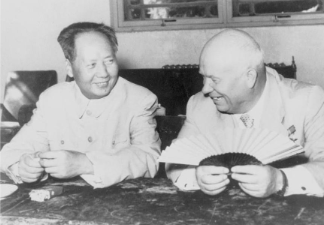
Mao and Khrushchev during their 1958 talks in China
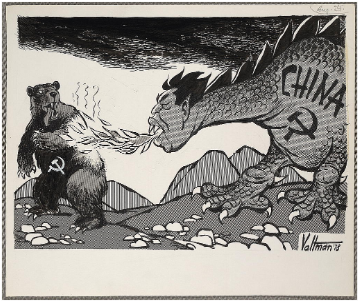
Cartoon depicting the Sino-Soviet split
In 1964, Mao withdrew his ambassador and ended diplomatic communication with Moscow after claiming that the Soviets were still in possession of a Chinese territory that was stolen during the reign of the tsars.
The most dangerous moments of the Sino-Soviet split came in the late 1960s over disputes on a contested border in Xinjiang province in China's remote northwest. Border talks ultimately broke down between the two parties, which escalated more in the second half of 1968.
Glossary of Terms
Mao's cult
The personality cult fuelled by the Red Guard's fanaticism of Mao Tse-tung
Socialist Education Movement
Also known as the Four Cleanups Movement, it aimed to clean up the country's economy, ideology, organisation and politics
Five Man Group
A group established whose main function was to assess anti-political sentiments in dramas, history, law, literature and philosophy
Little Red Book
A communist propaganda book containing a collection of quotations from Mao Tse-tung's speeches and writings
Cultural Revolution Group
The replacement of the Five Man Group after its disbandment on 16 May 1966
Thought Reform Movement
The movement that started in September 1951 in China and called for intellectuals to change their thoughts