The GDR in 1949 (AQA A-Level History): Revision Notes
📚Revision Notes
The GDR in 1949
Following the unification of the Communist Party of Germany and part of the Social Democratic Party as the Socialist Unity Party of Germany or SED (1946), the GDR was created on 7 October 1949. It was followed by the election of the East German parliament or Volkskammer and Wilhelm Pieck as the first and only president of the GDR. Characterised as a socialist republic, the GDR's government was based on the Soviet Union model.
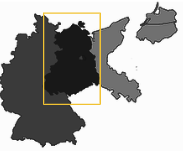
East Germany based on the Potsdam Conference
The highest state organ in East Germany was the Volkskammer (People's Chamber). Initially, it was the lower house of a bicameral legislature as created in 1949. The upper house was the Chamber of States or Länderkammer dissolved in 1958, following the abolition of states in 1952.
Note
Under the National Front, the SED controlled the following political parties: Christian Democratic Union, Democratic Farmers' Party of Germany, Liberal Democratic Party of Germany and the National Democratic Party of Germany.
As mentioned, Ulbricht, General Secretary of the SED, held most of the executive authority in East Germany. At first, he was able to dominate the SED. His second goal was to remodel the GDR into a Stalinist state. Following the death of Stalin, Ulbricht transformed the SED into a 'party of the new type'. In February 1950, the creation of the Ministry of State Security or the Stasi was approved by the Volkskammer. Similar to the Nazi regime, the SED used intimidation and purging of all political opposition. Before the end of 1950, card-carrying members who were identified as capitalists, peasant farmers, bureaucrats and intelligentsias were removed from the party.
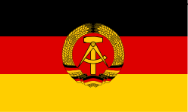
Flag of the GDR (1959-1990)
Note
Similar to Soviet intelligence agencies, East Germany had the Stasi and the Ministry of State Security.
In 1950, the Volkskammer passed resolutions lowering parental supervision to 18 years old and freedom of religion.
The following year, emigration of East Germans to the West increased to 17,000 per month. By 1953, it rose to 37,000 East Germans per month.
Note
In 1954, the Soviet Control Commission in Berlin was disbanded, East Germany was declared independent.