Renewal of War (AQA A-Level History): Revision Notes
📚Revision Notes
Renewal of War
📌 The Influence of Margaret of Anjou 1459-61
Invasion of Sandwich 1457: Pierre was a supporter of Margaret
Loveday March 1458: involved in the negotiations between her allies and the Yorkists. She walks arm in arm with York.
Act of Accord December 1460: Margaret gathers troops in the north after refusing to accept the Accord. Her supporters include Somerset, Devon, Exeter, Northumberland and James II of Scotland in exchange for Berwick-upon-Tweed
📌 What are the key advantages needed to win a battle?
Key advantages:
- large numbers of highly trained soldiers
- tactics/strategies
- weaponry
- high ground
- places to retreat to quickly
- location
- formation/position
📌 The resurgence of conflict and the rise of Warwick
Warwick was made Captain of the Calais Garrison in 1455
Warwick was nicknamed "The Kingmaker"
The French raid of Sandwich
- In august 1457 French attacked Sandwich in Kent led by Pierre de Breze (a friend of Margaret of Anjou)
- Breze had been negotiating a treaty for military support between Margaret of Anjou and Charles VII
- Rumours were that he was under the instruction of Margaret to cut off Warwick's supply route to Calais
- Led to excessive control over the channel by Warwick as the king had no ships of his own
- Offered the customs revenue to Warwick in return for his protection of the south coast
- Warwick exploited this by using the dominance for piracy
- He captured a fleet carrying salt from Kingdom of Castile
- Warwick potentially created international incidents that might lead to conflicts that they could not afford (e.g. with the Hanseatic League) and he was summoned to Westminster for trial
- October 1458 Warwick is indicted on charges of piracy but ignores this
- June 1459 Margaret and Henry summon their forces to Coventry and call a great council in which all nobles are invited to attend (Yorkist invite unclear)
- Meanwhile York sees this as a threat so raises his own forces (Salisbury and the Nevilles) in Ludlow
Blore Heath – Sept 1459
- Salisbury brings his forces (Thomas and John Neville) to try and link with York at Ludlow
- Margaret tries to get ahead and so sends Lord Audley and Lord Dudley to intercept
- Yorkists pretended to retreat to draw the Lancastrians away from their safe position
- Deaths of both Audley and Dudley is a big blow to Margaret
- Margaret could use it to charge the Yorkists with murder
Ludford Bridge, October 1459
- Yorkists carry on to Ludlow
- They sent a message to the king, protesting innocence and complaining about 'evil' advisors
- Henry issues a pardon for all but those who killed Audley
- The Yorkists did not accept these terms as they excluded Salisbury and would mean they were admitting to their guilt
- On October 12th York's forces (which included his sons the Earl of Rutland and the Earl of March, and the Lords Clinton and Grey of Powis) confronted the royal forces at Ludford Bridge
- Henry is there 'leading'
- The sight of the large royal army was too much of a threat to many on York's side
- Warwick's followers from Calais, led by Sir Andrew Trollope, deserted him
- Yorkist lords gave up in the night
- York and his son the Earl of Rutland fled to Ireland leaving Cecily Neville and their youngest sons George and Richard behind in Ludlow Castle)
- York's eldest son, the Earl of March, along with Salisbury, Warwick and his uncle William, Lord Fauconberg, fled to Calais
The Parliament of Devils – November 1459
- Henry spared the rank and file soldiers, fined a few and attainted fewer
- 27 rebels were attainted
- Some were pardoned including: Sir Walter Devereux, William Herbert and William Hastings
- Henry still wished for leniency so only the ring leaders were attainted
- A treatise named "Somnium Vigilantis" was written, setting out the case of the Yorkists. This stated their rebellion could never be justified and they had broken their oath of allegiance to the king more than once. One clause showed that Henry was still more concerned with showing mercy and reserved the right to pardon those who submitted to him
- The Yorkists dismissed their sentences and planned to return to England with force
- Calais had to be won back by the government by force and this became a priority
- Henry VI appointed Henry, Duke of Somerset as captain of the garrison on the 5th of October
- Somerset and Trollope went to lay siege on the town
- Lord Fauconberg, Warwick's uncle and Salisbury's brother, defended the town. He had plenty of experience in the military from the Hundred Years War in France
- In Jan 1460 reinforcements were on their way to support Somerset but were intercepted by a Yorkist raid on Sandwich. The raiders were also able to recapture Warwick's impounded ships
- Somerset was defeated by Warwick's supporters on the 23rd of April 1460 at the Battle of Newnham Bridge
- Somerset had to retreat to Guisnes where he remained until the autumn of 1460
- Warwick was able to leave the garrison in March 1460 and go to Ireland to discuss the next campaign strategies with York
📌 The Battle of Northampton
📌 Why could Warwick muster the support to win the battle of Northampton?
- He led attacks on foreign shipping in the channel
- Merchants of London were particularly pleased as they had seen their trade decline under Henry VI
- The pirating provided money to pay his men in Calais
- He was praised for defending England from attack
- The Yorkists and their supporters distributed propaganda sheets all over the south-east
Events leading to the battle:
- August 1457: The French attacked Sandwich in Kent, led by Pierre de Breze. Warwick is given greater control over the channel to prevent this from happening again.
- 24th March 1458: Henry VI tried to reconcile the two factions with negotiations after the First Battle of St Albans.
- Battle of Blore Heath in which the Earl of Salisbury defeats Lord Audley and Lord Dudley.
- Parliament of Devils attaints Warwick, York, and Salisbury
- Battle of Ludford Bridge: Trollope and the Calais garrison marched away as they did not want to fight against Henry's troops. Warwick fled to Calais.
- Yorkist invasion lands in Sandwich with Salisbury and Edward. They meet with the archbishop of Canterbury and march on London.
📌 Battle of Northampton – July 10th, 1460
Number of Soldiers
- Lancastrians: 5,000 – 10,000
- Yorkists: 15,000 – 20, 000
Position
- Yorkists: in an open field
- Lancastrians: behind water-filled ditch in front of them topped with stakes and stockade with Northampton town river to rear
Weapons
- Yorkists mainly men-at-arms armed with crossbows, longbows and pole weapons
- Lancastrians: canons (field artillery), a similar collection of men-at-arms armed with crossbows, longbows, pole weapons
Aims of the Yorkists
- To remove the influence of Lancastrian favourites from the King's inner circle through military violence
- To establish York as Protector of the realm, not monarch
Key Events
Once in position he sent a message that read, "At 2 o'clock I will speak with the king, or I will die"
- King's forces took up a defensive position at Northampton
- Whilst approaching, Warwick sent a delegate to negotiate with the king on his behalf
- The Lancastrian commander, the Duke of Buckingham, replied: "The Earl of Warwick shall not come to the king's presence and if he comes he shall die"
- During Warwick's advance to Northampton, he was denied access to the King's person twice more
- Yorkist army was split into three battles, commanded by Fauconberg, Warwick and Edward Earl of March
- Fauconberg commanded the vanguard which consisted of men recruited in Kent
- The Yorkists advanced at 2 o'clock
- The men were in a column but were slightly hindered by rain
- As they advance, Warwick was met by a hail of arrows
- The rain had rendered the Lancastrian cannons useless
- When the Yorkists reached the artillery range the Lancastrian guns failed to open fire as the gunpowder had gotten damp in the rain
- When the Yorkists reached the defences, hand-to-hand combat began
- When Warwick reached the left flank of Lancastrian defences commanded by Lord Grey of Ruthin, treachery ensued
- Grey had his men lay down their weapons and helped the Yorkists into the camp beyond
- There had been a secret message from Grey to March saying he would change sides if the Yorkists backed him in a property dispute with Lord Fanhope
- Warwick had ordered his men not to lay violent hands on ordinary soldiers, especially Grey's men
- There may have been promises of high office by Warwick (Grey was made Treasurer in 1463)
- After this the battle lasted only 30 minutes
- The defenders were unable to manoeuvre inside the fortifications and fled as the attacking Yorkists advanced
- Most of the army surrendered or fled – some drowned in the River Nene, but some escaped across it
- Buckingham, Lord Egremont, Shrewsbury, and Lord Beaumont were killed
- Henry was captured by an archer, Henry Mountfort
- Aside from the leaders casualties seemed quite low – around 300
Note
Warwick attempted to negotiate with King Henry VI, but the Lancastrian commander, the Duke of Buckingham, refused. Despite heavy rain hindering both sides, Warwick's Yorkist forces advanced, met by ineffective Lancastrian artillery. Lord Grey of Ruthin's treachery allowed Yorkists into the Lancastrian camp, leading to a swift victory in just 30 minutes. King Henry was captured, and key Lancastrian leaders, including Buckingham, were killed. Casualties were relatively low, with around 300 men lost.
📌 What can sources tell us about the Battle of Wakefield?
Causes
- Northumberland, Somerset and Clifford: blood feud with Nevilles and York (long term)
- Act of Accord: York made the heir instead of Margaret's son (medium term)
- Queen Margaret starts attacking York's scouts and Northern estates, e.g. Pontefract Castle (short term)
Events
- Loss of scouts: slaughtered to the man
- Richard, Duke of York, underestimated the size and strength of the Lancastrian forces, who had gathered a substantial army nearby.
- On 30th December, Richard led his forces out of Sandal Castle, possibly to engage in a skirmish or gather supplies, unaware of the full strength of the Lancastrians.
- The Lancastrians ambushed the Yorkist forces, who were caught off guard and outnumbered.
- The battle quickly turned into a rout, with the Yorkists overwhelmed by the Lancastrian attack.
- Somerset attacks the foraging party
- York sallies forth from Sandal Castle to attack
- The Lancastrians spring their trap (planned by Andrew Trollope)
Results
- A decisive Lancastrian victory.
- Richard, Duke of York, was killed in the battle. His head was subsequently displayed on a spike at Micklegate Bar in York, adorned with a paper crown in mockery.
- Edmund, Earl of Rutland, attempted to flee but was captured and killed by Lord Clifford in what was described as a brutal act of vengeance for Clifford's father, who had been killed earlier by Yorkist forces.
- Richard Neville, Earl of Salisbury, was captured and executed shortly after the battle.
- The deaths of these key Yorkist leaders were a significant blow to the Yorkist cause, although leadership quickly passed to Richard's son, Edward, Earl of March, who would become Edward IV.
The Battle of Mortimer's Cross
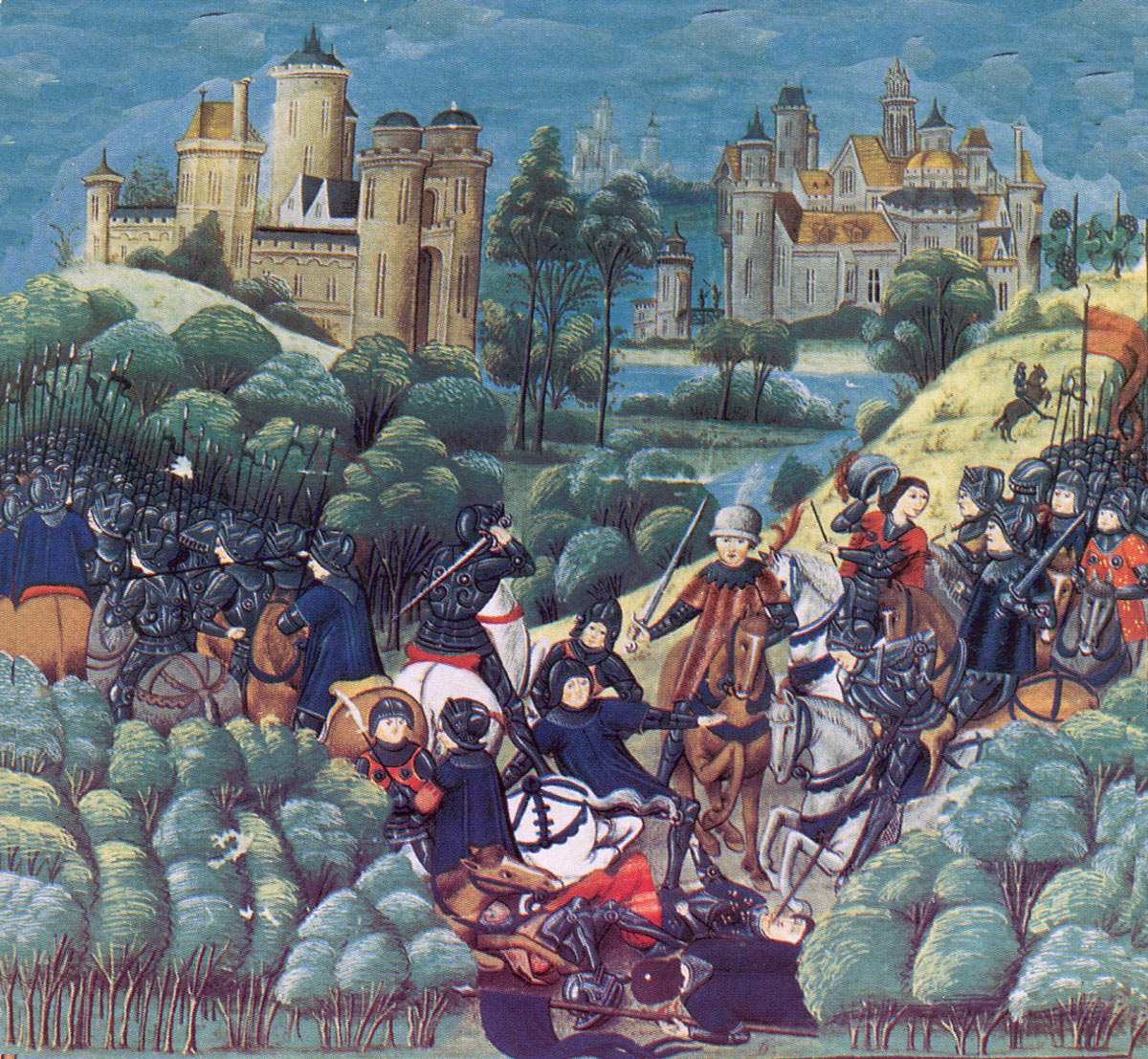
The Battle of Mortimer's Cross
- Date: 2nd February 1461
- Location: Near Wigmore, Herefordshire, England
Background:
- Following the Yorkist defeat at the Second Battle of St Albans, Edward, Earl of March, sought to intercept the Lancastrian forces moving through Wales.
- Edward, at the age of 19, emerged as the new leader of the Yorkist forces, determined to avenge the deaths of his father and brother.
Key Figures:
- Yorkists: Edward, Earl of March (later Edward IV)
- Lancastrians: Jasper Tudor, Earl of Pembroke
The Battle:
- The battle commenced early in the morning with a celestial phenomenon known as a parhelion (three suns visible due to atmospheric conditions). Edward used this to rally his troops, claiming it as a sign of divine favour.
- Edward's forces managed to surprise the Lancastrians, resulting in a significant tactical advantage.
- The Yorkists employed disciplined archery and infantry tactics, overwhelming the Lancastrian lines.
Outcome:
- A decisive Yorkist victory, with Jasper Tudor's forces routed.
- Owen Tudor, Jasper's father, was captured and executed.
- This victory solidified Edward's position as a formidable military leader and paved the way for his subsequent proclamation as king
📌 The Second Battle of St Albans - 1461
Background to the battle
- Following the battle of Wakefield and York's death, the Lancastrian army advance towards London
- Led by the Duke of Somerset, Earl of Northumberland, and Lord Clifford
- Meanwhile, Edward Earl of March had taken over the Yorkist claim to the throne
- To secure this he left London under the command of Warwick to deal with Jasper Tudor in the Welsh marshes where he was held up at the Battle of Mortimer's Cross
- Warwick was therefore tasked with meeting the Lancastrian army under Margaret on its journey south to release Henry VI and claim the throne
Positions
Warwick
- took position north of St Albans, on the main road from the north
- He set up several fixed defences, including cannons and obstacles such as caltrops and pavises studded with spikes
- Part of his defences used the ancient Belgic earthwork known as Beech Bottom Dyke
- Warwick's forces were divided into three "Battles"
- He led the main battle in the centre
- The Duke of Norfolk led the forwards (Vanguard) Battle on the right
- Warwick's brother, John Neville, commanded the Rear Battle on the left
Betrayal
- Although strong, Warwick's lines only faced north
- Margaret knew of this position through Sir Henry Lovelace, the steward of Warwick's household
- Lovelace had been captured by the Lancastrians at Wakefield but had been spared from execution and released
- He was offered the Earldom of Kent as reward for betraying Warwick
- On Feb 16th, Margaret's army swerved sharply west and captured the town of Dunstable
- About 200 local people under the town butcher tried to resist them but were easily dispersed
- Warwick's scouts failed to detect this move
The Battle
- On February 17th the first Lancastrian troops under Andrew Trollope advanced down Watling Street
- He headed south-east towards the centre of St Albans
- A force of Yorkist archers were posted at the end of the main market street by the Abbey
- The Lancastrians were forced back
- The Lancastrians continued to move north attempting to find a way around the Yorkist line
- This led them to the unprepared Vanguard on Barnet Heath, now under the control of Montagu
- The Yorkists may have had 4,000-5,000 men in the Vanguard and fought well at first, but Montagu was unable to get messages to Warwick, who then failed to get his men into the battle
- The Yorkist vanguard broke and fled, and Montagu was captured
- The main Yorkist army had not taken part in any fighting
- The remaining army fell apart
- Warwick escaped with a few troops and fled west, towards Edward Earl of March
- In the chaos of the army collapse, Henry VI was abandoned
- He was found by the Lancastrians, and he was accompanied by William Bonville, Lord Bonville and Sir Thomas Kyrill
- Henry had promised that neither man would be harmed, but he had little power and Margaret insisted that they were executed and got Prince Edward to give the orders
- Montagu was more fortunate and was kept as bargaining, since Somerset's brother was in Yorkist hands
Aftermath
- The Lancastrians advanced towards London
- They didn't want to risk an assault on the city as the commoners now feared the Queen
- Margaret entered negotiations with the city fathers
- A delegation of ladies led by the dowager duchesses of Bedford and Buckingham was sent to Margaret to negotiate terms for the Lancastrian entry into the city
- Most Londoners did not want to take their chances with the northerners of the Lancastrian army
📌 Who has possession of Henry VI?
First Battle of St Albans – no one
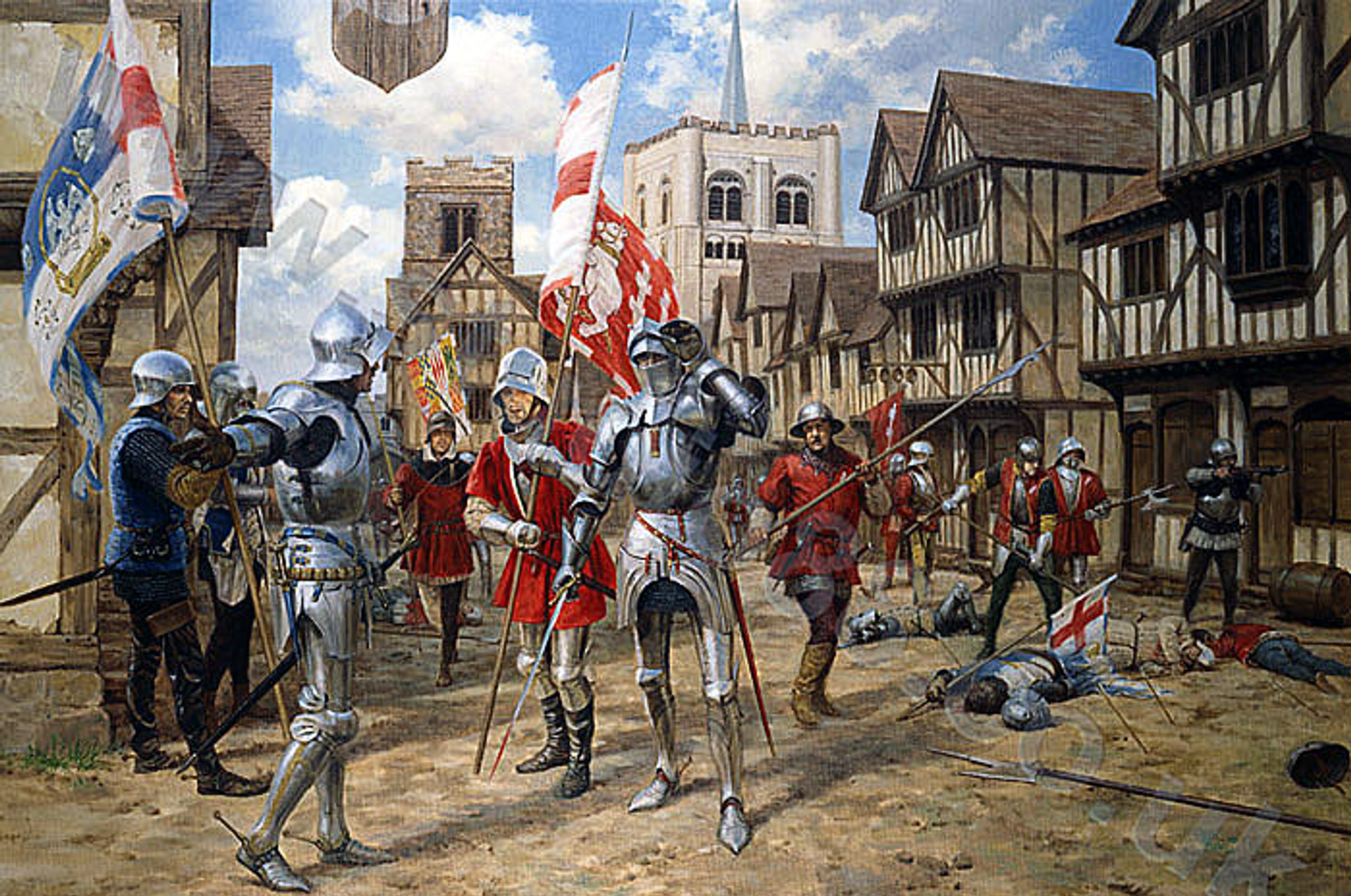
Battle of Northampton – Yorkists
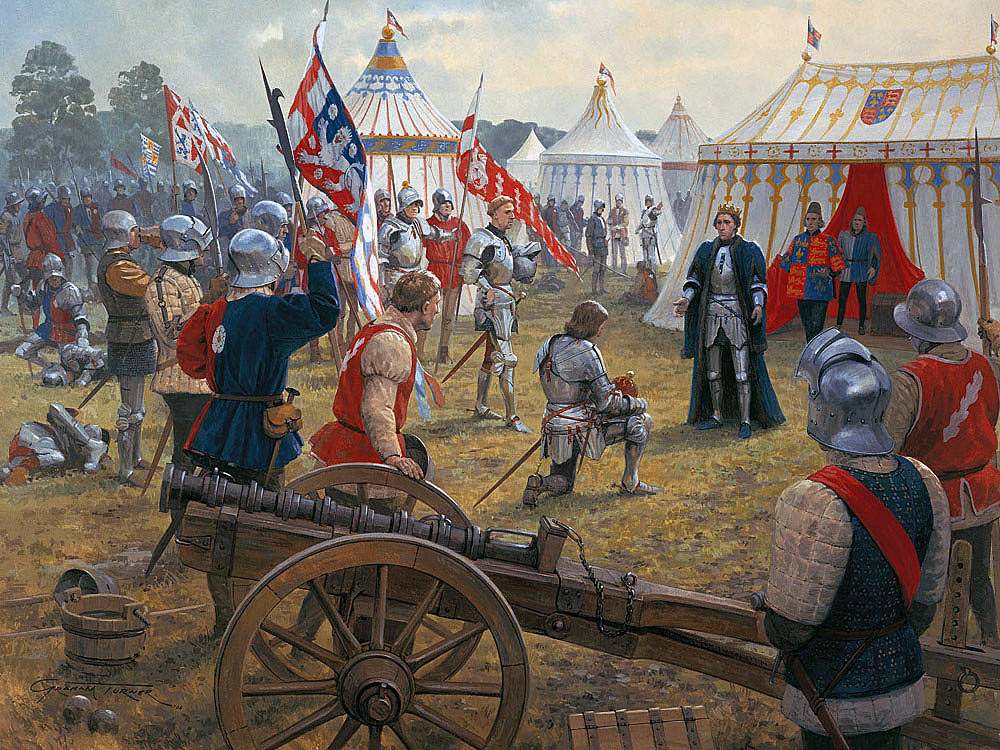
Second Battle of St Albans – Lancastrians
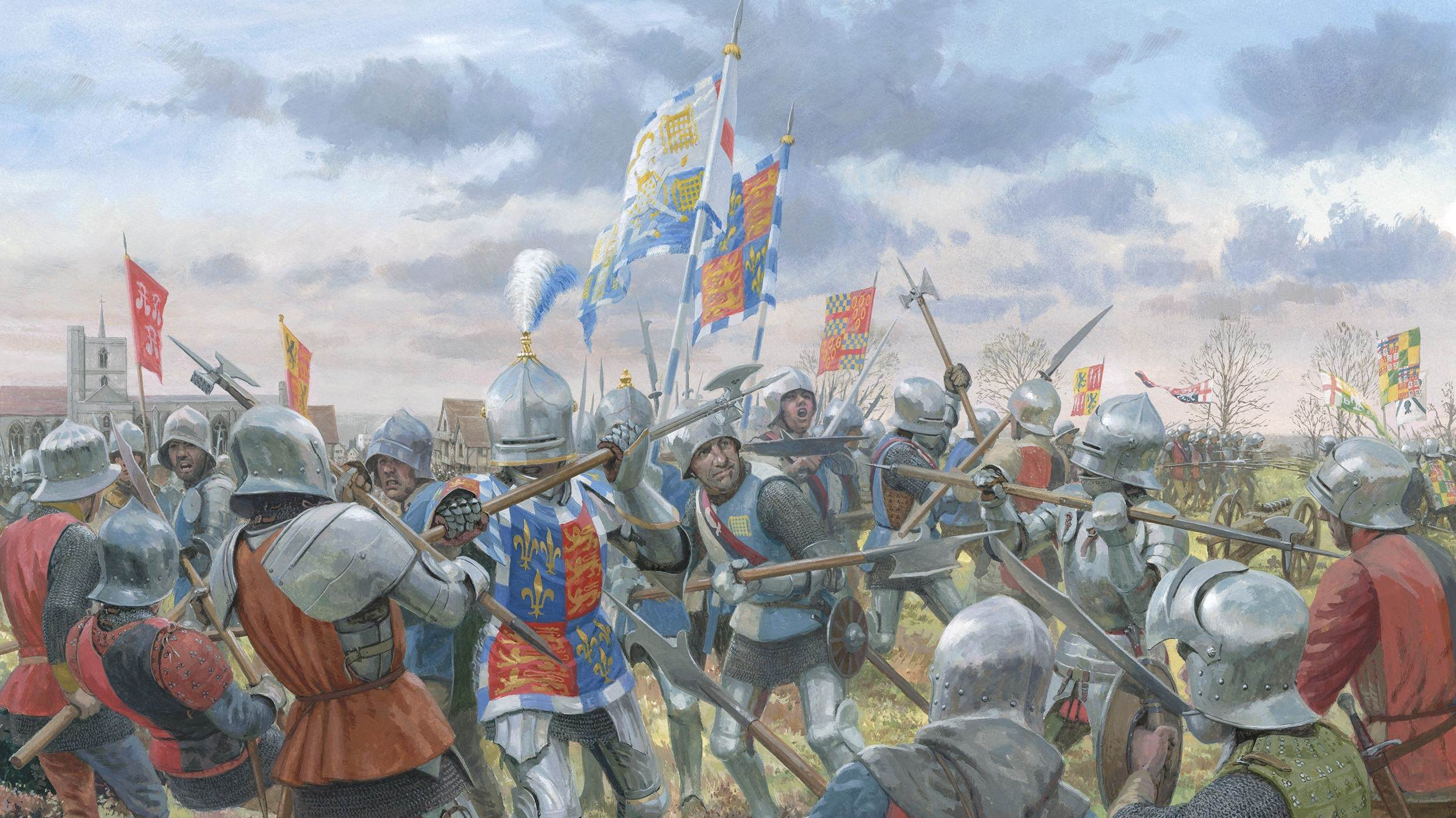
'The Act of Accord was the turning point after which Henry VI ceased to have any personal influence or involvement in the running of the Kingdom' Assess the validity of this view.
Agree:
- Margaret has more influence and gets her son Prince Edward to carry out orders (e.g. the executions after the second battle of St Albans)
- York made heir apparent and Protectorate
- York has more power and support, and parliament supports him (the Act of Accord)
Disagree
- Mental breakdowns of Henry VI
- York's first protectorate
- Yorkist possession of Henry
- Influence of Margaret of Anjou
The Battle of Towton
- Date: 29th March 1461
- Location: Near Towton, North Yorkshire, England
Background:
- After being proclaimed king, Edward IV needed to secure his throne against the Lancastrian forces.
- The battle was fought during a bitterly cold day, with heavy snow and strong winds playing a significant role.
Key Figures:
- Yorkists: Edward IV, Richard Neville (Earl of Warwick), William Neville (Lord Fauconberg)
- Lancastrians: Henry VI, Queen Margaret, Duke of Somerset, Duke of Exeter
The Battle:
- Edward's forces marched north to confront the Lancastrians, who held a strong defensive position.
- The Yorkists took advantage of the wind direction, which allowed their archers' arrows to travel further and wreak havoc on the Lancastrian lines.
- Lord Fauconberg instructed his archers to collect and reuse the enemy's arrows, conserving their own ammunition and further demoralising the Lancastrian forces.
- As the battle progressed, hand-to-hand combat ensued, marked by exceptional brutality and high casualties on both sides.
- The arrival of reinforcements led by the Duke of Norfolk for the Yorkists turned the tide decisively in Edward's favour.
Note
Edward's forces advanced north, exploiting the wind to gain an edge in archery against the Lancastrians. Lord Fauconberg cleverly had his archers reuse enemy arrows, saving ammunition and weakening the opposition. Intense hand-to-hand combat followed, with heavy casualties on both sides. The timely arrival of the Duke of Norfolk's reinforcements ensured a decisive Yorkist victory.
Outcome:
- A decisive Yorkist victory that resulted in heavy Lancastrian losses.
- Many Lancastrian soldiers, blinded by arrows and sleet, drowned while attempting to flee across the River Cock.
- Several key Lancastrian leaders were killed, and the remaining forces fled north. Henry VI and Margaret of Anjou escaped to Scotland.
- The victory at Towton effectively secured Edward IV's claim to the throne and marked a turning point in the Wars of the Roses.