Origins, Beliefs, and Strands (AQA A-Level Politics): Revision Notes
📚Revision Notes
Origins, Beliefs, and Strands
Nationalism centres its ideology around the nation, seeking to promote its wellbeing and place it at the heart of political life. The ideology pursues three primary objectives: national autonomy (the right of nations to govern themselves), national unity (bringing the nation together), and national identity (a shared sense of distinctiveness from other nations).
Note
These three core objectives form the foundation of all nationalist movements, though different strands of nationalism interpret and pursue them in vastly different ways. Understanding these objectives is essential for analyzing any form of nationalist ideology.
Historical origins of nationalism
Nationalism emerged from the upheaval of the French Revolution between 1789 and 1799. Before this revolutionary period, political organisation was based on empires and kingdoms where people were subjects of a ruler, owing them allegiance and obedience. The revolution fundamentally changed this relationship by introducing the concept of citizenship, where political legitimacy came from the people themselves rather than monarchical authority.
Important
The shift from subjects to citizens represents one of the most significant transformations in political thought. This change meant that individuals were no longer simply under the authority of a monarch, but were active participants in the political community with rights and responsibilities.
The revolutionary period established the idea that political action should be undertaken in the name of the French nation and for French citizens. This marked a significant shift in how political communities were understood.
Throughout the nineteenth century, nationalism became a powerful force that reshaped Europe's political landscape. New nation states such as Italy and Germany were formed during this period. Initially a progressive, revolutionary movement, nationalism was gradually adopted by conservative and reactionary politicians who saw its potential to maintain social order.
By the twentieth century, nationalism had spread globally. It appeared in two significant forms: as aggressive nationalism embodied in fascism, and as anti-colonial nationalism in response to European imperialism (the extension of power through conquest to establish political and economic control over other countries).
Understanding the nation
Defining the nation
According to political theorist Anthony D. Smith, a nation comprises "a named human community residing in a perceived homeland, and having common myths and a shared history, a distinct public culture, and common laws and customs for all members." For example, the French people form a nation within the homeland of France.
There remains considerable debate about what constitutes a nation and how nations have developed historically. Some scholars argue that nations are nineteenth-century inventions, created by nationalist movements to generate the social cohesion necessary for effective state functioning. Benedict Anderson famously described nations as "imagined communities" in 1983, suggesting they are social constructs rather than natural formations.
Note
The "Imagined Communities" Concept
Benedict Anderson's theory suggests that nations are "imagined" because members will never know most of their fellow members, yet they still hold an image of their communion in their minds. This doesn't mean nations are fictional, but rather that they are socially constructed through shared narratives, symbols, and beliefs.
In contrast, scholars like Anthony D. Smith argue that modern nations connect to ethnies - historical communities bound by shared beliefs, commitments, memories and a perception of their culture as distinctive from others. These ethnies, they argue, long predate modern states.
The nation state concept
The nation state represents a geographical area where cultural boundaries align with political boundaries, and the people possess the capacity for self-government. However, this concept represents an ideal rather than a reality in most cases.
Important
The Nation State as an Ideal
It's crucial to understand that the perfect alignment of cultural and political boundaries rarely exists in practice. Most modern states contain multiple national identities, and many nations exist without their own state. The nation state concept is therefore an aspiration rather than a description of reality.
Modern nation states typically contain multiple national and cultural elements. Belgium, for instance, includes both Flemish and Walloon identities alongside Belgian national identity. Some nations lack states entirely - the Kurds represent over 30 million people spread across Iraq, Syria, Turkey and Iran without a unified state. Conversely, some states lack a strong sense of nationhood, with Iraq sometimes cited as an example due to its weak public culture.
Strands of nationalism
Nationalism represents perhaps the most diverse political ideology. While all nationalists agree on the principle of national autonomy and the importance of national unity and identity, they disagree fundamentally about the sources of these qualities and how to strengthen them.
State nationalism versus minority nationalism
A key division within nationalism concerns the relationship between state and nation. State nationalism holds that the state must be based on a homogeneous national culture (the values, beliefs and customs passed down through generations) to realise its political values. Nationalism here involves creating, reinforcing or developing shared culture to allow effective state functioning. This manifests through national symbols (flags like the French tricolour), anthems (such as 'La Marseillaise'), oaths of allegiance, national assemblies, ceremonial processions (like the Trooping of the Colour), sporting achievements and national events (such as royal weddings in the UK).
Minority nationalism emerges in opposition to state nationalism. Minority groups within states believe their identity and culture face threats from state nationalism and require their own state for protection.
Example
State Nationalism vs Minority Nationalism in Practice
Scotland and the UK: The Scottish National Party (SNP) seeks Scottish independence from the UK, representing minority nationalism. Meanwhile, the Conservative, Labour and Liberal Democrat parties emphasise UK unity, promoting state nationalism that encompasses all British identities.
Catalonia and Spain: Catalonian independence movements seek separation from Spain to protect their distinct identity and language (minority nationalism), whilst the Spanish government promotes Spanish identity and unity (state nationalism).
Liberal nationalism
Liberal nationalism represents the earliest form of nationalism, originating in the French Revolution. It aims to liberate people from imperialism and end internal oppression. The strand rests on three pillars: self-determination, liberal internationalism and civic nationalism.
Self-determination
Liberal nationalism applies liberal principles about individual sovereignty to nations themselves. Just as rational individuals should be sovereign over their own minds and bodies with guaranteed natural rights, nations as collective individuals on the international stage should be sovereign and autonomous. The most fundamental right is self-determination.
This principle combines ideas of nationhood with popular sovereignty (the principle that no law can be legitimate unless it comes directly or indirectly from the consent of the individuals concerned). Political nationalism - the belief that the nation is the natural political community with the right to govern itself - underpins self-determination.
Note
Self-determination extends liberal principles of individual autonomy to the collective level. This creates a parallel between individual rights and national rights, with both requiring freedom from external control to reach their full potential.
The goal of liberal nationalism is creating nation states through either unification or achieving independence from foreign domination or absolute monarchy. The ultimate vision is a world of independent, equal nation states. Since nation states practice self-government, their governance must be democratic, based on popular consent. This expression of consent demonstrates the rationality of both individuals and the nation state itself.
Liberal internationalism
Liberal nationalists believe a world of independent nation states will create international balance and harmony. This vision rests on several principles:
Democratic nation states will respect other states' sovereignty (unrestricted power). Growing interdependence through free trade promotes mutual understanding, cooperation and makes war economically costly and therefore unlikely. International organisations like the United Nations create forums for rational debate and peaceful dispute resolution.
Democratic nation states will not wage war on each other because declaring war requires popular consent, and citizens must bear the costs of fighting. Cosmopolitan ideals (the idea that all humans are citizens of a global community) will develop, where individuals feel moral and ethical connections to all others regardless of nationality, recognising universal entitlement to basic rights and freedoms.
Important
The Democratic Peace Theory
A key assumption of liberal internationalism is that democracies do not wage war against each other. This theory suggests that because citizens must consent to war and bear its costs, democratic nations will resolve disputes peacefully. This remains a cornerstone of liberal nationalist thought about international relations.
Civic nationalism
Civic nationalism develops from shared political values and allegiances rather than ethnic or cultural characteristics. This form is open and voluntary - anyone who subscribes to the nation state's values is welcomed, regardless of ethnicity, religion, language, sexual orientation or culture.
Civic nationalism is inclusive, with members seeing themselves as part of a community of citizens unified by commitment to democratic ideals. It provides the basis for peaceful, dynamic and diverse societies that drive social and economic progress. The state plays a key role in building shared national culture to realise political values such as democracy or economic welfare.
The American motto "E pluribus unum" ("Out of many, one") exemplifies civic nationalism. It creates an inclusive society where new arrivals can learn the language, take oaths of allegiance and understand the culture without abandoning their own traditions, languages or identities. This creates a "melting-pot" society (a diverse society becoming more homogeneous, with diverse elements "melting together" into a unified whole) where people can be Irish-American, Italian-American or African-American. This opposes extreme individualism by giving people collective unity and identity, creating a sense of "us" and "we" that provides the basis for policies sharing resources across society, such as taxation and welfare.
Key thinker: Jean-Jacques Rousseau (1712-78)
Rousseau inspired liberal nationalism, particularly through The Social Contract (1762). He conceived the nation as a people who voluntarily establish their own governing authority through a social contract, without distinction based on wealth, religion or birth. The bond among community members is purely their agreement to obey the political authority they have created.

Rousseau's concept of the general will (seeing human society as a collective individual, where the general will comes from all and applies to all, ensuring liberty and equality while developing community spirit) detailed popular sovereignty as "only one will which is directed towards their common preservation and general wellbeing."
Note
The General Will in Practice
The general will required radical democracy, with legislative powers residing directly with the people rather than in representative assemblies. Rousseau opposed representation because he believed the state requires active citizen participation to survive, forming the basis of civic nationalism.
He argued viable political systems require social cohesion, necessitating a "civic profession of faith" based on values and ideas that make good citizens. Civic nationalism can be achieved through education, such as studying national literature "to shape the soul of citizens in a national pattern," strengthened by mass culture including sports, games and ceremonies.
Example
Rousseau's Ideas in the French Revolution
The French Revolution exemplified Rousseau's ideas in practice. Article VI of the Declaration of the Rights of Man and Citizen stated "the law is the expression of the general will," directly reflecting Rousseau's theory. The revolutionary motto "liberty, equality and fraternity" embodied the values that would unite citizens into a nation.
Key thinker: Giuseppe Mazzini (1805-72)
Mazzini was a political activist who formed "Young Italy," seeking Italian unification and removal of foreign influence and monarchical power. The movement aimed at "reconstituting Italy as one independent sovereign nation of free men and equals."
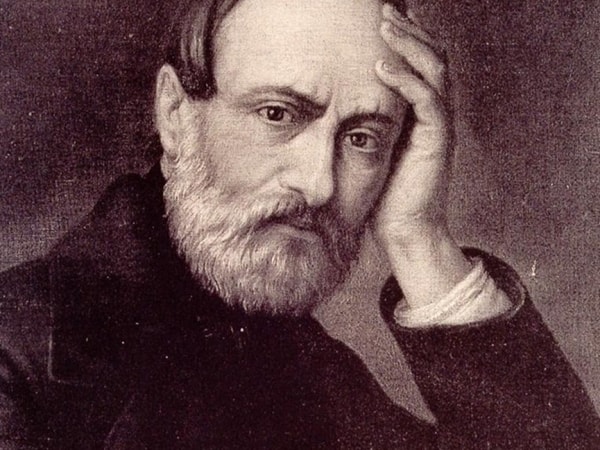
Mazzini committed to republicanism with two key aspects placing him within liberal nationalism. He believed all nations should be free and equal: "theoretically every nation is destined, by the law of God and humanity, to form a free and equal community of brothers." He saw a republic as "the only form of government that insures this future," stressing his belief in representative democracy.
However, Mazzini transcended pure liberal nationalism by viewing the nation as more than a rational concept linking territory to self-determination. His idea of "thought and action" argued that Italian unification was a moral rather than rational mission. He saw the nation as more than territory, describing it as "the sentiment of love, the sense of fellowship which binds together all the sons of that territory," giving his nationalism a romantic dimension.
Note
Mazzini's blend of liberal and romantic nationalism shows how nationalist thinkers often combine elements from different strands. His emphasis on both rational republicanism and emotional attachment to the nation demonstrates that these approaches need not be mutually exclusive.
Conservative nationalism
Unity and order
Conservatives initially viewed nationalism suspiciously, seeing it pit the nation against traditional authority such as the Church and monarchy. Once the nation and state merged in the nation state, conservatives recognised nationalism's potential for protecting the state against radicals and socialists promoting revolution, particularly in established states like the UK and France.
The nation is organic, emerging from the conservative view of imperfect human nature. Nationalism encourages deep connection to the nation because nations naturally emerge from people's desire for security, drawing together with others sharing attitudes, values, practices and appearance.
Note
The organic view of the nation sees it as naturally developing over time, like a living organism, rather than being artificially created through rational design. This contrasts sharply with the liberal view of nations as voluntary associations based on shared political values.
Nationalism protects and enhances existing social order and traditional institutions, creating needed security and stability. The unity and identity of the nation becomes paramount. Symbols, values, myths, memories and traditions nurture a romantic connection to the nation, combating divisions like age, gender, class or wealth.
Romantic nationalism stresses the importance of shared culture, language and history over rationalism as the basis of the nation. This approach developed from philosophers Johann Gottlieb Fichte and Johann Gottfried von Herder's writings.
Rights of the nation
Rather than supporting self-determination for all nations, conservative nationalism focuses on rights of one particular nation. This can manifest in two ways:
- Preserving national identity and unity by maintaining the status quo or returning society to a "golden age" based on a romanticised view of the past
- The particular nation state may promote its own economic and political interests at other nations' expense
Exclusivity
Exclusive nationalism emphasises shared culture, language and history, leading to opposition to large-scale immigration viewed as threatening national identity. Strong, stable societies are based on shared values and common culture, with opposition to multiculturalism (state-led policies balancing diversity and unity by creating political unity through recognising different cultural groups' rights).
Newcomers must accept common culture to become part of the nation. Immigration, especially from societies with practices, values or religions conflicting with majority culture, should be restricted.
Important
Conservative Nationalism's Exclusive Character
Unlike liberal civic nationalism which welcomes anyone who subscribes to shared political values, conservative nationalism requires cultural assimilation. This fundamental difference explains much of the contemporary debate about immigration and multiculturalism in Western democracies.
Opposition to supranationalism
Supranationalism occurs when regional or international bodies can impose their will on nation states. National institutions (such as parliaments), laws and currency (as symbols of cultural unity) should not be weakened by supranational bodies.
Opposition to the EU and euro has been strong among eurosceptics in the Conservative Party and was crucial to UKIP's rise. UKIP views the EU and euro as threats to British currency and way of life, undermining British institutions by limiting parliamentary sovereignty. The idea of "ever-closer union" is seen as absurd given Europe's cultural, linguistic and national diversity.
Example
President Trump's Conservative Nationalism
President Trump's "America First" and "Make America Great Again" slogans exemplify conservative nationalism through multiple policies and approaches:
- Returning to a "golden age": Pushing back against multiculturalism and globalisation to restore a romanticised vision of America's past
- Protectionist economic policies: Imposing tariffs on steel and aluminium imports to restore American manufacturing industries
- Withdrawing from international agreements: Pulling out of or remaking international bodies or treaties not furthering American interests, such as the Transatlantic Trade and Investment Partnership or Paris Climate Change Agreement
- Restrictive immigration policies: Implementing tough immigration controls to preserve American national unity and identity
- Cultural nationalism: Opposing NFL players protesting during the national anthem, viewing their actions as unpatriotic attacks on national symbols
Protectionist economic policies (shielding domestic industries by imposing taxes on imports) exemplify how conservative nationalism extends beyond cultural concerns to economic policy, prioritising national interests over international free trade.
Key thinker: Johann Gottfried von Herder (1744-1803)
The German critic and philosopher von Herder developed romantic or organic nationalism, where state legitimacy lies in the distinct national spirit and culture of each nation. He was the first thinker to use the term nationalism, "identifying it with a strong attachment to one's own nation that spills over into prejudice against other nations."
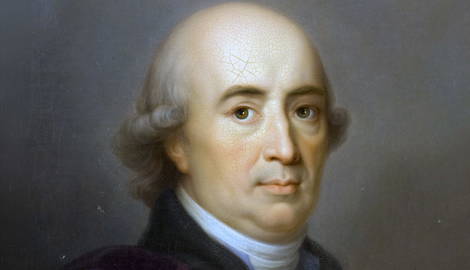
Von Herder argued individuals find meaning and value in their national culture. Each nation's culture differs, with unique character defined by history and relationship to natural environment, visible through language, literature, arts, folklore and law.
Note
Von Herder's emphasis on language as the expression of national spirit made linguistic preservation and development central to nationalist movements. This explains why language rights and revival (such as in Wales, Ireland, or Catalonia) remain crucial issues in contemporary nationalism.
Von Herder encouraged all nations to explore their linguistic, artistic and cultural spirit. He promoted cultural nationalism (focusing on protecting a nation's unique culture rather than the importance of self-determination, where the state supports the nation, not the nation supporting the state) rather than political nationalism - "an empire consisting of one nation is a family, a well-ordered household."
He saw patriotism as spiritual attachment to the nation, aiming to energise and protect the nation and its unique culture. He opposed any authority extending over multiple nations: "an empire forcing together a hundred peoples and a hundred-twenty provinces is a monstrosity and no body of state." This positioned von Herder against empires covering multiple nations, against supranational communities and against leaders not emerging from the people themselves.
Anti-colonial and post-colonial nationalism
European powers' imperialism created desire for national liberation and sense of nationhood among peoples of Africa and Asia. Colonised peoples, based in artificial territories defined by colonial boundary makers, gained unity and identity through opposition to and struggle with colonial powers.
European colonial powers brought liberal nationalism ideas with them. Many national liberation movement leaders from Africa and Asia were educated in the West, applying liberal self-determination ideas to their struggles.
Note
The irony of anti-colonial nationalism is that colonised peoples used the very ideals promoted by European liberal nationalism (self-determination, popular sovereignty) to challenge European colonial rule. This demonstrates how nationalist ideas can be adapted and applied in different contexts.
National liberation movements opposed colonialism's economic oppression, which exploited them and their natural resources for colonial powers' benefit, giving the movement an economic perspective. Consequently, national liberation movements blended self-determination with socialism (see chapter 3 on socialism).
In post-colonialism, nationalism and the state aimed to build national identity and unity - effectively, to build a nation. Here, nationalism preceded the nation.
The struggle against colonialism produced diverse ideas blending nationalism with non-Western concepts. Tanzanian president Julius Nyerere's Ujamaa ("familyhood") advocated collectivised agriculture, nationalised banks and industries, and self-reliance of individual and nation. Ghanaian revolutionary and president Kwame Nkrumah developed the "African Personality": "We are going to see that we create our own African personality and identity."
Black nationalism
Black nationalism comprises complex ideas based on desire for cultural, political and economic separation of African-Americans from white American society, developing in early twentieth-century United States. Marcus Garvey was central to its development, with two main elements:
Black pride represents feeling of pride and unity in black identity, culture and achievements, based on sense of common ancestry for all black Africans. Separation meant, for some, separate political, social and economic institutions for African-Americans; for others, a separate nation with independent state in America or return of all Africans to a free Africa.
Pan-Africanism
Pan-Africanism is a movement, informed by black nationalism ideas, wishing to unite all black Africans behind consciousness of their unique political identity and common political destiny. Three key elements define it:
Diaspora - all peoples worldwide descended from Africans share common ancestry, culture and identity. Much of this scattered population was created by forcibly removing Africans from Africa in the slave trade. Imperial powers divided Africans within Africa to facilitate continental domination, backed by ideological domination portraying Africans and African culture as backward.
Important
Freedom for Africa can only be achieved through total liberation of the entire African continent, with all Africans working together to escape colonialism and neocolonialism (where the state appears sovereign, but its economic and political policies are directed from outside by multinational companies and international organisations like the World Bank and Western countries like the USA).
Key thinker: Marcus Garvey (1887-1940)
Marcus Garvey, a Jamaican immigrant to America, was central to creating black nationalism and inspired anti-colonialism in Africa and pan-Africanism. He founded the United Negro Improvement Association (UNIA) in 1914 for "the absolute purpose of bettering our [African-Americans'] condition, industrially, commercially, socially, religiously and politically."

He established the Negro Factories Corporation and Black Star Line (a shipping/passenger company) so African-Americans could become self-reliant and separate from white society and economy. Garvey emphasised black pride to give black people sense of worth in their race and colour: "Be Black, buy Black, think Black, and all else will take care of itself."
He advocated African unity, arguing all Africans globally share common ancestry: "Our union must know no clime, boundary, or nationality...let us hold together under all climes and in every country." He believed in Africa for Africans, giving all Africans "national independence, an independence so strong as to enable us to rout others if they attempt to interfere with us."
Example
Garvey's Lasting Influence
Garvey inspired future black movements and leaders in America, including Malcolm X and the Black Panthers. He exercised huge influence on pan-Africanism and African leaders in the struggle against colonialism.
Ghana placed the Black Star in its national flag centre and nicknamed its football team the "Black Stars" in memory of Garvey's Black Star Line. Kwame Nkrumah's words about Ghanaian independence show Garvey's influence: "Our independence is meaningless unless it is linked up with the total liberation of the African continent."
Expansionist nationalism
Darwinian and chauvinistic nationalism
Expansionist nationalists based ideas on the assumption that international politics was a struggle similar to Charles Darwin's "survival of the fittest" concept from On the Origin of Species (1859). A nation state's political, economic or military success resulted from that nation's superior qualities. Underpinning this is the view that some nations are superior to others: chauvinistic nationalism (an irrational dedication to a particular group or community based on the idea that it is superior).
Imperialism and colonialism
During the nineteenth century, expansionist nationalism expressed itself as imperialism and colonialism, aiming to establish exploitable colonies serving the national interest at home. Struggle for empire against other nations created national unity and pride, with successful conquest proving that particular nation's superiority, often described as jingoism.
Important
Imperialism ignored self-determination principles, with nineteenth-century Europeans viewing African and Asian peoples as unable to govern themselves. Imperialism was portrayed as an idealistic, moral campaign to deliver civilisation to the world by introducing good government, culture and religion to less well-off nations.
This nationalism form is based on militarism (the idea that a nation state should maintain strong military capability and be prepared to use it aggressively to defend or promote national interests).
Pan-nationalism
Pan-nationalism emerged as chauvinist nationalism seeking to unite people of one culture, language or related language under one state. Pan-Slavism emerged in late nineteenth and early twentieth centuries with two themes: Russians and other Slavic peoples of eastern and southeastern Europe are one, with Russians as natural leaders and defenders; and Slavic peoples are superior to western European nations, making pan-Slavism both anti-liberal and anti-Western.
Note
Pan-Slavism ideas appear in writings of Alexander Dugin, a Russian philosopher and sometime adviser to Vladimir Putin, who sees Russia as the leading nation in Eurasia (a geographical area similar to the Soviet Union) with destiny to unite it in a Eurasian Union. Russian actions in Crimea and Ukraine can be seen to fit this pattern.
Integral nationalism
Chauvinist nationalism became more militant with integral nationalism, closely associated with Charles Maurras' thinking. Integral nationalism places the nation at the centre of all citizens' lives. It is anti-democratic, anti-individualistic and irrational, as all other loyalties or identities are absorbed into loyalty to the nation state. This is a form of ethnic nationalism (the idea of loyalty to a distinctive population, territorial area or cultural group where the group is believed, rightly or not, to have common ancestors).
This promotes individual sacrifice for the nation's benefit. It tends to be highly militaristic with strong appeal to nations feeling isolated, powerless and under threat, or nations recently achieving statehood through conflict.
Fascism and aggressive nationalism
This represents the most extreme and radical form of expansionist nationalism. Nazism in Germany crystallised around ideas of the "Aryan race" and "Ein Volk, Ein Reich, Ein Führer" (One People, One Nation, One Leader), as well as Lebensraum ("living space"). The political state is placed above the nation, with the nation serving the state. Mussolini, Italian fascist dictator from the 1920s until the Second World War, expressed this: "Everything within the state, nothing outside the state, nothing against the state."
Important
The Extreme Danger of Fascist Nationalism
Fascism represents nationalism at its most dangerous and destructive. By placing the state above all else and demanding total submission of individuals to the nation, fascist nationalism eliminates individual rights, democratic freedoms, and any form of dissent. This ideology was responsible for some of the twentieth century's greatest atrocities.
Racialism
Racialism believes in fixed, scientific categories for distinguishing between races despite scientific evidence, inaccurately equating nation with race. This splits the world into "us" versus "them" on racial basis, seeing some races as superior and pitted into competition against each other in a war of survival.
Racialism is exclusive as you cannot "opt in" to a race. The purity of that race must be defended at all costs against corruption by races regarded as lesser. This racialism form found expression in Nazi Germany under Hitler.
Key thinker: Charles Maurras (1868-1952)
Charles Maurras was an extremely controversial French writer and critic who led the Action Française movement in early twentieth-century France, describing his nationalism form as integral nationalism.
Maurras believed France had lost its greatness, seeing the decline's start as the French Revolution and its principles. He rejected the revolution and democracy. Political liberty had destroyed citizens' respect for state laws and natural and spiritual laws governing humanity. Equality, in democracy's shape, had handed power to the many, the "most inferior elements of the nation." Fraternity had turned France against itself, as anyone failing to share the same principles was portrayed as a monster and villain.
Maurras saw Jews, Protestants, Freemasons and immigrants as guilty of the French Revolution and as permanent threats to the nation. They were "anti-France" and should be excluded from the nation. He harked back to France's glorious past, proposing return to hereditary monarchy and Catholic Church principles to maintain social order and promote nationalism rather than individualism.
For Maurras, nationalism was integral as it must ensure "a true nationalist places his country above everything." Maurras contributed the idea that the individual is a servant of the nation and that the nation is the highest level of collective identity.
Recent challenges to nationalism
In recent times, nationalism has faced challenges potentially threatening its importance but also revitalising it. Liberal nationalism supports globalisation's liberal internationalism, accepts international law and human rights importance, proposes multiculturalism as a way of creating unity from diversity, and sees supranationalism as enhancing state power through pooled sovereignty.
These challenges have led to pan-Africanism revival to oppose neocolonialism seen at globalisation and free trade's heart. There has been rise of a more regressive, right-wing nationalism form identified by its opposition to these world changes, seeing them as real threats to cultural or ethnic identities. This includes UKIP and hard-line eurosceptics in the Conservative Party, the impact of Donald Trump's "America First" and "Make America Great Again" messages, and nationalist parties rising across Europe, including the AFD in Germany, the Freedom Party in Austria and the Law and Justice Party in Poland.
Note
Four Major Challenges to Contemporary Nationalism
Modern nationalism faces pressures from multiple directions, creating both threats to traditional nationalist movements and opportunities for nationalist revival. Understanding these challenges is crucial for analyzing contemporary politics.
Main challenges include:
- Globalisation - the world has become increasingly interconnected, especially economically, limiting the state's ability to control economic activity within its borders, weakening national autonomy
- Cosmopolitanism - the world can increasingly be seen as one society, where people have human rights and obligations to others extending beyond any national, cultural, religious or ethnic differences, threatening ideas of national unity and identity by creating a global identity
- Supranationalism - growth of supranational bodies higher than nation states that can impose laws and decisions on them. The EU clearly exemplifies this, removing national autonomy
- Immigration - increases diversity levels within societies of different groups with different identities and cultures, seen as threatening national identity and unity
Core ideas of nationalism
Human nature
Nationality is a form of consciousness whereby individuals identify themselves with a nation based on common identity distinct from other nations. This consciousness can be understood in different ways across nationalist strands.
Liberal nationalists view national identity as emerging from shared political values and rational choice. Individuals voluntarily subscribe to their nation's political principles, making nationality a matter of civic commitment rather than inherited characteristics.
Conservative nationalists see nationality as organic, emerging naturally from shared culture, history, language and traditions. National identity connects to a romantic attachment to the nation's heritage and collective memory.
Expansionist nationalists view nationality in exclusive terms, often equating nation with race or ethnicity. National identity becomes a matter of inherited characteristics that cannot be chosen or changed.
The state
Nationalists agree that nations should be organised into states, though they differ on the relationship between nation and state.
Liberal nationalists see the state as serving the nation, providing the framework for self-determination and democratic self-government. The state's legitimacy derives from popular consent.
Conservative nationalists view the state as protecting and enhancing national identity, using its institutions to nurture national culture and maintain social cohesion.
Expansionist nationalists place the state above the nation, with citizens serving state interests rather than the state serving the people.
Society
Nationalists emphasise the importance of national community, though they conceive this differently.
Liberal nationalists support diverse, inclusive societies based on shared political values, accepting multiculturalism as compatible with national unity.
Conservative nationalists favour homogeneous societies based on shared culture, viewing diversity as potentially threatening national cohesion.
Expansionist nationalists demand exclusive societies where only members of the dominant national or ethnic group fully belong.
The economy
Economic perspectives vary across nationalist strands.
Liberal nationalists generally support free trade and economic internationalism, viewing economic interdependence as promoting peace and cooperation between nations.
Conservative nationalists may support protectionist policies to defend national economic interests and preserve traditional industries.
Expansionist nationalists use economic policy to serve nationalist goals, whether through imperial exploitation, autarky or economic dominance over other nations.
Remember!
Summary
Key Concepts to Remember:
-
Nationalism emerged from the French Revolution, introducing citizenship and popular sovereignty as alternatives to monarchical rule, and spread globally through the nineteenth and twentieth centuries
-
Liberal nationalism champions self-determination, liberal internationalism and civic nationalism, viewing nations as voluntary political communities based on shared values rather than ethnicity, with Rousseau and Mazzini as key thinkers
-
Conservative nationalism emphasises organic unity, romantic attachment to shared culture and traditions, opposing rapid change and large-scale immigration while favouring national sovereignty over supranational bodies, with von Herder as a key thinker
-
Anti-colonial and post-colonial nationalism developed in response to imperialism, blending self-determination with economic concerns and producing movements like black nationalism and pan-Africanism, with Marcus Garvey as a key thinker
-
Expansionist nationalism takes aggressive, exclusive forms, ranging from nineteenth-century imperialism to fascism and racialism, placing one nation above others and promoting militarism, with Maurras as a key thinker representing integral nationalism