Chainsaw Versus the Pampas Grass by Simon Armitage (Edexcel A-Level English Literature): Revision Notes
Chainsaw Versus the Pampas Grass by Simon Armitage
Analysis of the Title
The title "Chainsaw Versus the Pampas Grass" sets up a dramatic conflict between two contrasting forces: a powerful, mechanical tool and a seemingly delicate plant. This juxtaposition hints at a deeper exploration of the themes of human dominance over nature and the inherent tension between technological aggression and natural resilience.
Structure and Form
Form, Metre, and Rhyme
- The poem is written in free verse, composed of seven irregular stanzas.
- There is no consistent rhyme scheme or metre, allowing for a more natural, conversational tone.
- The irregular form mirrors the unpredictability and raw power of the chainsaw and the eventual persistence of the pampas grass.
Speaker
- The speaker is a man who recounts his experience using a chainsaw to cut down pampas grass in his garden.
- He exhibits a mixture of fascination, awe, and slight trepidation towards the chainsaw, highlighting a complex relationship with the tool and what it represents.
Setting
- The setting is a typical suburban garden, emphasising the contrast between the ordinary, domestic environment and the violent, almost absurd use of a chainsaw.
- The garden, with its summerhouse and overgrown pampas grass, serves as a battleground for the speaker's attempt to assert control over nature.
Poetic Devices
Personification
- The chainsaw is personified as a violent, almost sentient being, "grinding its teeth in a plastic sleeve."
- d as a violent, almost sentient being, "grinding its teeth in a plastic sleeve."
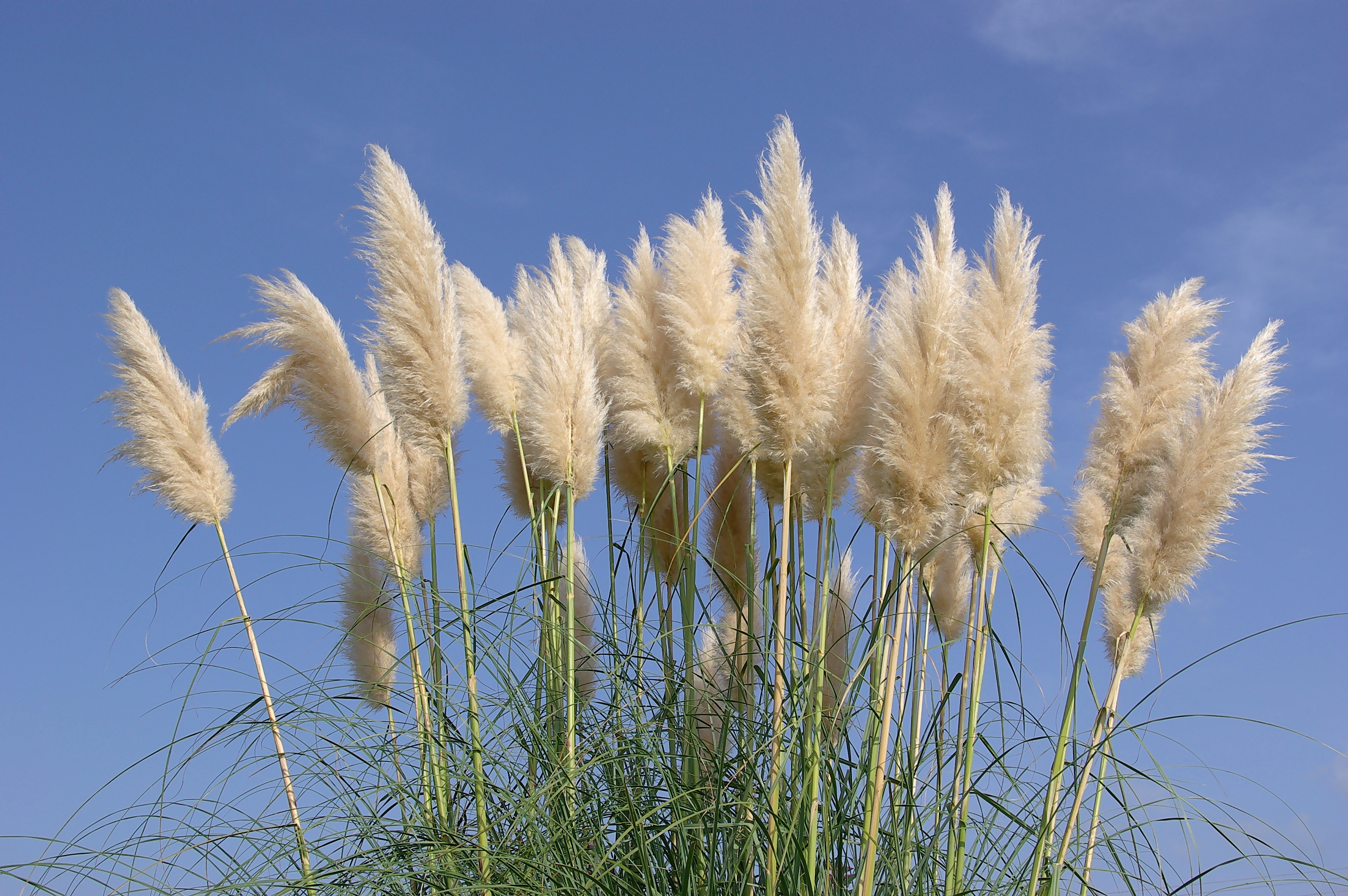
- The pampas grass is also personified, depicted as a resilient entity that "sunned itself" and "swooned."
Imager
- Vivid imagery captures the chainsaw's power and the destruction it causes: "juices ran from its joints and threads" and "plant-juice spat from the pipes and tubes."
- The contrasting gentle imagery of the grass "sunning itself" and its "ludicrous feathers and plumes" highlights its vulnerability and eventual resilience.
Simile
- Similes enhance the descriptions, such as the power cord laid out "like powder from a keg," suggesting an explosive potential.
- The grass is described as "new shoots like asparagus tips," emphasising its delicate yet persistent nature.
Key Themes
Human Technology Versus Nature
- The poem explores the conflict between human technological power and natural resilience. Despite the chainsaw's violent force, the pampas grass ultimately prevails. "New shoots like asparagus tips / sprang up from its nest."
Violent Force Versus Quiet Persistence
- The chainsaw represents aggressive, destructive power, while the pampas grass symbolises gentle, persistent resilience. The grass's ability to regrow quietly after being cut down illustrates the triumph of soft power over hard power. "The seamless urge to persist was as far as it got."
Line by Line Analysis
Lines 1-8
It seemed an unlikely match.
All winter unplugged,
grinding its teeth in a plastic sleeve,
the chainsaw swung
nose-down from a hook in the darkroom
under the hatch in the floor. When offered the can
it knocked back a quarter-pint of engine oil
and juices ran from its joints and threads,
oozed across the guide-bar and the maker's name,
into the dry links.
"It seemed an unlikely match."
- The poem begins with the speaker reflecting on the seemingly disproportionate battle between the chainsaw and the pampas grass.
- The term "match" sets up the idea of a conflict or competition.
"All winter unplugged, / grinding its teeth in a plastic sleeve,"
- The chainsaw is personified, described as if it is impatient and aggressive, even when not in use.
- "Grinding its teeth" suggests a barely contained violence.
"the chainsaw swung / nose-down from a hook in the darkroom"
- The imagery of the chainsaw hanging ominously in the dark emphasises its latent power.
"When offered the can / it knocked back a quarter-pint of engine oil"
- The chainsaw is given human-like qualities, depicted as drinking engine oil like a person might drink alcohol.
- This further personifies the chainsaw as a voracious and potentially dangerous entity.
"and juices ran from its joints and threads, / oozed across the guide-bar and the maker's name, / into the dry links."
- The vivid imagery of the oil oozing suggests the chainsaw coming to life, ready for action.
Lines 9-12
From the summerhouse, still holding one last gulp
of last year's heat behind its double doors, and hung
with the weightless wreckage of wasps and flies,
mothballed in spider's wool . . .
"From the summerhouse, still holding one last gulp / of last year's heat behind its double doors,"
- The summerhouse is depicted as a stagnant, almost forgotten place, adding to the sense of anticipation and latent energy.
"and hung / with the weightless wreckage of wasps and flies, / mothballed in spider's wool . . ."
- The imagery of dead insects preserved in spider webs enhances the sense of decay and neglect, contrasting with the impending violence of the chainsaw.
Lines 13-18
from there, I trailed the day-glo orange power line
the length of the lawn and the garden path,
fed it out like powder from a keg, then walked
back to the socket and flicked the switch, then walked
again and coupled the saw to the flex – gunned the trigger.
"from there, I trailed the day-glo orange power line / the length of the lawn and the garden path,"
- The bright power line is likened to a fuse, building tension and foreshadowing the explosive action to come.
"fed it out like powder from a keg,"
- This simile suggests an impending explosion, emphasising the chainsaw's potential for destruction.
"then walked / back to the socket and flicked the switch, then walked / again and coupled the saw to the flex – gunned the trigger."
- The methodical actions of the speaker contrast with the violent potential of the chainsaw, highlighting his control over the powerful machine.
Lines 19-26
No gearing up or getting to speed, just an instant rage,
the rush of metal lashing out at air, connected to the mains.
The chainsaw with its perfect disregard, its mood
to tangle with cloth, or jewellery, or hair.
The chainsaw with its bloody desire, its sweet tooth
for the flesh of the face and the bones underneath,
its grand plan to kick back against nail or knot
and rear up into the brain.
"No gearing up or getting to speed, just an instant rage,"
- The chainsaw's sudden activation is described as an "instant rage", personifying it as an angry, violent entity.
"the rush of metal lashing out at air, connected to the mains."
- The imagery of metal "lashing out" underscores the chainsaw's raw power and potential for destruction.
"The chainsaw with its perfect disregard, its mood / to tangle with cloth, or jewellery, or hair."
- The chainsaw is depicted as indifferent to what it cuts, further emphasising its dangerous nature.
"The chainsaw with its bloody desire, its sweet tooth / for the flesh of the face and the bones underneath,"
- The violent imagery of a "bloody desire" and a "sweet tooth for the flesh" personifies the chainsaw as having a sinister appetite.
"its grand plan to kick back against nail or knot / and rear up into the brain."
- The chainsaw is described as having a malicious intent, adding to the tension and danger.
Lines 27-29
I let it flare, lifted it into the sun
and felt the hundred beats per second drumming in
its heart, and felt the drive-wheel gargle in its throat.
"I let it flare, lifted it into the sun"
- The speaker takes a moment to admire the chainsaw, revelling in its power.
"and felt the hundred beats per second drumming in / its heart, and felt the drive-wheel gargle in its throat."
- The personification of the chainsaw continues, with its mechanical parts likened to a heartbeat and throat, emphasising its lifelike qualities.
Lines 30-38
The pampas grass with its ludicrous feathers / and plumes.
The pampas grass, taking the warmth and light
from cuttings and bulbs, sunning itself,
stealing the show with its footstools, cushions and tufts
and its twelve-foot spears.
The pampas grass, with its ludicrous feathers / and plumes, taking the warmth and light / from cuttings and bulbs, sunning itself,"
- The pampas grass is personified as a lazy, indulgent entity, enjoying the sun and stealing resources from other plants.
"stealing the show with its footsools, cushions and tufts / and its twelve-foot spears."
- Despite its seemingly gentle nature, the grass is described as having "twelve-foot spears", suggesting a hidden strength and resilience.
Lines 38-45
I touched the blur of the blade
against the nearmost tip of a reed – it didn't exist.
I dabbed at a stalk that swooned, docked a couple of heads,
dismissed the top third of its canes with a sideways sweep
at shoulder height – this was a game.
I lifted the fringe of undergrowth, carved at the trunk –
plant-juice spat from the pipes and tubes
and dust flew out as I ripped into pockets of dark, secret warmth.
"I touched the blur of the blade / against the nearmost tip of a reed – it didn't exist."
- The chainsaw's power is so great that the reed seems to disappear upon contact.
- This highlights the chainsaw's overwhelming destructive capability.
"I dabbed at a stalk that swooned, docked a couple of heads,"
- The speaker begins to play with the chainsaw, casually cutting down the grass.
- The use of "dabbed" and "swooned" adds a mocking tone, emphasising the ease with which the chainsaw operates.
"dismissed the top third of its canes with a sideways sweep / at shoulder height – this was a game."
- The speaker treats the destruction of the grass as a game, showcasing a sense of power and control.
"I lifted the fringe of undergrowth, carved at the trunk – / plant-juice spat from the pipes and tubes / and dust flew out as I ripped into pockets of dark, secret warmth."
- The violent imagery of "carved," "ripped," and "spat" underscores the brutality of the chainsaw's actions.
- The "pockets of dark, secret warmth" suggest a violation of the natural world.
Lines 46-51
To clear a space to work I raked whatever was severed or felled or torn towards the dead zone under the outhouse wall, to be fired.
Then cut and raked, cut and raked.
The seamless urge to persist was as far as it got.
"To clear a space to work I raked whatever was severed or felled or torn / towards the dead zone under the outhouse wall, to be fired."
- The speaker prepares to dispose of the grass, treating it as waste.
- The "dead zone" adds a sense of finality and desolation.
"Then cut and raked, cut and raked."
- The repetitive actions emphasise the thoroughness of the speaker's efforts to eradicate the grass.
"The seamless urge to persist was as far as it got."
- Despite the destruction, the grass retains a natural urge to persist, hinting at its resilience.
Lines 52-59
Wanting to finish things off I took up the saw and drove it vertically downwards into the upper roots,
but the blade became choked with soil or fouled with weeds,
and what was sliced or split somehow closed and mended behind,
like cutting at water or air with a knife.
I poured barbecue fluid into the patch and threw in a match –
it flamed for a minute, smoked for a minute more, and went out. I left it at that.
"Wanting to finish things off I took up the saw / and drove it vertically downwards into the upper roots,"
- The speaker attempts to ensure the destruction of the grass by attacking its roots.
"but the blade became choked with soil or fouled with weeds,"
- The chainsaw struggles against the natural resistance of the soil and weeds.
"and what was sliced or split somehow closed and mended behind, / like cutting at water or air with a knife."
- The grass's resilience is compared to the impossibility of cutting water or air, highlighting its ability to heal and regrow.
"I poured barbecue fluid into the patch and threw in a match – / it flamed for a minute, smoked for a minute more, and went out. I left it at that."
- The speaker resorts to fire, but the attempt is ultimately futile as the fire quickly dies out.
Lines 60-64
In the weeks that came new shoots like asparagus tips / sprang up from its nest and by June
it was riding high in its saddle, wearing a new crown.
Corn in Egypt.
"In the weeks that came new shoots like asparagus tips / sprang up from its nest and by June"
- The grass begins to regrow, symbolising nature's resilience.
"it was riding high in its saddle, wearing a new crown."
- The grass is personified as triumphant and regal, having fully recovered from the chainsaw's assault.
"Corn in Egypt."
- This biblical allusion emphasises the miraculous and abundant regrowth of the grass.
Lines 65-68
Back below stairs on its hook, the chainsaw seethed.
I left it a year, to work back through its man-made dreams,
to try to forget.
The seamless urge to persist was as far as it got.
"Back below stairs on its hook, the chainsaw seethed."
- The chainsaw is once again personified, now described as angry and defeated.
"I left it a year, to work back through its man-made dreams, / to try to forget."
- The speaker puts the chainsaw away, acknowledging the futility of trying to conquer nature with technology.
"The seamless urge to persist was as far as it got."
- The grass's natural persistence is contrasted with the chainsaw's inability to achieve lasting control, underscoring the poem's central theme of nature's enduring power over human attempts at domination.