The Global Shift Creates Winners and Losers for People and the Environment (Edexcel A-Level Geography): Revision Notes
📚Revision Notes
The Global Shift Creates Winners and Losers for People and the Environment
The Global Shift
🔗 The combined impacts of off-shoring and outsourcing

-
The Global Shift*
Benefits and drawbacks of The Global Shift - Host countries
| Benefits | Drawbacks |
|---|---|
| ● Investment in infrastructure ● Increased amounts of waged work ● Less informal employment ● Reduction in poverty ● Improved education and training ● Governments gain ↑ income w/ ↑ in levels of personal taxation ● Population better connected eg. through the internet | ● Loss of productive farmland as urban areas expand ● Rapid rural-urban migration, leading to urban sprawl ● Shanty towns as much of the outward growth of cities is unplanned and informal ● Degradation of natural environment as ↑ pollution from industry etc ● Sweatshop industries • low wage & bad working conditions ● Pressure on resources ● Due to poor governance, some investments are poorly planned and located ● Westernisation • traditional culture declines |
Benefits and Drawbacks of The Global Shift - Source Countries
| Benefits | Drawbacks |
|---|---|
| ● Restructuring of industry = changes in employment types ● Lower levels of industrial pollution ● Declining populations in some city regions ∴ ↓ pressure on services ● Investment in training and skills • trying to 'future proof' the workforce | ● Deindustrialisation on a large scale = unemployment ● Increasing levels of dereliction • abandoned factories ● ↑ in poverty levels w/in urban areas ● ↑ in urban unrest w/ some forms of crime ↑ as people feel left behind |
Environmental Issues in Developing Countries & Their Impact on Health
- ↑ Energy demands from industry = more power stations & ∴ pollution
- Resources in developing countries are exploited - land, raw materials, water
- Dumping of pollutants from factories - impact on water and land
- Clearance of open spaces = ↓ biodiversity
Impact on Health
- Waste pollutes water, making it unsafe to drink, risk of waterborne disease
- Poor living conditions
- Poor working conditions w/ bad health & safety regulations
Deindustrialisation
The decline of regionally important manufacturing industries. Decline can be classified in terms of workforce, output and production measures
Social & environmental problems for deindustrialised regions
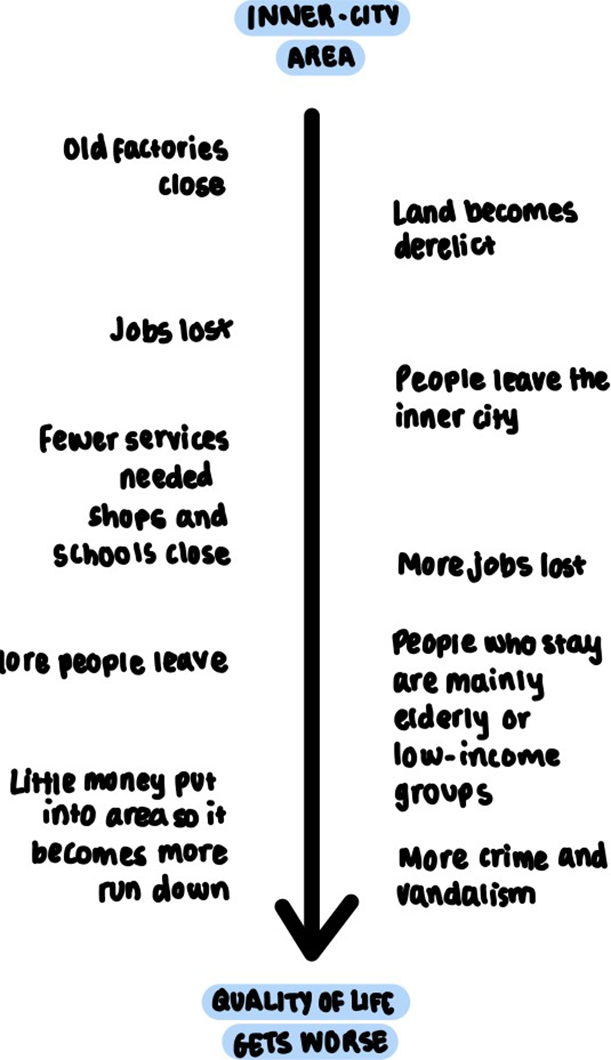
The Main Challenges Include
- High unemployment
- Crime
- Depopulation (brain drain)
- Dereliction
- Contamination (old waste from industry left to decay and eventually leaks into local environment)