Existing superpowers face ongoing economic restructuring, which challenges their power (Edexcel A-Level Geography): Revision Notes
📚Revision Notes
Existing superpowers face ongoing economic restructuring, which challenges their power
The USA and EU are the two largest economic powers - but will not necessarily last
↳ The USA is arguably in a better position because
- Although made up of 50 states, with different rights and laws, they are all similar when compared to the 27 EU members meaning the former are more likely to agree
- The USA is not ageing as much as EU
Economic Problems:
Economic Restructuring
- Both the USA and EU are facing the problems associated with economic restructuring
- Economic restructuring → The shift from primary and secondary industry towards tertiary and quaternary industry as a result of deindustrialisation
- Has large social and economic costs → Some communities feel left behind & has led to widespread unemployment & loss of secondary sector jobs
Debt
- Global recession in 2008 created higher public debt in rich countries as govs borrowed money to keep their economies working
- This resulted in a debt crisis and forced countries to ↓ public spending
Social Costs
- Cuts in public spending linked to ↑ crime and ↓ social cohesion
- Loss of global influence reflected in growing nationalism in the USA, the UK and many EU countries
Global Military Power
Maintaining Power
The more traditional forms of military power (naval & air) are very expensive to maintain Naval power
-
Allows countries to project military dominance almost anywhere
-
Advances in land-base missile technology have made aircraft carriers very vulnerable to attack Air power
-
Allows superpower to dominate airspace and win wars from the air
-
Drones are increasingly used to search for and destroy precise targets
-
Drones are more affordable than planes, making air dominance harder because poorer countries can also afford them
Nuclear Defence
- Other powers, both nuclear and non-nuclear should be deterred from attacking due to the potential consequence of nuclear retaliation
- Very expensive to replace/maintain (eg. £100 bn to replace Trident system)
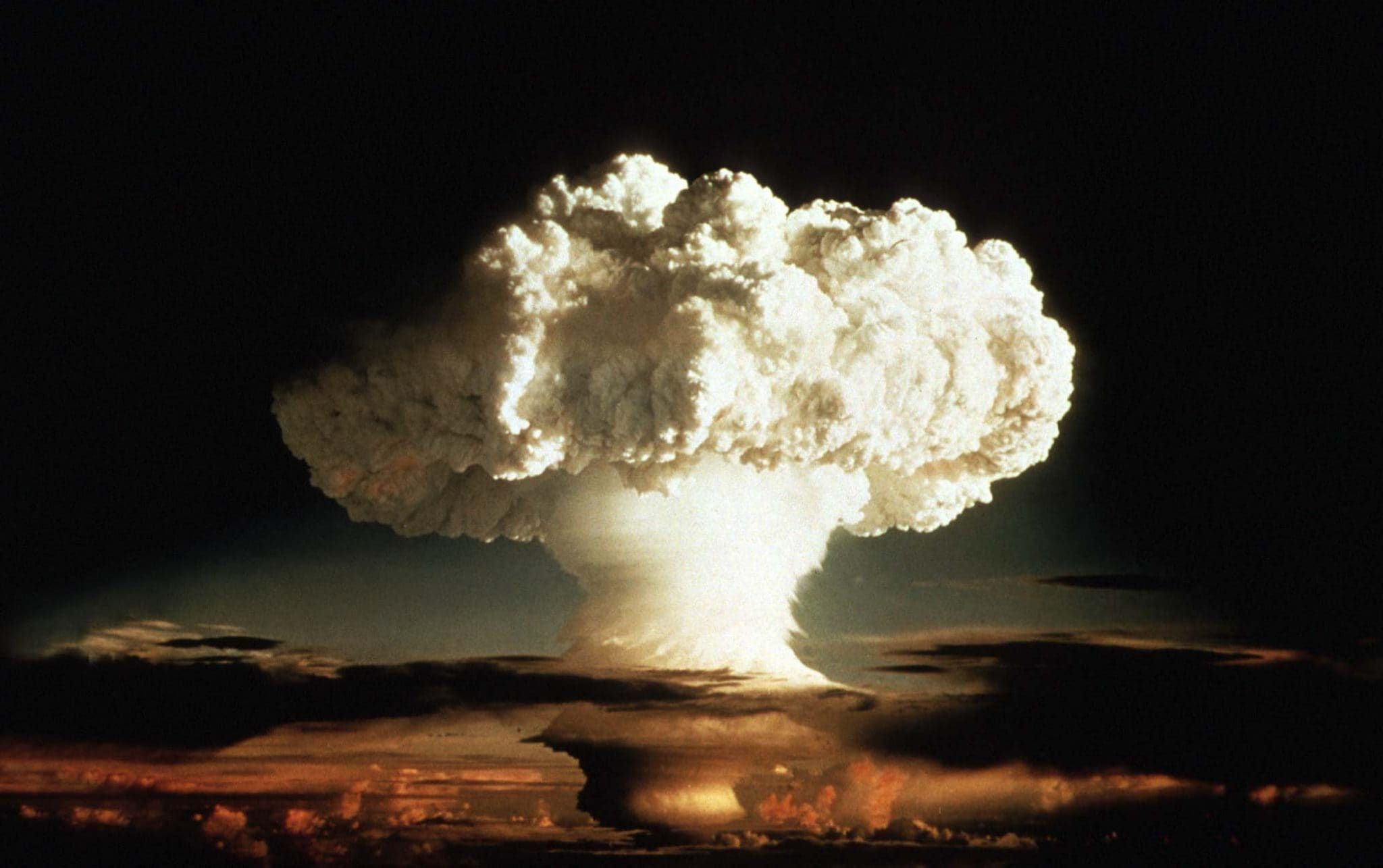
Nuclear Defence
Intelligence Services
- Helps to protect powers from threats, inc terrorist ones
- The volume of intelligence data intercepted is more than can be processed (eg. 911 terror attacks not picked up in time)
Space Exploration
- Innovation in computing, science and technology has massively increased
- Very expensive, arguably money could be spent better elsewhere (eg. getting people out of poverty)

Space Exploration
The Future
The balance of global power in 2030 and 2050 is uncertain Some of the most common economic future projections are:
- China will overtake USA and become the world's largest economy by 2020
- India will become the 3rd place power by late 2020s
- India may overtake China by the end of the century
Alternative Superpower Futures in 2030
| US Hegemony (Unipolar) | US maintains dominance • economic and military alliances ↑ China will face an economic crisis, preventing it from growing so rapidly |
|---|---|
| Regional Mosaic (Multipolar) | Emerging powers continue to grow while traditional superpowers begin to fall ↳ More regional than global influence due to power balance |
| New Cold War (Bipolar) | China rises to become an equal power to the USA ↳ Nations align themselves with one or the other's ideologies |
| Asian Century (unipolar) | Economic, social and political problems ↓ the power of the EU and USA ↳ Economic and political power shifts towards the emerging powers in Asia, mainly led by China |
EU vs The USA
| USA | EU | |
|---|---|---|
| Positive | All 50 states have generally similar ideologies Strong military Largest economy Spend 601 bn on defence budget (3 x GDP of Finland) | Several strong members Starting to invest in renewables Leading in water management |
| Negative | Ageing population | Hard to get all of the members to agree Ageing population UK BREXIT ∴ lost economy |