Economic and social developments (Edexcel A-Level History): Revision Notes
📚Revision Notes
Economic and social developments
📌 Social developments
De-Stalinisation and The Secret Speech
The term de-Stalinisation is problematic
- Not used in Soviet Era Russia at all
- 'Overcoming/exposure of the cult of personality
- De-Stalinisation used more widely in the West
- Polly Jones: Sounds too final, in reality there was a 'thaw'
- Anne Applebaum: Reforms took two steps forwards and one step back, sometimes three steps back
From 1953 there was a period of silent de Stalinisation
- Gulag inmates released
- Eventually there had to be a public acknowledgement that there was a rolling back of Stalin's policies
- Khrushchev is believed to have had a naïve belief that once rid of the Stalinist stain socialism will become even more widely supported
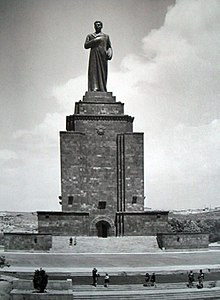
De-Stalinization
December 1955 commission found:
- Of 1,902,635 Party officials arrested 1935-40, 688,503 were shot
- All plots against Stalin were fabricated
- Stalin was personally responsible for directing the torture resulting in the forced confessions
- Khrushchev argued that 'We've got to have the courage to tell the truth'
- Molotov however in particular wanted the Party to see Stalin as 'the great continuer of Lenin's work'
- Khrushchev was a latecomer to the Politburo whereas Molotov et al. were long term members
- So they implicated in the terror of Stalinism more clearly
📌 What were Khrushchev's motives?
- Restoration of faith in the Party and save it from self-implosion
- Liberate the Party from fear of repression, making it more efficient and therefore successful
- Avoid more radical debate within the Party
- Get ahead of his leadership rivals
- They were all implicated in the Stalinist terror, suggesting they would continue such practices
The Speech – 'On the cult of personality and its consequences'
- Delivered at an unscheduled 'secret' session, lasted four hours with an intermission
- He avoided attacking Stalin pre- 1934 and did not attack the ideology of Leninist-Marxism
- He didn't address the NKVD order 0047 (which he helped facilitate)
- He attacked the Cult of Personality under Stalin and cited how Stalin was guilty of self-glorification while maintaining a front of modesty. He attacked Stalin's attacks on loyal Party members and use of needless violence
- Criticised the role of the NKVD in the purges especially the use of torture to extract confessions
- 'beat, beat and once again beat' were Stalin's instructions to the NKVD to elicit confessions
- Highlighted Stalin as being essentially against the Party
- Read out Lenin's testament emphasising the part criticising Stalin and letters about Stalin's rudeness to Krupskaya to demonstrate Lenin's doubts about him
- Suggested how Stalin might have been complicit in the murder of Kirov
- Criticised the performance of Stalin in the war, held him responsible for the disasters of 1941
- Denounced the mass deportations of the 'punished peoples' during the war as contrary not only to Marxism-Leninism but also to common sense
- Demonstrated that Stalin's 'grave abuse of power' continued after the war with the purge of the Leningrad Party and the Doctor's Plot
- Told the delegates that Stalin apparently had plans to destroy old members of the Politburo 'to hide the shameful acts we are now reporting'
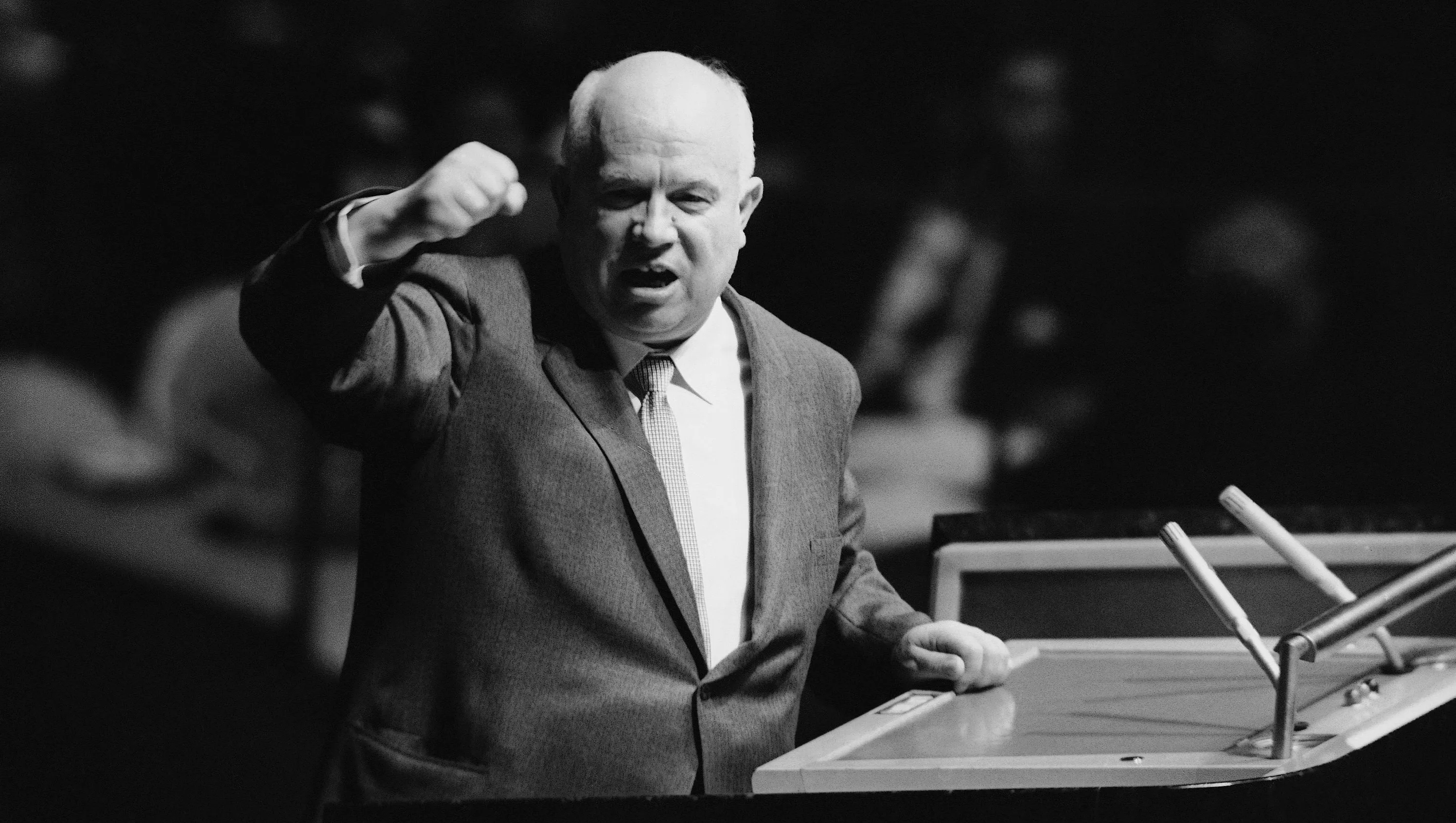
Khrushchev's hypocrisy
Khrushchev's hypocrisy
- Under Khrushchev's leadership the implementation of NKVD order 0047 was very significant in both Moscow and Ukraine
- Overfulfilled his quota
- Bragged to Stalin about the sheer numbers
- Only 10/146 Party Secretaries survived in the Moscow region
- Obvious defence: to not act would have sealed his own death
- Taubman argues that Khrushchev was in denial until the very end of his complicity in such terror
- Around 25 million people were exposed to the transcript of The Secret Speech
Consequences at home
- In Hosking's words, Khrushchev had 'torn the veil away from the inner sanctum and revealed a blood-stained torture chamber'
- The party was thrown into confusion
- Some blamed the leaders for failing to speak out earlier
- Others criticised Khrushchev for raising all these questions
- At Moscow State University, students boycotted the canteen, notorious for its bad food
- It was a semi-intentional re-enactment of the revolt on the battleship Potemkin in 1905
- In schools, students tore Stalin's portraits off the walls and trampled them underfoot
- At public meetings to discuss the speech Stalin was condemned as an 'enemy of the people'
- Calls for multi-party elections and real rights and freedoms to prevent the Terror from happening again
- The response was well beyond Khrushchev's expectations
- Was worried by the Party's more radical critics
- Were expelled from the Party and pilloried in the press as 'rotten elements'
- Khrushchev had to perform a balancing act
- This meant his de-Stalinisation was marked by retreats as well as advances
- Freeing of political prisoners accelerated
- In the three years following the speech 7000 were rehabilitated
- In the 10 months that followed 617,000 were rehabilitated
Consequences outside the USSR
- In communist countries of Eastern Europe an attack on Stalin's post-war conduct had a de-stabilising impact
- They had only been under communist rule since 1945
- A strike brought about a change of government in Poland
- In Hungary, in October 1956 there was a full-blown uprising
Consequences outside the USSR
- Then the new Hungarian Prime Minister denounced the Warsaw Pact and declared Hungary's neutrality
- At first Soviet troops complied with the demand for them to leave
- This was too much for Khrushchev
- He decided to crush the uprising
- 20,000 Hungarian casualties
- Turbulence inside the Warsaw Pact strengthened the position of those in the Praesidium who were critical of Khrushchev's de-Stalinisation
- In China, Mao Zedong was shocked by the betrayal of Stalin
- Later denounced Khrushchev as a 'revisionist' for watering down the tough revolutionary doctrine of Bolshevism
- Never forgave Khrushchev for not revealing to him what he intended to do beforehand
Longer Term consequences and Historiography
- Figes argues the Soviet system never really recovered from the crisis of confidence created by the speech: 'The speech changed everything. It was the moment when the Party lost authority, unity and self-belief. It was the beginning of the end.'
- For the first time the Party was admitting it was wrong and in a catastrophic way
- Many of his colleagues never forgave Khrushchev for the speech
- Many years later in 1984 when the Politburo decided to readmit Molotov to the Party, it reaffirmed its hostility to Khrushchev
- According to Dmitrii Ustinov the then Defence Minister 'no other enemy brough us as much harm'
📌 Economic changes
📌 How and with what success did Khrushchev try to reform the Soviet Economy?
The Economy under Khrushchev
- Compared to Stalin, Khrushchev was much more hands on with the economy
- Following the defeat of Malenkov, Khrushchev aimed to boost the production of consumer goods and increase food yields
Problems he found:
- Low productivity
- Low livestock levels
- Low farmer incomes and low government procurement prices
- High taxes on private plots discouraged investment and production
- Because of his Ukrainian background, he felt he was a man of the people
- Wanted to be more involved
- Regarded himself as the agricultural expert – did not mean he knew anything about farming
- A first honest assessment of the agricultural sector since collectivisation
Solutions
- State procurement prices were increased
- Taxes were cut
- Investment in private and collective farms and equipment was raised
- The Virgin Lands campaign
The Virgin Lands Campaign
- Khrushchev loved contact with peasants and workers
- Huge operation designed to plough up a vast tract of virgin and fallow land
- Kazakhstan, the Urals and Siberia
- Grain cultivation
- More than 300,000 Komsomol volunteers were mobilised to settle and cultivate the areas
- By 1959: 35.9 million acres had been cultivated
- Would be joined by even larger groups of students, soldiers and truck and combine-drivers
- They were transported on a seasonal basis
- Conditions were primitive
- Harsh climate
- Run like a military campaign with emphasis on speed, much like the Five-Year Plans
- Much publicity
- Little listening to advice
- Harvest in 1956 was announced as a great victory, it was the largest in Soviet history
- Over 125 million tonnes of grain produced came from the new regions, results never reached that again
- By the early 1960s reliance on single-crop cultivation had taken its toll on the fertility of the soil
- Failure to adopt anti-erosion measures led to millions of tonnes of topsoil simply blowing away
- 1960: this happened to 13,000 square miles of land
- By 1963 the grain harvest was disastrous
- Virgin Lands produced their smallest crop for years
The Maize Obsession
- Khrushchev believed he had solved both the grain problem and the fodder problem
- With the VL campaign underway, maize could be grown in traditional grain-producing areas
- It would provide cattle-feed and revive meat and dairy farming
- He wanted it grown everywhere
- Claimed "corn can produce high yields in all areas of our country" and "corn is unequalled by any other crop"
- While it is valuable in Ukraine, barely ripens elsewhere
- 85 million acres were planted however only about one-sixth was harvested ripe
- Khrushchev claimed in 1957 that the USSR would catch up with the USA in per capita meat output by 1960, this required a threefold increase.
- One provincial Party boss met this aim, this was much praised by Khrushchev however it had only been achieved by the slaughter of dairy cattle, rustling, false accounting of all sorts. The Party Boss later shot himself.
- One-sixth of the vaunted promise was delivered the following year
- Ultimately this was a huge waste of man-hours – it was a bigger failure than the VL campaign
Other Agricultural Changes
- MTS were abolished in 1958
- They had maintained and hired out machinery
- Now the Kolkhozy had to buy the machinery and had to pay too much too quickly and there was nowhere to store them
- Mechanics from the former MTS tended to go to the towns where living standards were higher so there was not enough expertise to maintain or repair machinery
- Left to rust away
- Restricted size of private plots
- Put pressure on peasants to sell their cows to the Kolkhoz
- Khrushchev interfered too much with different forced campaigns
- Often with little regard
- Reorganised continually
Industry
The Space programme
- The Soviet Union under Khrushchev took the lead in space research and exploration
- August 1957 saw the first successful test of an inter-continental ballistic missile
- Two months later that rocket was used to launch the first satellite, Sputnik, into space
- In 1961, Yuri Gagarin became the first man in space
- Huge boost to Soviet prestige
- Coupled with Khrushchev's boasting about its military rocketry
- This led the outside world to overestimate Soviet progress
- There was no 'missile gap' with the United States in favour of the Soviet Union
The Seven-Year Plan
- Khrushchev introduced a Seven-Year Plan covering the years 1959-65
- Wanted rapid expansion of the chemical industry to provide more mineral fertilisers for agriculture
- Large investment in oil and natural gas
- Focus on investment in areas east of the Urals
- By 1961 Khrushchev announced some upward amendments
- Was always in a hurry and was now buoyed up by Soviet Space exploits
- Overall industrial progress was impressive
- Major increase in consumer goods
- Soaring expenses of the space and missile programme and increased military expenditure placed heavy strain on scarce skills and specialist equipment
- Growth rates suffered
- In 1963/1964 growth rates fell to the lowest in peacetime since planning began
Note
Khrushchev's Seven-Year Plan (1959-65): Focused on rapid industrial expansion, especially in chemicals and oil, with a shift to the east of the Urals. The plan initially boosted industrial progress and consumer goods, spurred by Soviet space achievements. However, soaring costs in the space, missile, and military sectors strained resources, leading to a significant drop in growth rates by 1963-64—the lowest in peacetime since Soviet planning began.
Khrushchev's Reorganisations
- Had clear political motives
- Was hoped they would avoid waste and bring decision-making nearer the point of production
- Stalinist command economy concentrated great power in the central gov ministries
- This was where main Praesidium had power bases
- Khrushchev's devolution of powers to the republics strengthened Party (rather than ministry) control
- Also increased his power and influence
- Between 1954 & 55: about 11,000 enterprises transferred from central to republican control
- 1956: factories run by twelve central governmental ministries were placed under the jurisdiction of republican governments
- May 1957: 105 regional economic councils were established to take the place of the central economic ministries
- This was one of the factors that stirred up Khrushchev's Praesidium opponents to challenge him
- Overcame his opponents
- Regional economic councils were abolished soon after Khrushchev was ousted