Religious Changes and Legislation (OCR A-Level History A): Revision Notes
📚Revision Notes
Religious Changes and Legislation
Note
What you need to know - Religious legislation including Prayer Books and Acts of Uniformity and the extent of religious change
Somerset and Northumberland took advantage of their power for personal gains and to establish government control. Both were Protestants and thus were supporters of the English Reformation. Edward VI's active participation in the government was limited but was distinct in matters of religion, allowing radical progress in the Reformation.
The King trusted Thomas Cranmer, Archbishop of Canterbury, and his religious reforms that ultimately made the Church of England institutionally Protestant. Much was achieved during Edward VI's reign including the two evangelical Prayer Books, a new English order of service and the stripping of the remaining Catholic paraphernalia from the churches.
Religious Changes
Several religious changes and laws distanced the Church of England from Catholicism.
- Traditional religious processions and pilgrimages were banned.
- The dissolution of monasteries damaged the social structure.
- Commissioners removed all symbols of Catholicism.
- A newly introduced poll tax was causing concern.
The Royal Injunctions of 1547
The Royal Injunctions of 1547 were issued to guide commissioners inspecting churches.
- Traditional liturgy was banned, including the use of holy water.
- Reciting the rosary was condemned along with an emphasis that symbolic rituals like communion were only reminders of Christ and not transubstantiation.
- The definition of objects used for worship or devotion was broadened to justify more destruction.
- The decoration was stripped and the Church walls were painted over. Rebellious bishops such as Edmund Bonner and Gardiner were arrested.
In 1547, the Chantries Act abolished the remaining ones left for praying for the dead and had their assets confiscated.
The Act of Uniformity, 1549
Note
In 1549, the Act of Uniformity was passed. It followed the Edwardian Injunctions of 1547 and the Sacrament Act which served to cement Protestantism in England and Wales.
The Act of Uniformity established Cranmer's Book of Common Prayer and various sacraments, rites, administration and ceremonies as the only legal form of worship in England. After 1549, it was required for the new prayer book to be uniformly adopted and it was illegal to use anything else. Local magistrates enforced the change. Latin was not allowed to be used for the rites of Whitsunday (the seventh Sunday after Easter) in 1549.
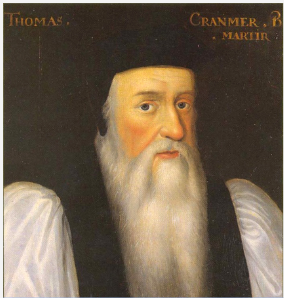
Thomas Cranmer
Note
Edward VI approved these reforms and displayed his influence as Supreme Head of the Church. He went as far as to dissuade his half-sister Mary, a devout Catholic, from practising her religion. In 1552, Cranmer made revisions in his prayer book and the canon law and clarified the terms of the reformed religion, but enforcements were put on hold when Edward VI fell ill in 1553.
Response of the People and Impact on the Church
- Many English people soon gave up belief in masses for souls in purgatory. Some parishes were reluctant to change but feared the consequences, so concealed images and relics.
- People across the country did not like the removal of images but had no choice.
- By March 1548, candles were abolished and Communion was altered to reflect Protestant theology.
- Confessions to a priest became optional and replaced by a general congregation confession.
- Ordinary people were taught that receiving the sacrament was symbolic.
- Only major feasts such as Christmas, Easter and Whitsun remained.
- The routine of the church, such as Morning Prayer, Mass and Evening Prayer, remained the same. Priests still wore vestments, something Elizabeth would abolish.
- In 1549, clerical marriage was legalised.
- Rebellions in Norwich and Cornwall broke out in 1549.
- Bishops not in favour of reform were purged and replaced with Protestants between 1550-1551.
- Stone altars were removed and replaced with wooden communion tables to reflect the Last Supper where sacrament took place at a wooden table.
- The Oath of Supremacy required consecration garb to be worn, which set off conflict about vestments.