Chromosomes (AQA GCSE Biology Combined Science): Revision Notes
📚Revision Notes
1.2.1 Chromosomes
Note
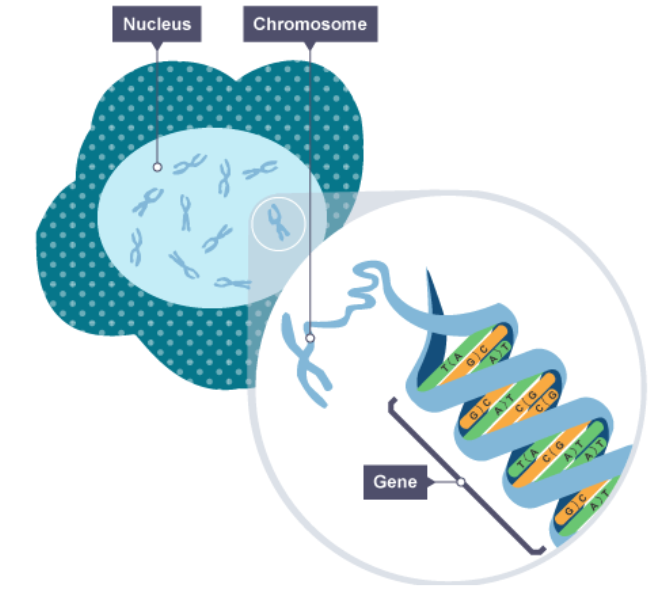
Genetic information is organised into structures called chromosomes, which are made up of long, tightly coiled strands of DNA.
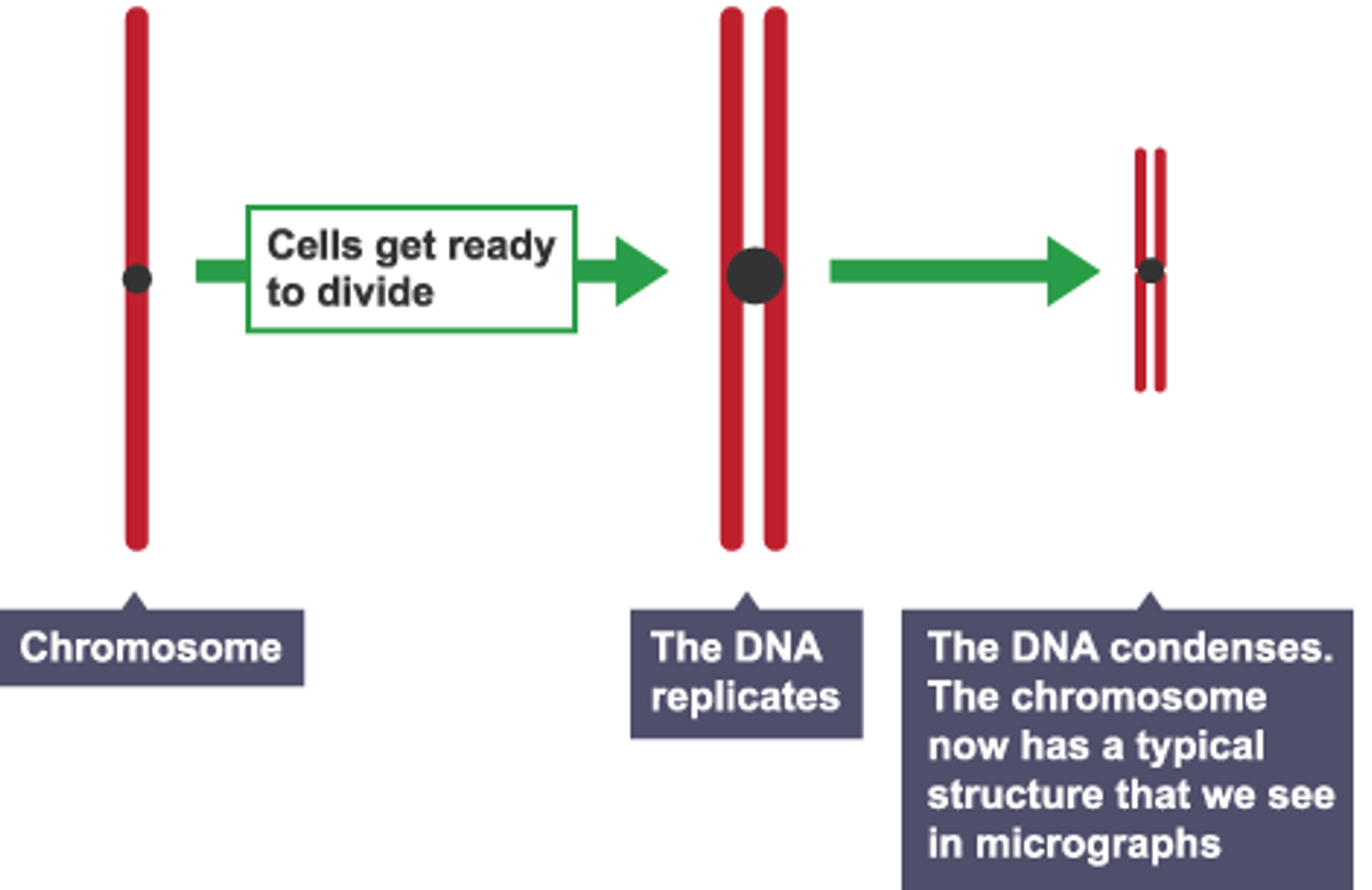
Note
Genes are short sections of DNA located on chromosomes. Each gene provides instructions for making a specific protein, which influences a particular characteristic or trait. Therefore, each chromosome carries many genes.
In human body cells, there are 23 pairs of chromosomes—a total of 46 chromosomes. You inherit one chromosome of each pair from your mother and the other from your father.
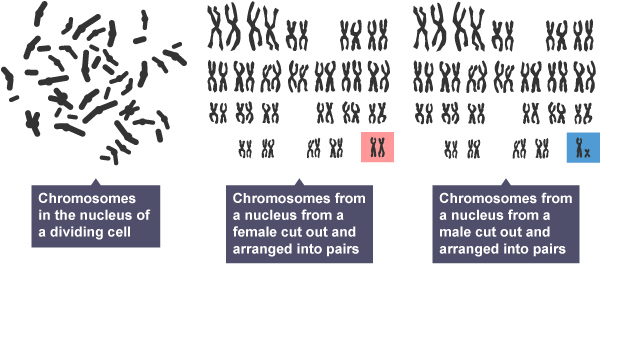
Sex cells (gametes), such as sperm and egg cells, are an exception. They contain only 23 chromosomes (one from each pair), ensuring that when they combine during fertilisation, the resulting embryo has a full set of 46 chromosomes.
Note
The nucleus is the control centre of the cell and contains your genetic information.