Reducing Use of Resources (AQA GCSE Chemistry Combined Science): Revision Notes
📚Revision Notes
10.2.2 Reducing Use of Resources
Reducing the Use of Resources
To use the Earth's resources more sustainably, it is essential for society to reduce its reliance on raw materials. This can be achieved through recycling and reusing materials that have already been extracted and processed. Although recycling has both advantages and disadvantages, the benefits generally outweigh the drawbacks.
Reducing the Use of Raw Materials
Many of the products we use daily are made from finite natural resources, such as metals, glass, and ceramics. Extracting these raw materials puts pressure on their limited supplies and often causes environmental damage.
To live sustainably, it is important to minimise the extraction of raw materials from the Earth. This can be done by reusing and recycling materials that have already been utilised. Instead of discarding products after use, they should be retained and processed to recover the materials used in their manufacture. This approach reduces the demand for new raw materials and decreases the amount of waste sent to landfills.
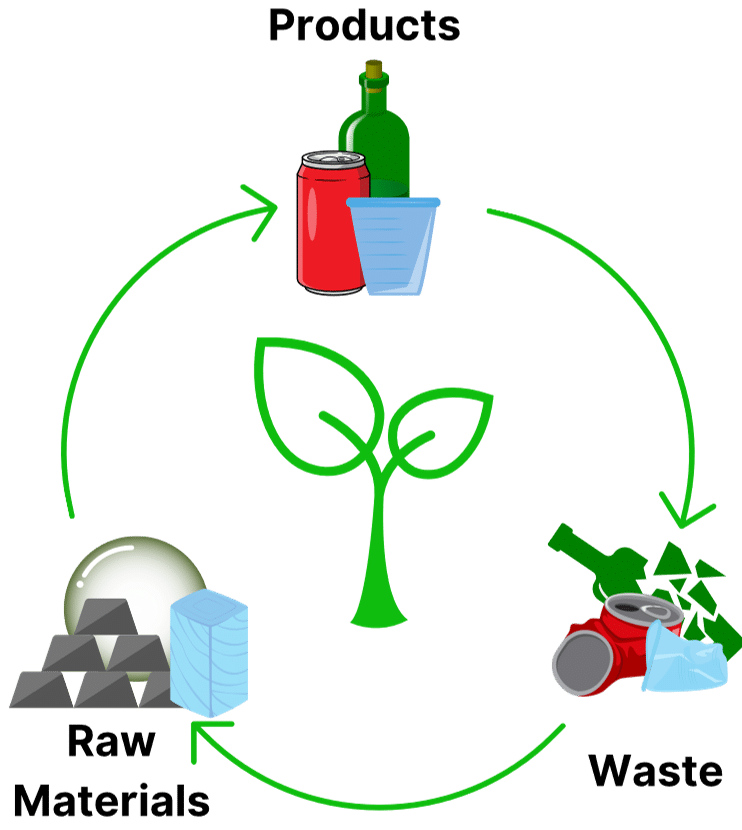
Reuse or Recycle
- Reuse:
- Some materials, like glass bottles, can be reused after they have served their initial purpose. For example, glass bottles can be returned to manufacturers, where they are cleaned, refilled, and used again. This significantly reduces the need for raw materials to produce new bottles.
- Recycle:
- Not all products can be reused. For instance, aluminium cans are typically difficult to reuse after a single use. In such cases, recycling is a viable alternative, particularly for metals. The recycling process typically involves the following steps:
- Separation: Products at the end of their useful life are taken to recycling centres. They are dismantled, and their components are separated. Non-recyclable materials are sent to landfill, while recyclable metal components are retained for further processing.
- Melting Down: The recovered metal components are melted down to isolate the metal. Depending on the intended use, alloys may be further separated into their elements or left as they are.
- Recasting: The raw metal is melted again and recast into new products. For example, scrap steel can be added to blast furnaces in iron production, reducing the need for fresh iron ore.
Pros and Cons of Recycling
Recycling is a key strategy for achieving sustainability, but it has both advantages and disadvantages:
- Disadvantages:
- Transport Emissions: Waste must be transported to recycling centres, which generates carbon emissions from vehicles.
- Labour-Intensive Sorting: Separating recyclable materials from non-recyclables can be labour-intensive.
- Energy Consumption: Melting down materials requires significant energy, increasing the demand for power generation and fossil fuels.
- Advantages:
- Reduced Environmental Impact: Recycling significantly lowers the environmental impact associated with extracting and processing new raw materials.
- Decreased Landfill Waste: Recycling reduces the volume of waste sent to landfill.
- Extended Resource Lifespan: By reducing demand for raw materials, recycling helps to conserve these resources for longer periods.