Environmental Impacts (AQA GCSE Computer Science): Revision Notes
📚Revision Notes
Environmental impacts of technology
When we use digital technology every day, it's easy to forget that our devices and online activities have real effects on the environment. Understanding these impacts is crucial for making informed decisions about how we use technology responsibly.
Negative environmental impacts
Energy consumption
Modern computers and digital devices consume significant amounts of electricity, even when we're not actively using them. Many computers are left running continuously, which means they're using power 24/7. This constant energy demand contributes to our overall carbon footprint.
Data centres represent one of the biggest energy consumers in the technology world. These massive facilities store and process information for services like Instagram, YouTube, and cloud storage.
Important
Data centres account for approximately 2% of all energy used globally - that's the same amount of energy as the entire air travel industry uses!
Note
This enormous energy consumption occurs because data centres must run continuously to provide instant access to online services, and they require powerful cooling systems to prevent overheating of the servers.
Manufacturing materials and resources
Creating computers and electronic devices requires valuable natural resources, including rare metals and minerals that are difficult to find and can't be replaced once used. The manufacturing process also involves some dangerous materials such as:
- Airborne dioxins
- Polychlorinated biphenyls (PCBs)
- Cadmium
- Chromium
- Radioactive isotopes
- Mercury
Important
These toxic substances pose serious environmental risks during both the manufacturing process and when devices are eventually thrown away. Exposure to these materials can cause long-term health problems and environmental contamination.
Electronic waste problems
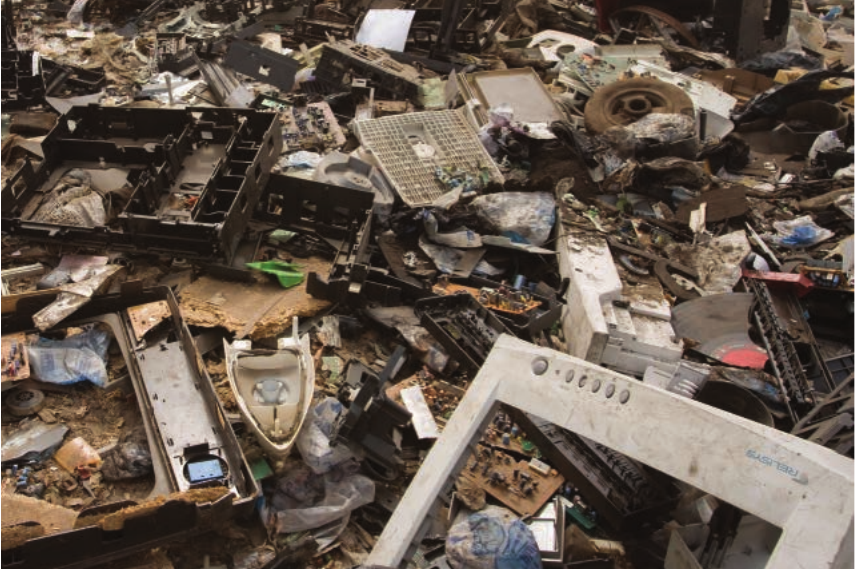
When computers and other electronic devices reach the end of their useful life, they create a major environmental challenge called electronic waste or "e-waste". Unfortunately, many old devices end up being shipped to countries with less strict environmental regulations to reduce disposal costs. This often results in the equipment ending up in landfill sites where toxic materials can leak into the soil and water supply.
Important
In some developing countries, children and adults sort through electronic waste by hand to extract valuable metals that can be recycled and sold. This exposes them to serious health risks from the toxic materials contained in the devices.
Positive environmental impacts
While technology does create environmental challenges, it also offers some significant benefits for protecting our planet:
Reduced paper consumption
Digital technology has dramatically reduced our need for paper documents. Instead of printing physical copies, we can read documents on screens, send emails instead of letters, and store files digitally rather than in paper filing systems. This helps protect forests and reduces the environmental impact of paper manufacturing.
Remote working opportunities
Laptops and internet connections allow many people to work from home instead of travelling to an office every day. This reduces the need for daily commuting, which in turn decreases energy consumption and carbon dioxide emissions from transport.
Note
The shift to remote working, accelerated by recent global events, has demonstrated that many jobs can be performed effectively from home, leading to significant reductions in transport-related emissions.
Supporting renewable energy research
Computers play an essential role in scientific research focused on developing renewable energy sources and creating more energy-efficient devices. Without powerful computer modelling and data analysis, progress in clean energy technology would be much slower.
Smart monitoring systems
Modern technology enables us to monitor and manage our resource use much more effectively. Smart metres can track energy and water consumption in real-time, helping us identify waste and use resources more efficiently. This precise monitoring wouldn't be possible without computer systems.
Managing clean technology
Computers are also crucial for operating and managing renewable energy systems and other low-energy technologies. Wind farms, solar panels, and energy-efficient buildings all rely on computer systems to operate at their best performance levels.
Making responsible choices
Understanding these environmental impacts helps us make better decisions about how we use technology.
Summary
Key Actions for Responsible Technology Use:
- Turn off devices when not in use to reduce energy consumption
- Keep devices longer before upgrading to reduce e-waste
- Choose energy-efficient devices when possible
- Properly recycle old electronics through certified programmes
- Take advantage of digital alternatives to paper when appropriate
Summary
Key Points to Remember:
- Data centres use about 2% of global energy - the same as all air travel combined
- E-waste contains toxic materials that can harm the environment and human health if not properly disposed of
- Technology manufacturing uses rare, non-renewable materials that are difficult to replace
- Digital alternatives can reduce paper use and the need for physical travel
- Smart technology helps us monitor and reduce resource consumption more effectively