Impacts of Digital Technology on Wider Society (AQA GCSE Computer Science): Revision Notes
📚Revision Notes
Impacts of digital technology on wider society
Introduction
Digital technology has transformed how we live, work, and interact with each other. From smartphones to smart cars, computers are now part of almost every aspect of our daily lives. While these technologies bring many benefits, they also create new challenges and concerns for individuals and society as a whole.
When studying the impact of digital technologies, we need to consider three main types of effects: ethical impacts (what's right and wrong), legal impacts (what the law says), and environmental impacts (effects on our planet and surroundings).
Note
These three impact categories - ethical, legal, and environmental - provide a comprehensive framework for analysing any digital technology. Every technology we'll discuss in this document can be evaluated through these three lenses.
Cyber security and computer misuse
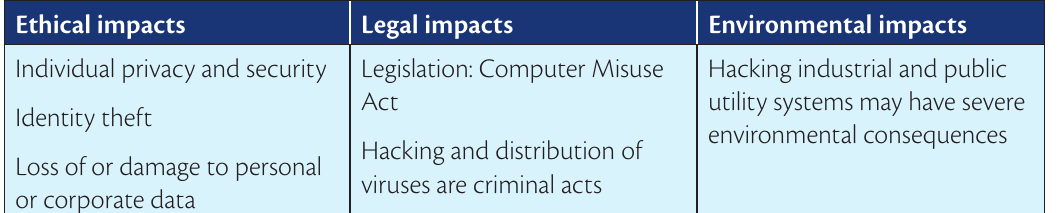
Cyber security refers to the protection of computer networks, users, and data from attacks or damage. The Computer Misuse Act 1990 makes hacking and intentionally damaging computers or data illegal in the UK.
Computer crimes and misuse can have serious consequences across all three impact areas:
Important
When hackers break into systems, they can steal personal information like bank details or private messages. This raises serious ethical questions about privacy and security. Legally, these activities are criminal offences under the Computer Misuse Act. From an environmental perspective, cyber attacks on industrial systems or public utilities (like power grids or water treatment plants) can cause widespread disruption and even environmental damage.
Mobile technologies
Mobile technologies include smartphones, tablets, and other portable devices that connect to networks. While incredibly useful, these devices can be tracked and monitored, creating both opportunities and threats.
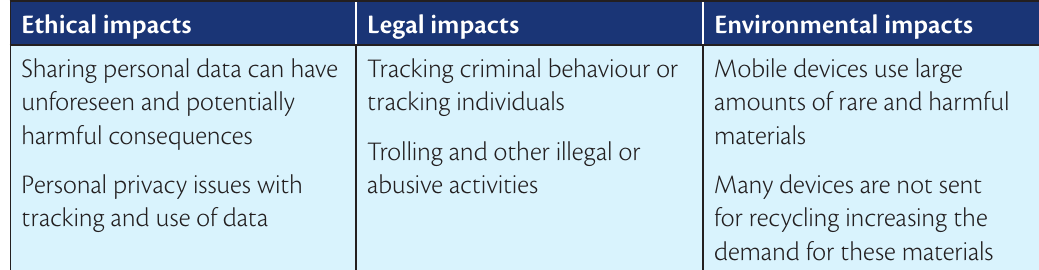
Mobile devices raise significant privacy concerns because they constantly collect and share personal data about where we go and what we do. This information can be used in harmful ways we might not expect. From a legal standpoint, tracking individuals and trolling or abusive behaviour online are serious issues that can break various laws.
Note
Environmentally, mobile devices contain rare and valuable materials that are harmful to extract and difficult to recycle properly. The mining of these materials often occurs in developing countries with less stringent environmental protections.
Wireless networking
Most places now offer wireless internet access, not just for mobile devices but also for smart monitoring systems and infrastructure. While convenient, wireless networks create new vulnerabilities.

Important
Wireless networks can be intercepted more easily than wired connections, making sensitive personal data vulnerable to eavesdropping. Under the Computer Misuse Act, accessing data from someone else's wireless network without permission is illegal.
When wireless infrastructure networks are attacked, it can cause widespread disruption to public services and essential systems.
Cloud storage
Cloud storage allows you to save files on servers accessed through the internet, meaning you can access your data from anywhere in the world. However, this convenience comes with trade-offs in terms of security and control.

Storing personal information in the cloud makes it potentially vulnerable to hacking and misuse by others. Different countries have different data protection laws, so your data might not be as well protected if it's stored outside the UK, EU, or USA.
Note
Large data centres that provide cloud storage consume enormous amounts of electricity to store and manage all that data, creating a significant environmental impact. These facilities require constant cooling and power, often running 24/7 to ensure data availability.
Hacking
Hacking means gaining unauthorised access to computer systems or data. It's covered by the Computer Misuse Act 1990 and can target everything from personal computers to major corporate systems.

Important
Hacking violates personal privacy by allowing illegal access to private data and information. The Computer Misuse Act makes all forms of hacking criminal activities. When hackers target public utilities like electricity grids or water systems, they can compromise essential services that everyone depends on, potentially causing widespread environmental and social disruption.
Wearable technologies
Wearable devices like fitness trackers and smartwatches are becoming increasingly popular. These devices monitor health data and activity levels, often sharing this information through apps and websites.

Personal privacy can be compromised when wearable devices track and share intimate details about someone's daily activities and health. In the UK, illegally accessing this type of personal data is outlawed under the Computer Misuse Act.
Note
Like all mobile devices, wearables contain rare and harmful materials that require specialised recycling to prevent environmental damage. The challenge is that these devices often have short lifespans and are frequently replaced with newer models.
Computer-based implants
Computer-based implants are medical devices that help people with various conditions, such as hearing aids, heart monitors, devices for partially sighted people, and prosthetic limbs controlled by computers.

Currently, most computer-based implants don't present significant ethical or legal issues, as they're primarily designed to improve people's health and quality of life. However, like all electronic devices, they contain rare and harmful materials that need specialised recycling when they're no longer needed.
Autonomous vehicles
Autonomous vehicles are self-driving cars that use artificial intelligence (AI) to navigate and make driving decisions. While they promise safer and more efficient transportation, they also raise important questions about responsibility and data privacy.
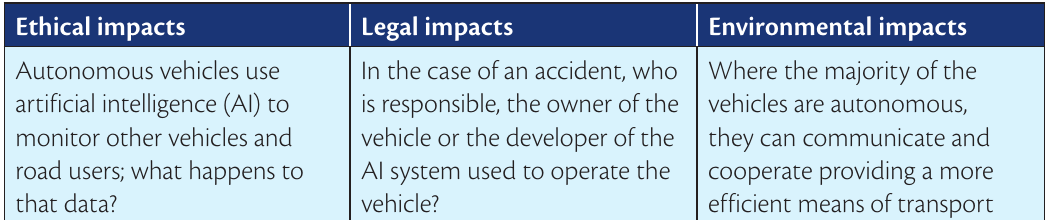
Autonomous vehicles use AI systems to monitor other vehicles and road users, raising questions about what happens to all this collected data and who has access to it.
Example
Worked Example: Legal Responsibility in Autonomous Vehicles
Consider this scenario: An autonomous vehicle's AI system makes a split-second decision during an emergency that results in an accident. Who is legally responsible?
Possible parties:
- The vehicle owner (traditional responsibility)
- The car manufacturer (product liability)
- The AI software developer (system malfunction)
- The sensor manufacturer (equipment failure)
This shows how autonomous vehicles create complex new legal questions that traditional traffic laws weren't designed to address.
Environmentally, when most vehicles become autonomous, they could communicate and cooperate with each other to create much more efficient transportation systems, potentially reducing traffic and pollution.
Summary
Key Points to Remember:
- Three types of impacts: Always consider ethical (right/wrong), legal (what the law says), and environmental (effects on surroundings) impacts of any technology
- Computer Misuse Act 1990: This UK law makes hacking, virus distribution, and unauthorised access to computer systems illegal
- Privacy vs convenience trade-off: Many digital technologies offer great benefits but require giving up some personal privacy and data control
- Environmental responsibility: All electronic devices contain rare materials and need proper recycling to minimise environmental harm
- Emerging technologies: New technologies like autonomous vehicles create new ethical and legal questions that society is still figuring out how to address