Using and working with electronic and mechanical systems (AQA GCSE Design and Technology): Revision Notes
📚Revision Notes
Using and working with electronic and mechanical systems
Understanding systems fundamentals
Systems form the backbone of modern technology and are designed as organised collections of components that work together to achieve specific goals. These systems fall into two main categories that often work in combination with each other.
Note
Systems are fundamentally about connection and coordination - individual components become more powerful when they work together towards a common purpose.
Mechanical systems rely on physical components to transform and transfer power through movement. These systems utilise elements such as levers for force multiplication, linkages for motion transfer, pulleys for direction changes, gears for speed and torque adjustments, and cam bearings for converting rotational motion into linear movement. Think of a bicycle's gear system or a car's transmission as examples of mechanical systems in action.
Electronic systems handle electrical power sources and convert them into useful outputs through electronic components. These systems process electrical signals, control power flow, and often provide the intelligence behind modern devices. Examples include the control circuits in washing machines or the processing units in smartphones.
Important
Many contemporary products combine both mechanical and electronic elements, creating hybrid systems that leverage the strengths of both approaches. Understanding both types is essential for modern engineering design.
Material selection framework
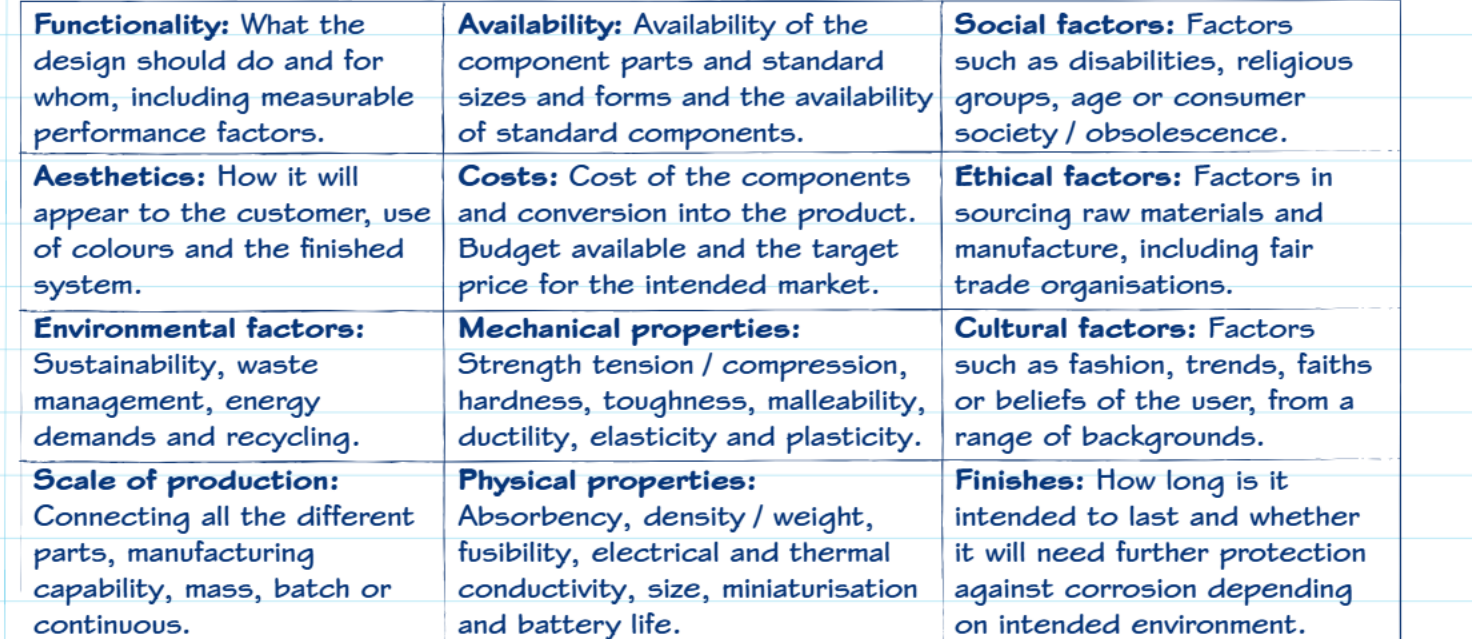
When designing any system, engineers must carefully evaluate materials based on multiple interconnected factors. This evaluation process ensures that the final product meets user needs while remaining feasible to manufacture and market.
Note
The selection process involves analysing twelve critical areas that influence material choice and overall design success. No single factor determines the best choice - engineers must balance competing requirements.
Performance and user considerations
Functionality represents the core requirement - what the design must accomplish and for whom. This includes evaluating performance factors that directly impact how well the system serves its intended users. Engineers must clearly define target users and their specific needs to make appropriate material choices.
Availability addresses practical sourcing concerns, including how easily component parts can be obtained and whether they conform to industry standard sizes and formats. Standard components often reduce costs and improve reliability compared to custom alternatives.
Note
User-Centered Design Consideration: Social factors encompass the diverse needs of users, including considerations for people with disabilities, different age groups, and evolving consumer preferences. Modern design emphasises inclusive approaches that serve broader user populations.
Visual and economic factors
Aesthetics influence user acceptance and market success through visual appeal, colour schemes, and overall design harmony. The chosen materials must support the intended appearance while maintaining functional requirements.
Costs involve comprehensive financial analysis including component expenses, manufacturing conversion costs, and target market pricing. Budget constraints often drive material selection decisions and manufacturing method choices.
Responsibility and sustainability
Ethical factors address responsible sourcing practices, including fair trade considerations and ethical manufacturing processes. These factors increasingly influence consumer purchasing decisions and corporate responsibility policies.
Important
Environmental factors focus on sustainability throughout the product lifecycle, including material recyclability, energy efficiency during use, and end-of-life disposal considerations. Circular design principles encourage material choices that support reuse and recycling.
Technical properties
Mechanical properties define how materials respond to physical forces, including:
- Strength under tension and compression
- Hardness for wear resistance
- Toughness for impact absorption
- Ductility for forming processes
- Elasticity for spring-like applications
Physical properties cover characteristics like density affecting weight, electrical and thermal conductivity for energy transfer, component size constraints, and operational factors such as battery life in electronic systems.
Production and finishing considerations
Scale of production determines appropriate manufacturing methods and influences material choices. Mass production enables different material options compared to small batch or continuous production approaches, affecting both capability and cost-effectiveness.
Note
Cultural Adaptation: Cultural factors recognise that design preferences vary across different user communities, influenced by fashion trends, cultural beliefs, and diverse user backgrounds. Successful products often adapt to cultural preferences in different markets.
Finishes address durability requirements and environmental protection needs. The intended service life and operating environment determine whether additional protective treatments against corrosion or wear are necessary.
Practical applications
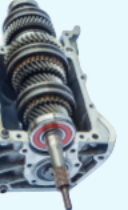
Real-world systems demonstrate how these selection criteria work in practice. Consider vehicle transmission systems, where gears serve as the primary mechanical components.
Example
Worked Example: Vehicle Transmission System Analysis
Material Selection Rationale:
- Mechanical Properties: Gears excel in automotive applications because their mechanical properties provide high strength and toughness needed for transmitting significant forces
- Availability: Standard gear components allow manufacturers to source reliable parts efficiently
- Functionality: The gear configuration enables different speed ratios within compact spaces, offering advantages over alternative systems like belt drives that require more room
Modern appliances like microwave ovens showcase hybrid electronic-mechanical systems.

Example
Worked Example: Microwave Oven System Integration
These products demonstrate how electronic control systems manage mechanical components like turntables and door mechanisms. Material selection must consider:
- Function-specific requirements for both electronic and mechanical components
- Production scale economics for cost-effective manufacturing
- User interface design needs for intuitive operation
Engineers developing such products must balance competing requirements - gears might be mass-produced for cost efficiency while offering multiple tooth configurations to create various speed ratios. The materials chosen must withstand operational stresses while supporting the intended product lifespan.
Summary
Key Points to Remember:
-
Systems combine components: Both mechanical and electronic elements work together to achieve specific functions through organised interaction of parts
-
Material selection is multifaceted: Twelve key factors from functionality to finishes must be balanced, with no single factor determining the choice
-
Properties drive performance: Mechanical properties like strength and physical properties like conductivity directly impact how well systems serve their intended purpose
-
Context matters significantly: Scale of production, cultural factors, and environmental considerations influence material choices as much as technical requirements
-
Real applications demonstrate principles: Vehicle gearboxes and appliance controls show how theoretical selection criteria translate into practical engineering decisions