Metaphors and Similes (AQA GCSE English Language): Revision Notes
📚Revision Notes
Metaphors and similes
What are metaphors and similes?
Both metaphors and similes are powerful literary devices that writers use to create vivid pictures in readers' minds. They work by making comparisons between different things, helping us understand and visualise concepts in fresh and interesting ways.
These comparative techniques are fundamental tools in both literature and literary non-fiction writing. Writers employ them to make their descriptions more engaging and to help readers connect with their ideas on a deeper level.
Note
These devices are essential for creating engaging, memorable writing that helps readers form clear mental images and connect emotionally with the text.
Understanding similes
Similes work by comparing one thing to another using connecting words. They help readers understand something by relating it to something else that might be more familiar or easier to picture.
The key characteristic of similes is that they use specific connecting words - typically "like" or "as" - to make their comparisons clear. When you see these words in a text, you're likely looking at a simile that's trying to paint a picture in your mind.
Note
Quick Recognition Tip: Look for the connecting words "like" or "as" in sentences - these are your clues that you're reading a simile rather than a metaphor.
Understanding metaphors
Metaphors take a more direct approach to comparison. Instead of saying something is "like" something else, they state that something actually "is" something else. This creates a stronger, more immediate connection between the two things being compared.
Example
Worked Example: Analysing a Metaphor
When a writer says "his gaze was a laser beam," they're not suggesting the person's eyes literally shoot lasers. Instead, they're emphasising the intense, focused, and perhaps piercing quality of the person's stare.
Analysis breakdown:
- Literal subject: his gaze
- Metaphorical comparison: laser beam
- Effect: Creates imagery of intensity, focus, and penetration
Key differences between metaphors and similes
The main difference lies in how direct the comparison is. Similes use "like" or "as" to make gentle connections, whilst metaphors make bold statements by saying one thing actually is another.
Important
Critical Distinction: Metaphors often create more powerful imagery because they don't soften the comparison with connecting words. They present the comparison as fact, which can make the description feel more immediate and striking.
Analysing their effects
When you encounter metaphors and similes in your reading, consider what they're trying to achieve. These devices serve several important purposes:
They make descriptions more creative and memorable, helping readers form clear mental images. They can also convey emotions and atmosphere more effectively than straightforward description alone.
Example
Worked Example: Comparative Analysis
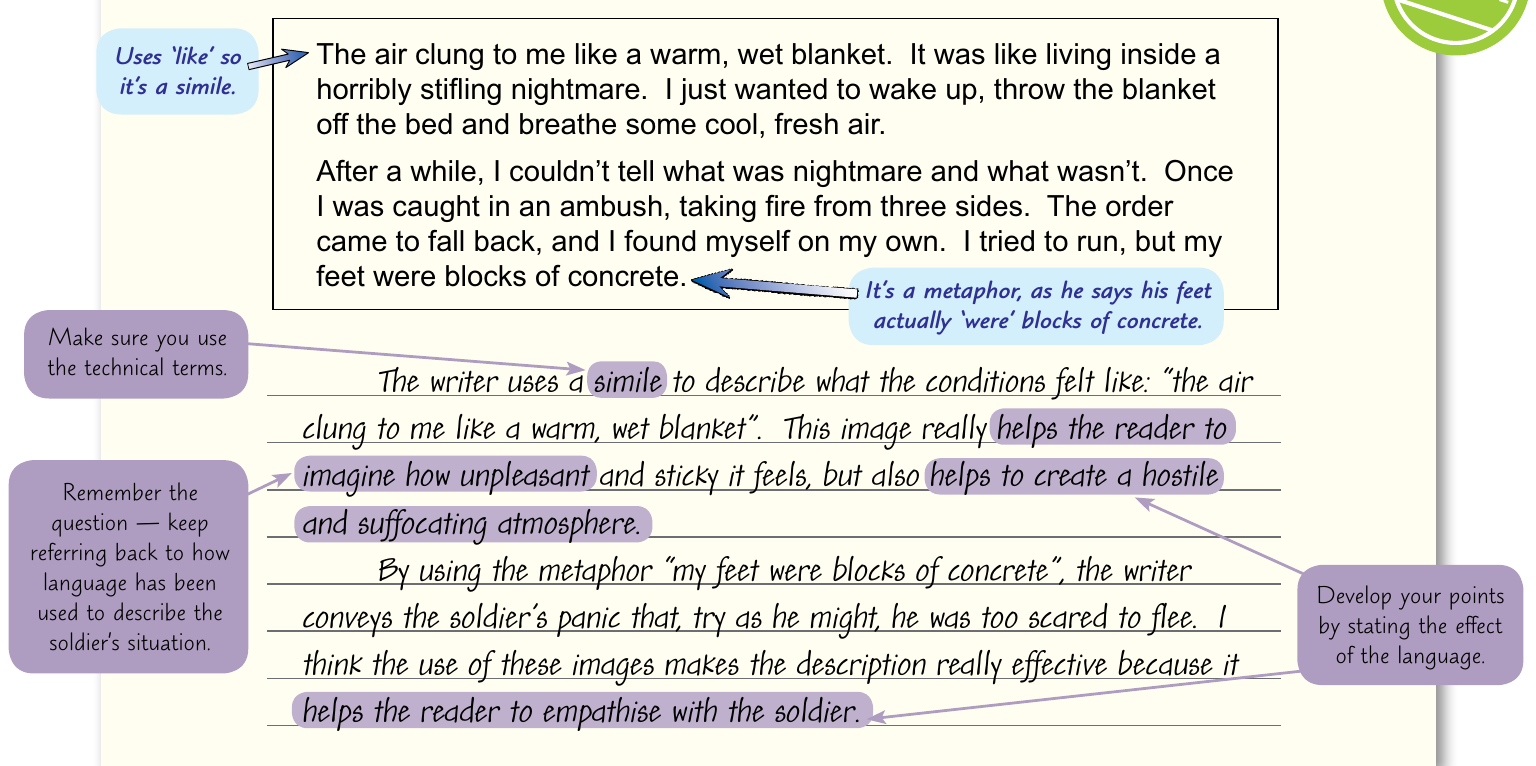
In the example shown, notice how the writer uses both types of comparison to help readers understand a soldier's experience:
Simile: "like a warm, wet blanket"
- Effect: Helps us feel the oppressive, suffocating nature of the air
- Technique: Uses "like" to create a relatable sensory comparison
Metaphor: "blocks of concrete"
- Effect: Conveys the paralysing fear that prevents movement
- Technique: Direct statement creates immediate, powerful imagery of immobility
Exam techniques for analysis
Important
Essential Exam Strategy: When writing about metaphors and similes in your exams, focus on their effects rather than just identifying them. Consider how they help readers understand characters' feelings or visualise scenes more clearly.
Always use the correct technical terms when discussing these devices. Explain how the specific comparison works and what it reveals about the situation or character being described.
Remember to link your analysis back to the question you're answering. Show how the writer's use of these techniques contributes to the overall meaning or effect of the text.
Practical application
Look for opportunities to comment on how these devices create atmosphere, reveal character emotions, or help readers empathise with situations. Consider whether the writer has chosen a simile or metaphor for a particular effect.
Pay attention to the specific words chosen for the comparison - they often reveal important information about tone, mood, or the writer's attitude towards what they're describing.
Note
Analysis Tip: The specific vocabulary used in metaphors and similes often reveals as much about the writer's perspective as the comparison itself. Consider why the writer chose those particular words.
Summary
Key Points to Remember:
- Similes use "like" or "as" to make comparisons, whilst metaphors state that something "is" something else
- Both devices help writers create vivid imagery and make their descriptions more engaging
- Metaphors often create more powerful effects because they're more direct
- Always analyse the effect of these devices on the reader, not just identify them
- Use proper technical terms and explain how the comparison works in your analysis