Research Skills (AQA GCSE English Language): Revision Notes
📚Revision Notes
Research skills
What you need to know about individual researched presentations
Your spoken language assessment involves delivering a researched presentation that lasts up to 10 minutes to your teacher and classmates. This presentation needs to be well-prepared, clearly structured, and based on thorough research of your chosen topic. You might be given a specific theme to explore, or you may have the freedom to select your own subject matter. The key to success lies in comprehensive preparation and understanding exactly what you want to communicate to your audience.
Note
The presentation includes time for audience questions at the end, so you'll need to demonstrate deep knowledge of your topic. This question-and-answer session is your opportunity to showcase the breadth of your research.
Feeling confident during your presentation comes from knowing you've prepared thoroughly and researched your subject extensively.
Why research skills matter
Developing strong research abilities is crucial for your spoken language assessment, but these skills will also serve you well in other GCSE subjects and beyond. Effective research involves much more than simply gathering information - it requires a systematic approach that helps you find reliable sources, organise your findings, and present them in a meaningful way.
Note
Beyond GCSE: Research skills are essential for A-levels, university studies, and professional life. The techniques you develop now will benefit you throughout your academic and career journey.
When you approach research with the right methods and mindset, you'll find the process becomes much more manageable and productive. Understanding both what to do and what to avoid will help you make the most of your research time.
The research process workflow
Successful research follows a logical sequence that ensures you cover all necessary steps systematically. This approach helps you stay organised and avoid missing important elements of your preparation.
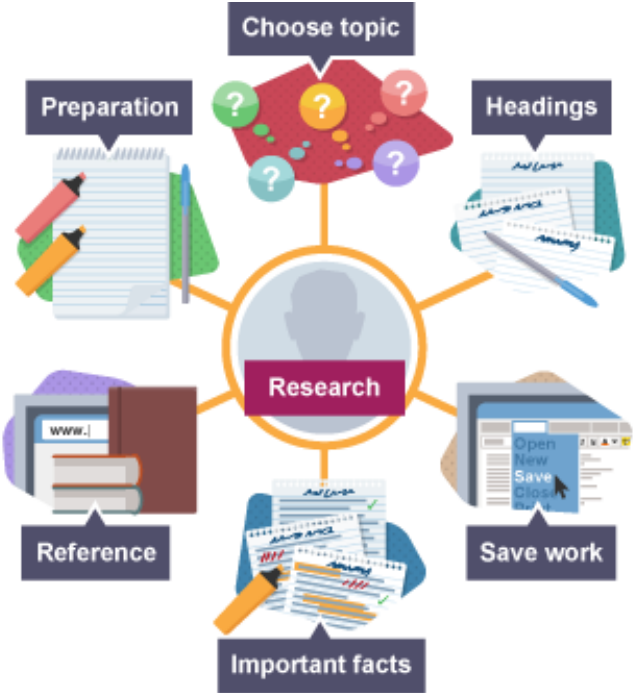
Note
The research process involves six key stages that work together to create a comprehensive foundation for your presentation. Each stage builds on the previous one, creating a structured pathway from initial topic selection through to final preparation.
Essential research strategies
Getting properly equipped
Before you begin researching, make sure you have all the tools you need for effective note-taking. Having a notepad, pen, and highlighters ready will help you capture information efficiently and mark important details as you discover them.
Choosing and confirming your topic
One of the most important early decisions involves selecting your presentation topic and sticking with it. Take time to consider what subject genuinely interests you and what you can research effectively. Once you've made your choice, resist the temptation to change direction later, as this wastes valuable research time and can leave you feeling unprepared.
Important
Stick to your choice: Changing topics mid-research is one of the biggest mistakes students make. It wastes valuable time and can leave you feeling unprepared for your presentation.
Creating an organisational system
Developing a clear structure for your notes will save you considerable time when you start writing your presentation. Create specific headings that relate to different aspects of your topic. For example, if you're researching the Olympics, you might use headings like 'different sports', 'locations around the world', and 'historical development'. This system keeps your research focused and makes it easier to find specific information later.
Using varied and reliable sources
Both libraries and internet resources offer valuable information for your research. When using online sources, it's essential to verify information by checking multiple websites, as internet content isn't always accurate or reliable. Cross-referencing information helps ensure the facts you include in your presentation are trustworthy.
Note
Library advantages: Don't overlook traditional library resources. Books and academic journals often provide more reliable, in-depth information than general internet sources.
Maintaining your work
If you're taking notes electronically, save your work frequently to avoid losing important research. Regular saving prevents the frustration of having to repeat work and ensures your research efforts are preserved.
Staying actively engaged
Approach your research as an active process where you think carefully about what you're reading. Rather than copying information mindlessly, consider each piece of information and decide whether it's genuinely important for your presentation. This selective approach leads to better-quality research and more focused presentations.
Recording your sources
Keep detailed records of where your information comes from, including website addresses and book titles. This documentation allows you to return to sources if you need to verify details or gather additional information later in your preparation process.
Research pitfalls to avoid
Avoiding information overload
Important
Quality over quantity: Simply printing large amounts of information from the internet doesn't constitute effective research. Quality matters more than quantity - it's better to read information carefully and select only the most relevant details for your presentation.
Taking time to understand and evaluate information leads to much better results than collecting vast amounts of unprocessed material.
Moving beyond passive copying
Important
Engage with your sources: Don't fall into the trap of photocopying pages from books or copying facts without engaging with the content. Active research involves highlighting relevant passages and creating your own notes based on what you've read.
This approach helps you understand the material better and ensures you can explain it clearly to your audience.
Choosing trustworthy sources
Important
Source reliability is crucial: Be selective about which internet sites you use for research. Some websites are created by students as projects and may contain inaccurate information. Focus on sources from reputable organisations, educational institutions, or well-known providers.
This attention to source quality helps ensure your presentation is based on accurate, reliable information.
Remember!
Summary
Key Points to Remember:
- Plan your research systematically - Follow the six-step process to ensure thorough preparation and avoid missing important elements
- Stay organised from the start - Use clear headings and keep detailed source records to save time later
- Focus on quality over quantity - Select relevant information carefully rather than collecting everything you find
- Verify your sources - Check multiple websites and use reputable sources to ensure information accuracy
- Engage actively with your research - Think critically about what you read and how it relates to your presentation goals