Julius Caesar: Themes (AQA GCSE English Literature): Revision Notes
📚Revision Notes
Julius Caesar: Themes
Key Themes in Julius Caesar
- Power and Ambition
- Betrayal and Loyalty
- Fate vs. Free Will
- Public vs. Private Lives
Power and Ambition
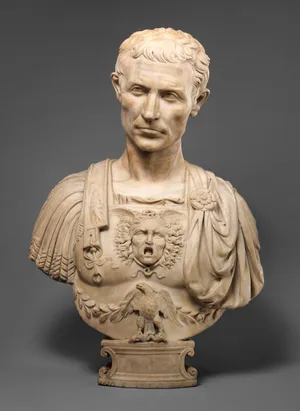
Julius Caesar examines the consequences of unchecked ambition and the pursuit of power. Caesar's rise to power threatens the Roman Republic, leading to his assassination by those who fear he will become a tyrant. The play explores how ambition can drive individuals to commit extreme acts in the name of the greater good.
Key examples:
- Caesar's Ambition: Caesar's growing power and influence alarm many senators, who fear that he will become a dictator. His ambition is seen as a threat to the Republic's ideals of shared power and governance.
- Brutus's Decision: Brutus joins the conspiracy to assassinate Caesar, believing it is necessary to protect Rome from tyranny. His decision reflects the conflict between personal loyalty and the perceived need to prevent the abuse of power.
Note
Shakespeare uses these examples to explore the dangers of ambition and the moral dilemmas faced by those who seek to balance power with responsibility.
Betrayal and Loyalty
Betrayal is a central theme in Julius Caesar, with personal relationships tested by political ambitions. Brutus's betrayal of Caesar, whom he loves and respects, is driven by his loyalty to Rome and his belief that Caesar's death is necessary for the greater good.
Key examples:
- Brutus's Betrayal of Caesar: Brutus's internal conflict between his loyalty to Caesar and his duty to Rome culminates in his participation in the assassination. This act of betrayal is portrayed as a tragic necessity, highlighting the complexities of loyalty in the face of political ambition.
- Mark Antony's Loyalty to Caesar: After Caesar's death, Mark Antony remains loyal to his friend, using his famous speech to turn the public against the conspirators. His loyalty contrasts with the betrayal of Brutus and the other conspirators, emphasising the theme of trust and fidelity.
Note
Shakespeare uses the theme of betrayal to explore the consequences of political and personal decisions and the impact of these decisions on relationships and society.
Fate vs. Free Will
The play grapples with the tension between fate and free will, questioning whether the characters are masters of their own destinies or whether their fates are predetermined. Caesar's dismissal of warnings about his fate and the conspirators' belief that they can change the course of history are central to this theme.
Key examples:
- The Soothsayer's Warning: The soothsayer's warning to "Beware the Ides of March" suggests that Caesar's fate is sealed. Despite this, Caesar chooses to ignore the warning, reflecting the play's exploration of fate versus free will.
- Cassius's Philosophy: Cassius argues that people are responsible for their own destinies, not the stars. This belief drives him to act against Caesar, highlighting the theme of free will and the power of personal agency.
Note
Shakespeare uses the theme of fate versus free will to question the extent to which individuals control their own lives and the role of destiny in shaping the course of events.
Public vs. Private Lives
Julius Caesar highlights the conflict between public duties and private loyalties, particularly in the character of Brutus, who must balance his personal feelings for Caesar with his responsibilities to Rome. The play examines how public roles can come into conflict with private relationships, leading to tragic outcomes.
Key examples:
- Brutus's Struggle: Brutus's internal conflict between his love for Caesar and his duty to Rome illustrates the tension between public and private lives. His decision to join the conspiracy is driven by a sense of public duty, even though it means betraying a friend.
- Caesar's Public Persona: Caesar's public image as a strong and unwavering leader contrasts with his private vulnerabilities, such as his physical weaknesses and his reliance on others' advice. This duality highlights the play's exploration of the difference between public perception and private reality.
Note
Shakespeare uses this theme to explore the challenges of leadership and the sacrifices that come with balancing public responsibilities with personal loyalties.