The Cayman Islands (AQA GCSE Geography): Revision Notes
📚Revision Notes
The Cayman Islands
Overview and location
The Cayman Islands represent a fascinating example of a small Caribbean territory with unique developmental characteristics. This British Overseas Territory sits in the western Caribbean Sea and consists of three distinct islands that each play different roles in the territory's overall profile.
The territory comprises:
- Grand Cayman - the largest and most developed island, home to the capital
- Cayman Brac - smaller island with distinct geographical features
- Little Cayman - the smallest of the three islands
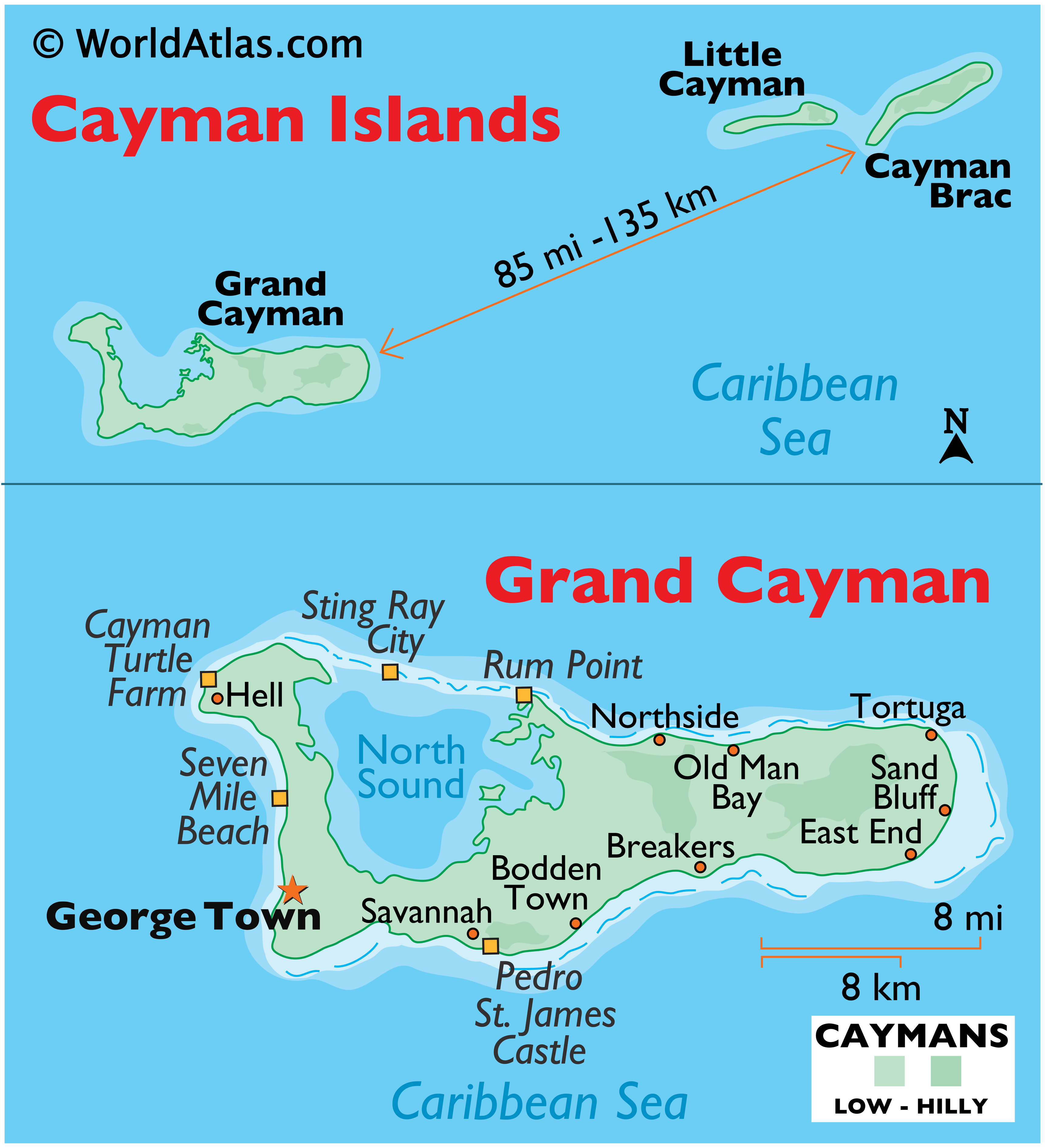
George Town, located on Grand Cayman, serves as the capital and main economic centre. The islands' strategic location in the Caribbean has contributed significantly to their development as both a tourism destination and international financial centre.
Note
British Overseas Territory - A territory that remains under British sovereignty but has significant local autonomy in managing its internal affairs.
Population characteristics
Understanding the population structure reveals important insights about the Cayman Islands' development story. With a total population of 71,432 people (2022), this relatively small territory demonstrates remarkable diversity and demographic patterns.
Population diversity and structure
The islands host an incredibly diverse population, with over 130 different nationalities represented among residents. This diversity reflects the territory's role as an international business centre and attractive destination for workers from around the world. Significantly, 34,171 residents are foreign workers on visas, highlighting the territory's dependence on international labour.
Important
The demographic profile shows several key characteristics:
- Life expectancy: 82.19 years, indicating high quality healthcare and living standards
- Birth rate: 13 births per 1000 people, which is relatively low
- Dependency ratio: 40.7%, meaning the working population is larger than dependent groups
This demographic profile suggests a territory with good healthcare systems and living conditions, though it faces challenges typical of developed nations with ageing populations.
Economic development and characteristics
The Cayman Islands present a complex economic picture that demonstrates both remarkable success and underlying challenges. Their development status classification provides important context for understanding these dynamics.
Development classification and wealth
The territory holds a unique position as both a Small Island Developing State (SIDS) according to UN classifications and a High-Income Country (HIC). This dual status creates interesting contradictions in their development profile.
Note
Small Island Developing State (SIDS) - Countries that face unique social, economic and environmental challenges due to their small size, remoteness, and vulnerability to external factors.
Example
Economic Indicators Comparison
Cayman Islands vs United Kingdom:
- Cayman Islands GDP per capita: US$83,568
- United Kingdom GDP per capita: US$46,510
- Difference: Cayman Islands is 80% wealthier per capita
Economic Structure:
- Service sector: 92% of GDP
- Service sector employment: 79% of workforce
Economic structure and challenges
Finance and tourism represent the two main pillars supporting the Cayman Islands economy. The territory has developed into a significant international financial centre, with 40 of the world's 50 largest banks operating branches there. Combined with tax-free status, this makes it particularly attractive to wealthy individuals and international businesses.
However, this economic success masks important challenges:
- High import dependence: 90% of food and consumer goods must be imported
- Limited local production: Very little farming or industry exists locally
- High living costs: Prices significantly impact lower-income residents
The main local agricultural products include:
- Fruits, sweet potatoes and tomatoes
- Cattle and poultry (though production is limited)
Primary imports consist of boats, ships, oil, gold and cars, reflecting both the luxury market and basic necessities.
Poverty and inequality challenges
Despite impressive GDP figures, the Cayman Islands face significant development challenges that highlight the limitations of using average income measures to assess living standards.
Understanding poverty in a wealthy territory
The territory experiences what economists call income inequality, where average wealth figures can be misleading. While GDP per capita suggests universal prosperity, the reality shows concerning disparities.
Important
Poverty Statistics in the Cayman Islands:
- Poverty levels: 1.9% of people live in poverty
- Vulnerable populations: 3.7% live in vulnerable conditions
- Food insecurity: Over 2% of the population experiences food insecurity (2021 census)
- Low wages: One-third of workers earn less than US$2,800 per month (2021)
Critical Finding: 65% of food-insecure households were Caymanian, indicating that local residents face particular challenges in accessing adequate nutrition despite the territory's overall wealth.
Geographic poverty patterns
Some of the Caribbean region's poorest areas exist within the Cayman Islands themselves, demonstrating how small territories can experience significant internal inequality. High prices compound these problems, affecting lowest earners most severely.
Climate characteristics
The Cayman Islands experience a tropical marine climate that significantly influences both daily life and economic activities, particularly tourism patterns.
Seasonal patterns
The climate shows distinct seasonal variations that directly impact the tourism industry and daily life:
Note
Seasonal Climate Patterns:
Wet season (Mid-May to October):
- Warm, rainy summers with higher precipitation
- Peak rainfall occurs in October (around 240mm)
Dry season (November to April):
- Mild winters with lower rainfall
- Generally more pleasant conditions for tourism
Temperature and weather patterns
The territory enjoys consistently favourable weather conditions throughout the year:
- Annual temperature range: 4°C (ranging from 25°C to 29°C)
- High temperatures: Consistently warm throughout the year
- Sunshine: Over 300 days of sunshine annually
- Total annual precipitation: 1400mm
- Rainfall range: 190mm annually, with October being wettest
This climate pattern creates ideal conditions for tourism but also presents challenges including vulnerability to tropical cyclones and sea level rise, particularly concerning for a low-lying territory.
Tourism industry development
Tourism represents a vital economic sector, contributing approximately 16% to GDP and providing employment for thousands of residents. The industry demonstrates both opportunities and challenges for sustainable development.
Visitor patterns and characteristics
Tourism shows several important patterns that reflect the territory's geographic location and infrastructure development:
- Primary source: Majority of visitors come from the United States
- Stay-over tourists: 80% of visitors
- Cruise passengers: 54% arrive via cruise ships
- Accommodation: Over 7,000 hotel rooms available
The industry experiences seasonal variations, with most cruise arrivals occurring between November and March, aligning with the dry season and Northern Hemisphere winter months.
Tourism attractions and activities
The territory offers diverse attractions that capitalise on both natural and cultural features:
Natural attractions:
- Stingray City and swimming with stingrays
- Seven Mile Beach
- Cayman Crystal Caves
- Central Mangrove Wetlands Reserve
- Coral reef diving and snorkelling
Cultural and historical sites:
- Pedro St James (oldest building on the islands)
- National Museum showcasing 19th-century buildings
- Mission House Historic Site
- Queen Elizabeth II Botanic Park
Adventure activities:
- World-class diving and snorkelling
- Water sports and beach activities
- Nature trails and wildlife observation
Tourism challenges
The industry faces several sustainability challenges that threaten long-term viability:
Important
Key Tourism Industry Challenges:
- Spending patterns: Tourist spending per visitor has decreased despite increasing visitor numbers
- Cruise tourism limitations: Many cruise passengers don't disembark or spend money locally due to all-inclusive packages
- Environmental impact: High visitor numbers can stress fragile ecosystems
- Waste generation: Tourists produce twice the daily waste compared to local residents
Port development case study: George Town
The evolution of George Town's port facilities demonstrates how small island territories must adapt infrastructure to support economic growth while managing environmental and social impacts.
Historical development timeline
The port has undergone significant expansion since its original construction, illustrating the rapid infrastructure development required to support economic growth.
Example
Port Development Timeline: George Town
1977: Original port built
- Capacity: 50,000 tonnes per year
- Mixed cargo and cruise facilities
- Basic infrastructure for small-scale operations
1988: Passenger landing dock upgraded
- Improved arrival experience for visitors
- Enhanced security measures
- More attractive facilities to support tourism growth
1993: South Terminal for cruise passengers opened
- Dedicated cruise passenger facilities
- Separation of cargo and tourism operations
1997: Cargo distribution facility expanded
- Response to growing import demands
- Improved logistics for essential goods
Current port capacity and operations
Modern port operations reflect the territory's economic evolution and demonstrate remarkable growth in capacity:
- Current cargo capacity: Over 500,000 tonnes (tenfold increase from original design)
- Cruise passengers: Numbers more than doubled since 1998, approaching 2 million annually
- Operational challenges: Despite high numbers, approximately 15-20% of cruise passengers remain onboard
This development pattern illustrates how small island territories must balance infrastructure investment with sustainable capacity limits while serving both essential supply functions and tourism industry needs.
Summary
Key Points to Remember:
-
The Cayman Islands demonstrate how small territories can achieve high GDP per capita through specialised economic sectors like finance and tourism, while still facing significant development challenges
-
Population diversity (130+ nationalities) and high foreign worker dependence (34,171 visa workers) show the territory's reliance on international labour markets
-
Climate patterns directly influence tourism seasonality, with dry season (November-April) being peak tourist period due to more pleasant weather conditions
-
Tourism industry challenges include decreasing per-visitor spending despite increasing numbers, particularly with cruise passengers who may not disembark or spend locally
-
Port development from 50,000 to 500,000+ tonnes capacity shows how infrastructure must evolve rapidly to support economic growth in small island developing states