Attempts at a Solution (Edexcel GCSE History): Revision Notes
📚Revision Notes
Attempts at a Solution
The significance of Arafat's renunciation of terrorism in a speech to the UN (1988)
During the first Palestinian intifada in the West Bank and Gaza Strip, riots continued. In an unexpected move, PLO Chairman Yasser Arafat renounced terrorism as a way to settle the Arab- Israeli conflicts in his address to the UN General Assembly on December 13-14, 1988.
In his speech, he called for the implementation of UN Resolution 181 (Palestine Partition Plan), that Israel withdrawal from the territories it occupied after the 1967 war, and the peaceful settlement of conflict based on UN Resolutions 242 and 336. Arafat's move was lauded by the US government as well as the international community since it was significant to begin long-term peace negotiations.
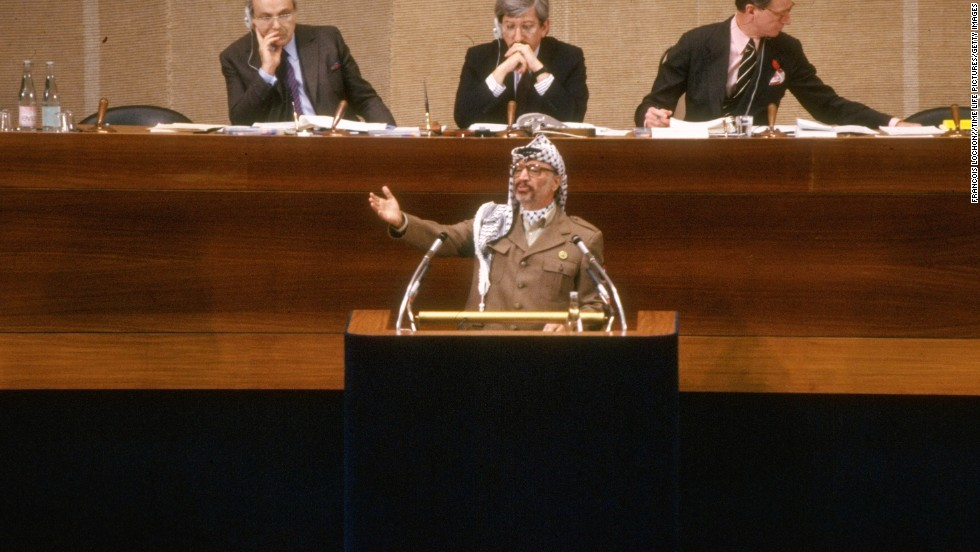 PLO Chairman Yasser Arafat addressing the UN General Assembly in December 1988
Changing superpower policies in the Middle East: US involvement in the Gulf War (1991)
IRAQ'S INVASION OF KUWAIT AND THE GEOPOLITICAL OIL CRISIS
REACTIONS AND RESPONSES
- August 2, 1990: Saddam Hussein and Iraqi forces invaded Kuwait Purpose 1: Pay off huge debt incurred during the Iran-Iraq war in 1979. Purpose 2: Position Iraq as the gatekeeper of the Middle East oil reserves.
- US OFFICIALS' REACTION: Kuwait invasion was the first step for Iraq to gain control of the Middle East. Control of Kuwait and Saudi = 20% of the world's oil reserves under the control of Iraq.
- THE UN'S ACTION: Passed resolutions placing economic sanctions on Iraq, and making them withdraw their forces from Kuwait by January 15, 1991.
THE TWO PHASES OF THE GULF WAR
FIRST PHASE
OPERATION DESERT SHIELD
August 1990 to January 17, 1991: US President George H.W. Bush commenced Operation Desert Shield where more than 500,000 enhanced US troops were deployed to protect Saudi Arabia and liberate Kuwait.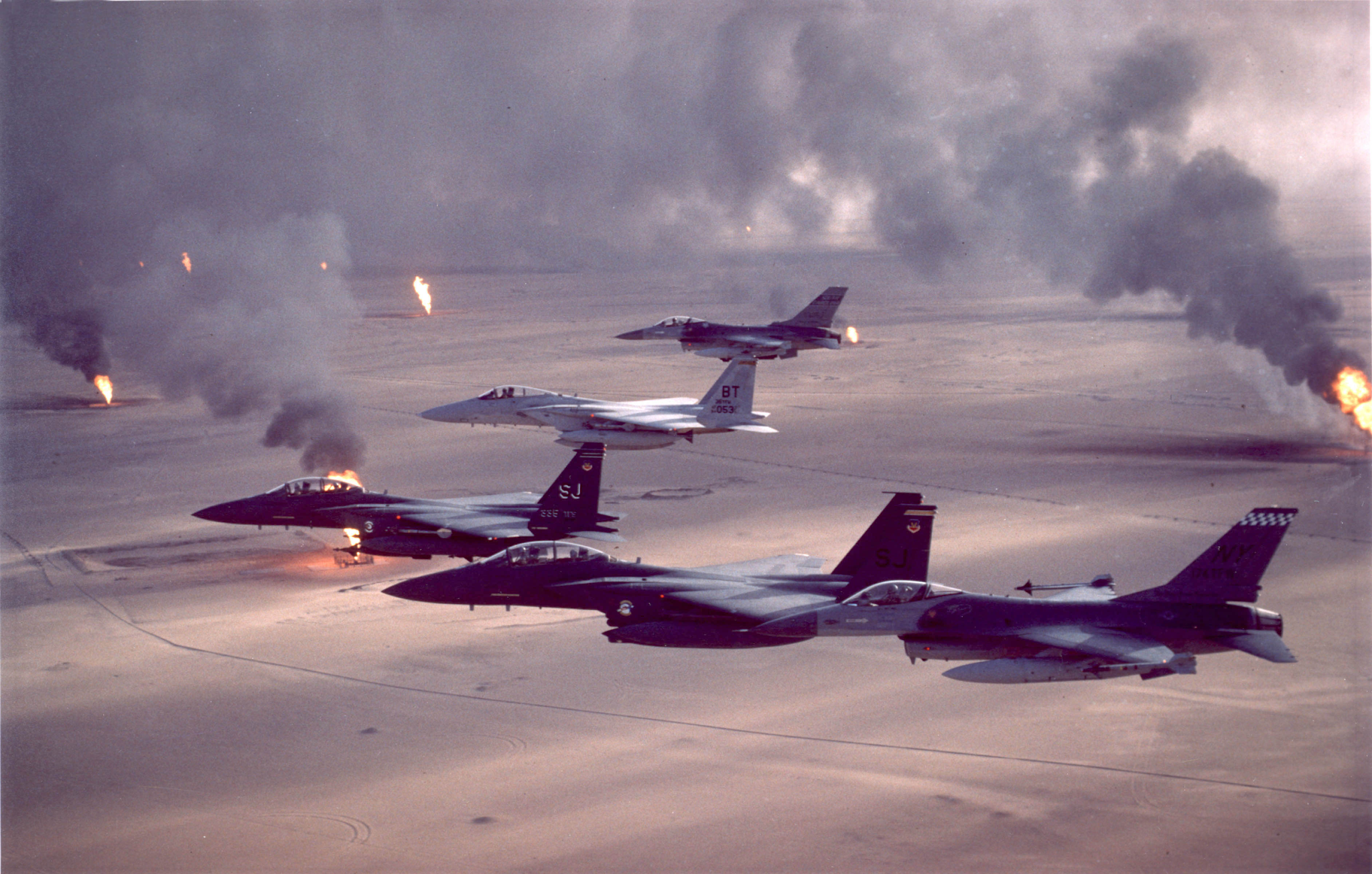 US air forces during Operation Desert Storm, 1991 (from Wikimedia Commons)
SECOND PHASE
January 17 to February 28, 1991: Generals Colin Powell and Norman Schwarzkopf led a five-week bombing campaign against Iraqi targets. In retaliation, Iraqi forces launched short-ranged "scud" missiles aimed at civilian and military targets in Saudi Arabia and Israel.
Changing superpower policies in the Middle East: The end of the Cold War
The Middle East experienced several geopolitical transformations since the Cold War began. These changes were brought about by the actions of other state actors, particularly Europeans, the Soviet Union, and the United States. With the collapse of the Soviet Union, which ended the Cold War, a rebalancing of power, as well as foreign policy changes, took place. The following were its implications:
- On International Trade: In the Middle East, mistrust and fragmentation prevailed. The United States maintained its strategic relations with the Middle East (and Israel), given its dependence on oil and gas from the Persian Gulf.
- On the Arab-Israeli Conflict: With the absence of the Soviet Union, the United States had the opportunity to be a "superpower moderator" in the peace process. This is evident during the Israel-Egypt peace treaty in 1979, and the Israel- Palestine accord in 1993 and 1995, respectively.
- On the Persian Gulf Conflict: The United States devoted much of its effort to maintaining peace between Israel (a US ally), Egypt, and Palestine. Historians believe that the lack of intervention in the Persian Gulf conflict confirms the fact that the US' interests were threatened.
Arafat, Rabin, and the Oslo Accords (1993)
BACKGROUND OF THE OSLO ACCORDS
Following Arafat's address to the UN General Assembly in December 1988, peace negotiations between Israel and the PLO secretly began in Oslo, Norway in 1993. Both parties wanted secrecy due to fear of backlashes from their respective constituencies. For its part, the Israelis had always seen the PLO as a terrorist organisation, while the PLO refused to recognise Israel's existence as a State.
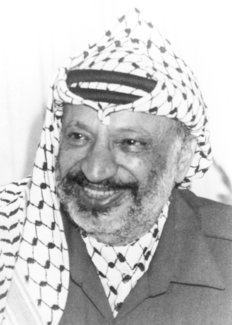
PLO CHAIRMAN YASSER ARAFAT: The Palestine Liberation Organisation was willing to commit to a peace agreement with Israel, as well as to acknowledge its right to exist. Arafat also said that any peace negotiations must adhere to UN Resolutions 242 and 336.
ISRAEL PRIME MINISTER YITZHAK RABIN: Israel recognised PLO as the Palestinian people's official representative to negotiate peace agreements. Rabin's move changed the face of Israel's foreign policy, given its perception of the PLO as the orchestrator of several terrorist attacks.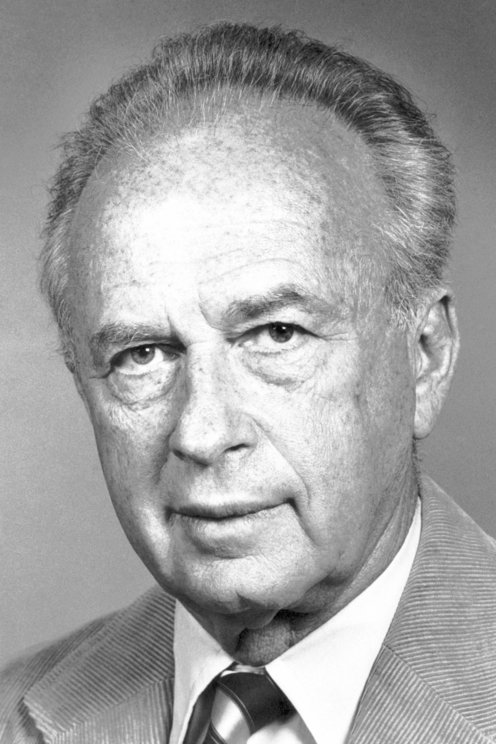
Arafat, Rabin, and the Oslo Accords (1993)
THE FIRST CHAPTER (OSLO-A), 1993
AGREEMENTS/ANNEXES STIPULATED IN OSLO-A (September 13, 1993)
- Israel would gradually withdraw from Gaza and the West Bank for a five-year period to give way for self-government. The territories were divided into zones controlled by certain authorities.
- Democratic elections commenced for the members of the Palestinian Legislative Council, as well as organising mass media.
- An Israeli-Palestinian committee for economic cooperation would be established focusing on key economic issues such as water, electricity, finance, trade and commerce.
- Both Israel and Palestine would undertake the promotion of a regional development programme, which included the West Bank and Gaza Strip
The establishment of the Palestinian National Authority (1994)
CREATION
It was created by the Gaza-Jericho agreement signed on May 4, 1994, in accordance with the 1993 Oslo Accords. The agreement included interim Palestinian self-rule in Gaza Strip and the West Bank within five years, as well as Israel's partial withdrawal from Jericho (in West Bank) and Gaza Strip.
Palestinian National Authority
- It was an interim organisation tasked with administering a limited form of the five-year interim Palestinian self-governance.
- ADMINISTRATIVE RESPONSIBILITIES: This only included civil authority and internal security of the territory. It did not include dealing with foreign affairs or relations with other countries.
- PALESTINIAN LEGISLATIVE COUNCIL: Elections for the PLC and PA's legislative body were held on January 20, 1996.
Israel-Jordan Peace Treaty (1994)
BACKGROUND: On October 26, 1994, Israel and Jordan signed a peace treaty that aimed to settle land and water disputes, and to enhance cooperation in trade and tourism. It also provided that their countries would not become a staging ground for military attacks.
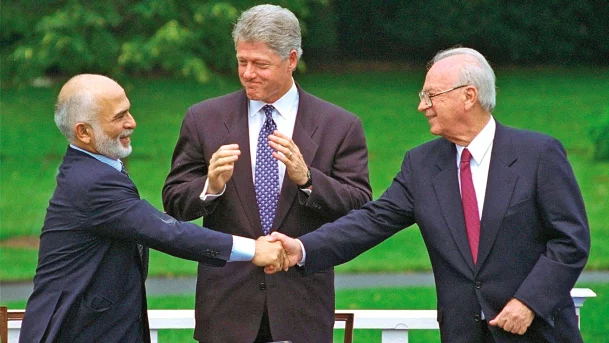 Jordan Prime Minister Abdul-Salam Majali and Israeli Prime Minister Yitzhak Rabin shook hands after signing the peace deal, while US President Bill Clinton looks on.
the
- Delimitation of the international boundary between Israel and Jordan, which included the territorial waters and airspace.
- No threats of hostility or violence would prevail between the two parties. Measures had to be undertaken by both parties to prevent terrorism.
- Water cooperation was also established to address water shortages.
- Freedom of passage between the two countries was also in the treaty. Access to roads, ports, and waters was granted.
- Freedom of access to places of historical and religious significance was also granted in the treaty.
- Vowed to address issues related to refugees and displaced people due to the conflicts in the Middle East.
Oslo II (1995): Context and Content
The Oslo I agreement served as a framework for the follow-up agreement that was signed on September 28, 1995, in Taba, Egypt. This was known as the Interim Agreement on the West Bank and the Gaza Strip or Oslo II. It created Areas A, B, and C, in which the first two areas were controlled by the Palestinian Authority in a limited capacity. The following are the key features of the accord:
THE PALESTINIAN COUNCIL
The agreement outlined roles and responsibilities of the Council. It the power to oversee civil affairs. In addition, Israel has transferred powers to the Council.
CONTROL OVER TERRITORIES
Oslo II provided for the division of the West Bank into three zones, where each zone was controlled by a certain authority. The extent of security and order over these areas were outlined.
LEGAL AFFAIRS
The accord outlined the scope of authority and jurisdiction of the Palestinian Council with respect to conflict resolutions, disputes, differences, and the like.
COOPERATION AND OTHER PROVISIONS
Israel and Palestine had to establish economic and political cooperation. Issues like the Palestinian prisoners, and the passage between the West Bank and Gaza were also included.
Oslo II (1995): Zones in the West Bank and the Gaza Strip
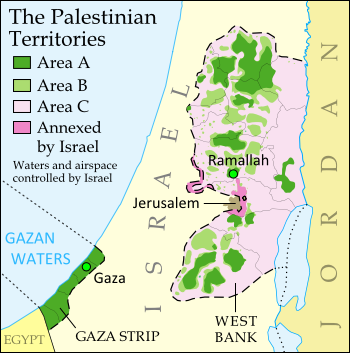
THE OSLO II ACCORD MAP
AREA C (light pink) - Israel fully controls these areas, except for Palestinian residents (to a limited extent), currently 61% of the areas.
AREA A (dark green) - Palestinians fully govern these areas, without Israel's administrative or military intervention (currently 18% of the areas).
AREA B (light green) - Both controlled by Israel and Palestine, with Palestine administering civil affairs, while Israel holds military control (21%).
Oslo II (1995): The Aftermath
Aftermath of the Oslo Accords
- High hopes dwindled, following the signing of the accords. There were disagreements between both parties but they were reconvened in Camp David with the hope of coming up with a permanent peace treaty.
- Palestinian officials accused Israel of non-withdrawal of troops from the territories stipulated in the accords. Critics have said that violence further escalated, putting blame on the PA for their failure to secure their territories.
- Changes in leadership happened in the United States with the rise of George W. Bush as the 44th President. The talks were no longer pursued by the new administration.
Note
Glossary of terms
ACCORD: It is an international agreement that signifies that parties agree on terms of an issue.
SELF-GOVERNMENT: It is a concept that generally refers to the control of a country or area by the people who live there, independent of external forces.
RENUNCIATION: It refers to the formal rejection of something, be it a belief, idea, or actions committed.
INTERIM: The term is used to refer to the transitional or temporary period of doing a certain action, or between other events.