Israel and Egypt, 1967-73 (Edexcel GCSE History): Revision Notes
📚Revision Notes
Israel and Egypt, 1967-73
Egypt's relations with Israel
Between 1948 and the 1970s can be described as the period of animosity between Egypt and Israel. After the 1967 war, Egypt suffered huge losses to Israel, including significant territories. However, Egypt's President Nasser was determined to put down the forces of Israel by enlisting help from the Soviet Union. In 1968, he launched limited attacks on Israeli forces in the Suez Canal zone. After a brief period of hostilities, a de-facto ceasefire occurred. In March 1969, the War of Attrition began when Egyptian forces attacked Israel again. The conflict would escalate until August 1970
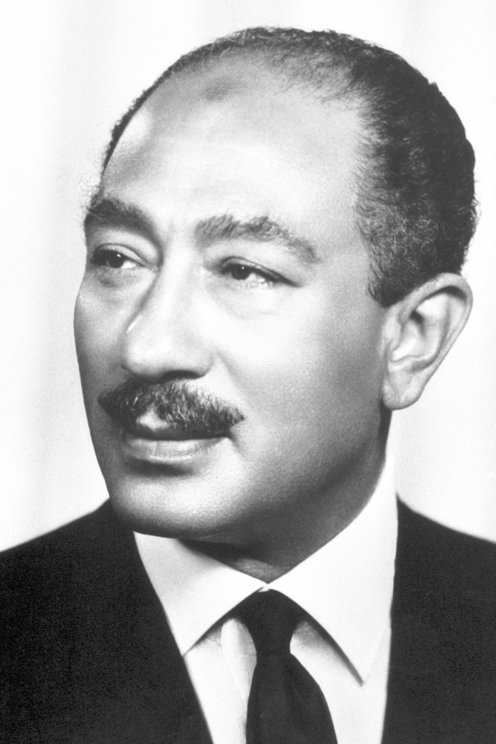 Egypt President Anwar el-Sadat (Photo from The Nobel Prize)
Egypt's Relations with the United States
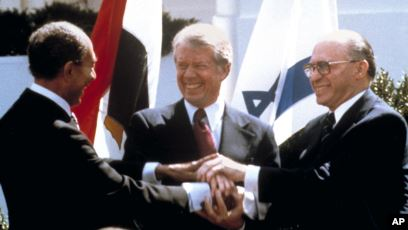
Egypt's President Anwar Sadat (left), US President Jimmy Carter (centre), and Israeli Prime Minister Menachem Begin (right) (Photo from AP)
The relationship between the United States and Egypt was rocky for decades. The rise of Nasser as Egypt's president and his anti-imperialist and anti-Israel rhetoric strained relations with the US. It deteriorated further when Egypt struck a deal with the Soviet Union in 1955 to purchase military equipment, and agreed with Moscow to construct a huge hydroelectric dam on the Nile after requests for funds to the World Bank were declined.
Egypt increasingly accused Israel of conspiring with the United States in the 1967 Six Day War. However, with Egypt suffering from a humiliating defeat in the war, and Nasser's death in 1970, relations began to improve. The US initiated a ceasefire between Egypt and Israel. In 1972, new Egypt President Anwar Sadat expelled Soviet military advisers and their families, stating that the USSR did not succeed in matching Egypt's military capacity with that of Israel.
Egypt's Relations with the USSR
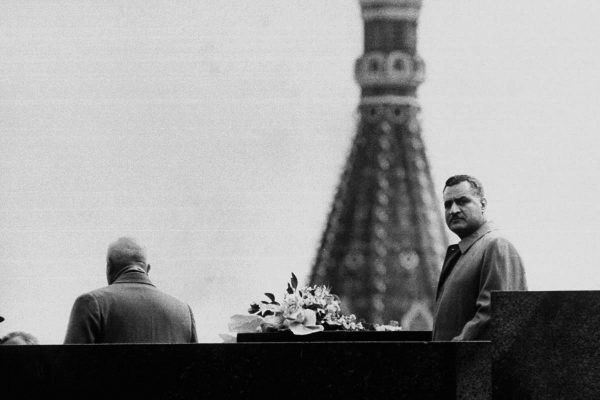 Egypt President Nasser and Soviet Leader Nikita Khrushchev (Photo from LIFE/ Howard Sochurek)
The seeds of the Egypt-USSR relations planted in the 1950s began to grow after the arms deal in Czechoslovakia was finalised. With this, the Soviet Union established itself as a superpower during the Cold War. It also opened doors for more bilateral ties in terms of diplomatic support, cultural exchange, and economic cooperation. In fact, during Nasser's presidency, Egyptian students studied at Soviet universities and military schools. His anti-imperialist and nationalist policies in Egypt earned him the respect and support of the Soviet Union.
Nasser's death brought an end to Egypt-USSR relations, however. Anwar Sadat started to make peace with Israel, with the United States' assistance. A treaty was signed between the two countries on May 27, 1971, but in July of the following year, the Egyptian government decided to expel thousands of Soviet military advisers from the country.
Note
"I always tell my Arab friends and our own Egyptian people that, even if the Russians are slow, in the end they give us what we want. That is the important thing; and it is what makes them different from the Americans." -- Gamal Abdel Nasser, January 1969
Egypt's Relations with the Arab States
After the 1967 war, the Arab states suffered great losses particularly Syria, Egypt, and Jordan. They lost their respective territories to Israel. There was significant criticism towards the Arab leaders and discontent among the Arabs. The rise of fundamentalism and Islamic nationalism paved the way for continued fighting for freedom by Palestinians.
Nasser's anti-Israel attitude did not change. In fact, this was reflected in the Khartoum Resolution passed during the Arab League summit in August 1967, which resolved that no peace and negotiations with Israel, nor recognition of its existence as a state would take place. This signified that Egypt and the Arab states would continue to forge strong relations with one another.
Nasser's death changed the tone of Egypt's foreign policy when Sadat pursued a more diplomatic way to address the crisis in the Middle East. He enlisted the help of other Arab states to do so. Egypt was still being supported by the USSR.
 The Arab states' leaders during the 1967 Arab League Summit in Syria
Israel's consolidation of control over the occupied territories
After the 1967 war, Israel was able to take over territories once belonging to Egypt, especially Gaza and the West Bank. As a result, it developed different ways to seize occupied territories. They included:
- Declaration of "State Land"
- Expropriation for Public Needs or Purposes
- Requisition of Land for Military Purposes
- Absentee Land
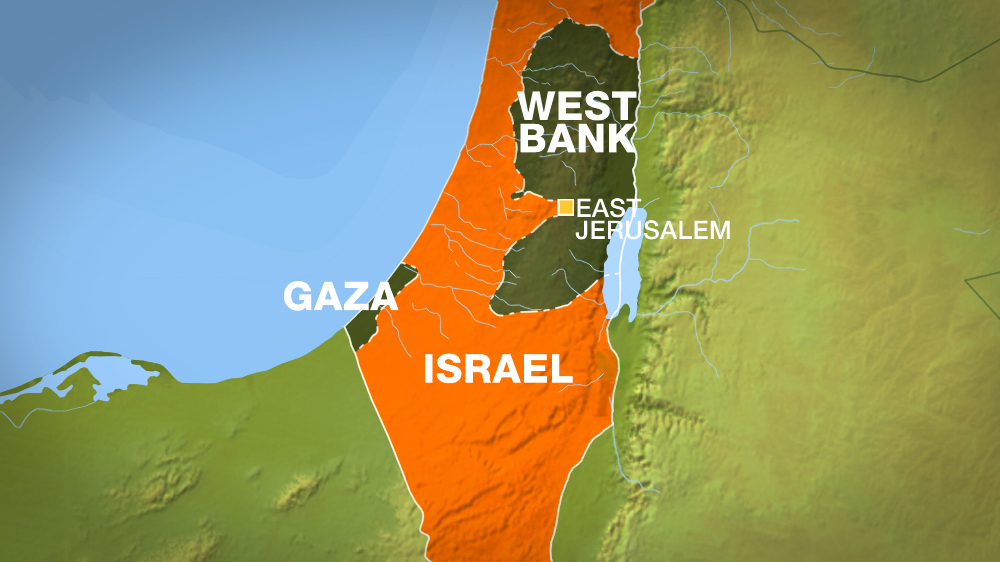 Map of territories occupied by Israel after the 1967 Six Day War including Gaza, West Bank, and East Jerusalem (Photo from AJ)
DECLARATION OF "STATE LAND"
- Israel declared 26% of the West Bank as "state land", using a different interpretation of Ottoman, British, and Jordanian laws.
- Most of the land paid for (through tax) and cultivated by Palestinians were not registered during the Ottoman and British occupations.
- Israel stopped the land registration process and declared any unregistered land as belonging to the government.
EXPROPRIATION FOR "PUBLIC NEEDS"
- Israel used the West Bank's law to expropriate private Palestinian land for public purposes.
- The Israeli government utilised the legal provisions to confiscate private land to build Jewish settlement roads connected to one another and to Israel.
- Israel used East Jerusalem's laws to build 12 settlements on Palestinian land declared for "public purposes".
LAND FOR MILITARY PURPOSES
- The Israeli army issued a "temporary" seizure order on private land, which would lead to a transfer of area ownership to Israel.
- The land was supposed to be returned to the owners after the army had finished using it. In the case of the Palestinians, some land was never returned.
- This was done at 42 settlements to build bypass roads for soldiers to travel on, as well as for building walls and fortification.
ABSENTEE LAND
- Absentee Property Law was used to seize the property of 800,000 Palestinians who were driven out of their homes due to the wars.
- The territories covered by the law were of Palestinians who fled to the West Bank, Gaza, and East Jerusalem. Israel claimed to protect these areas as the refugees were unable to return.
- However, they were subsequently banned from returning to the land in these areas, which were sold to Jewish Israelis.
Key Events of the Yom Kippur War (1973)
EVENTS LEADING TO THE OCTOBER 1973 WAR
The 1967 Six Day War left Israel possessing more territories. In fact, it became four times bigger. Egypt lost both the Sinai Peninsula and Gaza Strip, while Jordan lost the West Bank and East Jerusalem, and Syria lost Golan Heights.
Nasser's death brought Anwar Sadat to the presidency of Egypt. Unlike his predecessor, Sadat wanted to achieve peace, stability, and recovery of Sinai through an agreement. With Israel's victory in the 1967 war, however, it was uncertain whether the plan would work.
As a result of this, Sadat renewed his strategy and geared it towards an aggressive move to attack Israel once again. The thinking was that even if the plan failed, it could force Israel to reconsider a peace treaty with Egypt. Meanwhile, with Sadat's renewed alliance with Syria, a new attack on Israel was on the cards.
Yom Kippur War (October 1973)
- October 6, 1973: The fourth Arab-Israeli war began when Arab armies made the first move.
- Egypt and Syria launched simultaneous air strikes, followed by land attacks across the Suez, Sinai and Golan Heights.
- At that time, Israeli forces were away from their posts to observe the Jewish holy day of Yom Kippur.
- Within three days, Israeli forces had to withdraw from their posts in Golan Heights and Sinai as a result of successful attacks by the Arab forces.
- Egyptian forces pushed further into Sinai, but Israel's forces were able to mobilise, destroying equipment and killing soldiers.
- October 14, 1973: A major tank battle took place between Egypt and Israel in Sinai where Egypt's tanks were heavily destroyed.
Key Events during the Six Day War (1967)
OTHER EVENTS AND DIPLOMATIC TALKS DURING THE OCTOBER 1973 WAR
- Egypt's forces were weakened and equipment was destroyed by Israeli forces during the tank battle in Sinai. Israel was able to cross the Suez in the south, and get into the Golan Heights, where they had driven Syrian forces out of their positions in the territory.
- Diplomatic talks soon began at the height of the Yom Kippur War where Henry Kissinger served as a mediator. Sadat capitalised on the Arabs' successful initial attacks against Egypt, which catapulted peace negotiations.
- October 25, 1973: A ceasefire between Egypt and Israel was secured by the United Nations. Two days later, the Arabs accepted the armistice agreement.
THE AFTERMATH OF THE YOM KIPPUR WAR (OCTOBER 1973)
- Compared to the previous Arab-Israeli wars, both parties experienced mixed fortunes as the war concluded. Israel may have won in the battlefield, but Egypt was successful in capitalising on initial Arab attacks to advance peace negotiations to address the conflict.
- Sadat was seen as a world figure and a hero for the Arabs. Meanwhile, in Israel, the people criticised the government for their lack of preparation during the war. The following year, Prime Minister Golda Meir and Defence Minister Moshe Dayan resigned from their posts.
- As a result of the war that took place on October 6, 1973, the Middle East became the centre of global attention, and fears of a looming oil embargo prevailed. The confrontation between Cold War superpowers would also continue to heat up.
Note
Glossary of terms
YOM KIPPUR: Known as the Day of Atonement, it refers to the holiest day of the year in the Jewish calendar. It focuses on atonement and repentance, where the Jewish people observe this day with 25 hours of fasting and prayer.
EXPROPRIATION: This term refers to actions by the state or an authoritative body to take property from the owner for public purposes or benefit.
REQUISITION: It refers to the official order to use or get supplies of something (i.e. land) for military or public purposes/use.
DIPLOMACY: The term is used to refer to the art of dealing with people or situations in an effective manner. It is an activity or skill to manage international relations conducted by a diplomat or a country's representatives.