The significance of the fall of the Soviet Union (Edexcel GCSE History): Revision Notes
📚Revision Notes
The significance of the fall of the Soviet Union
Introduction
The collapse of the Soviet Union in 1991 represents one of the most significant events in modern world history. This monumental change not only brought the Cold War to a definitive end but also reshaped the global political landscape. The dissolution transformed one of the world's largest superpowers into multiple independent nations, fundamentally altering international relations and ending decades of ideological conflict between East and West.
The Soviet Union before 1991
Before its collapse, the Soviet Union was a massive communist state that stretched across eleven time zones, covering much of Eastern Europe, Central Asia, and Northern Asia. This enormous territory made it the largest country in the world by land area.
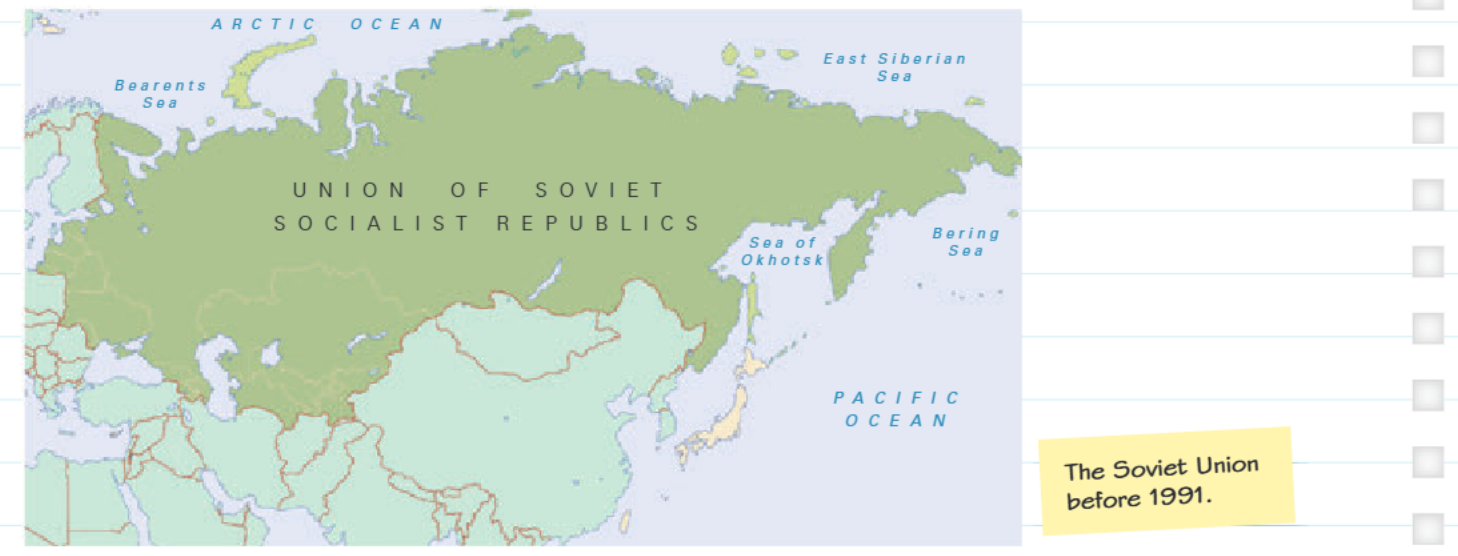
The Soviet Union, officially known as the Union of Soviet Socialist Republics (USSR), had been a major global superpower since the end of World War II. It controlled vast resources, maintained a powerful military, and led the communist bloc during the Cold War confrontation with the capitalist West, primarily the United States and its NATO allies.
Note
The sheer scale of the Soviet Union cannot be overstated - spanning eleven time zones meant that when the sun was setting in one part of the country, it was rising in another. This vast territory contained immense natural resources and diverse populations, making its eventual fragmentation all the more remarkable.
The collapse and fragmentation
When the Soviet Union finally collapsed in 1991, it did not simply disappear but broke apart into fifteen separate independent nations. This process of fragmentation created entirely new countries and restored independence to others that had been absorbed into the Soviet system decades earlier.
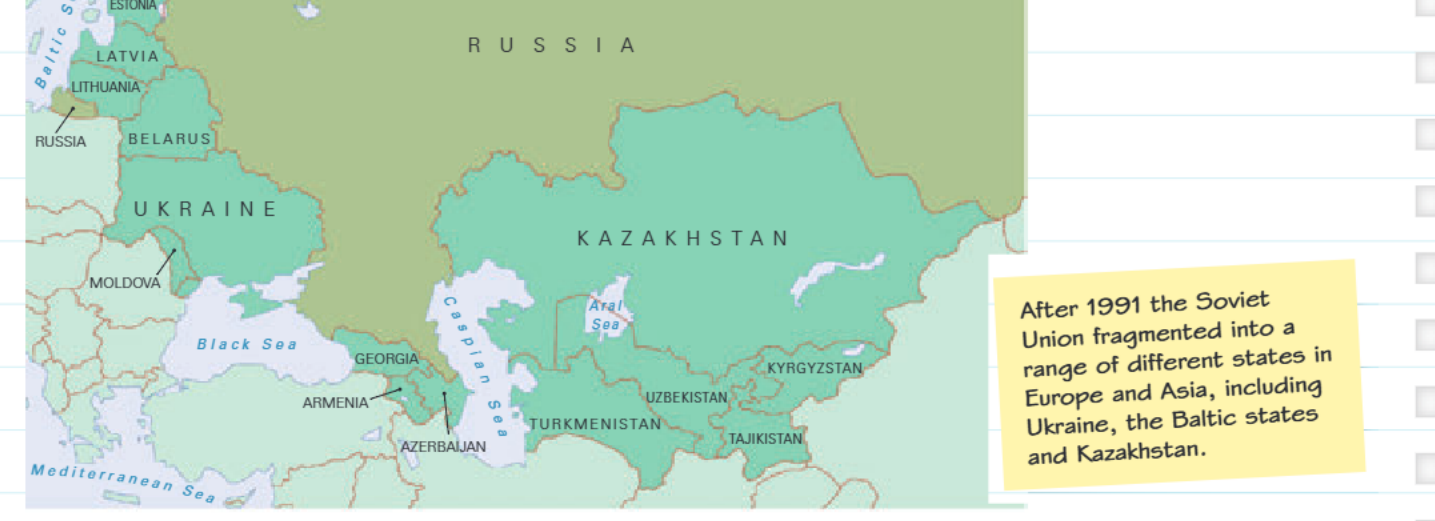
The newly independent states that emerged from Soviet territory included major countries like Ukraine, Belarus, and Kazakhstan, as well as the three Baltic states of Estonia, Latvia, and Lithuania. Central Asian republics such as Uzbekistan, Turkmenistan, Tajikistan, and Kyrgyzstan also gained their independence. Russia itself became a much smaller country, though still the largest nation in the world, and inherited much of the former Soviet Union's international responsibilities and nuclear arsenal.
Key political developments
The Commonwealth of Independent States
In January 1992, many of the former Soviet republics came together to form the Commonwealth of Independent States (CIS). This new organisation was designed to maintain some cooperation between the newly independent nations while respecting their sovereignty. However, the CIS was a much looser arrangement than the tightly controlled Soviet system that had preceded it.
The end of ideological conflict
The dissolution of the Soviet Union effectively ended the ideological battle between communism and capitalism that had defined the Cold War era. Without the Soviet Union as a communist superpower, there was no longer a global confrontation between two competing political and economic systems. This development fundamentally changed international relations and allowed for new forms of cooperation between former enemies.
Important
The end of this ideological conflict cannot be understated - for nearly half a century, the world had been divided into two competing camps with fundamentally different views on economics, politics, and society. The Soviet collapse eliminated this division and created entirely new possibilities for global cooperation.
Timeline of key events
Example
Key Events Leading to Soviet Collapse:
December 1989: The Malta Summit between US President Bush and Soviet leader Gorbachev declared an end to the Cold War
July 1991: The Warsaw Pact, the Soviet-led military alliance, was formally dissolved
December 1991: The Soviet Union officially ceased to exist
January 1992: The Commonwealth of Independent States was established
The broader significance
The fall of the Soviet Union had profound consequences that extended far beyond the borders of the former communist state. It marked the end of the bipolar world order that had existed since 1945, leaving the United States as the world's sole superpower. The collapse also paved the way for the expansion of democratic governments and free-market economies across Eastern Europe and Central Asia.
Furthermore, the dissolution of the Warsaw Pact in July 1991 eliminated the military alliance that had been NATO's primary opponent. This development opened up possibilities for former Soviet satellite states to eventually join Western institutions, fundamentally reshaping European security arrangements.
The peaceful nature of the Soviet collapse was particularly significant, as it demonstrated that major geopolitical changes could occur without devastating warfare. The Malta Summit of December 1989 had already signalled the end of hostile relations between the superpowers, creating the conditions for this peaceful transformation.
Note
The peaceful dissolution of such a massive superpower was unprecedented in modern history. Unlike the violent collapse of empires in the past, the Soviet Union's end came through political processes rather than military defeat, making it a unique event in world history.
Summary
Key Points to Remember:
- The Soviet Union's collapse in 1991 brought the Cold War to a complete end by eliminating the ideological conflict between East and West
- Fifteen new independent nations emerged from Soviet territory, including Ukraine, the Baltic states, and various Central Asian republics
- The Commonwealth of Independent States formed in January 1992 to maintain cooperation among former Soviet republics
- The Malta Summit in December 1989 had already declared an end to Cold War hostilities between Bush and Gorbachev
- The Warsaw Pact's dissolution in July 1991 eliminated the Soviet-led military alliance that had opposed NATO during the Cold War