Collision Theory & Activation Energy (OCR GCSE Chemistry A, Combined (Gateway Science Suite)): Revision Notes
📚Revision Notes
6.1.7 Collision Theory & Activation Energy
Collision Theory:
Note
Collision Theory helps us understand how and why chemical reactions happen. It states that for a reaction to occur, the particles (atoms, molecules, or ions) of the reactants must collide with each other.
Note
Just bumping into each other isn't enough. For the collision to lead to a reaction, the particles must hit with enough energy and in the right direction.
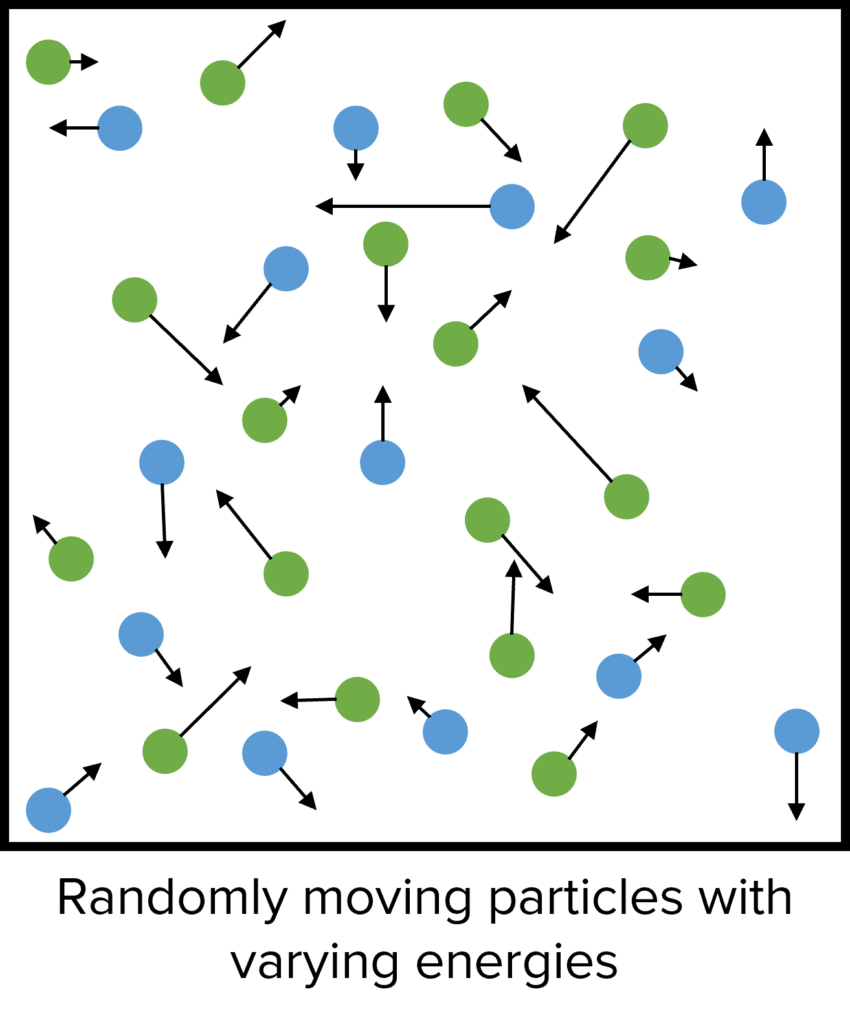
Successful Collisions:
- Not all collisions result in a reaction. A successful collision is one where particles collide with enough energy to break their bonds and form new ones, leading to the creation of products.
- The rate of reaction depends on how often these successful collisions occur. The more frequent the successful collisions, the faster the reaction.
Activation Energy:
Note
Activation Energy is the minimum amount of energy that particles need to collide successfully and start a reaction. Think of it as the energy "barrier" that must be overcome for a reaction to happen.
Note
If the particles don't have enough energy, they'll just bounce off each other without reacting.
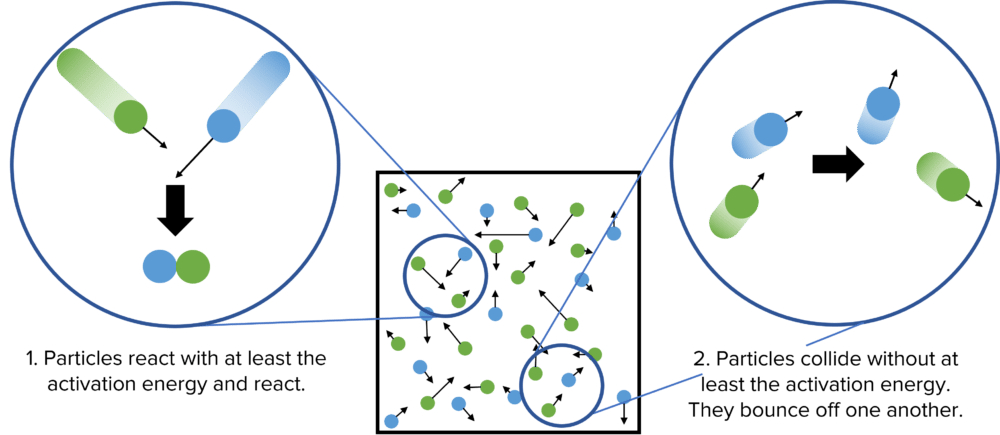
Impact on Reaction Rate:
- Reactions with low activation energy happen more quickly because more particles have enough energy to collide successfully.
- Reactions with high activation energy are slower because fewer particles can overcome the energy barrier during collisions.