Impacts of Climate Change for the UK (OCR GCSE Geography B (Geography for Enquiring Minds)): Revision Notes
📚Revision Notes
Impacts of Climate Change for the UK
Overview
Climate patterns across the UK are undergoing significant transformation. By 2050, the UK will experience considerable environmental changes that will create a range of social, economic, and environmental consequences. Understanding these impacts is essential for exam questions that ask you to describe, explain, or assess the effects of climate change on specific regions.
Note
Climate change impacts should always be classified into three categories: social (affecting people and communities), economic (financial consequences), and environmental (changes to the natural world). This classification system is frequently tested in exams.
Projected environmental changes by 2050
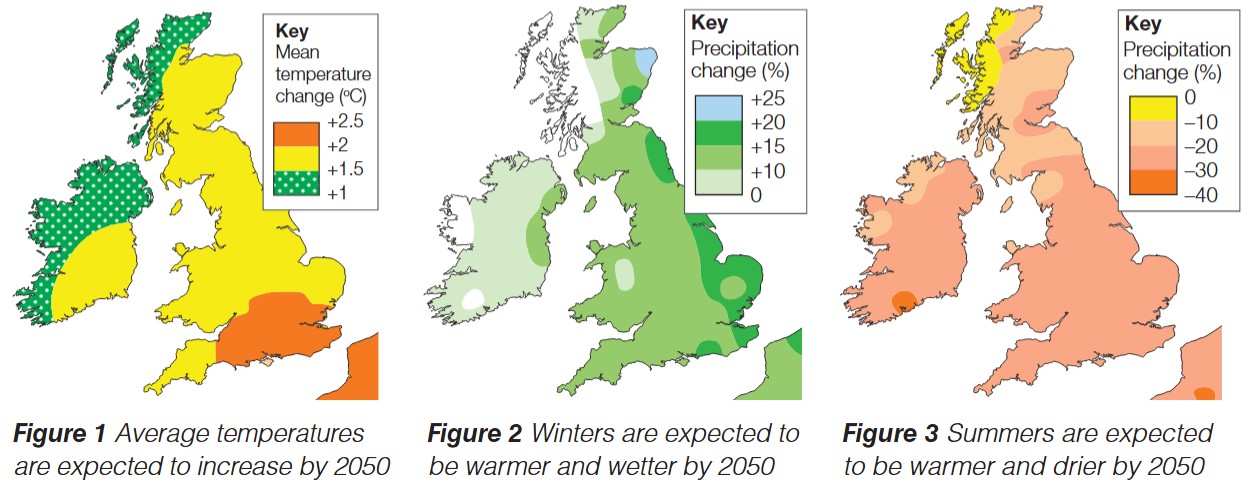
The UK's climate is expected to warm by 1-2.5°C by 2050. This warming will not be uniform across the country and will bring different changes to temperature and precipitation patterns.
Temperature changes
Average temperatures are projected to increase across all regions of the UK. Southern England, particularly the southeast, is expected to experience the greatest warming, with temperatures rising by approximately 2.5°C. Scotland and northern England will see smaller increases of around 1-1.5°C. These changes will affect the UK throughout the year, making the country warmer in all seasons.
Important
Regional Variation is Key
Temperature increases vary significantly across the UK. Always specify which region you're discussing in exam answers - don't just say "the UK will get warmer." Southeast England experiences the greatest warming (2.5°C), while Scotland sees smaller increases (1-1.5°C).
Winter precipitation patterns
Winters are forecast to become both warmer and wetter. Precipitation levels are projected to increase by 10-25% across most of the UK. The northwest of Scotland is expected to experience the highest increase in winter rainfall, with rises of up to 25%. This additional rainfall will significantly increase the risk of flooding during winter months.
Summer precipitation patterns
In contrast to winters, summers are expected to become warmer but considerably drier. Precipitation levels may decrease by 10-40% in summer months. Southern England faces the most severe reductions, with rainfall potentially dropping by 30-40%. These drier summers will have important implications for water resources and agriculture.
Note
Remember the pattern: Winters Wetter, Summers Drier (WWD). This seasonal difference is crucial for understanding water availability issues and flood risk patterns throughout the year.
Coastal flooding
Coastal regions face heightened flood risk as ocean levels increase. Rising sea levels represent an environmental impact that triggers significant economic and social consequences.
Economic impacts
Infrastructure in coastal areas will be severely compromised. Approximately £120 billion worth of infrastructure is at risk from coastal flooding. This includes damage to agriculture, manufacturing industry, and essential infrastructure like roads, railways, and buildings.
Coastal defence spending will need to increase substantially. Local and national governments will be required to invest more money in sea defences, flood barriers, and coastal protection schemes to protect communities and infrastructure.
Note
Interconnected Impacts
Notice how coastal flooding demonstrates all three impact types simultaneously. The environmental change (rising sea levels) causes economic damage (£120bn infrastructure at risk, increased defence costs) and social consequences (displacement, job losses). This interconnection is important for higher-mark exam questions.
Social impacts
Coastal flooding will force people to relocate from their homes. Communities living in low-lying coastal areas may need to move inland as their homes become uninhabitable or at too great a risk from flooding. This displacement will cause people to lose their jobs, particularly those employed in coastal industries like fishing, tourism, and port operations.
Extreme rainfall events
Precipitation levels are projected to rise across most of the UK. This increase will raise both the frequency and severity of river flooding, creating substantial impacts on communities.
Case study: Tewkesbury floods, July 2007
In July 2007, Tewkesbury received two months' worth of rain in just 14 hours. This extreme rainfall event demonstrates the devastating impacts that climate change-related flooding can have.
Example
Worked Example: Analysing the Tewkesbury 2007 Floods
When asked to "Describe the impacts of extreme rainfall in the UK using a case study," structure your answer by impact type:
Social impacts:
- 13 people died during the flooding
- 135,000 people were left without water for 17 days due to damage to water treatment facilities
- Homes were destroyed and communities were displaced
Economic impacts:
- The flood cost local councils £140 million in immediate response and cleanup
- The total cost to the UK economy reached £32 billion when long-term damage and business disruption were included
Environmental impacts:
- Breeding grounds for important bird species, including lapwing and redshank, were flooded and destroyed
- Water pollution occurred as sewage systems were overwhelmed
Key exam technique: Always use specific figures from your case study. Notice how each impact type has quantitative data to support it.
Important
Exam Approach: Using Case Studies Effectively
When describing or explaining flood impacts, always classify them as social, economic, or environmental. Use specific figures and examples like Tewkesbury to support your answers. Examiners award higher marks for answers that include precise data and named examples.
Problems with extreme heat
The UK will experience more frequent and intense extreme heat events. These represent environmental changes that lead to serious social and economic consequences.
Health impacts
Projections indicate that by 2050, there will be an extra 9,000 cases of illness caused by salmonella as warmer temperatures allow bacteria to breed more rapidly on food. Heat-related mortality will increase significantly.
Vulnerable groups face increased health risks. Older people and individuals with respiratory conditions like asthma are particularly susceptible to heat-related illness and death. The map below shows projected increases in premature deaths across different regions of the UK.
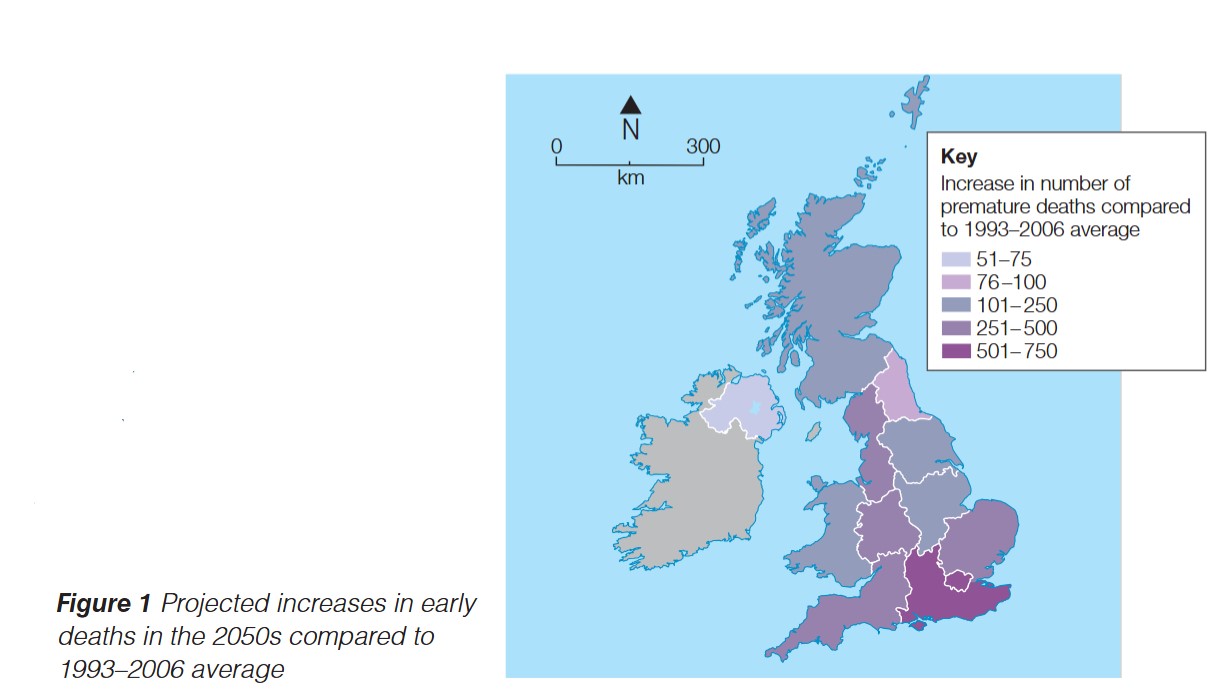
Southeast England is expected to see the highest increase in heat-related premature deaths, with 501-750 additional deaths compared to the 1993-2006 baseline average. This reflects both higher temperatures in this region and its larger elderly population.
Important
Vulnerable Groups and Health Inequality
Climate change disproportionately affects vulnerable groups - the elderly and those with respiratory conditions like asthma face the greatest health risks. This demonstrates how climate change can worsen existing social inequalities. Always mention specific vulnerable groups when discussing health impacts in exams.
Water shortage issues
Higher temperatures will cause increased evaporation rates. Combined with reduced summer rainfall, this will lead to significant water shortages with several economic consequences.
Water availability for agriculture will decline. Farmers will have less water for irrigating crops, potentially reducing yields and affecting food production.
Industry and power generation will be affected. Power stations require large amounts of water for cooling, and reduced water availability may limit electricity generation capacity.
Hosepipe bans and water restrictions will become more frequent. Both households and businesses will face limitations on water use during summer months.
Note
Understanding the Water Shortage Process
Water shortages result from a combination of factors:
- Higher temperatures increase evaporation rates
- Summer rainfall decreases by 10-40%
- Demand increases (agriculture, cooling, domestic use)
This triple pressure creates the shortage - it's not just about less rainfall, but also about increased evaporation and demand.
Benefits of warmer temperatures
Warmer conditions will create certain advantages alongside the challenges. Understanding both positive and negative impacts is important for balanced exam answers.
Health benefits
Cold-related deaths will decrease. Currently, winter cold causes significant mortality among vulnerable groups. A warmer climate, particularly milder winters, will reduce these deaths, potentially saving lives.
Tourism opportunities
A better climate will benefit the tourism industry. Warmer, drier summers will make the UK more attractive to both domestic and international tourists.
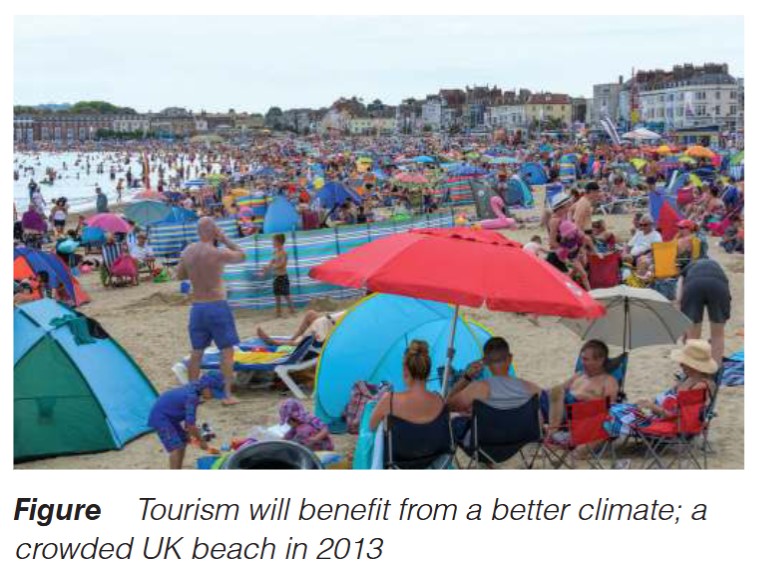
More money will be spent on accommodation, restaurants, attractions, and days out, boosting the economy. Coastal resorts and outdoor attractions are particularly likely to benefit from increased visitor numbers during extended summer seasons.
Agricultural advantages
Growing seasons will extend as temperatures rise and the risk of frost decreases. This longer growing period means farmers may produce increased yields of traditional crops.
New crop varieties will become viable. Farmers will be able to cultivate crops that currently cannot grow in the UK's climate, such as olives and melons. The wine industry is already benefiting from warmer temperatures, with English and Welsh vineyards producing higher quality wines as conditions improve.
These agricultural changes represent economic benefits as they increase food production, reduce imports, and create new market opportunities for British farmers.
Important
Balanced Evaluation for High Marks
When evaluating climate change impacts, remember to discuss both problems and benefits. However, make clear that for the UK, the negative impacts significantly outweigh the positive ones, particularly regarding extreme weather events and their social and economic costs. A balanced answer that reaches a justified conclusion will score more highly than one that only discusses negatives.
Remember!
Summary
Key Points to Remember: Climate Change Projections
- The UK's climate is projected to warm by 1-2.5°C by 2050, with wetter winters and drier summers
- Coastal flooding threatens £120 billion of infrastructure and will force communities to relocate
- Regional variation matters: Southeast England experiences greatest warming (2.5°C) and highest mortality risk; northwest Scotland sees greatest winter rainfall increases (up to 25%) Key Points to Remember: The Tewkesbury 2007 Case Study
Essential case study demonstrating all three impact types:
- Social impacts: 13 deaths, 135,000 people without water for 17 days
- Economic impacts: £140 million cost to local councils, £32 billion total cost to UK economy
- Environmental impacts: Bird habitat loss (lapwing and redshank breeding grounds flooded)
Exam tip: Memorize these specific figures - they demonstrate detailed case study knowledge that examiners reward. Key Points to Remember: Extreme Heat and Water Shortages
- Extreme heat will cause 9,000 additional salmonella cases by 2050
- Vulnerable groups (elderly people and asthma sufferers) disproportionately affected
- Water shortages result from increased evaporation and reduced summer rainfall (10-40% decrease)
- Economic consequences: affects agriculture, industry, and power generation
- Hosepipe bans and restrictions will become more frequent
Key Points to Remember: Benefits and Balance
Benefits of warmer temperatures:
- Fewer cold-related deaths from milder winters
- Improved tourism potential with warmer, drier summers
- Longer growing seasons enabling new crops (olives, melons) and benefiting wine industry
Critical point: While benefits exist, negative impacts significantly outweigh positives, especially regarding extreme weather events and their social and economic costs. Key Terms for Exams
-
Environmental impacts: Changes to the natural environment, such as temperature increases, precipitation changes, or habitat loss
-
Social impacts: Effects on people and communities, including health, displacement, and quality of life
-
Economic impacts: Financial consequences, including infrastructure damage, costs of adaptation, and effects on industries
-
Coastal flooding: Inundation of low-lying coastal areas caused by rising sea levels and storm surges
-
Extreme weather: Unusually severe weather events, such as intense rainfall, heatwaves, or storms
-
Precipitation: All forms of water falling from the atmosphere, including rain, snow, and sleet
-
Vulnerable groups: People at higher risk from climate change impacts, particularly the elderly and those with health conditions
-
Growing season: The period when temperatures are warm enough for crops to grow
Critical Exam Techniques
Impact classification: Always categorize impacts as social, economic, or environmental when answering exam questions. Many impacts fall into multiple categories - explain the connections.
Temperature-precipitation relationship: Understand that higher temperatures increase evaporation, contributing to water shortages even in areas with stable rainfall. This process is crucial for explaining water shortage problems.
Using case studies: Include specific figures, dates, and locations (e.g., "In July 2007, Tewkesbury..."). Generic answers without detail score poorly. The Tewkesbury case study is your essential example for extreme rainfall impacts.
Regional variation: Always specify which region of the UK you're discussing. Different areas experience different degrees of warming and precipitation change.