Climate and Landscape (OCR GCSE Geography B (Geography for Enquiring Minds)): Revision Notes
📚Revision Notes
Climate and Landscape
What is weathering?
Weathering describes how rocks are broken down over time through various natural processes. This breakdown is primarily caused by weather conditions. Once rocks have been weathered, the broken material may then be transported away through erosion. Together, weathering and erosion gradually reshape the landscape over long periods.
Note
The key difference: weathering breaks down rocks in place, while erosion removes and transports the weathered material. Both processes work together to shape landscapes.
Understanding weathering is essential because different types of weathering create distinctive landscape features across the UK and beyond.
Types of weathering
There are three main types of weathering that break down rocks in different ways. Each type operates through distinct mechanisms and creates different effects on the landscape.
Important
All three weathering types work together in nature:
- Mechanical weathering – temperature changes cause rocks to break up physically
- Chemical weathering – decomposition of rock through chemical reactions
- Biological weathering – breakup of rock due to the action of plants or animals
Mechanical weathering
Mechanical weathering occurs when temperature variations cause rocks to fracture and break apart physically. No chemical changes take place in this process—the rock simply breaks into smaller pieces.
The most common example is freeze-thaw weathering, which is particularly important in the UK's climate. This process works through repeated cycles of freezing and thawing.
Chemical weathering
Chemical weathering involves the decomposition or breakdown of rock through chemical reactions. This type of weathering is frequently caused by slightly acidic rainwater reacting with minerals in the rock.
A key example is the dissolving of limestone through a process called solution. Rainwater absorbs carbon dioxide from the atmosphere, making it slightly acidic. When this acidic water comes into contact with limestone, it slowly dissolves the rock, creating distinctive features like caves and limestone pavements.
Note
Chemical weathering is most active in areas with high rainfall because water is essential for the chemical reactions that break down rock minerals.
Biological weathering
Biological weathering happens when living organisms contribute to rock breakdown. This can occur through the actions of both plants and animals.
For example, plant roots can grow into cracks in rocks, gradually widening them as the roots expand. Burrowing animals can also break up rock by creating tunnels and disturbing the rock structure.
The freeze-thaw weathering process
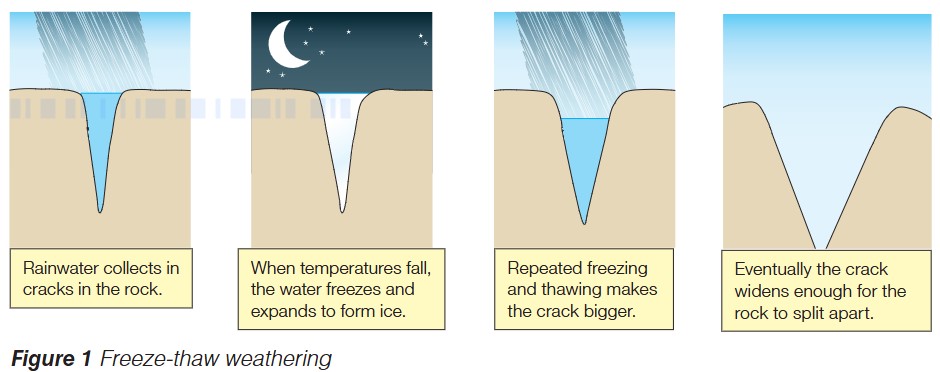
Freeze-thaw weathering is a type of mechanical weathering that operates through four distinct stages. This process is particularly active in areas that experience regular temperature fluctuations around 0°C.
Example
The Four Stages of Freeze-Thaw Weathering:
Stage 1: Water collection
Rainwater seeps into existing cracks and fissures in the rock surface. These cracks may already be present due to the rock's natural structure or previous weathering.
Stage 2: Freezing and expansion
When temperatures drop below 0°C (typically overnight or during winter), the water trapped in the rock cracks freezes. As water freezes, it expands by approximately 9% in volume. This expansion exerts tremendous pressure on the surrounding rock from within.
Stage 3: Repeated cycles
The process of freezing and thawing repeats many times. Each time the ice thaws during warmer periods, the water can penetrate slightly deeper into the widened crack. When it freezes again, the crack is forced open even further. This repeated cycle gradually enlarges the crack.
Stage 4: Rock splitting
Eventually, after many freeze-thaw cycles, the crack widens sufficiently for pieces of rock to break away completely. The rock splits apart, often along natural weaknesses in its structure.
This process is most effective in environments where temperatures regularly fluctuate above and below freezing point, such as mountainous regions or areas with cold winters.
Climate and weathering in the UK
The UK experiences a temperate (moderate) climate without significant weather extremes. This means that weathering processes typically operate slowly compared to regions with more extreme climatic conditions. However, the UK's climate still plays an important role in shaping distinctive landscapes.
Regional climate variations
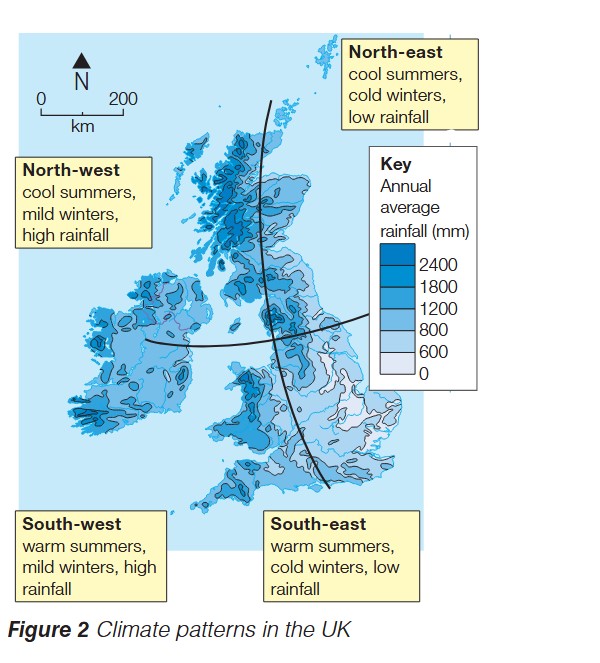
Different parts of the UK experience varying climate patterns, which directly influence the rate and type of weathering that occurs:
North-east region:
- Cool summers
- Cold winters
- Low rainfall
- Limited weathering due to relatively dry conditions
North-west region:
- Cool summers
- Mild winters
- High rainfall
- Significant weathering, particularly chemical weathering due to abundant moisture
South-west region:
- Warm summers
- Mild winters
- High rainfall
- Active weathering processes, especially chemical and biological weathering in the milder, wetter conditions
South-east region:
- Warm summers
- Cold winters
- Low rainfall
- Moderate weathering rates, though freeze-thaw can be significant during cold winters
Weathering rates across the UK
Weathering is most active in areas that experience either higher rainfall or more extreme temperature variations. The western and northern upland regions of the UK, such as the Lake District and Scottish Highlands, experience the most intense weathering. This occurs because these areas receive higher rainfall (sometimes exceeding 2,400mm annually) and experience greater temperature fluctuations.
Note
The distribution of weathering across the UK follows clear patterns:
- Western regions = high rainfall = more chemical weathering
- Upland regions = temperature extremes = more freeze-thaw weathering
- Eastern regions = lower rainfall = slower weathering rates overall
In contrast, the drier south-eastern regions experience slower weathering rates due to lower rainfall (often less than 600mm annually). However, they may still experience significant freeze-thaw weathering during particularly cold winters.
These variations in climate and weathering rates across the UK help explain why different regions have developed such distinctive landscape features—from the rugged mountains of Scotland to the gentler chalk downlands of southern England.
Exam guidance
Important
Command word: Describe
When asked to describe weathering processes, provide a clear account of what happens at each stage. Use Figure 1 as a guide to explain the sequence of events in freeze-thaw weathering.
Command word: Explain
When asked to explain how climate influences weathering, you must provide reasons. For example: "Chemical weathering is more active in western UK regions because higher rainfall provides more moisture for chemical reactions with rock minerals."
Command word: Assess
When asked to assess the impact of climate on UK landscapes, weigh up different factors. Consider both rainfall and temperature, and evaluate which regions experience most weathering and why.
Remember!
Summary
Key Points to Remember:
-
Three weathering types: Mechanical (physical breaking), chemical (decomposition by reactions), and biological (breakdown by living organisms) all contribute to landscape change.
-
Freeze-thaw process: Water enters cracks → freezes and expands → repeated cycles widen cracks → rock eventually splits apart. Most effective where temperatures fluctuate around 0°C.
-
UK climate characteristics: The UK's moderate, temperate climate means weathering occurs relatively slowly compared to regions with extreme weather conditions.
-
Regional variations matter: Areas with higher rainfall (western UK) or more extreme temperatures (northern uplands) experience faster weathering rates, creating more dramatic landscape features.
-
Climate shapes landscape: The distribution of weathering across the UK explains why different regions have developed distinctive landscape characteristics—understanding climate patterns helps explain landscape formation.