Ecotourism in Costa Rica (OCR GCSE Geography B (Geography for Enquiring Minds)): Revision Notes
📚Revision Notes
Ecotourism in Costa Rica
What is ecotourism?
Ecotourism is a form of sustainable tourism that aims to create jobs for local people while protecting and conserving the natural environment. Unlike traditional tourism, ecotourism prioritises environmental conservation and community benefits over profit maximization.
Note
The key distinction of ecotourism is its dual focus on both environmental protection and local community welfare, making it fundamentally different from conventional tourism models that prioritize profit.
How ecotourism differs from other types of tourism
Ecotourism is distinct from mass tourism and conventional holidays in several important ways:
- Environmental protection: It does not damage or harm the natural environment, unlike mass tourism which can cause degradation through overdevelopment and pollution.
- Small scale operations: Ecotourism operates on a relatively small scale, avoiding the problems associated with large resorts and mass tourist numbers.
- Community consultation: Local communities are consulted and involved in tourism planning decisions, ensuring their voices are heard.
- Shared benefits: Both local people and tourists benefit from ecotourism, creating economic opportunities for residents while providing meaningful experiences for visitors.
Important
A critical feature of ecotourism is that it operates on a small scale and actively involves local communities in decision-making processes. This prevents the exploitation often seen in mass tourism developments.
Case study: Samasati Nature Reserve, Costa Rica
The Samasati Nature Reserve in the Costa Rican rainforest provides an excellent example of ecotourism in practice. This eco-lodge demonstrates how tourism facilities can be developed sustainably whilst minimizing environmental impact.
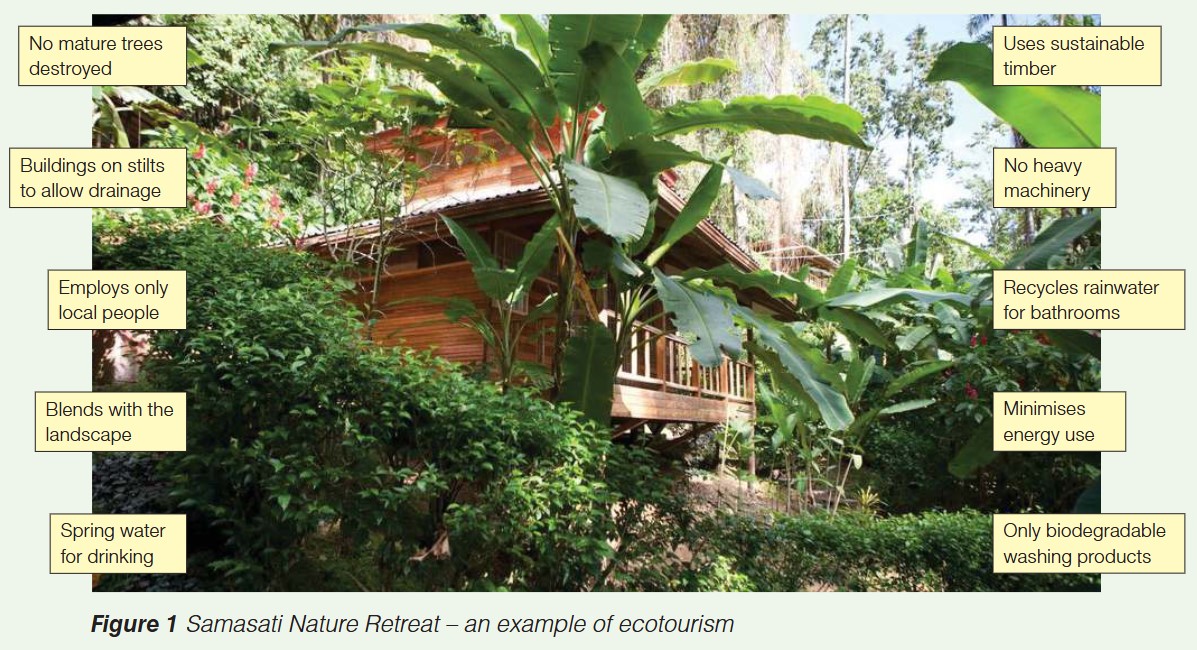
Sustainable features of Samasati Nature Retreat
Example
Practical Example: Sustainable Design at Samasati
The eco-lodge incorporates numerous sustainable practices across three key areas:
Building design and construction:
- Buildings are constructed on stilts, which allows natural drainage and prevents soil compaction
- Uses sustainable timber that is responsibly sourced
- No mature trees were destroyed during construction
- The buildings blend naturally with the surrounding landscape
Resource management:
- Spring water is used for drinking, reducing the need for processed water
- Rainwater is recycled and collected for use in bathrooms
- Energy use is minimized throughout the facility
- Only biodegradable washing products are used, preventing chemical pollution
Community and environmental benefits:
- Employs only local people, supporting the local economy
- No heavy machinery was used during construction, reducing carbon emissions and environmental disturbance
These features demonstrate how careful planning and design can create tourist facilities that actively support both environmental conservation and local communities.
Planning a sustainable holiday
When considering whether a holiday is sustainable, there are key questions tourists should ask. These questions help evaluate the true environmental and social impact of tourism choices.
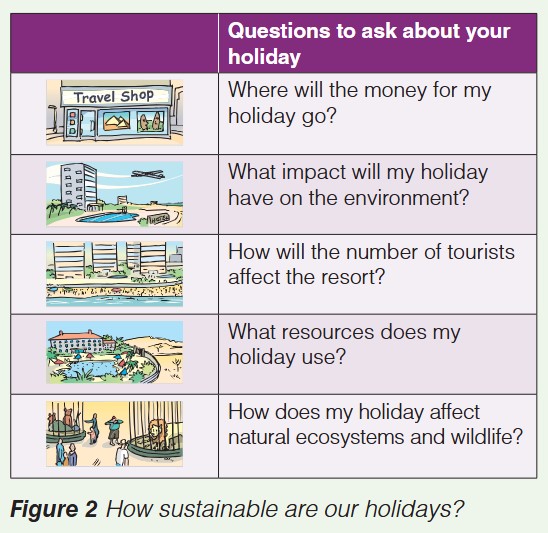
Questions to ask about your holiday
Note
Critical Questions for Sustainable Tourism:
Economic impact:
- Where will the money for my holiday go? Does it benefit local communities or large international corporations?
Environmental considerations:
- What impact will my holiday have on the environment? Consider transport, waste, and resource consumption.
Tourist pressure:
- How will the number of tourists affect the resort and local area? Can the destination cope with visitor numbers?
Resource consumption:
- What resources does my holiday use? Think about water, energy, and food sources.
Ecosystem impact:
- How does my holiday affect natural ecosystems and wildlife? Does it disturb habitats or harm animal populations?
Asking these questions before booking allows tourists to make informed decisions and choose options that align with sustainable tourism principles.
Important
Exam Tip
When answering questions about sustainable tourism or ecotourism, always consider both the environmental and socio-economic impacts. Use specific examples like Samasati Nature Reserve to support your points.
Command words such as "explain" require you to give reasons, whilst "assess" or "evaluate" need you to consider both advantages and disadvantages.
Summary
Key Points to Remember:
- Ecotourism creates local employment whilst conserving the natural environment
- It operates on a small scale and consults with local communities
- Samasati Nature Reserve in Costa Rica demonstrates sustainable practices including:
- Using local labour
- Sustainable materials
- Minimizing environmental impact through careful design
- Sustainable holidays require careful consideration of:
- Economic benefits to local communities
- Environmental impact
- Tourist numbers and carrying capacity
- Resource use
- Ecosystem effects
- Always ask critical questions about where money goes and how tourism affects local environments and communities