Sustainable Management of the Arctic (OCR GCSE Geography B (Geography for Enquiring Minds)): Revision Notes
📚Revision Notes
Sustainable Management of the Arctic
What makes the Arctic fragile?
The Arctic is classified as a fragile environment, which means it can be easily damaged or harmed by human activities. This fragility is particularly important because the Arctic contains the largest remaining area of wilderness in the northern hemisphere. A wilderness area is a large natural region that has experienced minimal human interference or development.
Important
Despite its vast size, only a small portion of the Arctic is currently protected from human activities. This lack of protection makes the region vulnerable to various threats, particularly from industrial development and climate change.
Note
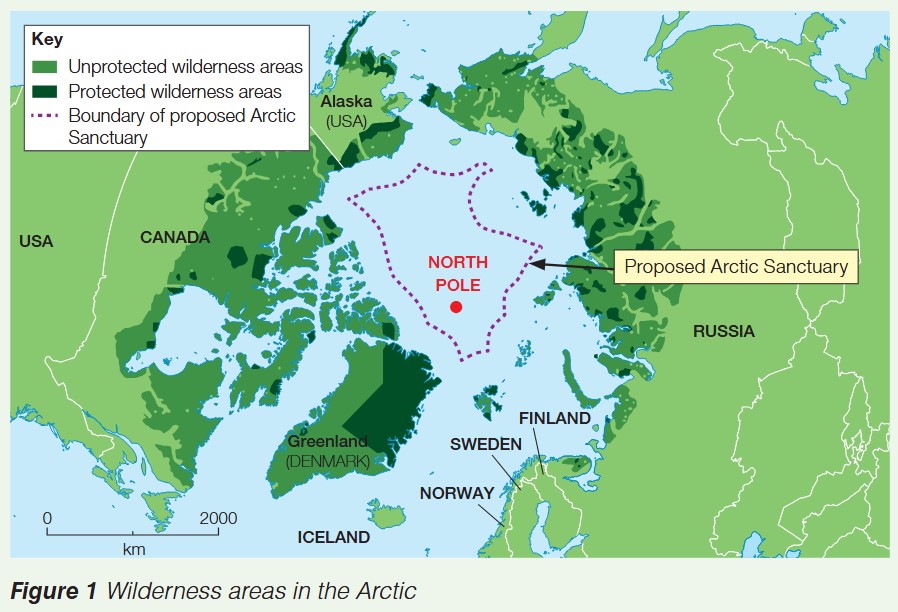
The map above shows the distribution of protected and unprotected wilderness areas across the Arctic region. The dotted line indicates the boundary of a proposed Arctic Sanctuary, which would provide greater protection to this fragile environment. Notice how much of the Arctic remains unprotected despite its environmental importance.
Major threats to the Arctic
The Arctic faces numerous environmental challenges, but the most significant threat comes from global warming. Rising global temperatures are having a dramatic impact on the Arctic ecosystem, particularly affecting sea ice coverage.
The impact of global warming
Sea ice in the Arctic Ocean is melting at an accelerating rate. Each year, more sea ice disappears during the summer months. Scientists predict that if current warming trends continue, the Arctic Ocean could become completely ice-free during summer months by the mid-21st century. This would represent a catastrophic change to the Arctic ecosystem.
Important
The loss of sea ice has serious consequences for Arctic wildlife, particularly species like polar bears that depend on sea ice for hunting and survival. It also affects global ocean currents and weather patterns, demonstrating how changes in the Arctic can have worldwide impacts.
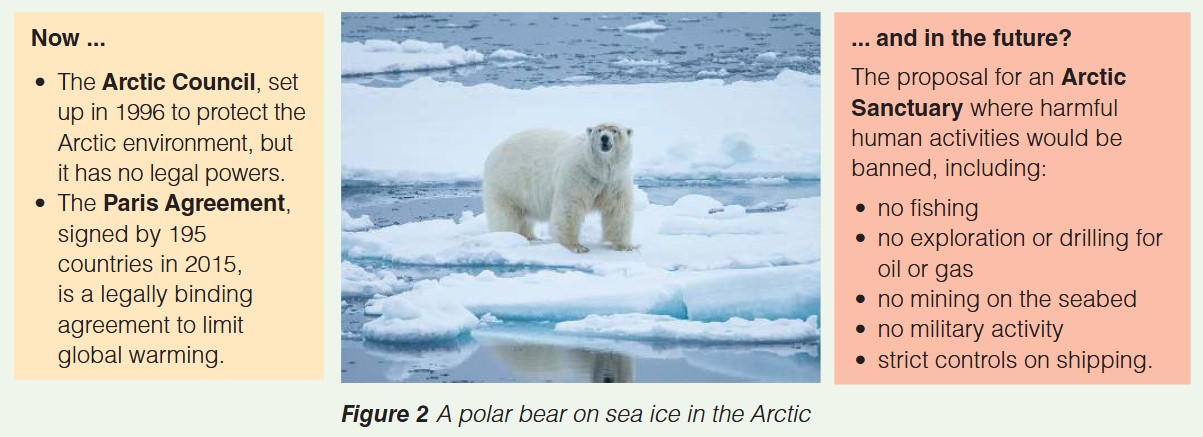
The photograph above illustrates the current state of Arctic sea ice, with a polar bear navigating increasingly fragmented ice floes. This image highlights the challenges that Arctic wildlife faces as their habitat continues to change due to warming temperatures.
International efforts to protect the Arctic
Unlike Antarctica, which benefits from comprehensive treaty protection, the Arctic does not have a single overarching treaty to protect the entire region. However, several international agreements exist that aim to safeguard the Arctic environment.
The Arctic Council
The Arctic Council was established in 1996 specifically to protect the Arctic environment. This international forum brings together Arctic nations to discuss environmental protection and sustainable development in the region.
Important
Critical Limitation: The Arctic Council has no legal powers to enforce its recommendations. This means that while the Council can identify environmental threats and propose solutions, it cannot legally require countries to take specific actions. Its role is primarily advisory rather than regulatory.
The Paris Agreement
The Paris Agreement represents a more recent and legally binding approach to addressing climate change, which is the primary threat to the Arctic. Signed by 195 countries in 2015, this international treaty commits nations to limiting global warming.
The legally binding nature of the Paris Agreement makes it a more powerful tool than the Arctic Council. By addressing global warming at its source, the Paris Agreement aims to slow the rate of Arctic ice loss and protect the region's fragile ecosystem. Each participating country must take action to reduce greenhouse gas emissions and work towards keeping global temperature increases below dangerous levels.
The proposed Arctic Sanctuary
A new proposal has been put forward to create an Arctic Sanctuary that would provide much stronger protection for the Arctic environment than currently exists. This sanctuary would ban harmful human activities across a large area of the Arctic, creating a protected zone similar to marine protected areas found in other parts of the world.
Activities that would be prohibited
Under the Arctic Sanctuary proposal, the following activities would be banned completely:
- Fishing: Commercial fishing operations would not be permitted within the sanctuary boundaries, allowing fish populations to recover and protecting the marine food web.
- Oil and gas exploration and drilling: All activities related to searching for and extracting fossil fuels would be prohibited, preventing potential oil spills and reducing industrial impacts on the environment.
- Mining on the seabed: Extracting minerals and other resources from the Arctic seabed would be banned, protecting sensitive marine habitats from destructive mining practices.
- Military activity: Military operations and exercises would not be allowed, reducing noise pollution and disturbance to wildlife.
- Shipping: While not completely banned, shipping would be subject to strict controls to minimize pollution, noise, and the risk of accidents that could harm the marine environment.
Note
Why an Arctic Sanctuary matters
The creation of an Arctic Sanctuary would represent a significant step forward in protecting one of Earth's last great wilderness areas. By prohibiting harmful human activities, the sanctuary would allow Arctic ecosystems to function naturally and provide a refuge for species affected by climate change in other areas.
The sanctuary proposal recognizes that while international agreements like the Paris Agreement address global warming, additional protection is needed to safeguard the Arctic from other human threats such as resource extraction and industrial development.
Exam guidance
Note
Answering questions about Arctic management:
When answering questions about Arctic management, remember to:
- Explain why the Arctic is fragile by linking its characteristics (wilderness, sea ice) to vulnerability to human activities
- Describe specific threats with examples, particularly global warming and its effects
- Assess the effectiveness of different management approaches by considering their legal powers and scope
- Evaluate whether current protection measures are sufficient by comparing them to the threats faced
For case study questions, you should be able to:
- Name and date specific agreements (Arctic Council 1996, Paris Agreement 2015)
- Explain the limitations of each approach
- Describe what the Arctic Sanctuary proposal would ban and why
- Compare Arctic protection with Antarctica's treaty system
Remember!
Summary
Key Points to Remember:
-
The Arctic is a fragile environment containing the largest wilderness area in the northern hemisphere, but most of it remains unprotected from human activities.
-
Global warming is the greatest threat to the Arctic, with predictions that the Arctic Ocean could be ice-free in summer by the mid-21st century.
-
The Arctic Council (1996) aims to protect the Arctic environment but has no legal enforcement powers, limiting its effectiveness.
-
The Paris Agreement (2015) is a legally binding treaty signed by 195 countries that addresses climate change, the primary threat to the Arctic.
-
The proposed Arctic Sanctuary would ban fishing, oil and gas exploration, seabed mining, and military activity, while imposing strict controls on shipping to protect the Arctic ecosystem from harmful human activities.