The Value of Rainforests (OCR GCSE Geography B (Geography for Enquiring Minds)): Revision Notes
📚Revision Notes
The Value of Rainforests
Living in the rainforest
Approximately 60 million people worldwide live in tropical rainforest regions. Many of these people are indigenous communities who have developed sustainable ways of living in the forest over thousands of years. Their traditional lifestyles demonstrate how people can live in harmony with the rainforest environment without causing significant damage to it.
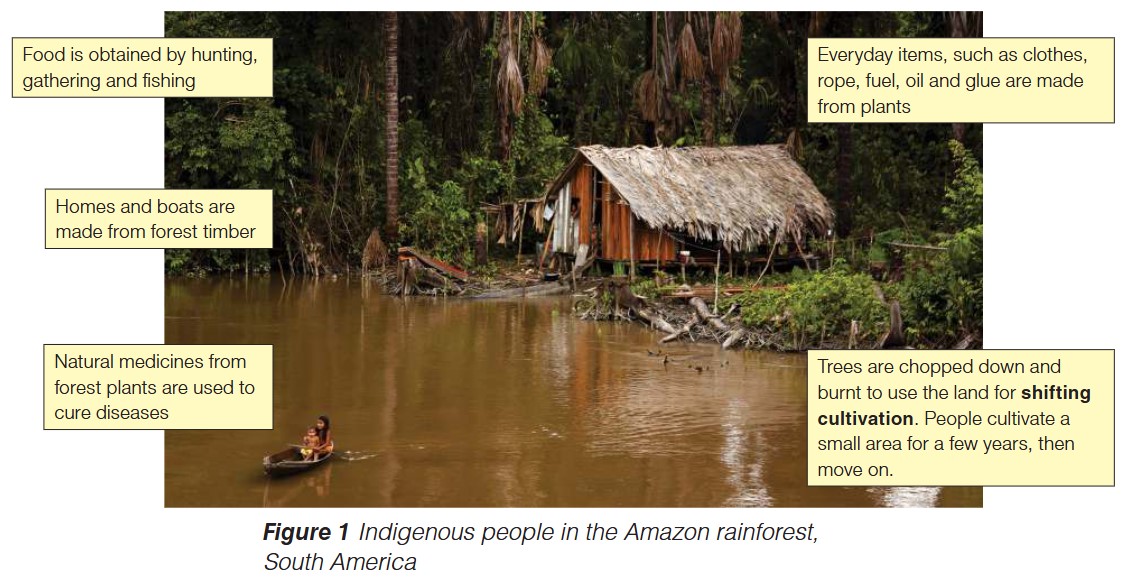
Indigenous communities rely on the rainforest for all their basic needs. They obtain food through subsistence activities such as hunting wild animals, gathering fruits and plants, and fishing in rivers. The forest provides timber for constructing homes and boats, which are essential for transportation in areas where rivers are the main routes through the forest. Indigenous people also use plants to make everyday items including clothes, rope, fuel, oil and glue, demonstrating their extensive knowledge of forest resources.
Note
Indigenous communities possess thousands of years of accumulated knowledge about sustainable forest use. This traditional ecological knowledge includes understanding which plants are medicinal, how to harvest resources without depleting them, and how to maintain the forest's health while meeting human needs.
Traditional medicine is another crucial aspect of indigenous life. Communities use natural medicines derived from forest plants to cure diseases, drawing on knowledge passed down through generations. For agriculture, many indigenous groups practice shifting cultivation, where trees are chopped down and burnt to clear land for farming. They cultivate a small area for a few years before moving on to allow the forest to regenerate, which is a more sustainable approach than permanent deforestation.
Goods and services from rainforests
People across the world, not just those living in rainforests, depend on the resources and functions that tropical rainforests provide. Understanding the value of rainforests requires distinguishing between two key concepts:
- Goods are the physical products obtained from the rainforest, such as timber, food crops, or medicines
- Services are the beneficial functions that rainforests perform, such as regulating climate or purifying water
The value of rainforests can be organized into six main categories, each providing essential benefits to both local communities and people worldwide.
Climate regulation
Rainforests play a vital role in regulating the Earth's climate. They act as a carbon sink, which means they remove carbon dioxide () from the atmosphere and store it in trees, plants and soil. This process is crucial because is a greenhouse gas that contributes to global warming. Without rainforests absorbing and storing this , levels in the atmosphere would be much higher, leading to accelerated climate change and rising global temperatures.
Important
Rainforests are one of Earth's most important defenses against climate change. The carbon stored in rainforest trees represents centuries of accumulated carbon removal from the atmosphere. When rainforests are destroyed, this stored carbon is released back into the atmosphere, contributing to global warming rather than preventing it.
Water management
Rainforests provide essential water-related services. The dense vegetation and complex root systems filter water naturally, purifying it before people drink it or use it for other purposes. Rainforests also act like enormous sponges, absorbing rainfall and releasing it gradually. This prevents both floods during heavy rainfall and droughts during dry periods, protecting communities and agriculture downstream from these extreme events.
Food sources
Many foods that people eat worldwide originally came from rainforests. Crops such as bananas, cocoa, coffee, and various spices all originated in tropical rainforests. Some of these foods are still grown in rainforest regions today, providing both local food security and valuable exports. The genetic diversity of rainforest plants also provides potential sources for new crops and improved varieties of existing ones.
Note
The genetic diversity preserved in rainforests is like a biological library. Scientists continue to discover wild relatives of crop plants in rainforests that possess valuable traits such as disease resistance or drought tolerance. These genes can be used to improve cultivated varieties, helping ensure global food security.
Health and medicines
Rainforests are like natural pharmacies containing thousands of medicinal plants. Many modern medicines are made from or based on compounds found in rainforest plants. Indigenous communities have used these plants for healthcare for centuries, and pharmaceutical companies continue to discover new medicinal properties in rainforest species. This biodiversity represents enormous potential for developing treatments for diseases.
Energy production
Rivers flowing through and from rainforest regions provide opportunities for renewable energy generation. Hydroelectric power stations built on these rivers produce electricity by harnessing the energy of flowing water. This clean energy source is generated without burning fossil fuels, making it important for reducing carbon emissions. However, dam construction must be carefully managed to minimize environmental impact.
Raw materials
Rainforests supply numerous raw materials used in manufacturing and industry. Timber from rainforest trees is used for construction and furniture. Rubber, originally from rainforest trees, is essential for tyres and many other products. Oils extracted from rainforest plants are used in cosmetics, food products, and biofuels. These materials support industries worldwide and provide economic benefits to rainforest regions.
Local and worldwide benefits
It is important to distinguish between the benefits rainforests provide to local people who live in or near them, versus the benefits they provide to people in other parts of the world. Local communities depend directly on rainforests for immediate survival needs such as food, shelter, water, and medicine. People in other parts of the world need rainforests for climate regulation, maintaining biodiversity, providing raw materials for products, and as sources of medicines and genetic resources.
Important
This distinction matters when making decisions about rainforest management. Local people may prioritize immediate survival needs, while people worldwide may focus on long-term environmental services. Sustainable management requires balancing both local and global needs to ensure rainforests continue providing benefits for everyone.
Remember!
Summary
Key Points to Remember:
- Approximately 60 million indigenous people live sustainably in tropical rainforests, using traditional practices developed over thousands of years
- Rainforests provide both goods (physical products like timber and food) and services (functions like climate regulation and water purification)
- Rainforests act as carbon sinks, removing and storing to help prevent global warming
- The six main categories of rainforest value are: climate regulation, water management, food sources, health and medicines, energy production, and raw materials
- Local people depend on rainforests for immediate survival needs, while people worldwide benefit from rainforests' environmental services and resources