Men’s responses to the demands of the war (OCR GCSE History B (Schools History Project)): Revision Notes
📚Revision Notes
Men's responses to the demands of the war
Note
On 7 August 1914, newly appointed Secretary of State for War Lord Kitchener introduced voluntary enlistment in the army. He appealed for volunteers and expansion of the Territorial Force which was then serving for home defence. Expansion meant that they sent overseas.
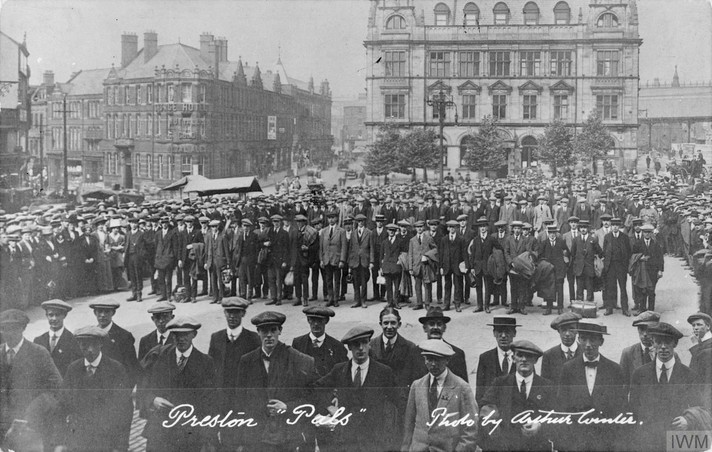
By September 1914, about 500,000 men joined the army as volunteers. The Parliamentary Recruiting Committee or PRC under the War Office officiated the recruitment. Recruiting posters were widely distributed. Moreover, the organisation of Pals' battalions further persuaded men from the same community to join. They were promised that they would be trained and later on fight together.
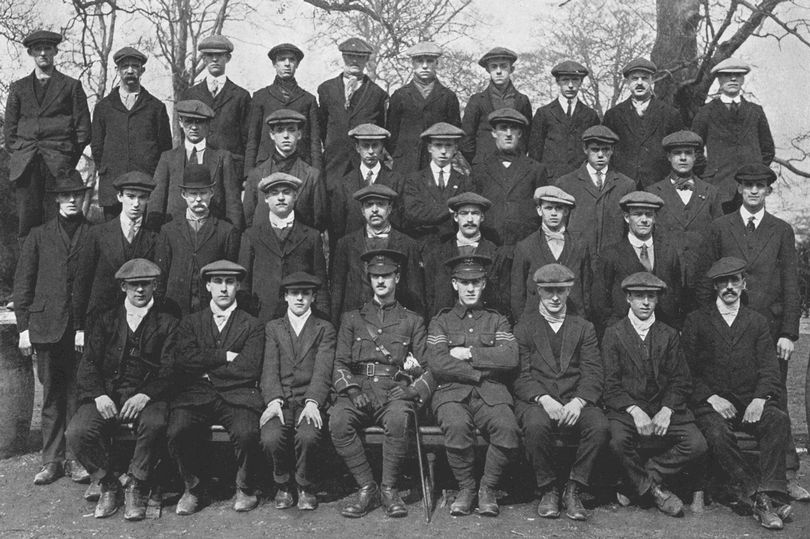
Image of Manchester Pals battalions
By the end of September 1914, Lord Kitchener used the motto "Your Country Needs You" in posters. During this time, voluntary enlistment was already high.
Between August 1914 and December 1915, about 2.5 million men became army volunteers. This insufficient number led to compulsory military service in 1915.
Note
One of the first pal's battalion was the Royal Fusiliers or so-called Stockbrokers Battalion formed in August 1914. About 16 men enlisted in the 10th Battalion in response to General Sir Henry Rawlinson's appeal to London stockbrokers. He believed that men will be more persuaded to enlist in the army if they could serve alongside friends and colleagues. After a few days, another battalion was raised in Liverpool.
Images showing the steps of civilian recruitment in WWI
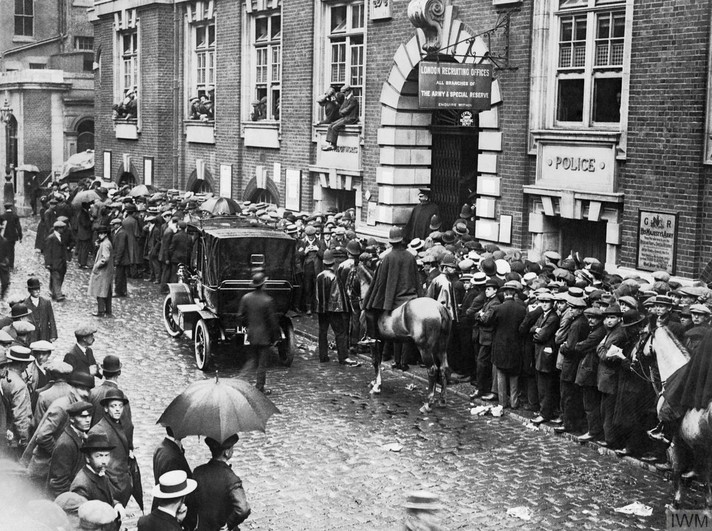
Central London Recruiting Depot at New Scotland Yard in August 1914
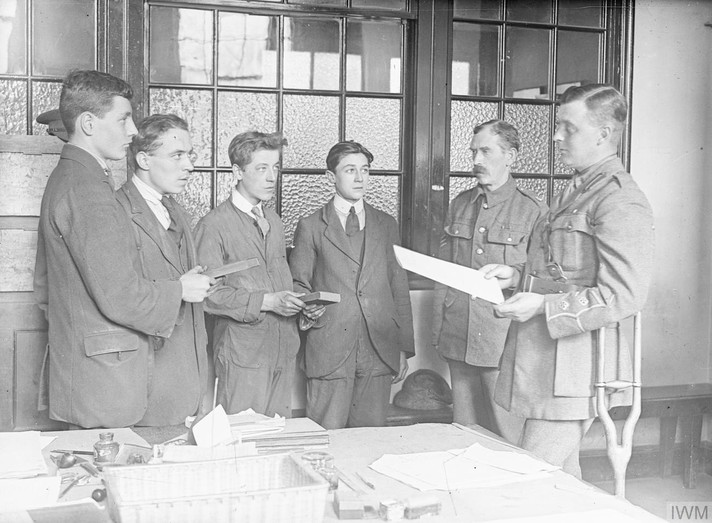
Men taking their oath of allegiance to the king
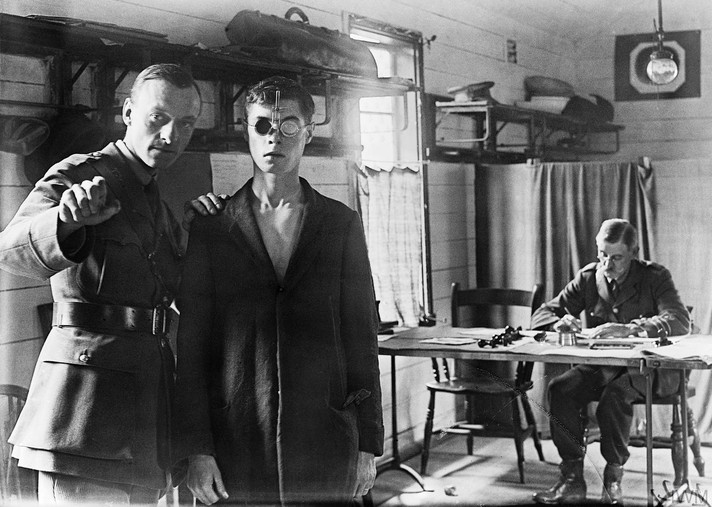
Image of a man taking an Army eye test and other medical examinations
Joining an army unit
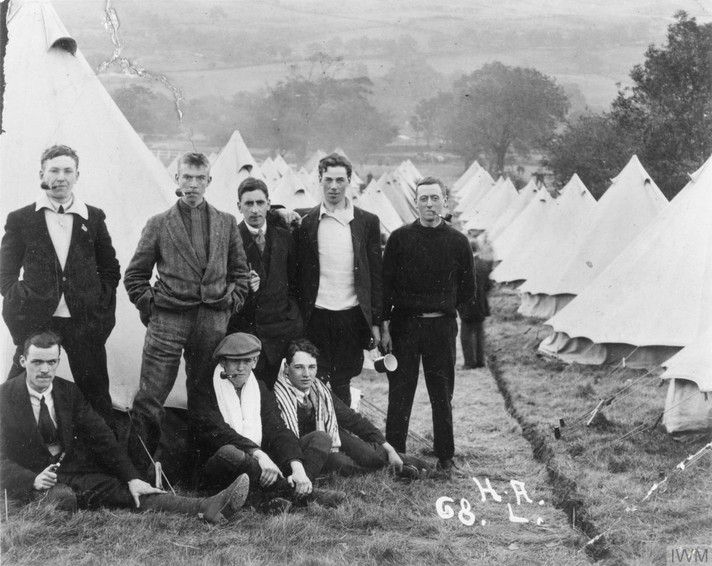
Months in training camps
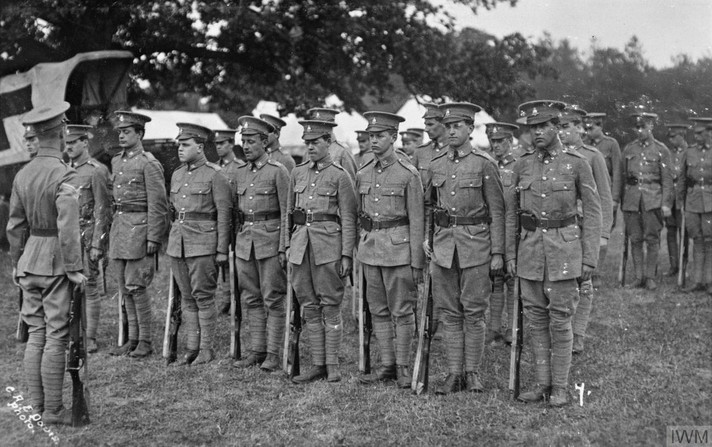
Cambridge University Officer Training Corps in Surrey camp
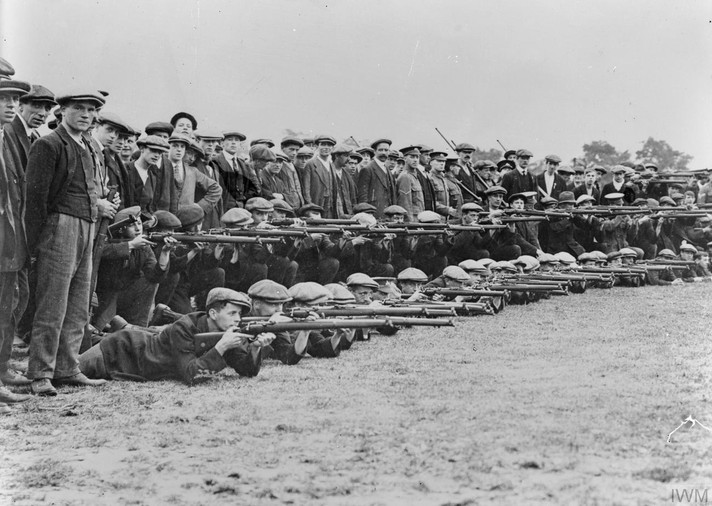
Learning military skills such as using weapons and equipment
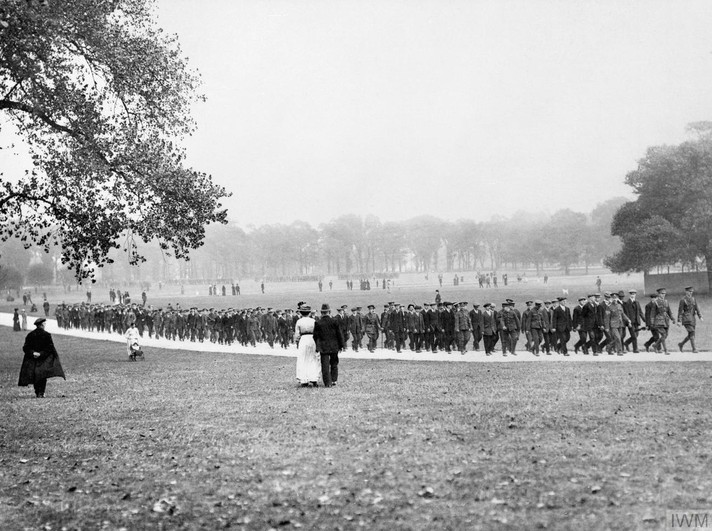
New soldiers to be sent to the front line
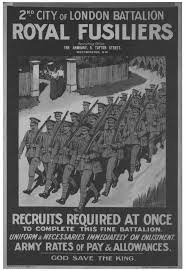
WWI recruitment poster
Conscientious objection
Note
Conscientious objectors are people who refuse to serve in the Army because fighting is against their conscience. There were 16,000 men during WWI became conscientious objectors.
What happened when you refused to serve in the Army?
Conscientious objectors had to prove that their beliefs were real at tribunals in both WWI and WWII. The tribunals were not always very fair, especially during WWI, because members of the panel were often hostile to conscientious objectors, believing them to be cowards and traitors. If one's hearing at the tribunal was successful, they would be offered a non-fighting job such as working in a bomb disposal unit or becoming an ambulance driver.
How did society treat conscientious objectors?
'Slackers' and 'cowards' were the usual nickname given to conscientious objectors. The attitude towards them tended to be hostile, and they could even face physical assault. Because many people believed it was their duty to defend Britain, most men would enlist as soon as they were required to.
Note
If you were not judged genuine, you could be imprisoned. This concerned 6,000 men during WWI and 3,000 during WWII.

Mock trial of conscientious objector, 1916