The campaigns for the vote: suffragists, suffragettes, support and opposition (OCR GCSE History B (Schools History Project)): Revision Notes
📚Revision Notes
The campaigns for the vote: suffragists, suffragettes, support and opposition
The campaigns for the vote
What did women find unfair in Edwardian Britain?
Higher education to facilitate financial independence
Medical training to allow women to be treated by women
An end to child prostitution
The right for married women to keep their own property
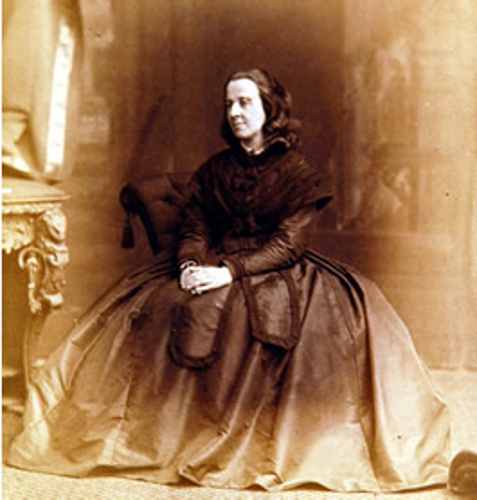
Bessie Rayner Parkes was one of the Ladies of Langham Place
Come 1861, there was significant interest in women's rights given the 1,25 million unmarried women and 750 000 widows requiring support. The Ladies of Langham Place realised the vote was the only way to create change. They petitioned Parliament in 1866 to amend the Reform Act, but this only served to forbid the female vote. This led to the formation of the NUWSS.
Note
For women, getting the right to vote was a means to address a wide range of issues affecting them, such as unequal divorce laws, health education and better healthcare for women's needs, improving education, and achieving better pay. Yet, without female representation in government, it was very difficult to bring about change, as any change had the first hurdle of convincing men in power to listen.
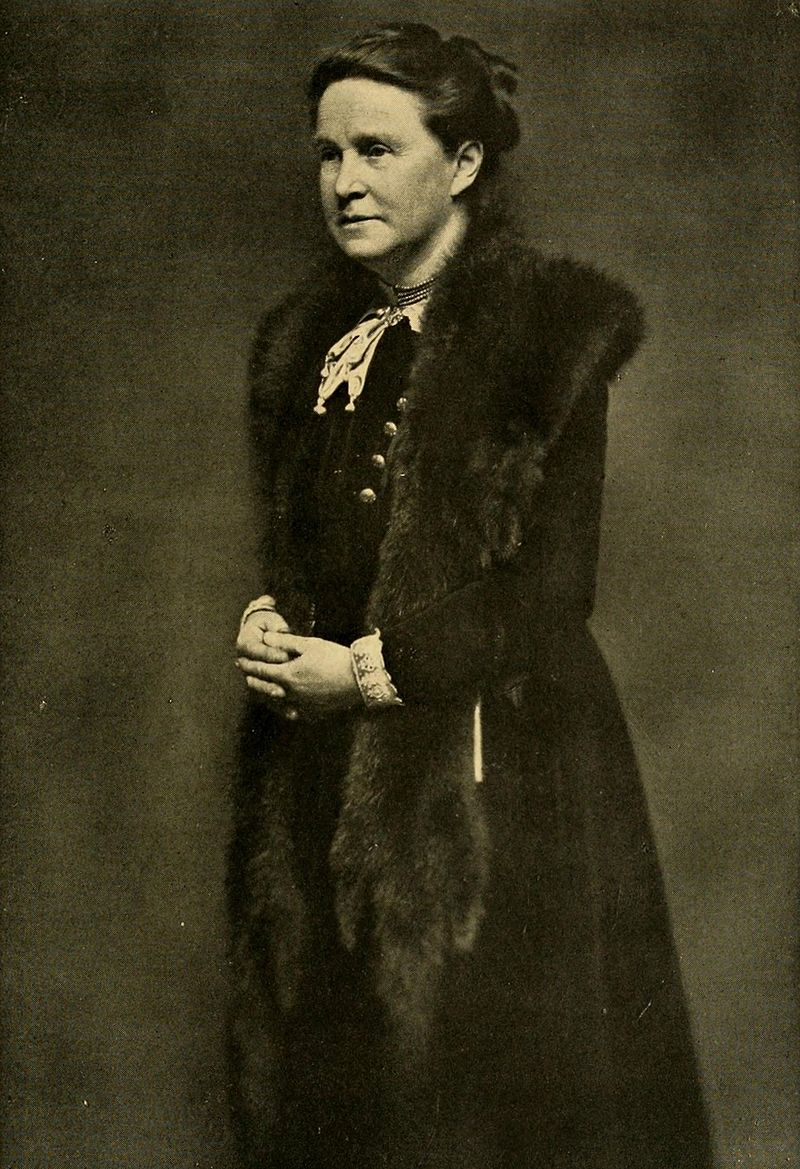
Millicent Fawcett
Suffragists began to emerge in 1897, when a network of local Women's Suffrage societies joined forces to create the National Union of Women's Suffrage Societies (NUWSS). In 1900, Millicent Fawcett was elected its president. The NUWSS took a moderate line, was non-confrontational and constitutional.
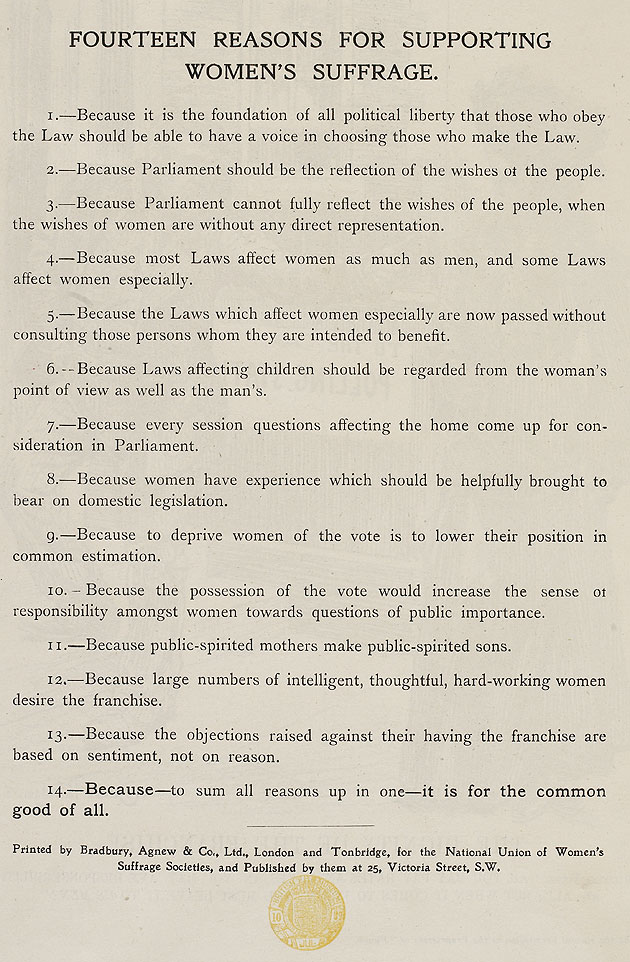
The NUWSS released a manifesto of 14 points. Some points were:
- Parliament should reflect the wishes of all the people
- Laws affect women too
- Women can bring useful experience to the table
- Granting women the vote would increase their sense of responsibility
- Reasons for denying women the vote are not rational "Public-spirited mothers make for public-spirited sons".
Emmeline Pankhurst
In 1889, suffragette Emmeline Pankhurst founded the Women's Franchise League, which advocated for suffrage for married and unmarried women. After the WFL broke apart, she founded the Women's Social and Political Union (WSPU) in 1903.
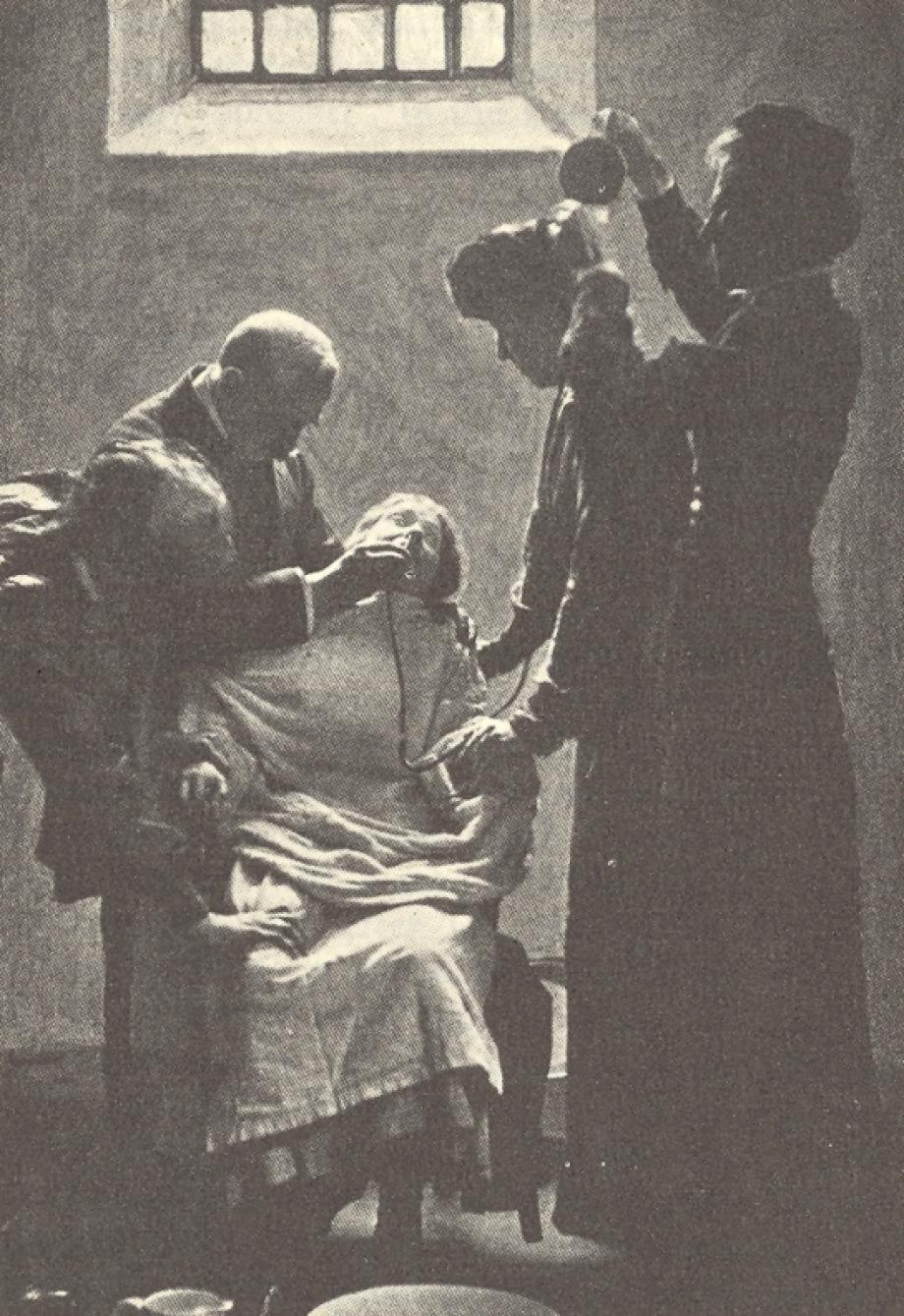
She'd had become disillusioned by the moderate tactics of the NUWSS and was prepared to be more militant to achieve suffrage. Indeed, it became known for physical confrontations, vandalism of property and assaulting police officers. Other tactics included hunger strikes wherein strikers were force fed. Later, arson became a tactic. The militant ways of the group alienated prominent members, including Pankhursts own daughters. She was imprisoned several times.
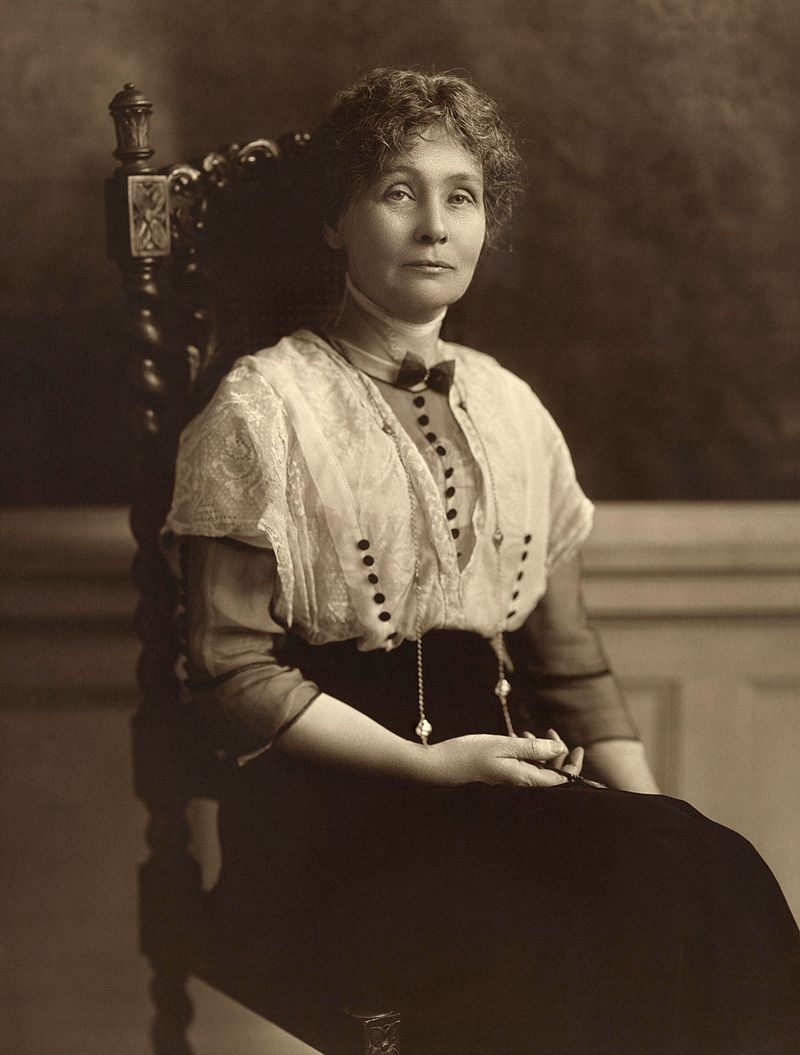
Emmeline Pankhurst
Note
The tactics initially used were similar to that of the Anti-Corn Law League - speakers toured the country to spread the word, leaflets and pamphlets were distributed, newspapers printed adverts and opinion pieces, and sympathetic MPs brought the issue of suffrage to Parliament.
- To get their voices heard, activists would interrupt political meetings with polite questions and ask the speaker his opinion on women's suffrage.
- Activists were typically non-party political, but that limited their influence as neither conservatives nor liberals could determine if women's suffrage would be to their benefit.
- Women's suffrage did not enjoy the same level of support from all levels of society as the abolition of slavery and the Anti-Corn Law League.
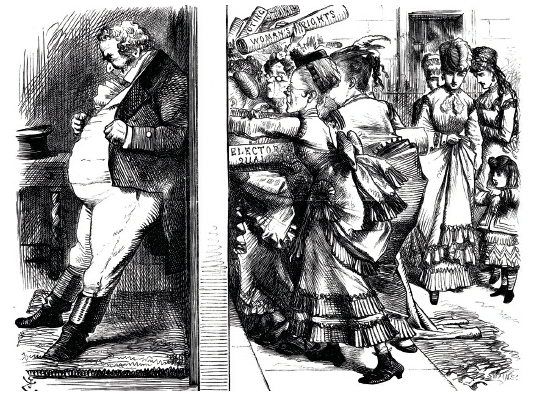
A political cartoon from Punch magazine depicting John Bull resisting women's suffrage
In 1905, Emmeline Pankhurst's daughters, Christabel, and Annie Kenney were the first suffragettes to be arrested after they refused to stop heckling an address by a Liberal government minister in Manchester.
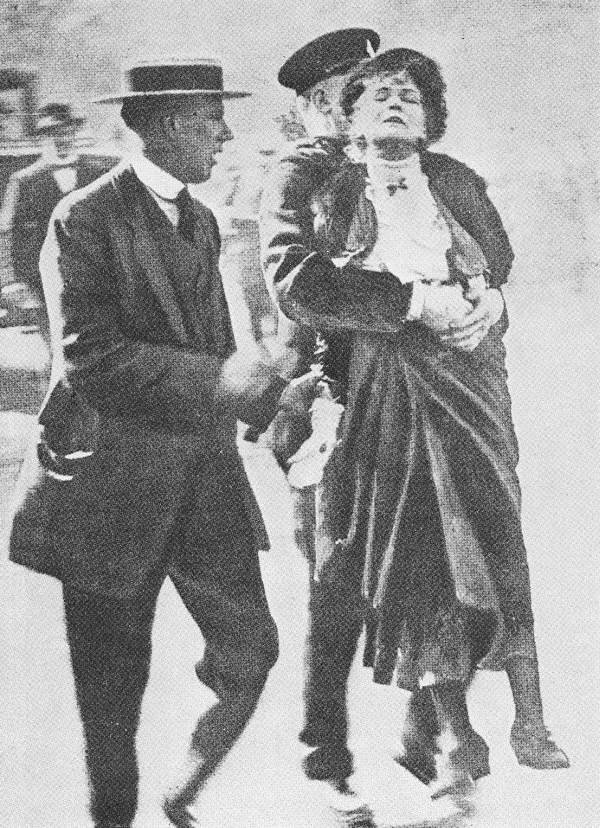
Emmeline Pankhurst being arrested outside Buckingham Palace, May 1914
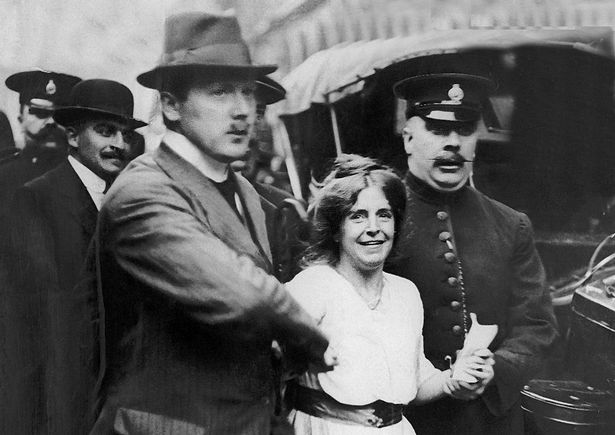
Annie Kenney being arrested by police.
When they resisted arrest by police, Christabel spat on an officer. She was fined 25p, but refused to pay it. This caused a huge uproar in society as it was considered highly improper for a middle-class woman to behave in this way.
The incident dominated newspaper headlines, which Pankhurst regarded as good publicity.
Like the Anti-Corn Law League, the suffragettes placed a lot of their efforts into influencing by-elections and their extreme acts kept them and their cause in the spotlight. This alienated more people than it enamoured, which significantly increased numbers for the moderate NUWSS.
But it also made things difficult in Parliament - by 1912, it was clear neither the Liberals nor the Conservatives would give the vote and so attention turned to the new, yet still small, Labour Party.
When WWI broke out, political activism was deferred in order to support the war effort. In fact, job opportunities improved for women even if their wages were still half that of men.
As a result of the contribution of women in the war, in 1918 the Representation of the People Act was passed, which granted votes to all men over the age of 21 and women over the age of 30 - this was so that women wouldn't outnumber men.
The Act was amended in 1928 to include all women over the age of 21.
Note
Women's suffrage was not supported by all, indeed, before 1900, Florence Nightingale and Queen Victoria herself were against women getting the vote.
Despite women's efforts to gain the vote, there was a counter-movement called the National Anti-Suffrage League. It was formed in 1910 and was well-funded by its 9,000 members. It had 80 branches all over Britain and its main arguments were:
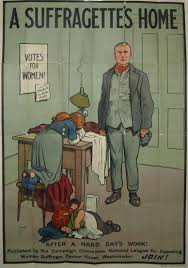
- Women and men had their own, separate spheres.
- The domestic sphere was not inferior
- Women had influence already, as their views were heard at home, influenced their husbands, and through public opinion
- Women were allowed to take part in elections at local government level
- Since women weren't in the army, they should not have a say in government.