The range and effectiveness of Nazi propaganda (OCR GCSE History B (Schools History Project)): Revision Notes
📚Revision Notes
The range and effectiveness of Nazi propaganda
Note
The Third Reich's Ministry of Public Enlightenment and Propaganda was established on 14 March, 1933, to spread and promote the ideals of the Nazi Party. It was headed by Dr. Joseph Goebbels.
Goebbels and Nazi propaganda
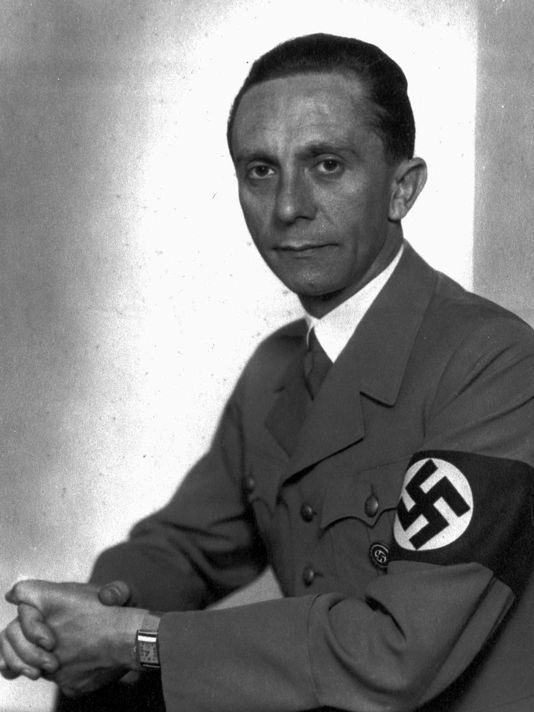
Joseph Goebbels
Paul Joseph Goebbels was the Third Reich's Minister of the Ministry of Public Enlightenment and Propaganda from 1933 to 1945. The ministry's main objective was to indoctrinate the German people into supporting Nazi ideals of anti-semitism and Aryan supremacy. His eloquence and charisma made the ministry successful and it gained many supporters and followers.
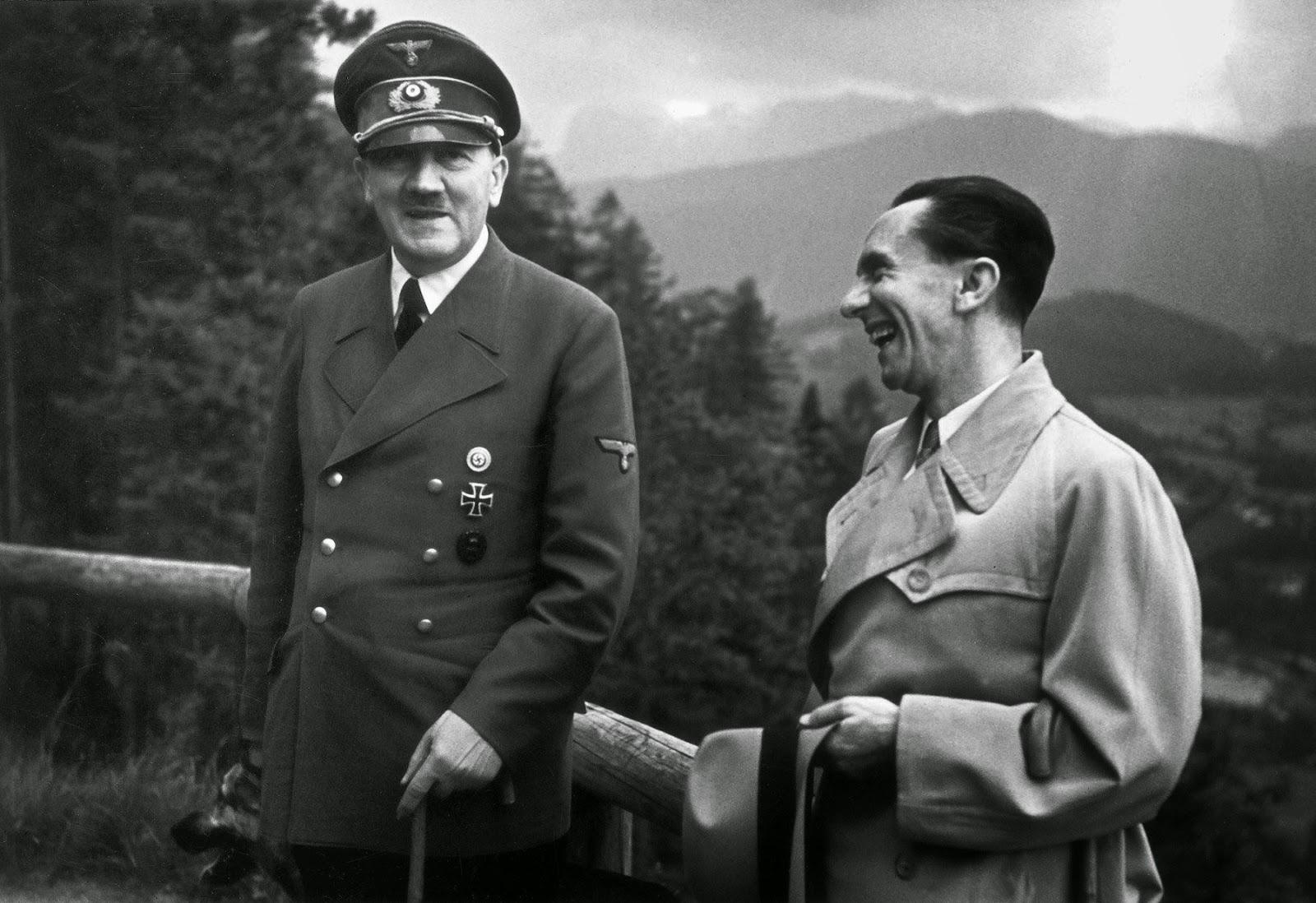
Hitler and Goebbels, 1943
The use of Mass media, Radio and Cinemas
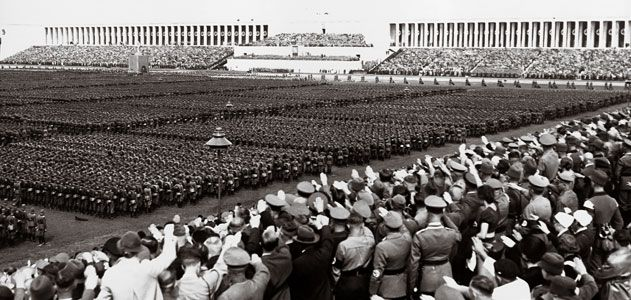
A 1934 mass rally in Nuremberg, Germany
Under the Third Reich, radios were mass-produced and sold cheaply. Broadcasts and stations were controlled by the Reich Broadcasting Corporation serving under Goebbels' ministry. Speakers were also set up on streets in various German cities. Nazi ideals and updates on Hitler's administration were the main focus of the radio broadcasts.
The Third Reich's Ministry of Public Enlightenment and Propaganda used mass media to promote Nazi ideals. Mass rallies, radio and cinema were effective tools in achieving their objectives. Mass rallies were used by Goebbels' ministry to propagate Nazi ideals.
Note
They involved Nazi music and public speeches uplifting the Nazi Party. Massive rallies were held annually in Nuremberg, Germany.
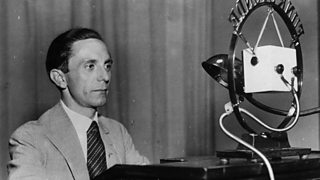
Goebbels addressing the people through radio
Note
The Third Reich's Ministry of Public Enlightenment and Propaganda used mass media to promote Nazi ideals. Mass rallies, radio and cinema were effective tools in achieving their objectives.
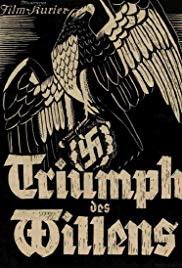

Goebbels' ministry saw films as popular forms of entertainment. Hence, the ministry produced several films that promoted the ideals of the Nazi Party. Ideals were craftily inserted into the stories and carefully guarded by the Nazis.
Popular Nazi films were Leni Riefenstahl's Triumph of the Will (1935), highlighting the Nuremberg rally, and Fritz Hippler's The Eternal Jew (1940), depicting Jews as evil, corrupt and intent on dominating the world.
The Berlin Olympics, 1936
Note
The Nazi government used the multi-sport event, held in Berlin, as a propaganda mechanism to show the country's strength. Hitler had a new 100,000-seat track and field stadium built, as well as six gymnasiums and many other smaller arenas. The Berlin Olympics were the first to be broadcast on TV, and radio coverage reached 41 countries.
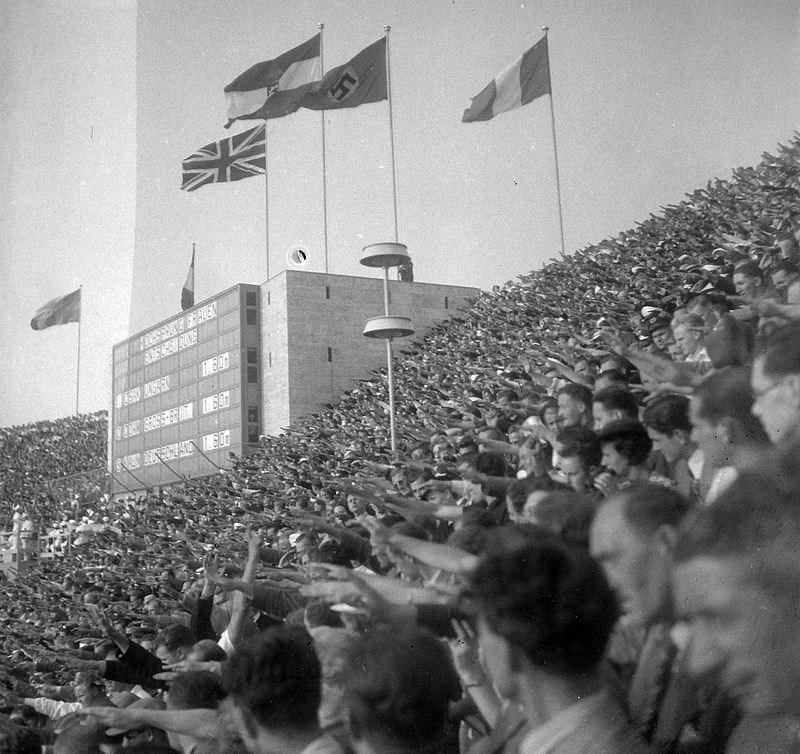
Spectators giving the Nazi salute at the Berlin Olympics
Hitler viewed the Olympics as an opportunity to spread and promote his government and the ideals of racial supremacy.
Initially, Jews were not allowed to participate, but when threatened with a boycott of the Games, Hitler allowed athletes of other ethnicities from other countries to participate.
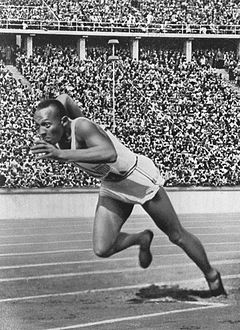
Ironically, Jesse Owens, an African-American, won four gold medals.
Through wide-scale propaganda, the Nazi regime was able to persuade the general public of its ideologies. Most Germans acknowledged and accepted Hitler's government.
The lack of open opposition was due to the following reasons:
- The Police State was feared by the public.
- Most Nazi political enemies were in prison or exile.
- Control over culture and education through censorship and indoctrination concealed the problems of the regime.
- German pride was restored as Hitler denounced the Treaty of Versailles through his rearmament programme, remilitarisation of the Rhineland, and territorial expansion - invasion of Austria and Czechoslovakia.