Establishing the dictatorship, January 1933 to July 1933 (OCR GCSE History B (Schools History Project)): Revision Notes
📚Revision Notes
Establishing the dictatorship, January 1933 to July 1933
The Reichstag fire
Van der Lubbe admitted to arson and was sentenced to death. Other suspects were released due to lack of evidence. Many historians believe that the fire was a Nazi plot, however, and that van der Lubbe served as their pawn.
Later in 1933, van der Lubbe and Ernst Torgler, leaders of the Communist Party in the Reichstag, and three Bulgarian Communists were arrested and put on criminal trial.

4,000 people were arrested by the SA.

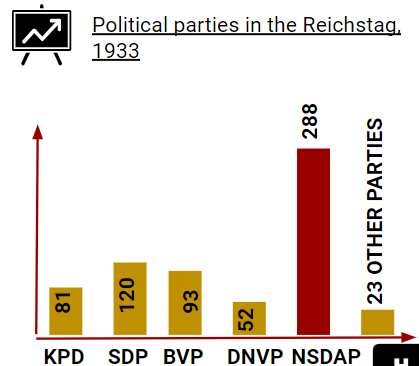
81 Communist deputies who were elected by the German people were detained after the fire incident.

On 5 March, the Nazis won 288 seats in the Reichstag, but it was still insufficient to form the majority. Hitler then joined with the nationalists to dominate the house.
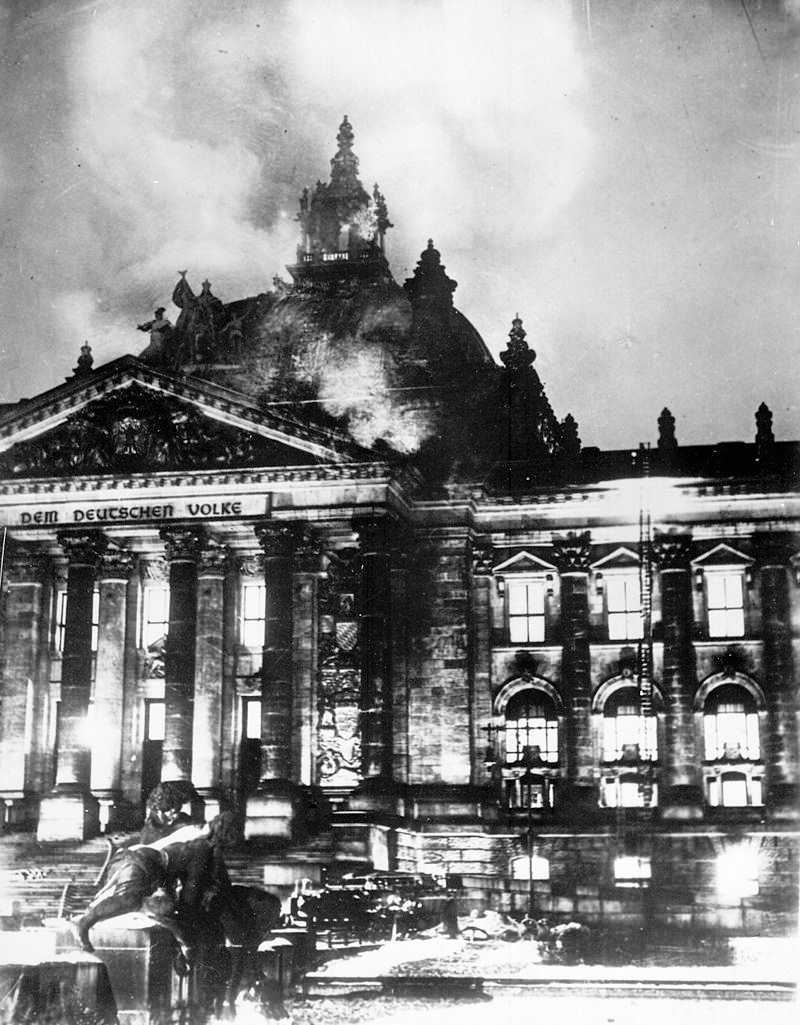
The Reichstag Fire, 27 February 1933
The accused
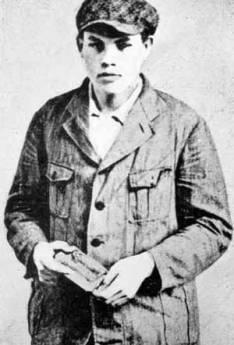
Marinus van der Lubbe, a Dutch council communist
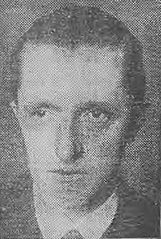
Ernst Torgler, chairman of the Communist Party of Germany
3 BULGARIANS
Note
Georgi Dimitrov
Note
Blagoi Popov
Note
Vasil Tanev
THE 1933 ELECTIONS
Note
In January 1933, Hitler became chancellor, while the Nazis only occupied a third of the seats in the Reichstag. He immediately called for a new general election. With manoeuvering by Hermann Goering, the NSDAP consolidated enough money to ensure the party's victory.
"Radio and press are at our disposal. Even money is not lacking this time."
- Joseph Goebbels To further ensure success, Goering, Hitler's Minister of Interior removed senior police officers and replaced them with Nazi people, which later became known as the Gestapo. The recruited members of the Sturmabteilung, commonly known as the SA, reached 50,000 members.
Moreover, Goering led the arrest of KPD leaders in Berlin with accusations of overthrowing the government. As a result, KPD candidates were also arrested. The SA was able to intimidate election meetings of the left-wing. In addition, some candidates were assassinated.
The Enabling Act
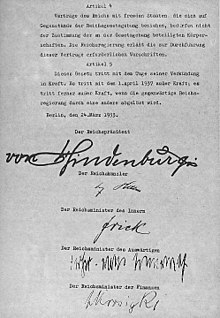
While all Communist deputies had been arrested and other non-Nazi political parties were intimidated by Hitler's SA, the Enabling Act was passed by a two-thirds margin.
Hitler personally negotiated with the Centre Party leaders to support the passage of this act, ensuring that their rights, functions and freedom would be left in peace.
It granted Hitler and the German Cabinet absolute power to enact laws without the legislative bodies, both Reichstag and Reichsrat.
Hitler ruled by decree, setting aside the Weimar Constitution.
The use of Christianity
Hitler used Christianity to assure Germans that the Nazi government would not interfere with religious life. Among his critics were members of the Centre Party, a Catholic-sponsored party in the Reichstag.
While negotiating a concordat with the Catholic Church, Hitler stressed that he only wanted to eliminate political Catholicism but not its religious role.
Note
On 23 March, 1933, the entrance of the Kroll Opera House was lined with SS and SA men to ensure the passage of the bill through intimidation. The Enabling Act was passed with 444 votes to 94 from the Social Democrats.